Games and companies in this document


Connections
Each row is a game or company this document names, each column a document, oldest first. A mark means that document names it. Select a row to see those documents.
1 free read left. Create a free account for unlimited reading + AI research.
Create free accountWhitepaperUniwersytet Wrocławski
Over 9 billion hours of game streams were watched in 2019, a 20 percent increase on the previous year.
This study, by Maciej Śledź of the University of Wrocław, examines "popcorn gaming," a phenomenon in which players prefer watching video games rather than playing them, and asks why such viewing has grown. Drawing on Denis McQuail's gratification and media use theory, the author situates the trend within the rise of streaming platforms such as Twitch and YouTube. Contextual data cited in the paper point to rapid growth in game-stream viewership, with over 9 billion hours watched in 2019, a 20 percent increase on the previous year, and a market segmentation study identifying popcorn gamers as roughly 13 percent of the population.
The primary empirical evidence comes from an online survey of 376 Polish gamers recruited through fan groups of popular Polish streamers on Twitch and YouTube. Of these respondents, 28 percent identified themselves as preferring to watch games over playing them, and the analysis focuses on this subgroup. The survey instrument comprised 26 questions covering game use, consumption of livestreams and let's-play videos, creator influence, and changes during the COVID-19 pandemic. The sample's recruitment through streamer communities means it is not representative of the broader Polish gaming population, a limitation the study implicitly acknowledges by its choice of a self-selected online sample.
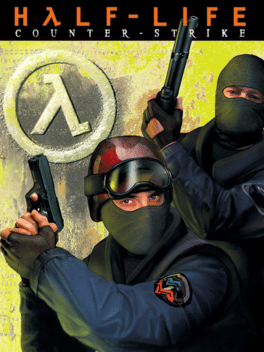
Findings suggest that viewers are drawn by the creator more than by the game itself, with 77 percent naming the streamer as their main motive, and by enjoyment of watching skilled play, fear of negative judgment from teammates in competitive online games, and limited hardware or skill. Preferred titles included League of Legends, Counter-Strike, and The Witcher series, and Twitch was the dominant platform, used by 49 percent of respondents. Most viewers reported that streamers influence their online behavior more strongly than their daily lives, and the pandemic increased time spent watching games for 47 percent of respondents. The author concludes that popcorn gaming offers informational, identity-related, social, and entertainment gratifications, and suggests that game developers may increasingly design social and spectator-oriented features.
Each row is a game or company this document names, each column a document, oldest first. A mark means that document names it. Select a row to see those documents.
Kinephanos · 2026