1 free read left. Create a free account for unlimited reading + AI research.
Create free accountWhitepaper DiGRA
1 free read left. Create a free account for unlimited reading + AI research.
Create free accountWhitepaperDiGRA
The report argues that Animal Crossing: New Horizons, Story of Seasons: Pioneers of Olive Town and My Time at Portia use Eden-style nostalgia. They offer a calm, community-centred alternative to capitalist and urban pressures.
Farming games such as Animal Crossing: New Horizons, Story of Seasons: Pioneers of Olive Town, and My Time at Portia are presented here as a form of utopian narrative and "regenerative play," capable of fostering ecological awareness and emotional well-being. The central argument is that these games draw on Eden-style nostalgia, offering a calm, community-centred alternative to capitalist and urban pressures. The analysis is grounded in the long utopian tradition stemming from Thomas More's Utopia (1516), and it returns repeatedly to a tension within that tradition between progressive visions and romanticised, nostalgic pasts. The inquiry asks whether these games challenge or reinforce the status quo, and what the aesthetics of play contribute to their alleviating effects.
The evidence is largely qualitative, built on close readings of gameplay design and narrative structure rather than empirical measurement. Olive Town emerges as a case of double-edged ecological critique: its pastoral utopia culminates in a luxury cruise liner docking at the port, exposing capitalist tourism as a corrupting force that players themselves enable. Portia is read as staging an ethical debate between technophobic and pro-technology factions in a post-collapse town, while New Horizons reflects a Disneyfied, commodity-driven ideology embodied in Tom Nook's economy, tempered by slow, real-time design that affords meditative possibilities.
Across the cases, the work concludes that these games blend a pastoral ecological utopia with a decelerated, "cosy" form of capitalism. Features such as long-term relationships, non-skippable dialogue, and resources that regenerate over one to three days encourage attentiveness to natural cycles. Yet the utopian potential proves fragile and depends heavily on player attitudes: an ecologically minded, slow-paced playstyle realises regenerative possibilities more fully than an achiever- or consumption-driven approach, which can undermine them. Ultimately, regenerative play is framed as a means for players to reflect on real-world society, with ethical and ecological outcomes contingent on the choices and playstyles they adopt.
Each row is a game or company this document names, each column a document, oldest first. A mark means that document names it. Select a row to see those documents.
DiGRA · 2026
Replay. The Polish Journal of Game Studies · 2024

Ludic Language Pedagogy · 2022
Canadian Game Studies Association · 2020
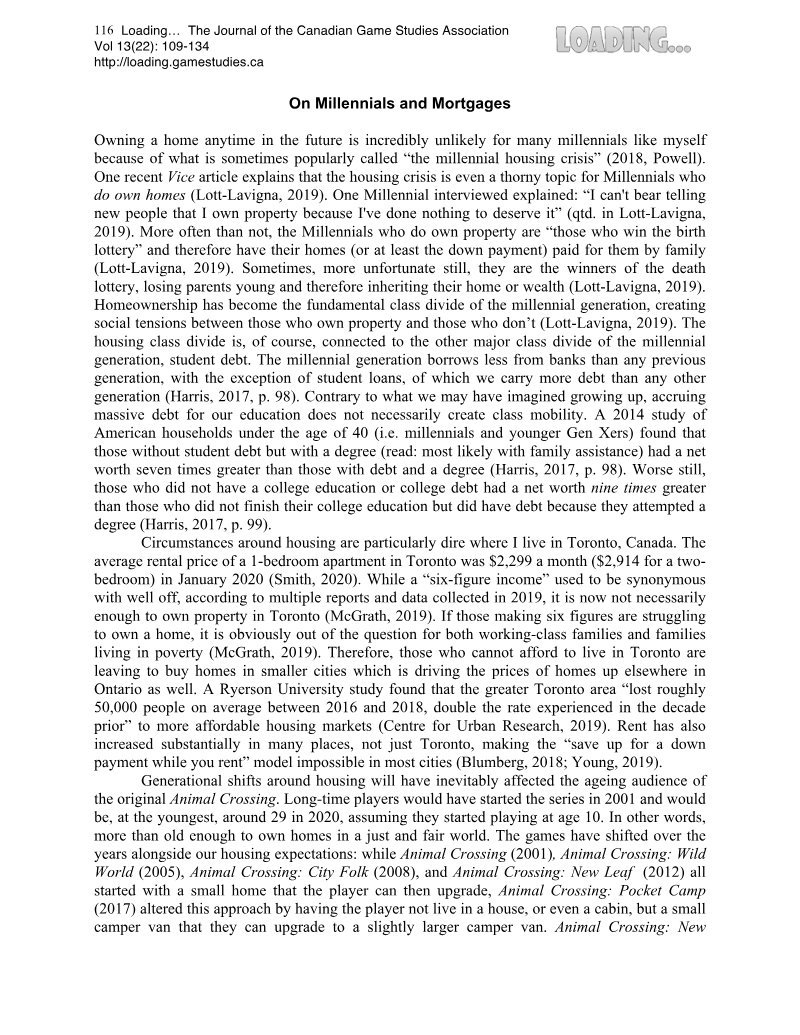
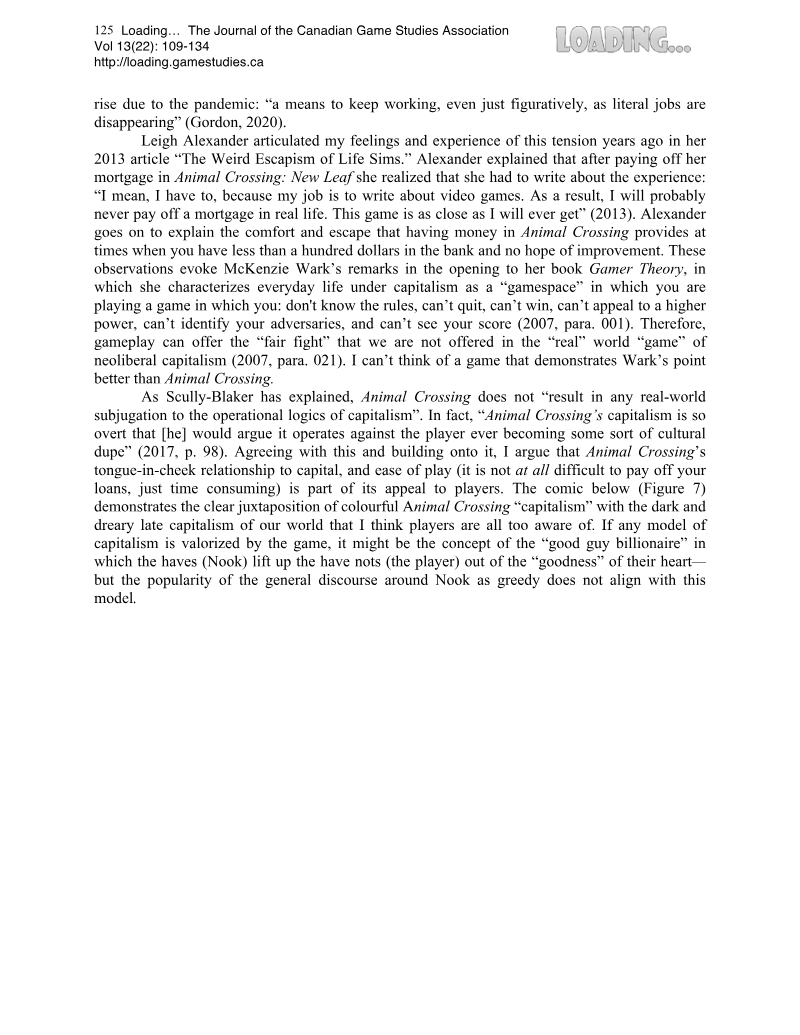
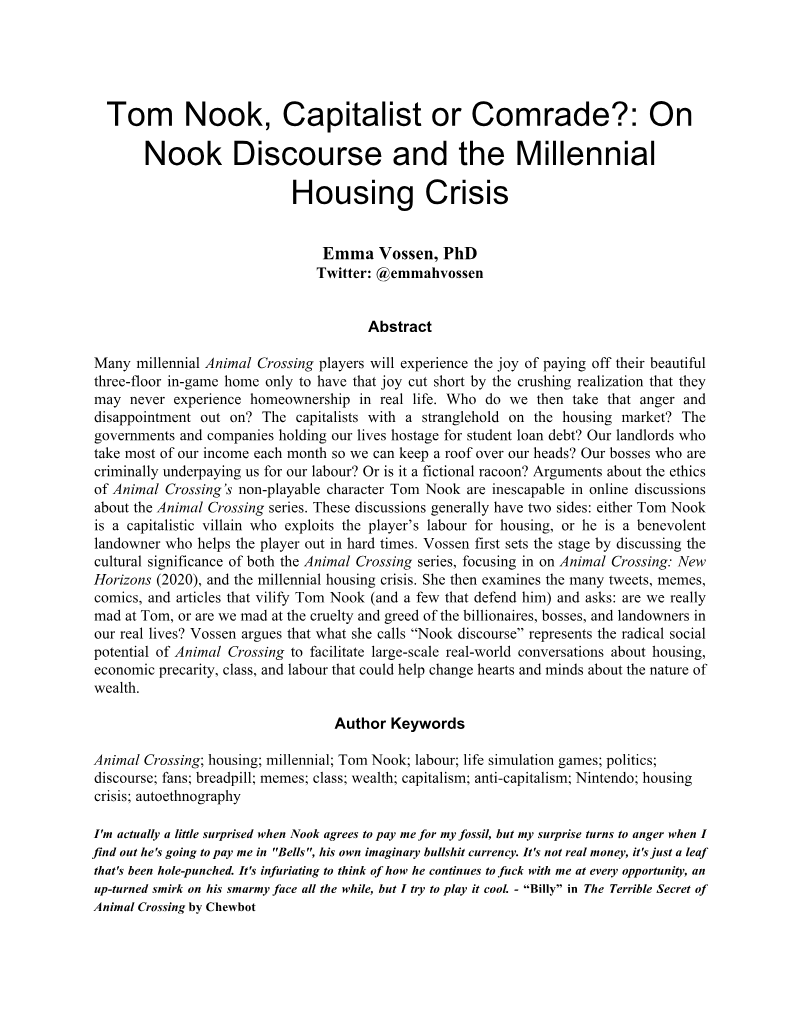
Canadian Game Studies Association · 2020



DiGRA · 2026



Press Start · 2026



Replay. The Polish Journal of Game Studies · 2026



gamevironments · 2026



International Journal of Role-Playing · 2026



Kinephanos · 2026



DiGRA · 2026



DiGRA · 2026































