Finland reports and market data
Documents
Finnish mobile games history: part 1
The Finnish mobile gaming industry represents a unique case study in regional economic development, evolving from a niche technical community into a dominant global force.
- The Finnish mobile gaming industry emerged from a unique convergence of a collaborative software demo scene and a cultural preference for indoor technical pursuits.
- Nokia served as a critical catalyst for the industry by providing essential funding, professional infrastructure, and training grounds for developers during the sector's early stages.
- Although the N-Gage platform was a commercial failure, it forced local studios to master technical constraints and team-based workflows that became foundational for later successes like Rovio and Supercell.
Using statistical analysis to predict the success of F2P games
The mobile gaming industry faces a significant challenge in balancing creative development with commercial viability, particularly as the market shifts toward free-to-play (F2P) models.
- Predictive modeling using a 'Game Power Score' shows a strong correlation with market success, as over 80% of titles scoring 85 or higher have reached the top 100 U.S. top-grossing charts.
- Statistical analysis allows developers to evaluate commercial viability during the concept and development phases, reducing reliance on subjective team reputation and soft-launch performance metrics.
- The scoring methodology identifies specific design weaknesses, such as ineffective progression or re-engagement loops, and enables scenario simulations to test how adjustments impact projected performance.
Embrace your mistakes and chase your passion, says Rovio's Niklas Hed
Rovio Entertainment’s rise to prominence in the mobile gaming industry serves as a case study in the importance of iterative learning, passion-driven development, and brand expansion.
- Rovio developed 52 titles before achieving global success with Angry Birds, demonstrating that iterative learning and persistence are foundational to long-term success.
- The success of Angry Birds was driven by intuitive physics-based mechanics that removed the need for tutorials and a commitment to continuous post-launch updates.
- Early technical constraints, such as limited heap memory and GPRS connectivity, forced Rovio to master content compression and efficient design, which proved critical for the transition to touchscreen gaming.
Panel on the Game Executive leadership program at Aalto University
The Aalto University Game Executive program serves as a critical bridge between technical expertise and organizational leadership for the Finnish mobile gaming sector.
- Long-term success in the mobile gaming industry is driven by an executive's ability to align individual creative motivations with broader business objectives rather than relying solely on technical proficiency.
- The Aalto University Game Executive program facilitates this transition for fifteen studio leaders by focusing on the intersection of organizational culture, creative autonomy, and production deadlines.
- Effective leadership in gaming requires high levels of emotional intelligence and self-awareness, specifically regarding the ability to provide constructive feedback to creative talent.

How 200 Finnish game developers generated $1.2 billion in 2013
The Finnish game industry experienced a period of rapid expansion between 2011 and 2014, characterized by high efficiency and significant financial growth.
- In 2013, the Finnish game industry generated €900 million in direct game sales, representing a 260 percent year-over-year increase.
- The total economic impact of the sector, including merchandising and M&A activity, reached €2.2 billion in 2013.
- Between 2011 and 2014, the industry secured $1.8 billion in total investment, fueling growth for both startups and established studios.

How Finland change the direction of the mobile games industry
The Finnish mobile gaming industry owes its foundational success to the strategic influence and patronage of Nokia.
- Nokia served as the foundational corporate patron for the Finnish mobile gaming industry, providing the essential investment, technical infrastructure, and distribution channels that enabled studios like Rovio, RedLynx, and Bugbear to scale.
- The Finnish 'demo scene'—a culture of programmers dedicated to maximizing hardware performance—provided the core talent pool that Nokia leveraged to pioneer early mobile gaming concepts.
- Nokia’s N-Gage hardware, despite its commercial failure, acted as a critical bridge to the modern era by introducing early mobile connectivity standards and concepts that prefigured modern ecosystems like Game Center and mobile MMOs.

Fondia's 3 key legal areas that matters for game companies
Game companies must prioritize intellectual property (IP) management and legal documentation to secure their core assets and mitigate operational risks.
- Game companies must secure explicit written IP transfer agreements from all founders, employees, and external consultants to ensure the company retains full ownership of its core assets.
- Developers must audit all third-party assets, including open-source code, fonts, and agency deliverables, to verify compliance with underlying license terms and avoid infringement claims.
- Proactive trademark searches in databases like USPTO or TMview are essential before finalizing game names to prevent costly rebranding or legal conflicts.

Boomlagoon's Tuomas Erikoinen talks character driven games and user retention
Character-driven game design serves as a strategic framework for enhancing user retention and brand development in the mobile gaming industry.
- Prioritizing character-driven design over purely functional mechanics fosters deeper emotional connections, which serves as a strategic framework for increasing long-term user retention.
- Limiting the primary cast to a maximum of five characters ensures player recognition and allows for the development of distinct, memorable traits.
- Establishing a consistent art style early in the production cycle is critical to avoiding technical debt and maintaining product quality throughout development.
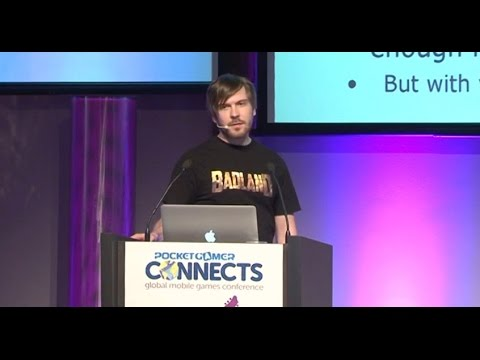
Frogmind CEO Johannes Vuorinen on making Badland: its perfect game
Frogmind’s success with the mobile title Badland serves as a case study for independent developers aiming to achieve commercial success without external funding or marketing budgets.
- Frogmind achieved immediate profitability with Badland by selling 100,000 copies in the first week following its April 2013 launch.
- The game generated $1.5 million in revenue over its first nine months and eventually reached 9 million downloads on iOS and 8 million on Google Play.
- Securing an Apple Editor’s Choice feature was a primary driver of success, achieved through a ten-month grassroots marketing campaign that included transparent development blogging and early press outreach.
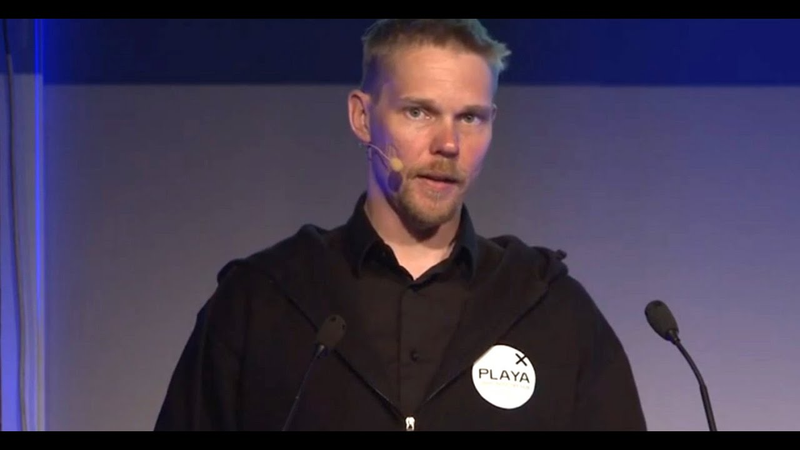
Cursor's Teemu Saarelainen on boosting the games industry in Finland
The game industry in Southern Finland underwent a significant transformation between 2010 and 2014, driven by strategic support initiatives aimed at professionalizing early-stage studios.
- Between 2010 and 2014, the Game Cluster project utilized over 5 million euros in EU and regional funding to professionalize early-stage game studios in Southern Finland.
- The initiative established specialized development hubs in Kotka, Kouvola, and Lappeenranta, providing startups with critical infrastructure including motion capture technology and mobile testing labs.
- The project facilitated over 500 B2B meetings at major international industry events like GDC, Gamescom, and E3, directly contributing to increased publishing deals for Finnish developers.
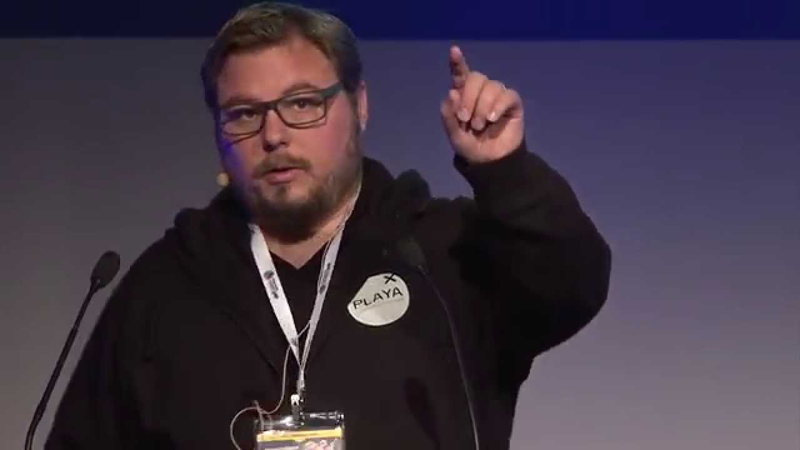
Cursor's Mikko Kähärä talks about encouraging innovation in Finland
The Start-up and Spinoff Factory, an EU-funded initiative based in Southern Finland, serves as a regional development program designed to revitalize the local economy by fostering a robust startup ecosystem.
- The Start-up and Spinoff Factory initiative supported 25 companies, with 50% of these being game studios, resulting in the creation of approximately 50 jobs.
- Participating startups successfully secured 8.5 million euros in early-stage funding through the program's intensive support and strategic guidance.
- The program focuses on bridging the gap between academic research and commercial viability by partnering with institutions like the University of Helsinki and Lappeenranta University of Technology.
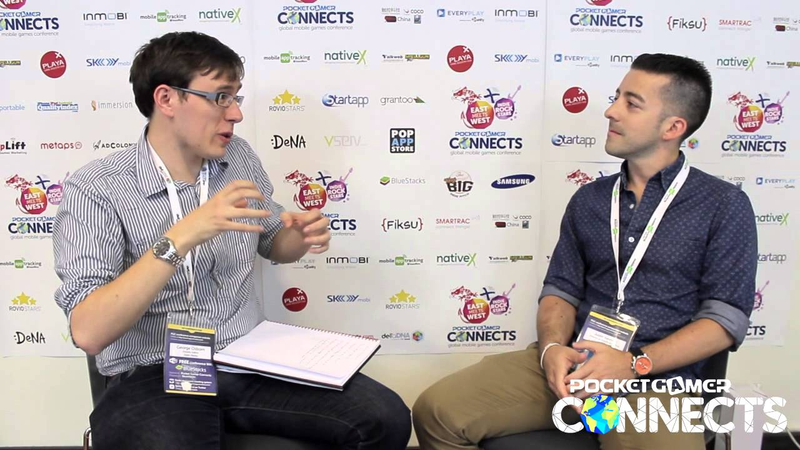
HasOffers' Justin Vanning on measuring the value of your ad campaigns
Effective mobile user acquisition requires a shift from bulk traffic purchasing toward data-driven, targeted advertising strategies.
- Mobile user acquisition must shift from bulk traffic purchasing to data-driven strategies that prioritize high-value users over low-cost volume to improve return on investment and lifetime value.
- Third-party attribution tools are essential for measuring campaign performance across diverse platforms, including major players like Facebook and Google, as well as hundreds of specialized ad networks.
- Advertisers should prioritize third-party tracking providers that do not operate their own ad networks or resell client data to ensure data sovereignty and prevent competitors from accessing proprietary campaign insights.