Finland reports and market data
Documents

Finnish Game Industry Report 2016
The Finnish game industry reached a pivotal stage of maturity in 2016, transitioning from a period of rapid, unchecked expansion toward a more stable and consolidated business environment.
- The Finnish game industry employed 2,750 people in 2016, a steady increase from 2,500 in 2014 and 2,700 in 2015. The industry's turnover reached €2.5 billion in 2016, up from €2.4 billion in 2015 and a significant rise from €87 million in 2008.
- The number of active Finnish game companies grew from 2 in 2002 to 250 in 2016, with a notable acceleration in new studio founding years after 2010.
- Key challenges for Finnish game developers include the high cost and difficulty of user acquisition for Free-to-Play games, the unpredictability of the industry, and the need for professional management as companies grow.

PlayRaven CEO: We don't make clones
PlayRaven operates on the core thesis that the mobile gaming market is saturated with long-standing titles, necessitating a commitment to original, innovative free-to-play experiences rather than clones.
- PlayRaven maintains a lean, 23-person team structure to foster agility and cross-pollination of ideas across multiple small, simultaneous development projects.
- The studio enforces a 'burn the boats' policy that mandates exclusive focus on original free-to-play content, prohibiting the development of clones to force mastery of the business model.
- Innovation is driven by a culture of extreme transparency, utilizing open meetings, public beta programs, and external feedback to accelerate the company's learning cycle.
Space Ape on the power of CRM for F2P success
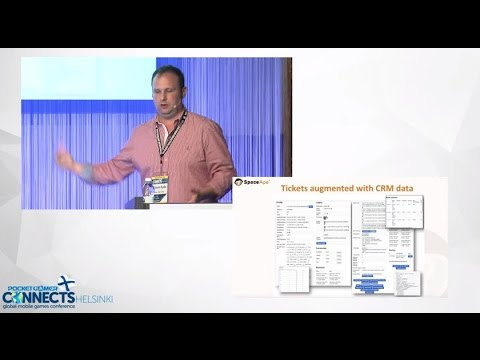
Space Ape Games emphasizes the strategic integration of customer relationship management (CRM) and data analytics to drive revenue and player retention in the free-to-play mobile gaming market.
- Space Ape Games found that 20% of total revenue was directly attributable to players who had experienced positive interactions with customer support.
- The studio prioritizes high-value users by augmenting support tickets with comprehensive player profiles that include spend history, churn propensity, and technical crash logs.
- Direct engagement with influential players via private, invite-only chat groups on platforms like LINE serves as a more effective marketing channel than traditional user acquisition.
Next Games' top tips for making money from incentivised video ads
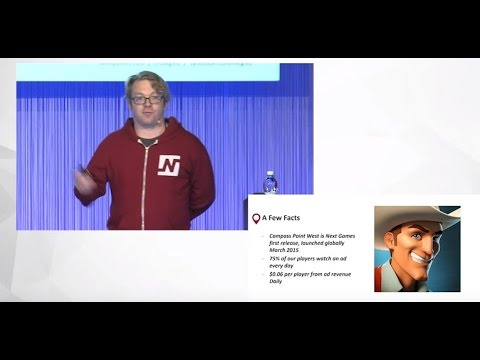
Next Games’ strategy for monetizing the mobile title Compass Point: West centers on the effective integration of incentivized video advertisements.
- Integrating incentivized video ads as a core game feature in 'Compass Point: West' resulted in 75% of daily active users watching at least one ad, generating $0.06 in ARPDAU from ad inventory alone.
- A/B testing revealed that players exposed to incentivized ads showed a 20% increase in repeat purchases and a 15% higher conversion rate compared to non-exposed players.
- Next Games successfully incentivized non-paying users by offering rewards valued at approximately $0.30 in exchange for 15 seconds of engagement.
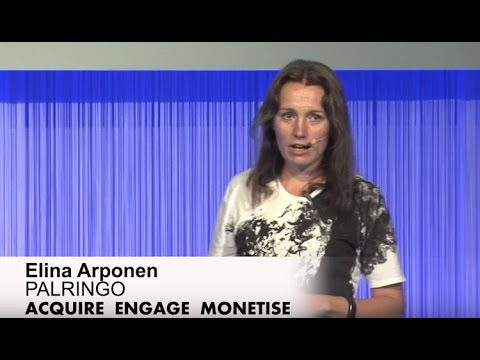
Palringo on why mobile messaging is great for gaming
Integrating mobile games into social messaging platforms represents a significant evolution in digital engagement, shifting the focus from isolated gameplay to social-first experiences.
- Mobile messaging apps have become the primary digital environment for users, surpassing traditional web browsers as the central hub for content discovery and community engagement.
- Integrating games into messaging platforms bypasses the high competition of saturated app stores by leveraging pre-existing social networks for direct user acquisition.
- Embedding chat functionality directly into games increases player retention by shifting the value proposition from isolated mechanics to social connections and peer-to-peer loyalty.

How Farm Away neatly integrates incent video ads
Incentivized video advertising has emerged as a primary monetization strategy for free-to-play mobile games, effectively balancing developer revenue goals with player experience.
- Futureplay’s Farm Away integrates incentivized video ads directly into core gameplay loops, allowing players to exchange ad views for tangible benefits like temporary gold production multipliers.
- This monetization model replaces intrusive banner or interstitial ads with a value-exchange system that prioritizes player experience and retention.
- The game utilizes a dual-monetization strategy that successfully balances traditional in-app purchases with voluntary, short-form video advertising.

China's Mobile Game Industry's Possibilities for Finnish Game Developers
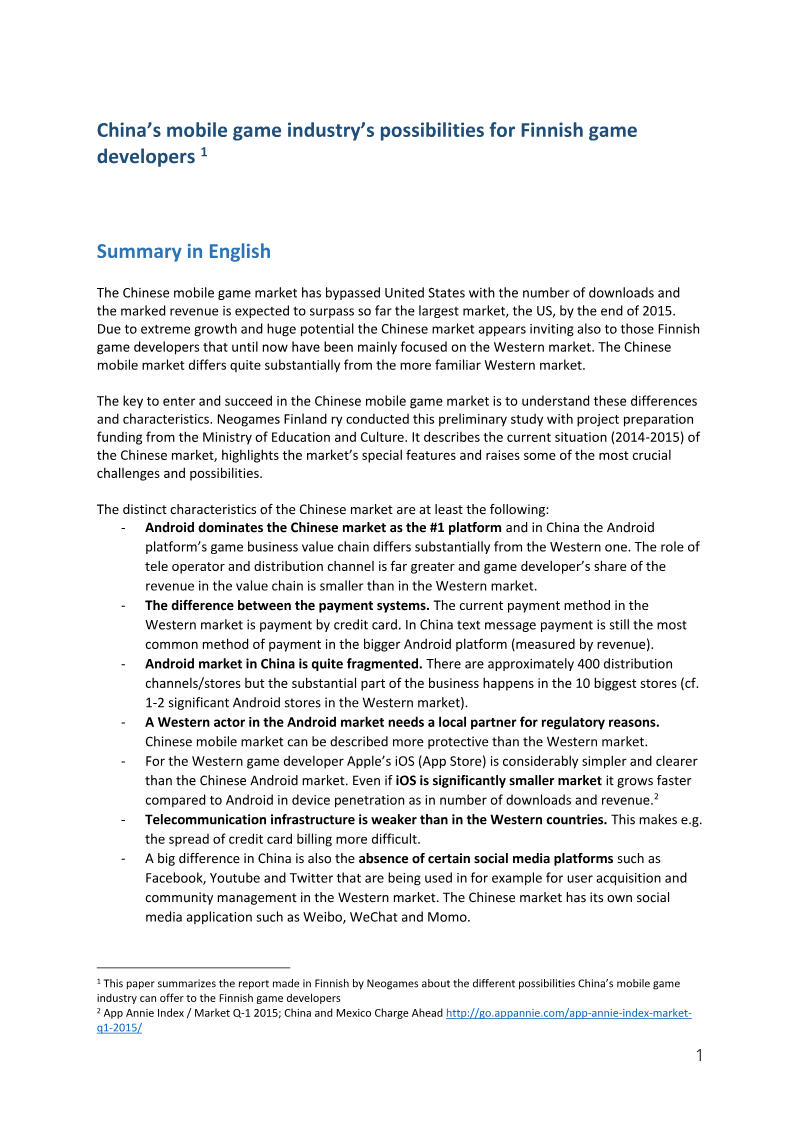
The Chinese mobile game market represents a significant growth opportunity for Finnish developers, having surpassed the United States in total downloads and approaching it in revenue.
- The Chinese mobile game market is a high-priority target that has surpassed the U.S. in total downloads and is approaching parity in total revenue.
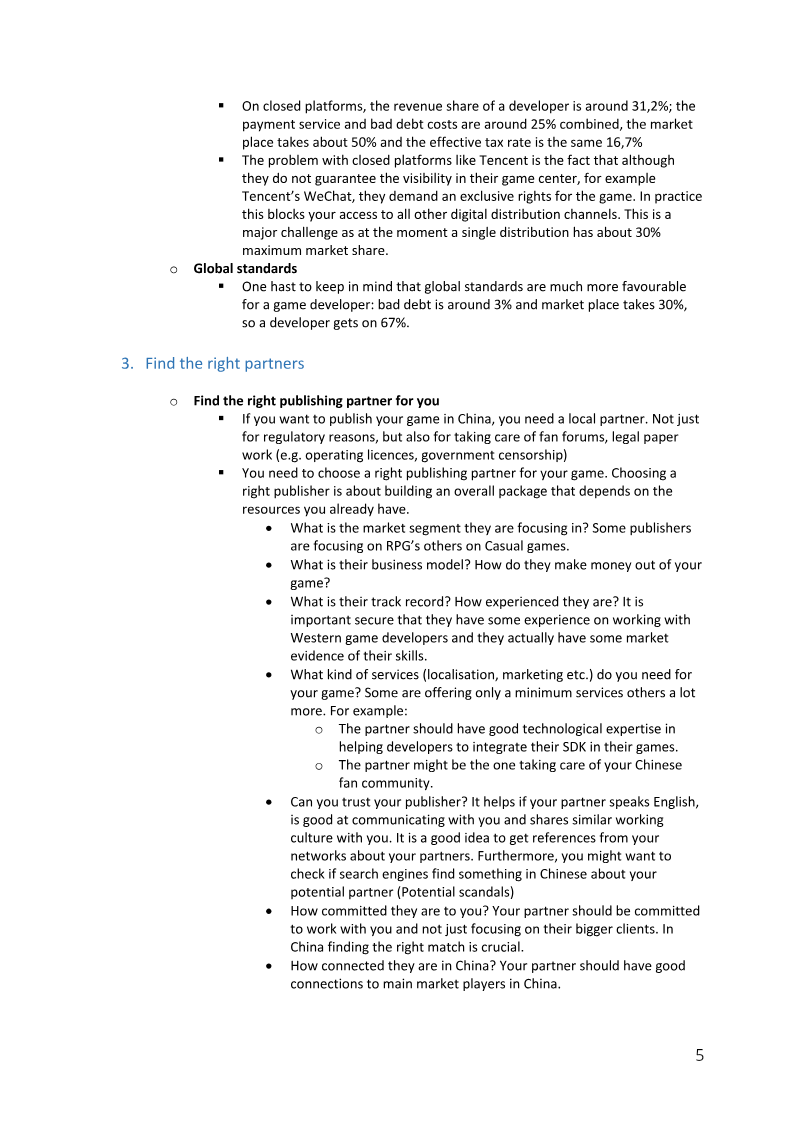
- Market entry requires a local partner to navigate strict government censorship, licensing requirements, and the technical integration of disparate software development kits.
- The Android ecosystem is highly fragmented, necessitating distribution across approximately 400 different channels rather than a centralized store model.

Monetizer: The Walking Dead: No Man's Land
The Walking Dead: No Man's Land, developed by Next Games, utilizes a hybrid monetization model common in mobile strategy and RPG titles.
- The Walking Dead: No Man's Land, developed by Next Games, maintains a consistent position within the top 50 grossing mobile charts in major markets like the United States.
- The game utilizes a hybrid monetization model that pairs traditional time-gating for base-building and survivor training with hard currency (gold) bypass options.
- Revenue is driven by a tiered currency purchasing structure and starter bundles that provide immediate utility, such as legendary equipment and additional squad slots.
Nordic Game Sales 2015: Retail
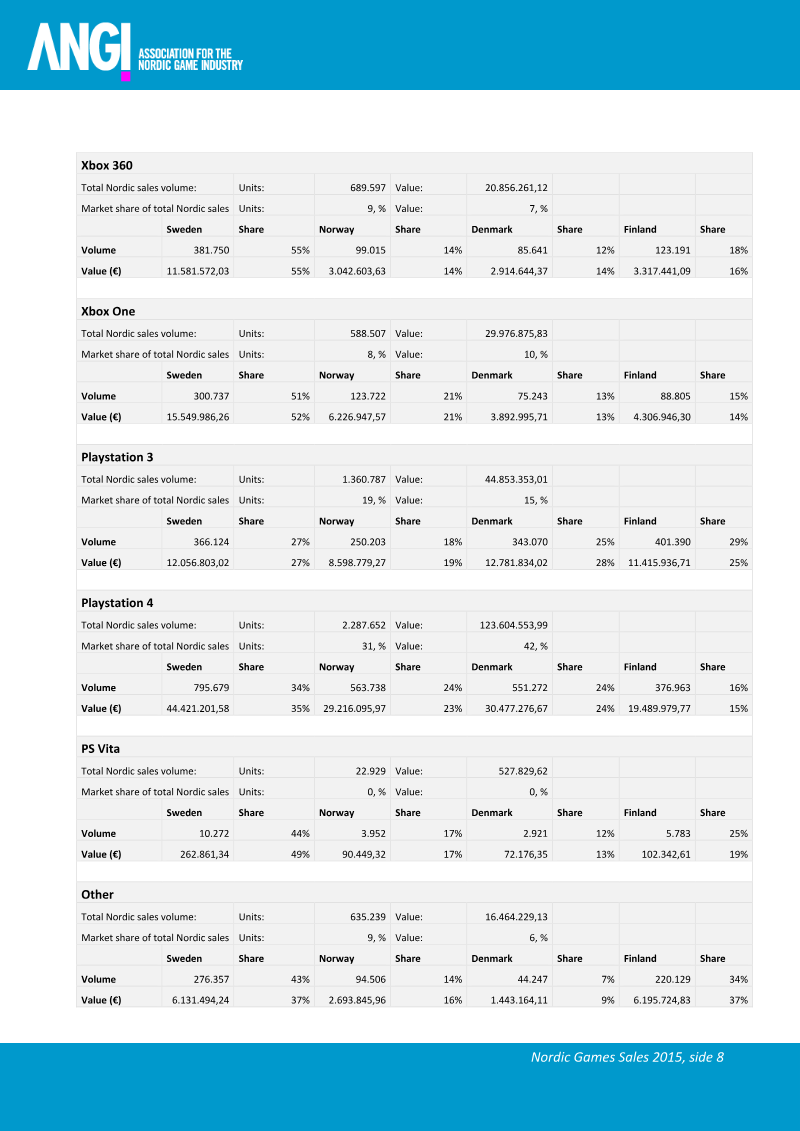
The Nordic gaming market underwent a significant structural transition throughout 2015, characterized by a marginal contraction in physical retail volume and value as consumer behavior shifted toward digital distribution.
- Eighth-generation console adoption drove significant software growth in 2015, with sales increasing by 135% for PlayStation 4 and 85% for Xbox One.
- The Nordic gaming market experienced a structural shift in 2015 characterized by a marginal contraction in physical retail volume and value as consumers transitioned toward digital distribution.
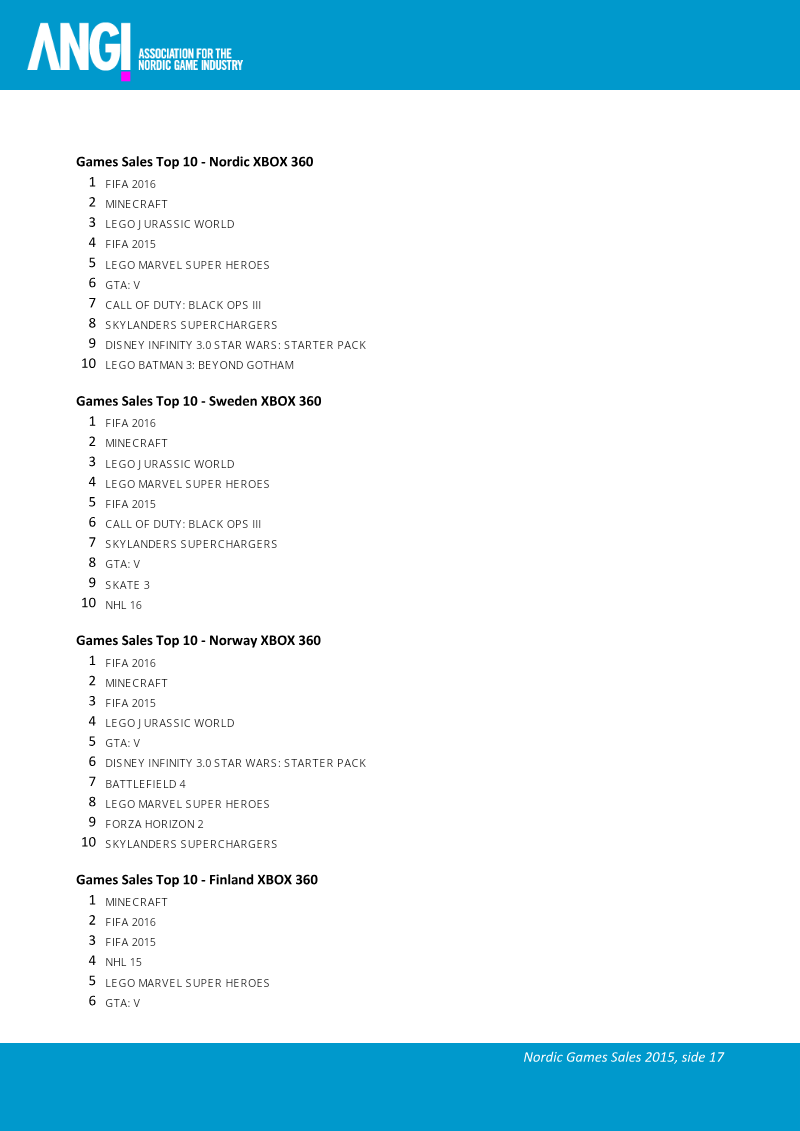
- Retail revenue was dominated by major franchises, specifically FIFA 16, Grand Theft Auto V, and Call of Duty: Black Ops III.

Why a Donald Duck CCG might be a big hit in Scandinavia
The Duckforce Rises represents a strategic expansion of the long-standing partnership between Sanoma Media Finland and Disney, transitioning a legacy print franchise into the mobile gaming sector.
- Sanoma Media Finland and Disney are leveraging a print franchise history dating back to 1952 to launch 'The Duckforce Rises,' a mobile card-battling game.
- The project targets a specific regional market where Donald Duck holds deep cultural significance, particularly in Scandinavia, Germany, and Italy, with a Finnish print readership reaching one million people.
- The game is positioned as a mid-core free-to-play title with RPG elements, intentionally moving away from the casual puzzle genre typically associated with Disney mobile games.
Rovio on balancing luck and skill in Nibblers
The development of the mobile match-3 title Nibblers represents a strategic shift for Rovio, prioritizing the creation of a new intellectual property over leveraging the established Angry Birds brand.
- Rovio developed Nibblers as a strategic move to establish a new intellectual property outside of the Angry Birds franchise, targeting a female demographic aged 25 and older.
- The core design challenge involved integrating characters as active board participants rather than static UI elements, a process that required the creation of over 20 distinct prototypes.
- The development team prioritized a calibrated balance between luck and skill to ensure the gameplay loop remained fair and engaging for a casual audience.
PechaKucha: Mark Val on why games are about people
The pursuit of fame and recognition within the gaming industry is often misaligned with the core purpose of game development.
- The gaming industry is increasingly defined by human experience and personality over technical software specifications, as evidenced by the rise of platforms like Twitch and prominent content creators.
- Weekly engagement in esports has reached over 300 million people, highlighting the massive audience shift toward human-centric content.
- Success in a saturated market is driven by persistent belief in a unique vision and authentic human connection rather than the pursuit of immediate fame or external validation.