1 free read left. Create a free account for unlimited reading + AI research.
Create free account
Next Games' top tips for making money from incentivised video ads
Key insights
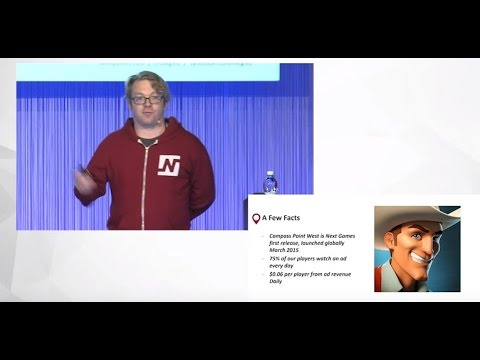
6 takeaways- 01Integrating incentivized video ads as a core game feature in 'Compass Point: West' resulted in 75% of daily active users watching at least one ad, generating $0.06 in ARPDAU from ad inventory alone.
- 02Next Games successfully incentivized non-paying users by offering rewards valued at approximately $0.30 in exchange for 15 seconds of engagement.
- 03Maximizing revenue from ad inventory requires a three-pillar approach: integrating ads into the core loop, balancing inventory to prevent user fatigue, and diversifying ad partners to optimize eCPMs.
- 04A/B testing revealed that players exposed to incentivized ads showed a 20% increase in repeat purchases and a 15% higher conversion rate compared to non-exposed players.
- 05The strategy proves that incentivized ads do not cannibalize premium spending but instead foster a more engaged player base with higher lifetime value.
- 06Effective monetization requires treating ads as a primary game loop element rather than a secondary stream, utilizing a high-production-value interface instead of burying ads in a shop menu.
Ask AI about this video
Transcript
[Music] All right. So, uh, video ads are the, uh, the talk of the day for sure. This is a talk, uh, that I did at GDC, was requested to do here. Again, a little bit of information. I work for Next Games. Uh, we're talking about specifically Compass Point West. Uh, we released this in March of, uh, 2015. Uh, a couple of stats that have grabbed people's attention. These are our stats from August. uh 75% of our players watch an ad every day and six cents per player from ad revenue every day. So these apparently are some pretty good bench benchmarks we've heard. So people have wanted to know how we did it. So uh first off we did a lot of innovation but we also made sure to learn from the current state of the market. So we
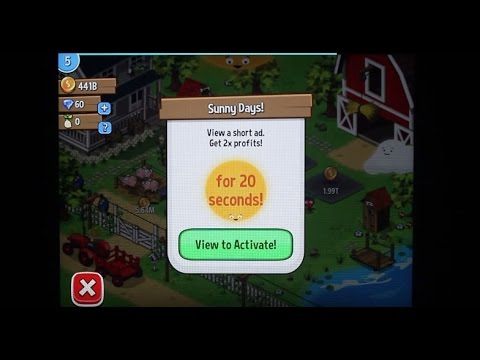
learned uh to integrate with core loops. We're ensure not to overload the inventory and to work with multiple part partners. I definitely want to encourage everybody who's looking at video ads to do all three of these things. Uh just a little bit of details on integrating with core loops. That means don't don't don't just put it in your shop for some extra soft currency and call it a day. I have seen this over and over and over and over again. And I've never heard anybody saying we're making a lot of money off of this. Uh make sure you're giving the player a purchase worthy item. That goes into soft currency for sure. But also make sure you're not just giving them something. I've heard advice, oh, something exclusive that you can only get with ads. Great. Make sure it is something that they want. Uh, and also put your ad front and center. Uh, Adventure Capitalist is a really good example of this. Uh, treat it not as something in your shop, but a shop button unto itself. Ad watchers are a completely different section and a completely different segment than people
who pay and people who don't. um they're com so you have to treat them as their own and that means they get a button all of their own. Ad venture capitalist Crossy Road both did this and I'm sure you've heard about their ad revenues. Also don't overload your inventory. This is the thing that your designers need to understand. Your designers need to understand the business of ads and that means you actually want people to click on the ads and look at the games you're advertising. which means you can't just go around and give 10 ads in a row because if someone's watching 10 ads in a row, they're not going to be clicking on them. It doesn't necessarily work out for the ad providers and the ad providers have no reason to give your game more money. Um, they give lower eCPMs for everybody who gives empty clicks. They do that because they should. Um, so it's important that you're giving very very valuable ads sparingly um to players at the exact right time as opposed to just letting them watch as many as they want because you get a scent from it. Otherwise,
that's all you get. Um, the other thing to point out, and we learned this from uh Koo who did this really, really well, work with multiple ad partners. This also works out in everybody's benefit uh for the same reasons. Uh you're giving less empty ads if there's a more variety of ads. If you're only using one partner, they're going to start seeing repeat ads, even if you're only showing two or three depending on the inventory going on in the day, which doesn't necessarily work out for the ad provider. So, you want to make sure that you use as many of them as you can. Uh so that you can also perhaps some uh partner is working and buying a whole lot of ads in France, you want to be working with that one and as opposed to one that just having the one that might have missed that promotion. So, it's a lot more work, but it is worth it. And that is how one of the ways we got here is making sure we optimized and work with as many ad partners as we can. So things that we did differently uh we implemented in a non-proven genre. Now this is a little less relevant as now everybody is doing it but when we first
started it was a bit of a risk. Uh we treated ads as an awesome feature as opposed to a sideline feature and we made them an important piece of our economy. So, everyone at uh Next Games was actually really really worried when we put ads in Compass Point West for the simple reason we are a builder battler. First, no one had done really ads at that point in a builder battler. Clash didn't do ads. So, of course, we still have this cargo cult design mentality a lot in the industry. If somebody is really good at something and they're not doing something you want to try, you get really, really, really nervous a lot. uh that well why wasn't Clash doing it if it was going to make money. Um but we looked at the actual business. We knew that Clash ads were probably a lot more expensive because of all the money that they were making than say a Candy Crush ad. And in our game showing Clash ads would be a whole lot more lucrative if we did it right. So by looking at the business and not just looking at the
previous successes of other companies then we saw that there was actually an opportunity to go into the builder battler genre and show ads properly. Um, the other thing we did is we made this a dedicated ad experience. This is just a quick little uh rundown of how it goes. Uh, we gather soft currency depending on how much of your map you've expanded. We already had that feature in the game. And then we added our traveling show feature uh which uh you know we now not a lot of players look listen to sound and everything like that, but we still made sure that there was dedicated sounds and everything for this. We put as much production value as we could into the traveling show as we would a brand new feature. It's very tempting, very, very, very tempting to go and just add it as another piece of an interface that you already have. We went differently and we made a complete interface specifically for this and at the end we gave them our cards decks which are our primary premium purchase.
These are the things that we sell people and we and these are the things that are an in important part of the game. So this actually allowed us to give them a very small sort of portion of the premium experience. They're giving you 15 cents 15 seconds of their time, but they're also giving you money. Treat them like payers. And that's what we did. We gave them something worth paying for, albeit a smaller version, but still just as emotionally rewarding. And so another thing that we did is make sure that you actually overvaluate for the money that uh the money that you're getting. We're making six cents, but if you actually break it down in our game, each of those ad decks packs is worth 30 cents. And that's because, you know, and we the players that are watching them are not usually giving us very much money at all. So that's money we wouldn't get. That's 30 cents that didn't exist. So for us to actually get that six cents, it's way worth it. And it's important, very important that you overvalue for price. Uh because this is
a way to get monetization out of non-paying users and giving them an opportunity to take part in the premium economy. So you want to give them something substantial. And so this essentially ended up normally uh in freeto play, you will give them often a teaser. You'll let them know what the premium experience is like. We don't necessarily do that in Compass Point West. We use the ads to do that and we put them front and center. So by doing that then they go okay this is what it's like to spend a little bit of money like 30 cents worth of money and we use the ads to replace that. Um and the other thing that you want to do is that if you have anything in your game that allows you to speed through uh our uh ad packs have lots and lots and lots of speedups because that allows more engagement. If people aren't going to spend on that, then you want them to actually give a little bit of money to feel what that feels like, but also to keep them playing a little bit more. Um, so it was touched on in the ad colony deck, how you can use this to actually really
really boost re-engagement while still getting some monetization out of it. So now, obviously, we did not come to this um at Next Games by just guessing and throwing it into the wind. uh because everybody was so nervous that it wasn't going to work then we had to do a lot of AB testing just to see how things were going which led to some interesting results. Uh so we had one where we were showing one ad one where we were showing five ads and one where we were showing three ads which was the control group of what we had before. Um so what we found is that actually the less ads we showed the more AP conversion we did have. So if you're worried about cannibalization by using really really valuable uh valuable uh ad placement, it is true there will be some cannibalization. But one thing to keep in mind is that there are other things involved in an APS with the platforms that actually if we looked at the overall net revenue generated uh the control group actually won out. So we're So that made us think, okay, if
there is some cannibalization, what will happen if we don't show any ads at all? If people didn't know that you could get things from ads in the game and so what we found is that the one with ads had 20% more repeat purchases, 15% higher conversion rate, and 50% higher higher art thou uh on APS, which means that the ads were actually increasing the value proposition of the game. If we were looking specifically at the people who spent, they were also some of our heaviest ad watchers as well, but they were spending and they were repeating spending as well. So, what ads do is that they allow players to know, hey, this game is actually worth more money than uh one that doesn't have ads in it because there's an opportunity for me to take part in some generosity and contribute and pay only when I really feel like, okay, now is the time to get something really, really heavy. So, but this is the thing is that that 50% higher art that is the one that is
really important to note. Uh, every game I think right now should have ads in it of some point after looking at this for the specific reason it increases the value proposition of your game itself. So, if you got anything to take away from this, if you want to take a pictures of any slides, this is the one to do it. uh lower amounts of valuable rewards on voluntary ads used consistently by a large majority of players in the early purchase price range was the key to our ad revenue success. So, uh actually I was told not to speed through it and I did. So, I've got plenty of time for questions. Uh if anybody has any questions about the design process and how we made uh the decisions that we did or how things are going now. Yes. Goes first. Hi. Hey. Hey Mitch. Um did you guys only AB test the number of ads
or also the contents of the rewards that you were giving for the ads? Um yeah, we only tested uh the number uh of the ads just to keep it uh at a at the value. Uh because because it's randomized, uh we we did make the assumption that uh the perception value would be pretty much invisible um unless we made it really really really drastic. Um, so it's something we, it is one we talked about doing, but we've determined that because it was so gacha heavy and we had such a large variety in the decks uh that uh it would be very difficult for the players to perceive and make a decision that the AB test could measure. Right. Just a quick followup. And how did you come to the giving away 30 cent value? Was that just kind of a, you know, the lowest entry point that you think would feel valuable or did you Um, we sort of played with what felt right in the decks. Um, and and so like we, you know, I measured that after uh about about where it would be. Um, we didn't um but and we were trying to get get it uh to to the right point. Um, but we
knew what the rates were going to be coming in were going to be. And so it was sort of like okay and I was sort of looking at the value of other games and I'd seen most of them had been around anywhere from uh from 10 cents uh to a dollar but the ones with a dollar wasn't doing so great. The ones with the 10 cents weren't doing well uh either. So wanted tried to get something uh in the middle. Uh it was more of a gut thing uh at that point but it's that the decks felt right in the game and then but we did make a point to know I know that 30 30 cent number because we wanted to overvaluate and that was a goal of ours. Uh, and so it's just a matter of how much. Hello. Oh, sorry. Hey, I have the mic now. Okay. Um, at what part of the development cycle did you do this AB testing and and who were the users that you were testing with? Um, we did this in soft launch. This was one of our various earliest soft launch updates. In fact, this we had an entire update in soft launch dedicated specifically to
getting this right. Um so that that that's when we did it we did it with and but because it was soft launch we were paying specifically for the users. Uh so it was very expensive for us to try and segment uh and then get uh and then get a little more uh more nuanced sort of details. Um so we did run uh actually the test uh after soft launch uh with the no ads uh after we had seen like the whole full development build of the game so we could get a good value perception uh sort of out of it. about the first ones that we did with uh those were done in soft launch immediately after the launch of the uh launch of the uh the feature. Yeah. Oh. Oh, okay. Hi. Question about the and the ads. So, do you see any difference in the ad usage between the freshly acquired users and some older users? Um yeah, a little bit is it's a it's a slow linear curve. Uh like we
don't have any tutorials or anything showing. So you can actually find the ads before you really know what the decks do. Um so we find that the because of that the the earlier users um don't necessarily get into it. But once the but once it's after day one uh then it starts uh going up. The players we did create you know this to be an appointment mechanic that you come back. you want to be excited that there's ads coming back. Um, so the longer we we have found yes that the longer players play and the longer the many days they've been retained, the more ads that they watch. Hi. Um, quick question. Uh, are the figures gross or net to you? Uh, it is um, it's uh, net for Yeah, net for uh, six cents uh, per per user. Yeah. Cool.
Hey buddy. Hey, there we go. I think you managed to get a question. Can you hear me? Yeah. Quick question based on you were saying you you fire off um the amount of ads across all users. Is that correct? Uh yeah, it's the same for everyone. Yeah. Is there any thoughts on optimizing based on segments or player behavior or non-spenders versus spenders or um yeah there is uh it's a little trickier to measure in ads because uh we we we're still making sure we're optimizing the eCPM um so if we do something like say okay you've been you're a spender and you've played for 30 days and you're one of our big ad watchers and there's a whole bunch of them or you're not a spender if we like for example like that that could skew uh a lot of the things while we're figuring out the eCPM uh sort of stuff. So, it's something we want to do uh obviously, but it's in the pipeline uh a little bit further further down the road. It is something we've talked about uh because we definitely want uh to, you know, if we can safely do it without lowering the eCPMs, we would love to show if you're
not a spender, but you're really dedicated to the game, giving those players more ads. Um but because they are so valuable too, we don't want to give away some competitive advantage uh to non-spenders uh who might be getting more decks uh and things like that. So, we would have to create different decks in those situ situations and stuff like that. All right, I'm way over time now. So, anybody wants to talk with me, I'll I have like a little bit 10 minutes before I have to go back to the office and fix some other AB tests. [Music] [Applause] [Music]
Summary
Next Games’ strategy for monetizing the mobile title Compass Point: West centers on the effective integration of incentivized video advertisements. By treating ads as a core game feature rather than a secondary revenue stream, the company achieved significant engagement, with 75% of the daily active user base watching at least one incentivized ad. This approach generated $0.06 in average revenue per daily active user (ARPDAU) from ad inventory alone, demonstrating that well-implemented ads can serve as a viable monetization pillar even in genres like builder-battlers, which historically avoided such models.
The methodology emphasizes three pillars: integrating ads into the core game loop, maintaining a balanced inventory to avoid user fatigue, and diversifying ad partners to maximize eCPMs. Rather than burying ads in a shop menu, the developer created a dedicated, high-production-value interface that offers players meaningful, purchase-worthy rewards. By overvaluing these rewards—providing items worth approximately $0.30 for 15 seconds of engagement—the game successfully incentivized non-paying users to participate in the premium economy.
Extensive A/B testing conducted during the soft launch period revealed that the presence of ads actually enhanced the game’s overall value proposition. Data indicated that players exposed to ads showed a 20% increase in repeat purchases and a 15% higher conversion rate compared to those who were not. Furthermore, the study concluded that ads do not necessarily cannibalize premium spending; instead, they foster a more engaged player base that is more likely to contribute financially. The findings suggest that by offering limited, high-value rewards consistently, developers can successfully monetize non-paying users while simultaneously increasing the lifetime value and retention of the broader player population.












Comments