Finland reports and market data
Documents
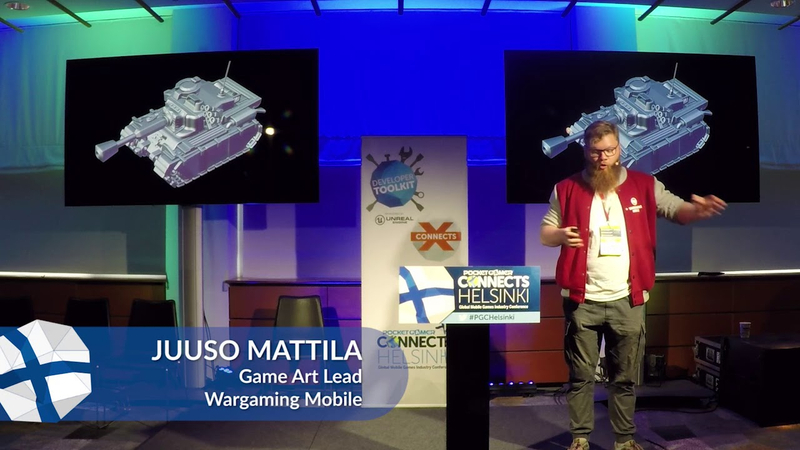
How to build 100 tanks with about three people
The development of a mobile game featuring a high volume of collectible assets requires a specialized production pipeline to maintain quality while operating with a small team.
- A three-person art team can produce 150 unique tank assets by utilizing a modular kit-bashing workflow instead of hand-crafting each unit from scratch.
- Production time per tank is reduced to approximately one day by assembling units from a library of interchangeable components like hulls, turrets, and armor plates.
- The team defines 'tank families' through shared visual guidelines, allowing them to create new units by reconfiguring existing parts rather than generating individual concept art for every asset.
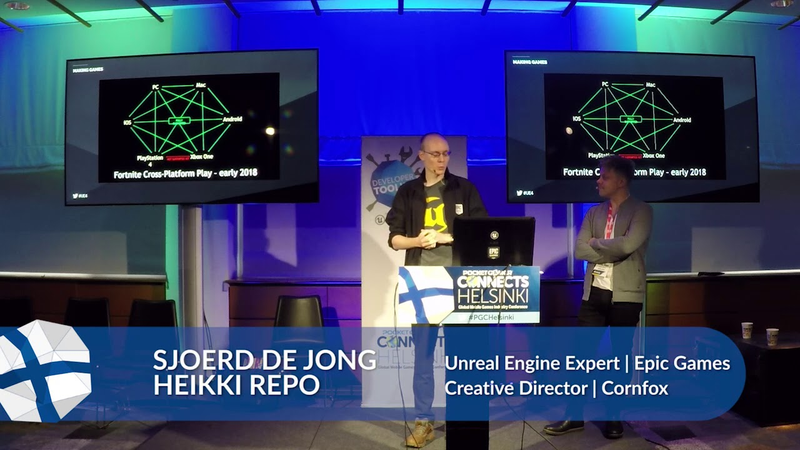
Unreal Engine and the future of mobile games
The future of mobile gaming is defined by the transition toward high-fidelity, cross-platform experiences that provide players with seamless connectivity across consoles, personal computers, and mobile devices.
- Mobile gaming is shifting toward high-fidelity, cross-platform experiences that offer seamless connectivity between mobile devices, PCs, and consoles.
- Unreal Engine enables developers to deploy console-quality titles on mobile hardware by overcoming previous technical limitations and democratizing high-end development.
- Optimization for mobile hardware requires addressing strict memory and draw-call constraints through automated level-of-detail generation, material instancing, and platform-specific texture compression.
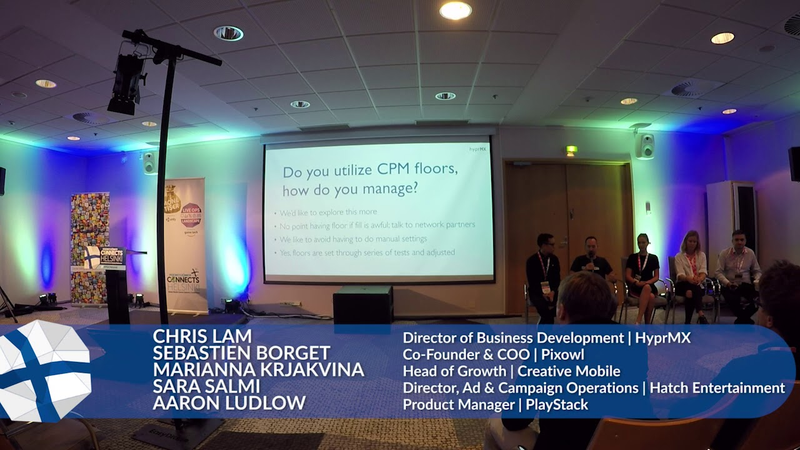
The real story of mobile game ad monetisation
Mobile game monetization requires a shift away from aggressive, high-volume ad integration toward a strategy centered on technical stability and user experience.
- Developers should prioritize technical stability and user experience over aggressive ad volume to avoid the diminishing returns and maintenance burdens associated with overloading games with excessive software development kits.
- Studios should utilize specialized third-party mediation platforms to manage complex tasks like waterfall optimization and CPM performance, allowing internal teams to focus on core game design.
- Ad placement must be treated as a fundamental design element, with developers using soft launches to conduct data-driven experimentation on ad density and user response before a full release.
EA Finland on live services game design with SimCity BuildIt
The transition from initial game development to live service operations requires a fundamental shift in organizational structure and design philosophy.
- Successful live service management requires transitioning from a product-based mindset to treating the game as an evolving entity that relies on continuous monitoring and iterative design.
- Development teams should be divided into three specialized units: a reactive team for troubleshooting, a live operations team for weekly content and A/B testing, and a development team for long-term roadmap execution.
- Studios must invest in robust live tools during the initial development phase to effectively track player behavior and optimize key performance indicators post-launch.
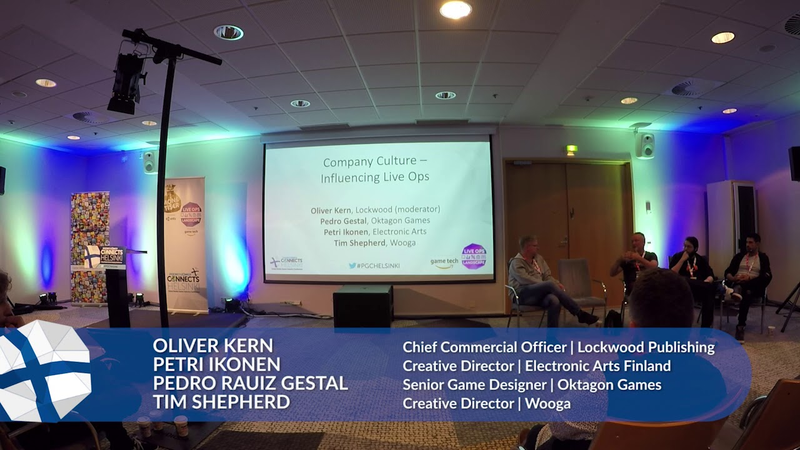
Company culture - Influencing live operations
Live operations function as an adaptive, player-centric framework that relies on continuous data feedback to refine the user experience.
- Long-term success in live services requires a cultural shift from the perfectionist pace of initial development to a model prioritizing rapid delivery, proactive communication, and collective ownership.
- Studios should transition from genre-based silos to lifecycle-based models, rotating staff between development and live operations to leverage diverse expertise and eliminate redundant workflows.
- Operational teams should be divided into distinct units that separate new feature development from ongoing event management and content updates.
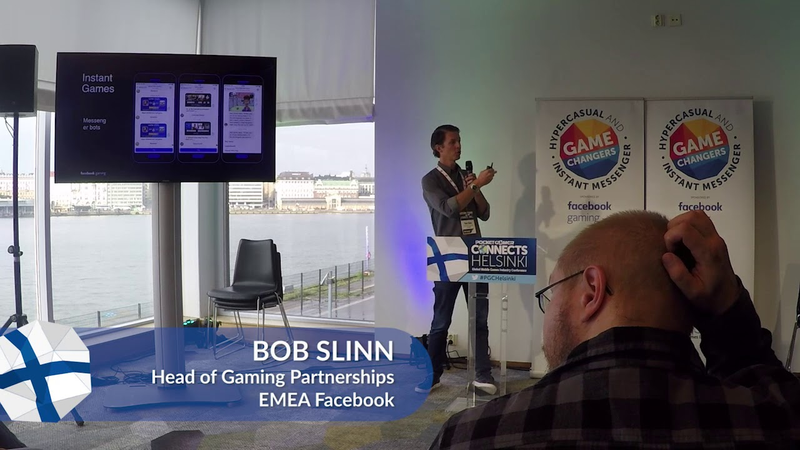
Facebook on Instant Games
Facebook’s Instant Games platform serves as a mobile-first, HTML5-based gaming ecosystem integrated directly into the Messenger and Facebook applications.
- Facebook’s Instant Games platform leverages a global user base of over 2 billion monthly active users to facilitate seamless game discovery and social play within the Messenger and Facebook applications.
- The platform utilizes an HTML5-based architecture that allows developers to build games once for deployment across both web and mobile, currently supporting a library of over 4,000 titles.
- Monetization for developers is supported through a combination of in-app purchases and the Audience Network, which provides interstitial and rewarded video advertising.
The Cell Structure: How Supercell Turned the Traditional Org-Chart Upside Down
Supercell operates on a decentralized organizational philosophy that prioritizes team autonomy over traditional top-down management.
- Supercell organizes its workforce into small, independent units called 'cells' to maintain startup-level agility and eliminate the bureaucratic friction typical of large enterprises.
- Individual cells hold full authority to own their creative vision and are responsible for the decision to terminate projects that fail to meet internal quality metrics.
- Leadership roles are redefined to focus exclusively on talent acquisition, team composition, and removing operational obstacles rather than providing direct project oversight.
Design in Depth at Supercell: Why Great Ideas Aren't Enough
Game development functions as an iterative navigation of complex systems where initial concepts serve only as starting points rather than blueprints for success.
- Game development success relies on iterative navigation of complex systems rather than rigid adherence to initial conceptual blueprints.
- Economic stability is best achieved by anchoring in-game goods to production time, creating scalable frameworks that allow for adjustments as player behavior evolves.
- To sustain engagement in competitive titles, developers should decouple personal progression from character-specific performance to encourage experimentation with new content.
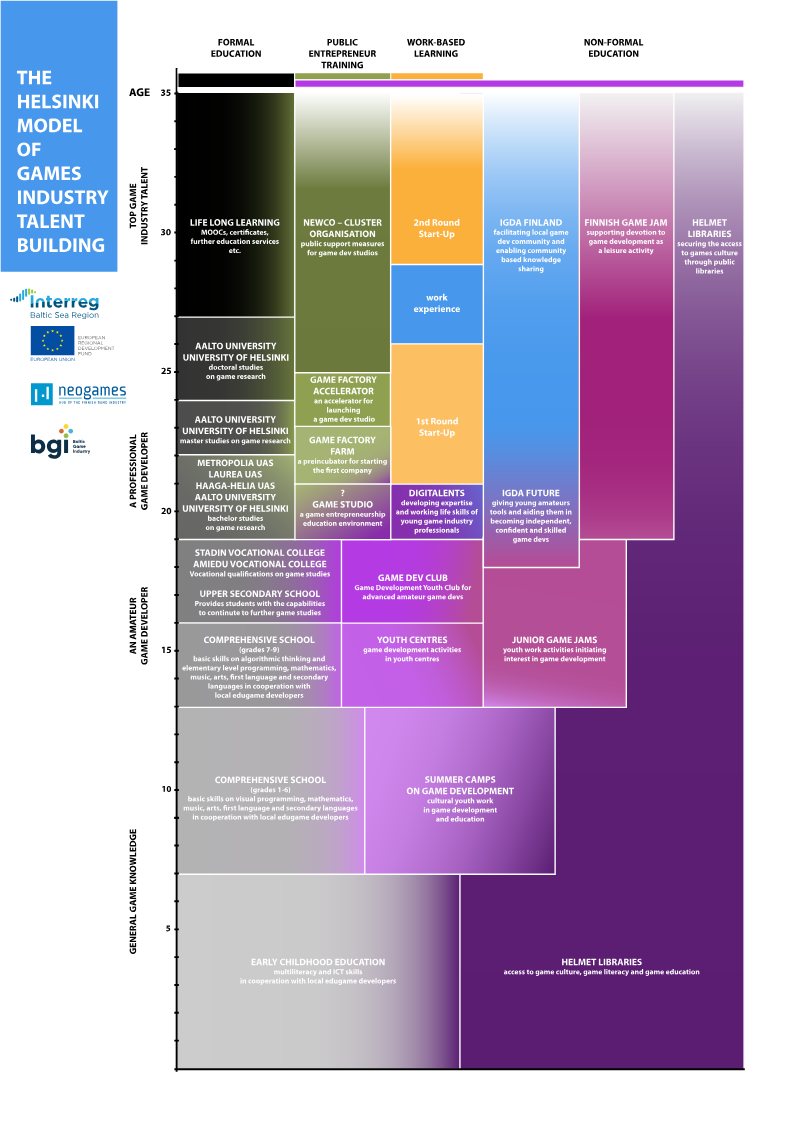
The Helsinki Model of Games Industry Talent Building
The Helsinki Model of Games Industry Talent Building establishes a comprehensive, lifelong educational framework designed to cultivate professional expertise within the Finnish gaming sector.
- The Helsinki Model creates a lifelong educational pipeline for game development that spans from early childhood literacy programs to doctoral research.
- The ecosystem relies on formal integration between academic institutions like Aalto University and the University of Helsinki and industry-focused infrastructure such as the Game Factory accelerator.
- Public-private collaboration between local government, educational bodies, and industry stakeholders is the foundational mechanism for sustaining the region's game development culture.
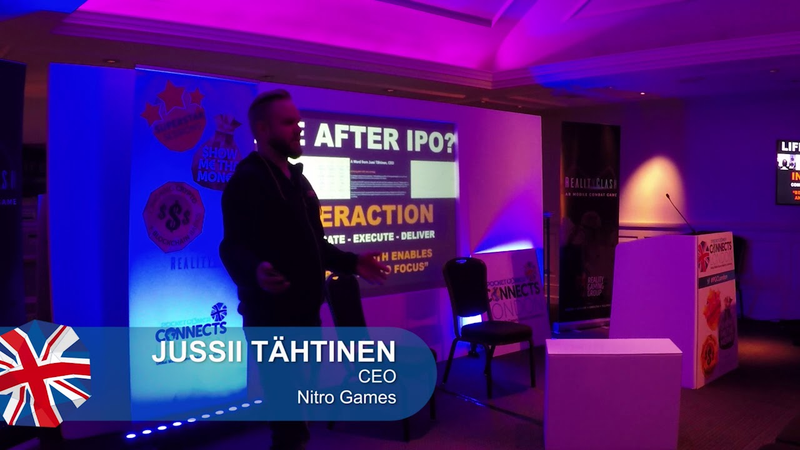
Life as a public indie developer
Nitro Games, a Finland-based mobile gaming studio with a decade of experience and a team of 40, views an initial public offering (IPO) not as an exit strategy, but as a strategic platform for growth.
- Nitro Games, a 40-person studio based in Finland, utilized an IPO on the Stockholm First North market as a growth platform rather than an exit strategy.
- Public listing streamlines business negotiations by providing partners with immediate access to financial and legal documentation, effectively bypassing lengthy due diligence processes.
- The transition to a public entity requires a rigorous operational loop of quarterly reporting and regulatory disclosures, necessitating a balance between administrative transparency and game development.
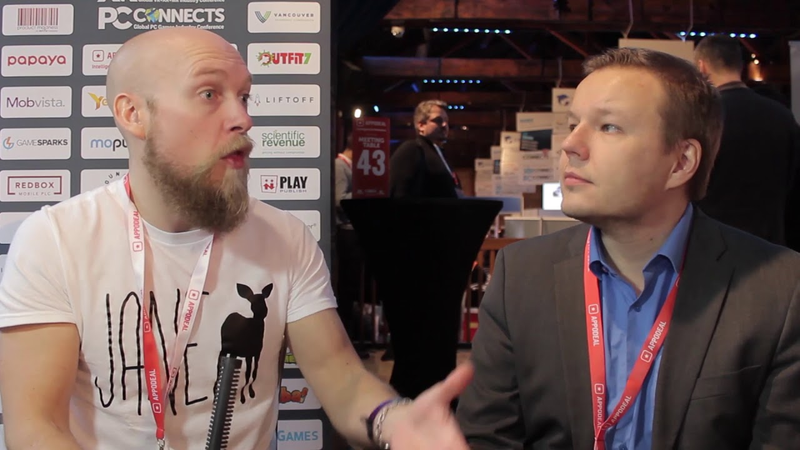
UpCloud on competing in the games industry cloud computing space
UpCloud positions itself as a specialized alternative to major global cloud providers by focusing on high-performance infrastructure and reliability tailored for small-to-medium enterprises.
- UpCloud competes with hyperscale cloud providers by utilizing its proprietary MaxIOPS storage technology, which uses commodity hardware to achieve performance benchmarks exceeding those of major industry leaders.
- The company targets small-to-medium enterprises (SMEs) and technical decision-makers by offering high-performance, cost-effective infrastructure specifically optimized for gaming, SaaS, and media applications.
- Customer satisfaction is a primary business metric, with the company currently maintaining a support satisfaction rate exceeding 90 percent.
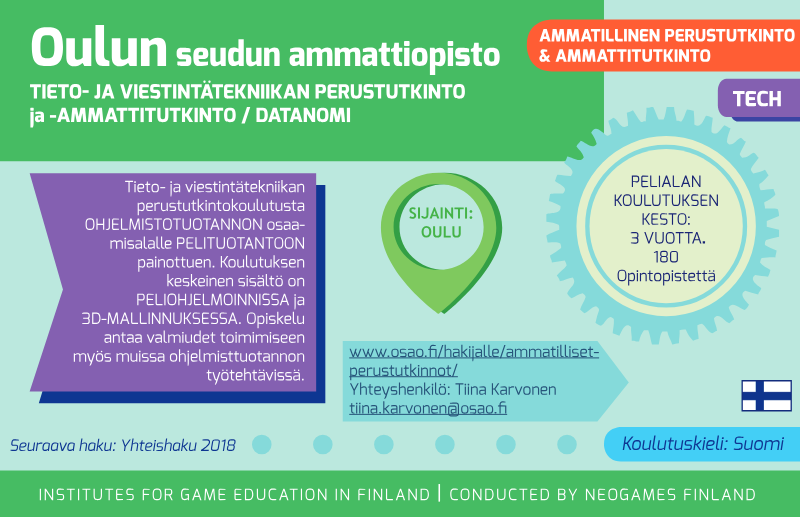
Koulutusta Suomessa
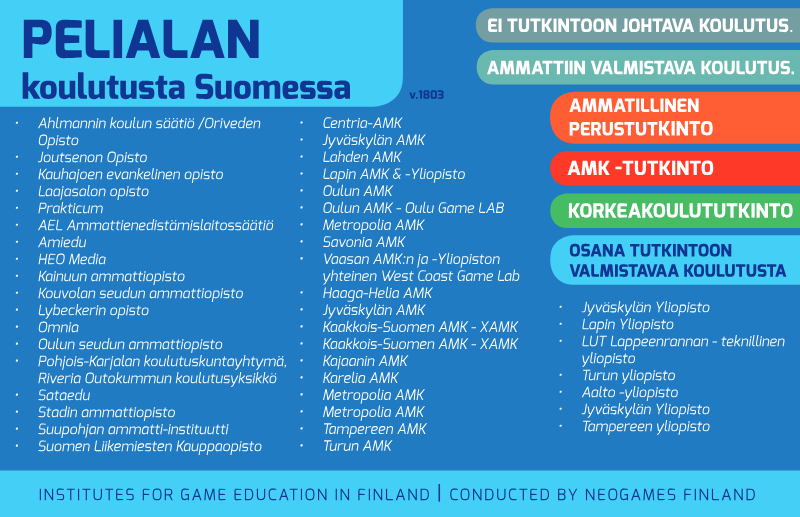
Finland maintains a robust and multifaceted educational ecosystem designed to supply the domestic game industry with highly skilled talent.
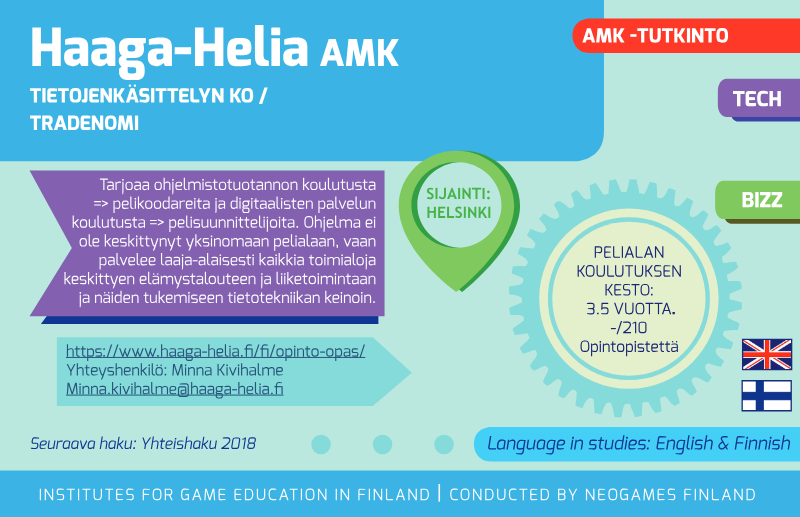
- Finland offers a wide range of game industry education, from vocational training to university degrees, including programs focused on game programming, design, art, and business.
- Vocational education (AMMATILLINEN PERUSTUTKINTO) includes programs like Datonomi, Media-alan perustutkinto (Animation and Game Industry), and Peliohjelmoija, with durations typically ranging from 2 to 3 years.
- Universities of Applied Sciences (AMK) offer Bachelor's degrees (AMK-TUTKINTO) in fields such as Information Processing (Tietojenkäsittely) and Culture and Arts (Game Design), generally lasting 3.5 to 4 years.