1 free read left. Create a free account for unlimited reading + AI research.
Create free account
EA Finland on live services game design with SimCity BuildIt
Key insights
7 takeaways- 01Successful live service management requires transitioning from a product-based mindset to treating the game as an evolving entity that relies on continuous monitoring and iterative design.
- 02Effective live service operations require a culture of psychological safety and clear communication, positioning game design as a collaborative, team-wide responsibility.
- 03Studios must invest in robust live tools during the initial development phase to effectively track player behavior and optimize key performance indicators post-launch.
- 04Operational processes and team roles should undergo formal evaluation every six months to ensure continued alignment with both team health and player satisfaction.
- 05Development teams should be divided into three specialized units: a reactive team for troubleshooting, a live operations team for weekly content and A/B testing, and a development team for long-term roadmap execution.
- 06Integrating player feedback from customer support, community channels, and surveys is essential for informing ongoing development and meeting audience needs.
- 07Data-driven design, such as identifying underserved player segments, can directly improve performance metrics, as seen when city-building players were successfully introduced to competitive features.
Ask AI about this video
Transcript
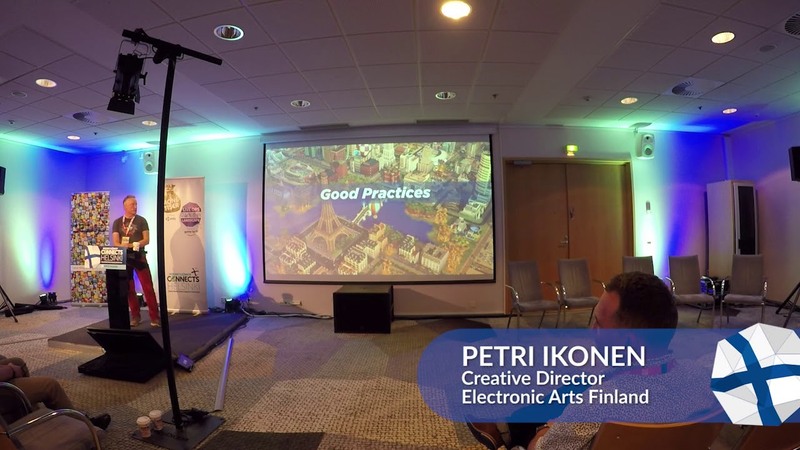
[Music] so welcome to live service game design I've been talking about development and design of SimCity build-it a lot and this is the first time that I'm talking about live service and and game design and actually it was just couple of months ago that I I started to think that what's the difference of role of game design and game designers in development and then compared to live service so that's the topic of the day also we are of course a little bit of kind of making some notes that what is live serve is what does live service mean for us so let's go I will very briefly introduce myself the studio
track 20 the game and then let's talk about live service so I've been working in the games industry 15 years started at SU Mayer created lots of those Java mobile games then 52 PC downloadable games and Facebook gaming and then 2012 I I joined EA and we set up a studio here in in Helsinki and and since that I've been doing game design there and okay we this is kind of nice history to looked at how did those mobile games look like 10 plus years ago if you remember those did you play those ones did you create those fun times right totally different beast you know so EA track 20 established 2012 we are fully
focused on mobile and fifty people growing 16 nationalities very diverse quite experienced team we have a really nice studio pace and here in Helsinki SimCity build-it our first game we used 18 months to develop this game the development phase was really difficult with it lots of design pivots re-designed re-implemented multiple times fortunately we did a lot of user testing and that saved the project we soft launched this about 4 years ago October 14 and then we went global December 14 and it's been a huge success and since that we have been running this live service and also the team is working on something new but I can't unfortunately tell about that yet at
least so let's think about live service what is that so it's so far funny that you are very exhausted you have been working hard months and months and then you launch the game and actually it's so funny that at that point you don't understand your players and also the fact is that the game is at its worst no now as a developer or game designer perhaps you could think that a game is ready I don't have to do anything else or that as a designer I have to move on something else and there are product managers they can handle the game and and and the rest of the team and me genius designer I can move on and do
something new create stuff or our PMS can say that designers go away we handle this game and I'd say that all this is so wrong it doesn't it's not so game design is needed it doesn't have to be called a game designer or game designers who are working on that with we will need game design so that is something that I already discussed during the panel so if we think live service it's about that is it live and running we have to kind of monitor it all the time if it's not running perhaps there is a problem or we are getting from customer service some things it might need needs some changes in for example in the games rules and it's about game design or we are running live campaigns designing those what are
the campaigns what are the values again it's about game design and of course naturally we start to learn our players we have to serve those we are designing new features implementing new features and again it's about game design so what are typical problems I would say that after a long development phase it takes time for a team to learn live service for us if I think our first year of live service for sure we started to felt that oh this is hard work we have to think our roles we have to think our processes and also we figured out that heck why didn't we implement this and that tool so at the same time during the first year we were creating more content more
features but also improving and creating more live tools and now if you are wise you invest in those already during the development because it's so kind of sad if your game is a huge success then you are alive and you realize that hook I didn't think about at all that how to run live events or how to do AP tests or something like that also it's very important to kind of remember always today we are doing all this why we do this for players and the truth is that we start to learn about our players when the game is live we start to get data we start to get customers to put support tickets and of course we are also starting to get information from the community so then when you start to get
that kind of information you start learning about your audience and then you start to understand that actually this product is not actually even serving all those aspects that those players are looking for and it's very invaluable information for the team so some good practices that I've learned that for example at the moment we are trying this kind of division that we have three little teams react which is kind of monitoring the game all the time working if there is any any problems if there are we can override things very quickly or fix things then there are live ops learning kind of planning and designing week by week how we enable more content how we enable campaigns how we AP test stuff and there is lot of activity all the time there and of course then development big
backlog making kind of decisions that ok next week release is about this and that and we have a very long road map we know about a year ahead all the time that what we are going to develop and still we are investing in live tools and with all those I think that things I think that this priori ties Aysen is always so important so you have to do those calls day after day one the kind of the last thing there this is very important for us putting players first and it has saved us many times that when you are arguing as a team are we doing this or this should we perhaps try this and if you have a kind
of very big problems we can call tape let's stop this let's ask simply that what's the best for players and let's pick that and simple as that and it had it has helped us a lot so if I then think kind of that what's the role of game designing is in in all this I'm thinking that now game design it's about what is game design game design is setting the rules of the game so let's say that game design means in in broadly players user experience game design defines that this is the experience that I'm getting as a player in this game and now all our kind of those three teams react live operations or campaigns and the dev team working on new releases they all are shaping games design so you need the team working as
game designers or you can call them whatever you like but you are actually working on game design and then they it's our customer support community you get information you get feedback from players and based on that information those three teams they are defining players user experience which equals to game design so that's my theory now so then in practice it doesn't mean that there is one genius game designer who is saying that ok this these are the values and this is the content we need to provide to players and then the other team is there that yes sir we'll deliver that no I don't believe that model at all so how do we work is that that more or less the whole team acts as game
designers so based now on that information that we are getting from players all members of the team together based on that information are working on on games design simple as that and yes you can have a studio and say that we don't need game designers that's totally fine you can call them any kind of anything but in practice someone or or the team is doing anyhow the game design so I think let's wrap up this live service for sure it's a base to be tamed it needs roles and processes I believe that there is no one good process or one way to set roles every team every product deserves own
processes and roles what will kind of serve your team and especially your players the best be ready to change those we are in in practice we are changing about every six month our development process we are constantly discussing about it and then about after six months we have one day that we focus on our roles processes and we are always eager to change those so that it serves us and helps us to Dell kind of create better user experiences team culture is something that you will have tough times you have tough times developing games you will have always tough times running live services and then it's about team culture if you have a great culture you know how to communicate together you trust each other you have very kind of
clear structure everybody is feeling safe most probably that will save your studio or company when you have very rough and tough times and I believe that what I've seen that that if you want to improve your kpi's the bottom is that it's from the game design if you have a great design which will serve better the players then you can implement it execute and you have a chance to improve your business and it's so funny that it's not funny it's very it's very serious that all this is about serving players and I love that so thank you very much for listening oh we have steel I thought that I don't have any more slides but now I have this it's a plus bonus bonus slide
so actually mmm it's a silver bullet have you ever seen that so actually two ones so I think okay yes game design great game game design will will kind of enable great business and also if you have the culture and team working together you have a chance to make that happen so I believe now I try again reaching my end slide let's say see there might be another bonus Oh now let's shoot some questions thank you [Applause] yeah hi thanks for the talk you mentioned the three initiative teams you have what type of problems does the react team solve and what have employees
that it consists of or like the skillset react team is the kind of the kind of the Kim we have multiple persons who are kind of working in in all of those like a game designer is very typical that is needed you know and it can be the same game designer working on all of those but react team is run by by a producer there is one one kind of live producer focusing on that then we have their very closely customer support and then net ops so those are kind of the key components of that and then whenever they need more help kind of anyone from the team join is it game designer or client programmer or server programmer or so but that's the kind of the essence of that team great talk thank you
where are your players socializing with each other like okay inside the game or on some Facebook or readyto I think all of those we have added during the live service lots of social features so we have mayor's clubs they can chat inside the game so they can form mayors clubs chat their trade there then for sure there are reddit groups there are Facebook groups and so on so multiple channels and we have to follow all of them yeah thanks for the talk can you give us a good example of how you use the data that you've gathered from the players into making some kind of a significant design change to the game like some examples that's I can
give a little bit different we did a big survey and and study on our players and we found out that because we thought when we launched the game that it's about kind of those kind of classical Sim City players who want to create it's more like a single player I want to create the most beautiful efficient City which looks like me or something like that but then we found out with those surveys that heck there are a lot of players who actually like to like to compete and that was then it took some time and we introduced competition of Mayors where you are playing the base game but at the same time you are competing that how efficient mayor you are and it was it has been a very successful feature and then when we check the data we saw that oh now there are big big KPI changes and it was a kind of a typical thing to kind of owe
underserved segments of players and let's do and let's now remember that we have those players too okay thank you very much Patriot thank you all Thank You audience [Applause] [Music]
Summary
The transition from initial game development to live service operations requires a fundamental shift in organizational structure and design philosophy. Rather than viewing a game as a finished product upon launch, developers must treat it as an evolving entity that requires continuous monitoring, data analysis, and iterative design. Successful live service management relies on the integration of player feedback—gathered through customer support, community channels, and surveys—to inform ongoing development, ensuring that the product consistently meets the needs of its audience.
To manage this complexity, development teams should adopt specialized internal structures. For instance, dividing staff into distinct units—such as a reactive team for immediate troubleshooting, a live operations team for weekly content and A/B testing, and a development team for long-term roadmap execution—allows for both stability and innovation. Investing in robust live tools during the initial development phase is critical, as these systems are essential for responding to player behavior and optimizing key performance indicators once the game is live.
Ultimately, game design in a live environment is a collaborative, team-wide responsibility rather than the domain of a single individual. By prioritizing the player experience and fostering a culture of psychological safety and clear communication, studios can navigate the challenges of long-term support. A notable example of this data-driven approach involves identifying underserved player segments; for instance, discovering that a significant portion of a city-building audience desired competitive elements led to the successful implementation of competitive features, which directly improved performance metrics. Continuous process evaluation, conducted roughly every six months, ensures that these operational roles remain aligned with both team health and player satisfaction.