1 free read left. Create a free account for unlimited reading + AI research.
Create free account
How to build 100 tanks with about three people
Key insights
6 takeaways- 01Production time per tank is reduced to approximately one day by assembling units from a library of interchangeable components like hulls, turrets, and armor plates.
- 02The game’s fixed camera perspective allows the team to prioritize high-polygon detail on individual assets while keeping animation systems simple and code-driven.
- 03The team defines 'tank families' through shared visual guidelines, allowing them to create new units by reconfiguring existing parts rather than generating individual concept art for every asset.
- 04A three-person art team can produce 150 unique tank assets by utilizing a modular kit-bashing workflow instead of hand-crafting each unit from scratch.
- 05Internal teams focus on high-level assembly and artistic polish, while outsourcing is reserved for non-creative, labor-intensive tasks like generating low-poly meshes and basic geometry.
- 06A custom Unity toolset automates the export of high- and low-poly models, material ID mapping, and the separation of animated components, significantly reducing repetitive technical work.
Ask AI about this video
Transcript
[Music] Hey good morning I'm um I'm the game art lead for wargaming Helsinki and I'm here today to talk to you about thanks which is an obvious for wargaming I guess but Here I am and this talk is about a kind of a specific pipeline we built to do one specific thing which is to build about 100 tanks with about 3 people and let's see how does this work alright so generally about the project it's wargaming housing this first game currently kind of chugging along nicely meat production and when you play it it looks like a game but it's definitely not done yet so I can't really show all of it but what I can disclose that it does have tanks in it which is a big departure for wargaming for sure but what is a big departure for gaming is
that its art style so it's a stylized game it's more colourful world kind of built from the ground up to work on phones maybe like a where as well of thanks proper is is more or other wargaming games are a lot about like the simulation and realism we're more colourful we're more kind of mobile focused and phrase we say a lot is that it's heavy but cute so when we make our tanks we want them to kind of well their proportions are better for mobile games they cannot they still need to feel heavy if anything they should feel heavier than real tanks some kind of super bulky funky things and the challenge for this project so when we set out to make it so have completed the prototype cut the Korean light we figure out a plan and it came out that we need about which is almost 150 tanks at launch to have enough content to go around and that's a lot of tanks and the tricky part about making them is that
they can't be crappy and so so it's the main kind of progression system of the whole game it's the core collectible element you you have so they need to be really good and for this thing we have one concept artist and two we artists we have other artists too but they need to make the rest of the game and that's a that's a tricky challenge one way to solve it would be to outsource it but we were super reluctant to do it not really because it wouldn't work perhaps but it's just even though we would outsource it it's still a lot of work to kind of manage that all and also like in it's just risky like maybe to find but we want to have full control over these things because that's kind of these are the things we need to sell to people so with those parameters we sat down and was like okay well how how can this be done like if if you were to just have you know have concept art make the 3d model make the rig make the animations with three people that would take like five years minimum probably so we need to figure out something more clever so we sat down and thought about
what is a tank really so good thing about tanks is that they're basically like pretty simple things so each tank has a has a hole in it turret barrel standard things a couple of wheels on it tracks and that's about it everything else is kind of just added prop so it's kind of armor plates and it's lights and it's in basically stuff that's poured onto the hull but the basics of it is quite simple and thanks don't really animate that much if you look at the tank shooting in real life it almost doesn't move it just moves the turret and pop we want to do a little bit more because we're a bit more cartoony but really like the animation part is quite simple like if we were to make 100 kind of fully facial animated cool characters like humanoids we would be in big trouble but luckily luckily that's not the case see so we figure out the basics basic idea for the pipeline so when we thought
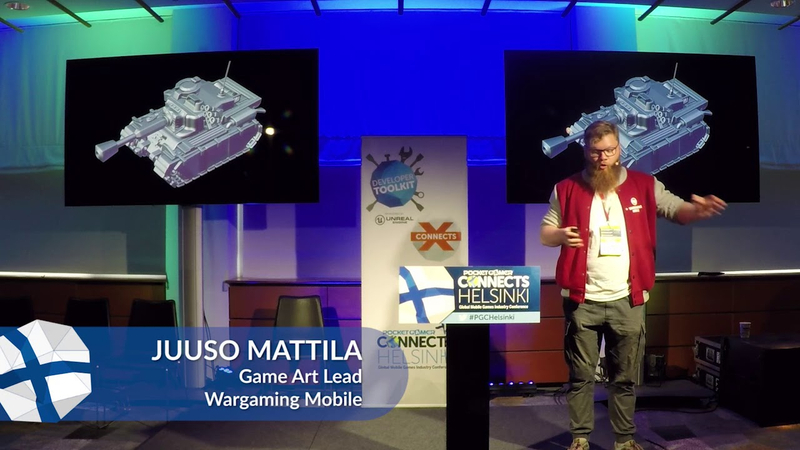
about making a high volume of tanks we thought about approaching it as parts so in a model building and kind of special effect shops there's a concept of kit bashing which basically means that you in order to build something new like maybe a cool spaceship for a sci-fi movie or whatever you use existing model kits so you take maybe like one plane model kit from there you take model kit from a tank you put stuff together you paint it you maybe do something a little bit custom but that's kind of you get a lot a lot of the detail for free and we figured that hey this would might be a pretty good approach for tanks because they have a lot of stuff that just bolted on this will kind of end up being like a high detail cool-looking a thing and it could be doable by a smaller team so one problem with that is that of course when you keep patch things you end up with something that's very like highly detailed especially for a mobile game it's kind of it's pushing the polygon limits a little bit but we have a nice constraint in that we only have one tank on screen at once so it's
allowed to be inefficient so you know if it's pushing like 10k polygons that's fine because there's only one and and it's meant to be the collectable cool thing anyway so how about put the detail in that instead of other things and the idea would be that we build a bunch of Tanks we take the parts out of them and for every kind of kind of custom tank we make we can extract the whole other parts and then do the in-between kind of heat patch tanks and get a lot of Tanks for free and animation we just don't do it so tank animation is so simple that you know you the turret turning and the paragon doing a little bit of recoil and the wheel spinning that can all be done by code just need to make a couple of systems for it and the biggest constraint for all of this is that everything has to be is almost automatic so if there's any part of this process that's like well here the 3d artist needs to clean up the 3d geometry for a day like that's suddenly a hundred days and if there's a couple of those it'll start taking years again so we can't do that
all right so now I go through the process of how we actually make one of our tanks so as I mentioned we only have one concept artist and that's not enough to make like concepts for 150 tanks so he would burn out so we do something a little bit different so instead of making concepts for each individual tank or something like that we instead make general guidelines so we split our tanks into kind of thanked families or kind of the internally called the manufacturers so it's kind of like a tank that looks a certain way has this service like certain shape language and here's a concept art for one of those so the idea here is that like the what the concept artist does is first he makes one cool tank so that's concept art for one seek late game you know when when you get the last tank in the game from this manufacturer it looks something like that and then the other stuff is kind of general like just sketches or like okay well when you make parts for this tank family you need to make parts that look
a little something like this when thanks like this are high level they have parts that look like that and when they're low level they have something else and then there's other stuff like you know logos and general like graphics unlike what sort of paint they should have on the sides but that's it from this one piece of concept art we do like at least 30 tanks and if there's not other example because it's cool this is kind of a late-game tank manufacturer but the idea is that the tanks look like boats yeah that's my favorite yeah next up so one of our 3d artists will start making models so I spoke earlier that we want to have like a really large chunk of parts to use and while you could just make parts so you know we could sit down and say like okay we're making like 100 turrets today or like hey we're making 60 wheels that's pretty tricky one it's like it would like morally kill all the artists probably and also like it's really hard
to do good stuff like that because you would end up like just making things in a vacuum and then when you put them all together it might end up looking super super random so instead we do whole tanks like this and from this one tank we can extract a whole bunch of parts so that's maybe like I know at least 20 different things we can use in the future and this is a very since we don't have like concept art for this specifically we just have some guidelines on what the tank might generally look like it's a very back and forth process between the concept artists and 3d guy so basically you know you do a quick block out you send it to the concept artist go like is this cool is this funky enough alright no and then back and forth and it's maybe like three or four times usually and then we end up with something that looks like this and also the nice benefit of having this be like a so this is custom built so we reserved this for the rarest like canna in the game world for the most premium most rare tanks because they're handmade
so usually they end up looking a little bit better than the other stuff so we're gonna get get a nice premium tank for free from that process and next up so when it's split into parts and that looks a little bit something like this so from that one tank we got this library of things that we can now in the future use on anything we used to do this ourselves take apart thank you know put the parts in the place do all the unwrapping and that sort of stuff but as it turns out that's that takes forever and it's tedious so that's what we use outsourcing for so that this is a nice nice part of the process that's kind of well it's unfair to call it non creative but it's kind of it's a lot of manual work basically and something we can't afford to do ourselves so this bishop to the outsourcing partner get back cool parts and we're super happy to not have to do with ourselves and also from them we get the low-poly kind of final game meshes so the parts you saw before with the high poly vana stuff we use for
making textures and maybe like marketing assets and stuff like that but this is the actual geometry that goes in the game and this is all done externally and like our artists are thankful for it alright so next up and this is kind of the the most custom part of this whole thing so once we have all these parts we've done all the work we not only get to assemble it so for this we have built something that looks like this and you might recognize it as looking like unity it is unity it's our custom kind of unity project that has all our tank parts in it so basically we dump all the stuff we have we have a kind of basic set of tools for editing these things so you know you can do basic operations like add symmetric parts here and there add you know flip a thing make sure the tracks are the right way around just basic tools to help like the everyday assembly process go faster it's kind of like building Legos that's that's a very
like marketing way to put it it's not as far as building Legos but it's it's alright and this is something our artists like this is the main thing they do usually and so from that point on I mean the previous previous shot you solve this this kind of awesome neon color tank you press a button it's one button and you get that so that's our final game rate model it doesn't move in this but it is animated it's got the textures of the cool bits and yeah that's not actually one pattern but it's almost one button so basically what what we do from this for having the assemble thing in the tank builder software thing is that we it makes the so you press one button it basically starts a massive script which makes both the high and low poly versions of the final tank so you can use them for texture baking and the marketing and all that it does all the things we need for the programming animation stuff so it separates the turret it separates the barrel
it makes sure all the wheels clean the right way and it makes basically separate measures out of those and most importantly it transfers all the material information so texturing would take quite a while if we didn't have something to help with it so if you look at let's go back a little bit if you look at that the neon colors are basically like material IDs so it tells the texturing software ok these parts made of metal these parts made of this other metal this parts fabric these are the wheels and that sort of stuff and with that in substance painter we can autumn eyes a lot on what we actually use in texturing and that's kind of that's the basics so that's of course a lot of work to do just to get one tank in the game as you're doing all the parts then you're you know chipping stuff out getting in them back and doing this but now it's the kind of actual good part about it so now I get to make more so these are a couple of like thanks our 3d artists assembled in the tank tools so this would typically take like no more than a day each to make so
maybe some of them a little bit longer some of them we can do like three a week basically through this and the texturing part but it is quite fast and from these things you get things that look like that so pretty distinct I would challenge people to like try to find like where are the Keith's patched parts and stuff like that when you do texturing and add all the finishing touches like you get quite different things texturing wise of course like you get a nice baseline texture pretty much for free but we do a lot of like kind of the final touches by hand so if you look at go back to this a little bit like for this for instance the markings you do and the camouflage pattern those are the things we do by hand and that's you know it takes a little bit of time maybe on average we have like a day the texture will add the finishing touches basically to the tank but that's worth it to have them look different otherwise you would be able to start seeing like okay wait a minute this tank is almost the same as that one but it has those parts but when
you put in the effort in the texturing you like make those differences go away and some general learnings from all this so I think the number one thing is like while making this stuff we learned is that as the project progresses like artists grow very familiar with the style and the way you know things need to be made so in the beginning you when you start out the thing you figure out an art style of course I'll just need a lot of help from content art they need a lot of like guide and some like how should like how should you make these angles typically but that's the project goes on like the need for that goes down quite a bit so like if you think about making a many of them like let's say a hundred tanks for example like you definitely don't need concept art for 100 tanks like you need to kind of enough concept art to get the artist going but from that point on like you can trust them to figure it out on their own and also you need to adapt the projects pipeline and as you do this because in the beginning everything's very rigid but as you go on you can like
start to look at okay let's cut some corners and do this a little different and the pipeline we have for our tanks is of course it's super specific to like one use case so like you don't want these tools unless you're making a hundred tanks in which case let's talk but but I think this general learning she said like can I'll try to try to think about like especially if you're making a high volume of things start to think about what you're making what what's the where can you cut corners where can you cheat a little bit and that's the sort of sort of problems I like to solve a lot thanks and we do have time for questions so yes just a second so hi how did the workflow evolve did you make a lot of mistakes
like did you go wrong paths or did it just naturally organically evolve when you were doing stuff you mean like initially building the pipeline up yeah yeah all right so you come up with this particle system for your particle yeah yeah so like I think initially like the first version of these tools like in in the main features it's pretty much the same as it is now but this is definitely something that you can't just like build a pipeline and forget it like you need to constantly be be thinking about like okay like it looks like when we're doing these textures we're like our are spending one day doing this menial crap and then you need to look at okay well let's optimize that part I can't remember any massive changes in the way we make these things but it's a lot of like we've added things to the pipeline and it's like let's say that thanks shoot in the game so we've added all sorts of systems to automatically put you know anchor points and stuff like that to make the whole process like they take all basically take all the manual labor out of it if
we can more questions is good in your pre-production stage when you're trying to work out you know what this pipeline should look like and what did you do what were your kind of opening stages did you just build three tanks and see what's needed in building those three tanks or yeah how did that come about yeah basically we built like maybe five tanks we had concepts you know did the initial concept art then we built the five tanks by hand with his like hand animation for all of them kind of they had like all these small beats that you know moved a little bit we actually had suspension and that sort of stuff and then we actually okay first we check the game okay like suspension we have kind of like a down angle for our game so you don't even see the suspension so we got that then we saw the well what else is here and then we notice that basically the whole tank is the hull and then stuff
pulled it on and that's how we got the idea for the kid bashing thing and then it kind of went on from there but definitely we established the art style first without like before thinking about any of this we have time I think for at least one more question yeah thank you you talked a lot about the art side but how many developers are what kind of tools support do you have in your team mmm the tools support at the moment is basically me so well I'm the art lead but also I do the technical artists type type stuff so I've made most of those things we have one kind of basically we every now and again we pick a random programmer to help us with the tools on the kind of in the final gameplay side but the rest of it is kind of it's what one technical artist using unity or something similar definitely takes a lot of the overhead away from like having to do a whole bunch of boilerplate stuff first
thank you very much please give a big hand to are you [Music]
Summary
The development of a mobile game featuring a high volume of collectible assets requires a specialized production pipeline to maintain quality while operating with a small team. Faced with the requirement to produce approximately 150 unique tanks for a mobile title, a three-person art team—comprising one concept artist and two 3D artists—implemented a modular kit-bashing workflow. This strategy avoids the unsustainable labor of hand-crafting every asset from scratch, instead leveraging a library of interchangeable parts to generate high-detail models efficiently.
The methodology centers on defining "tank families" through shared visual language and design guidelines rather than individual concept art for every unit. By creating a few premium, hand-crafted tanks, the team extracts a library of modular components—such as hulls, turrets, and armor plates—that are then reassembled into new configurations. Outsourcing is utilized specifically for the manual, non-creative labor of generating low-poly game meshes and basic geometry, allowing the internal team to focus on assembly and final artistic polish.
Technical automation is critical to this workflow. A custom toolset built within Unity enables artists to assemble tanks rapidly, with a single-button script handling the export of high- and low-poly versions, material ID mapping, and the separation of animated components like turrets and wheels. Because the game features a fixed camera perspective, the team can prioritize high-polygon detail on individual tanks while keeping animation systems simple and code-driven. This approach reduces the production time for a new tank to approximately one day, demonstrating that high-volume content creation is achievable through modularity, strategic outsourcing, and the automation of repetitive technical tasks.













Comments