Employment reports and market data
Documents
Nordic Game Education Index: 2015
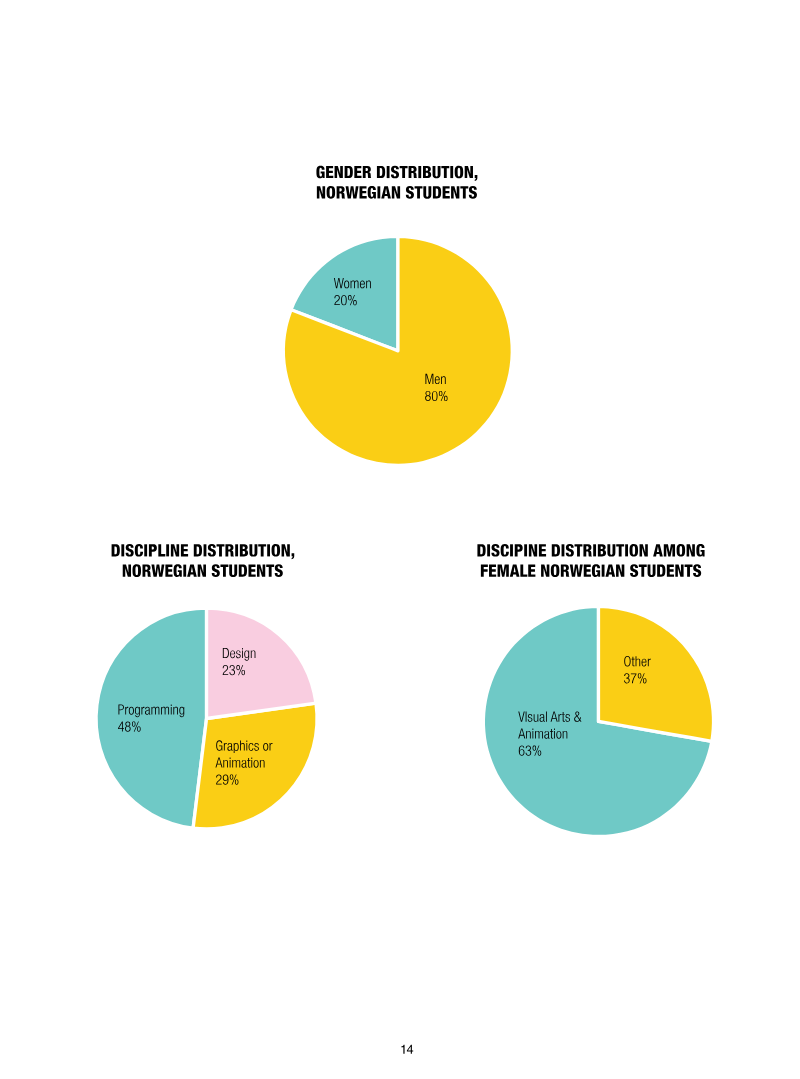
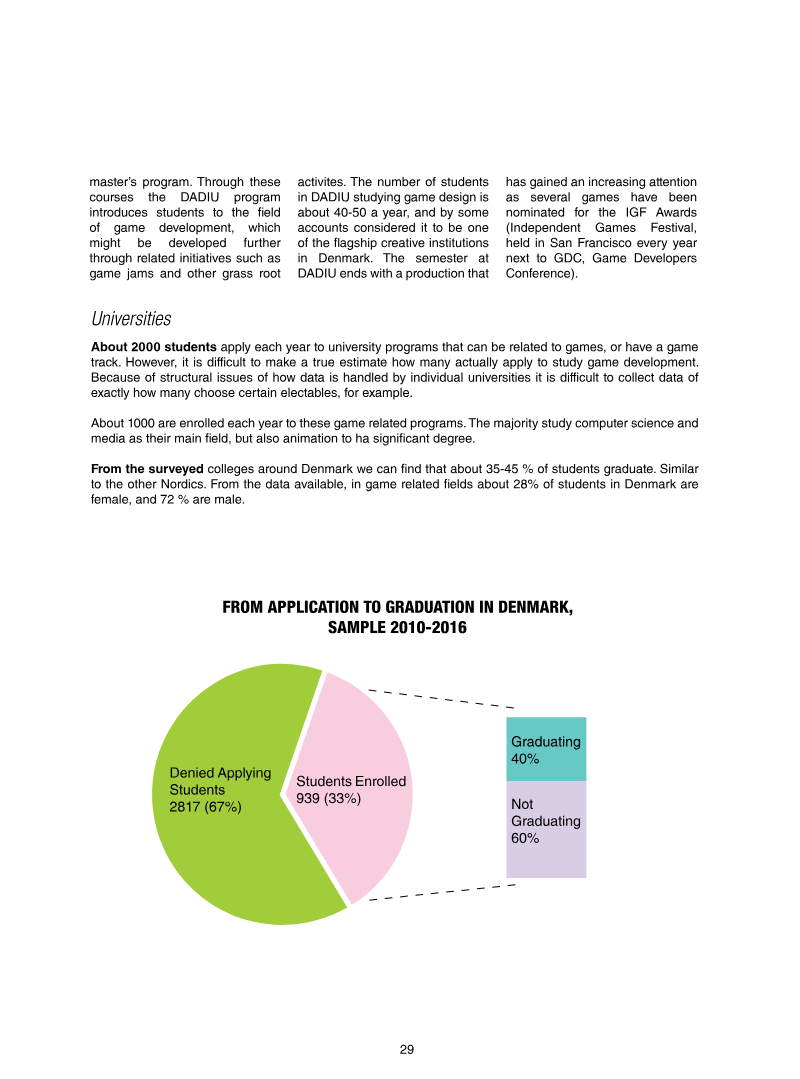
The Nordic game education sector functions as a mature, highly specialized ecosystem, comprising approximately 65 distinct programs that attract over 6,000 annual applicants.
- The Nordic game education sector consists of approximately 65 programs serving over 6,000 annual applicants, focusing on project-based learning to simulate real-world studio environments.
- Swedish higher vocational programs demonstrate high industry integration, with 80 to 87 percent of graduates securing roles within six months of completion.
- Finland leads the region in academic efficiency with a 60 percent graduation rate, significantly outperforming the broader Nordic average of 40 percent.

How to get your dream job in mobile games
Securing a career in the mobile games industry requires a strategic, organized, and professional approach to job hunting.
- Treat the job search as a disciplined, full-time endeavor rather than a passive activity to effectively reverse-engineer a career path toward specific long-term goals.
- Optimize resumes for a recruiter's initial review, which typically lasts fewer than ten seconds, by ensuring they are concise, scannable, and focused on relevant skills and portfolios.
- Avoid the 'spray and pray' application method by targeting specific roles that align with your qualifications and professional trajectory rather than applying to every open position.
Libro Blanco del Desarrollo Español de Videojuegos 2016
The 2016 White Paper on the Spanish Video Game Development Industry serves as a comprehensive analysis of the sector's economic health, growth trajectory, and strategic importance within the national economy.
- The Spanish video game industry generated 510 million euros in revenue in 2015, marking a 24% year-over-year increase with projections to reach 1.14 billion euros by 2019.
- The sector supported nearly 8,000 jobs in 2015, establishing itself as a significant contributor to national employment.
- The industry is highly atomized, with 71% of companies employing fewer than 10 people and a significant portion of these firms reporting zero revenue.
White Paper on Video Game Development in Spain: 2016
The 2016 White Paper on Video Game Development in Spain provides a comprehensive analysis of the domestic gaming industry, utilizing data collected through an exhaustive survey of Spanish development studios conducted in April 2016.
- The Spanish video game industry generated 510.7 million euros in 2015, representing a 24% year-over-year growth with projections to reach 1.14 billion euros by 2019.
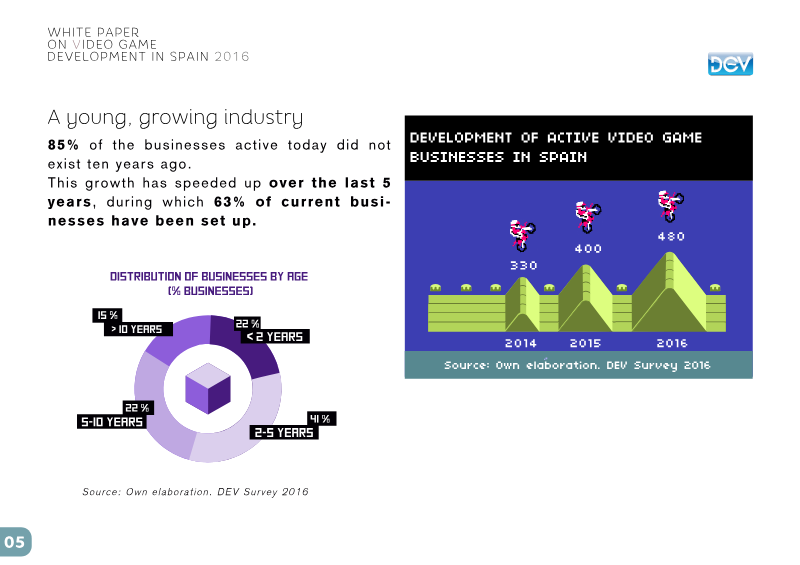
- As of 2016, there were 480 active development companies in Spain, a 20% increase from the previous year, with 85% of these firms established within the last decade.
- Direct employment in the sector grew by 32% to 4,460 professionals, yet 55% of companies report significant difficulties in recruiting appropriately skilled staff.
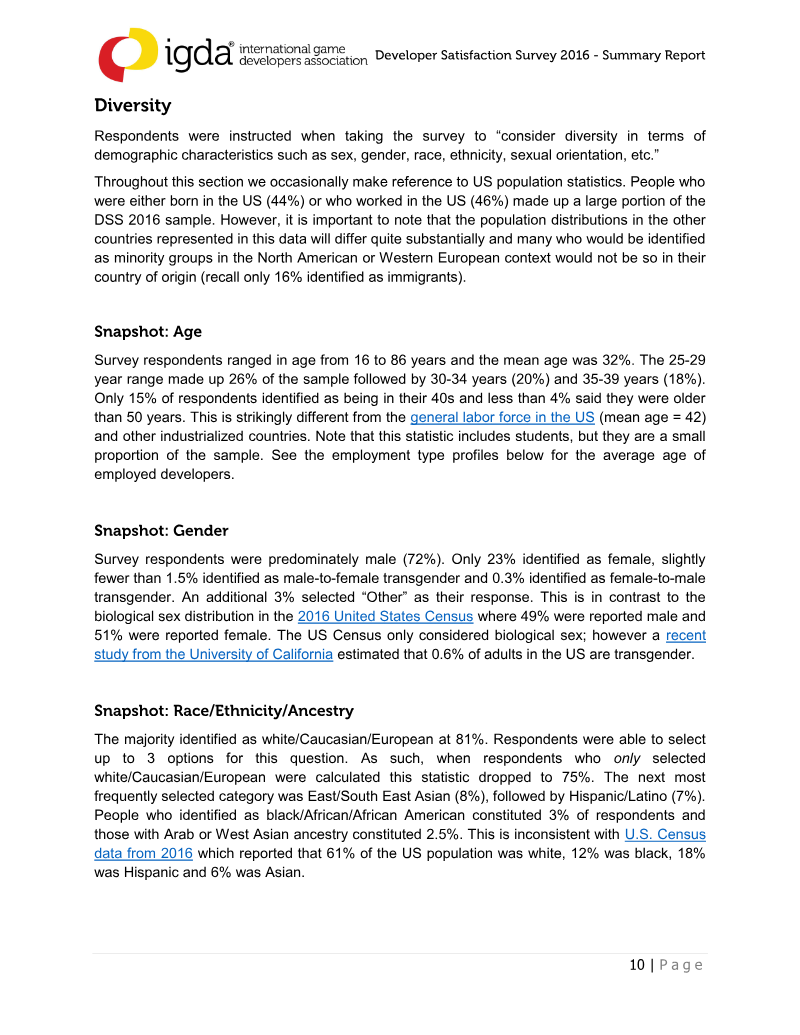


Developer Satisfaction Survey 2016: Summary Report
The 2016 game industry landscape is defined by a workforce that remains predominantly white, male, and university-educated, with the average professional being a 32-year-old based in North America.
- The 2016 game industry workforce is characterized by a lack of diversity, remaining predominantly white, male, and university-educated with an average age of 32.
- Over 50% of freelancers and self-employed developers earn less than $15,000 annually, highlighting severe financial instability within the sector.
- Systemic labor issues, including high turnover rates and the normalization of uncompensated overtime or 'crunch' culture, persist across both independent and salaried roles.
Remote Development - How to Work Effectively from Long Distance - Extra Credits
Managing a distributed game development team requires intentional structure, clear communication, and a focus on fostering team cohesion.
- Effective remote management requires replacing physical oversight with explicit expectations regarding schedules, reporting chains, and task deadlines.
- Integration into the development pipeline must be prioritized by clearly defining dependencies so team members understand their specific roles and impact on others.
- Productivity is maintained through frequent feedback loops and prompt reviews of work, which compensate for the lack of in-person supervision.
Educating Game Designers - Too Much "Game" at Game Schools - Extra Credits
Current game design education often fails to prepare students for professional environments, leading to a disconnect between academic training and industry requirements.
- Current game design degrees often fail to provide a competitive hiring advantage because they prioritize specific tools and engines that quickly become obsolete.
- Effective game design education should emphasize transferable high-level competencies, such as logical thinking, communication, and project scoping, rather than narrow technical tasks.
- A robust curriculum should be grounded in a liberal arts foundation, specifically philosophy, psychology, and mathematics, to foster critical thinking and rapid information assimilation.
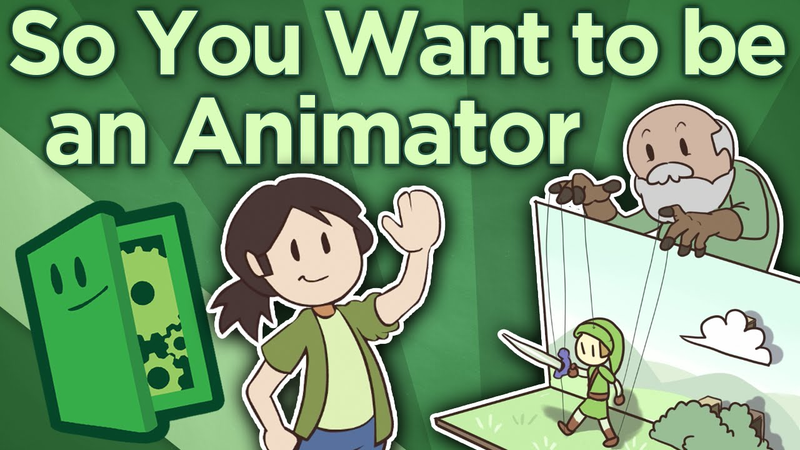
So You Want To Be an Animator - Building Your Career - Extra Credits
Professional animation serves as a form of digital or physical puppetry, where practitioners act as performers to imbue inanimate objects with life, emotion, and character.
- Professional animation is defined as digital or physical puppetry that requires a synthesis of technical skill, observational prowess, and acting ability to imbue objects with life.
- Career success is primarily driven by the strength of an animator's portfolio, which must demonstrate both high-level creativity and technical proficiency.
- Aspiring animators should prioritize foundational education through established institutions like CalArts, Ringling, SCAD, and Sheridan, or specialized online programs like Animation Mentor.
The Game Industry of Finland 2015
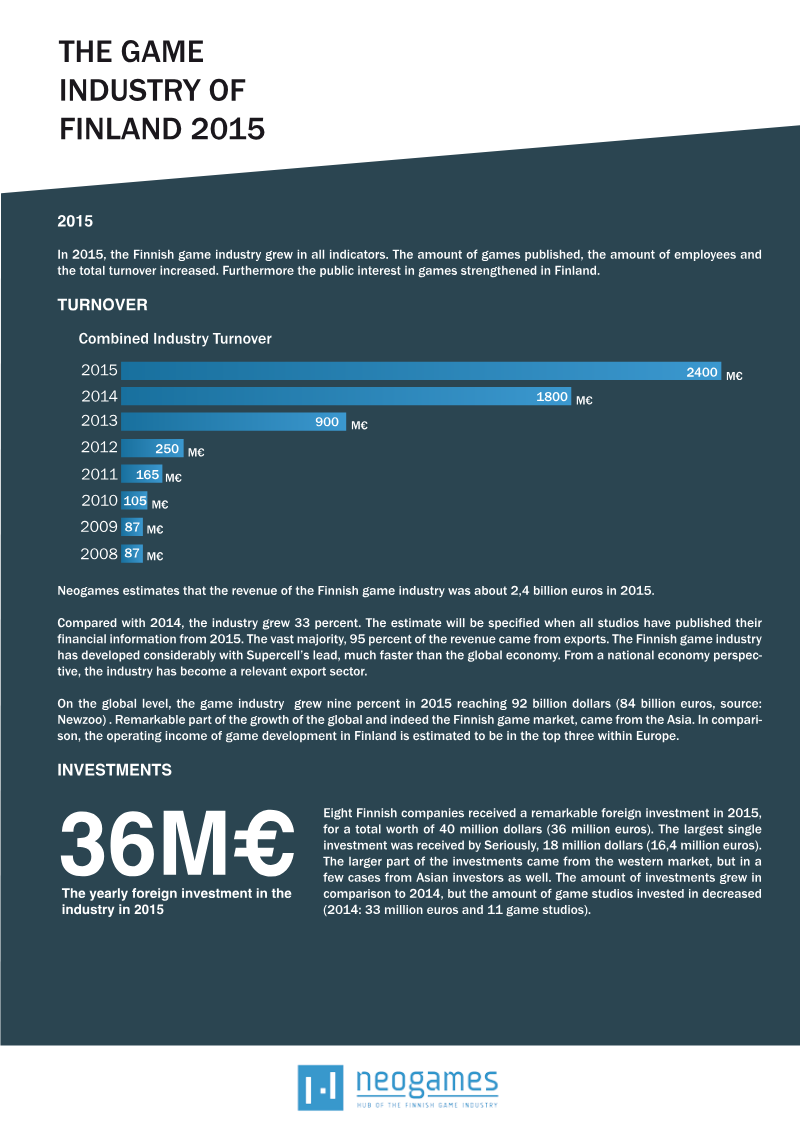
The Finnish game industry experienced significant expansion throughout 2015, characterized by robust growth in turnover, employment, and output.
- The Finnish game industry generated 2.4 billion euros in turnover in 2015, marking a 33 percent year-over-year growth that solidified the country as a top-three European hub for game development.
- Exports are the primary economic driver for the sector, accounting for 95 percent of total industry revenue.
- The industry employed 2,700 professionals across 290 active companies, with the majority of talent and operations concentrated in the Helsinki metropolitan area.
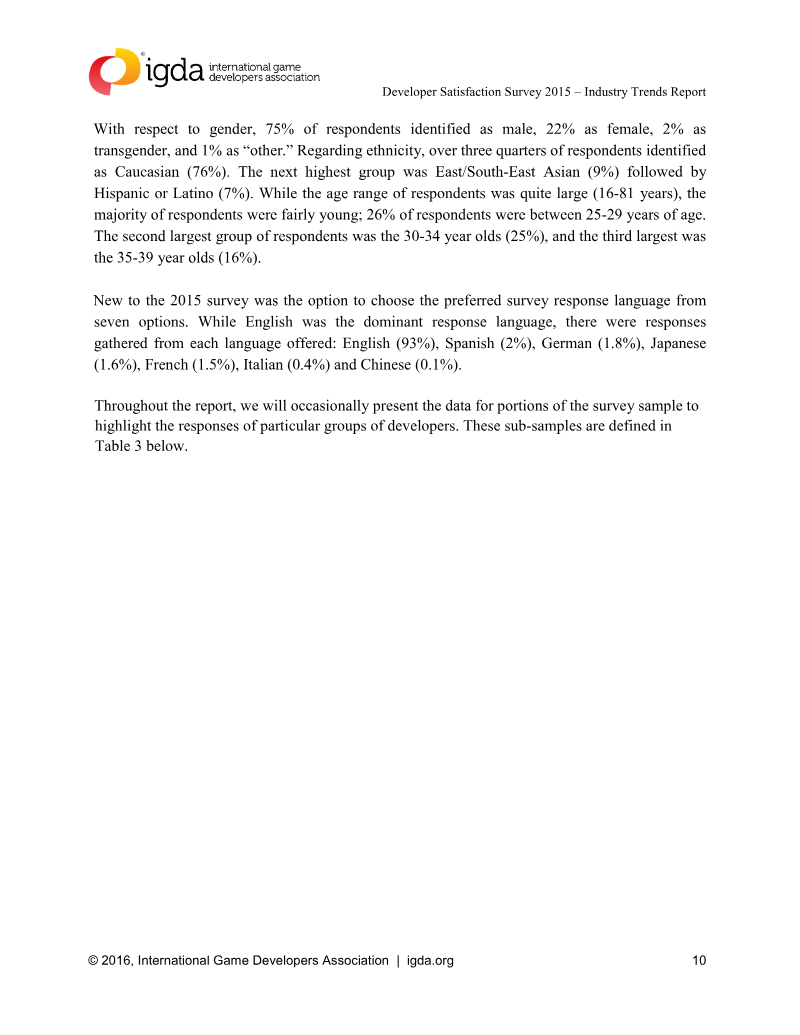
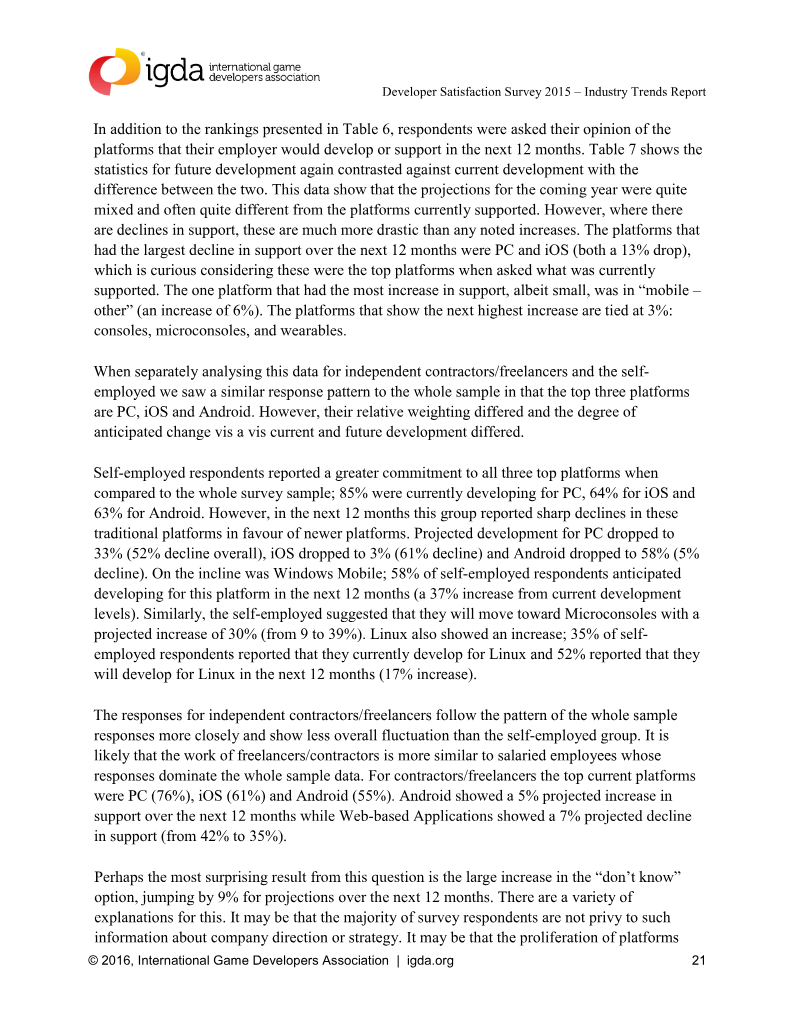

Developer Satisfaction Survey 2015: Industry Trends and Future Outlook Report
The 2015 game industry landscape reflects a complex dichotomy between individual professional fulfillment and systemic cultural anxiety.
- Over 50% of the nearly 3,000 surveyed professionals believe the public views the game industry negatively due to high-profile controversies regarding sexism, racism, and toxic workplace conditions.
- Female and transgender developers report a significantly higher awareness of and exposure to discriminatory practices within both the workforce and game content.
- Despite cultural concerns, the industry maintains a stable growth trajectory with developers expressing optimism for technological innovation and career prospects.

Is Supercell's success good or bad for the Finnish game industry?
The rise of Supercell has served as a primary catalyst for the Finnish mobile gaming industry, acting as a source of inspiration rather than a disruptive economic force.
- Supercell’s lean organizational model has prevented labor market overheating and wage hyper-inflation, allowing small-scale independent studios to remain economically viable.
- The success of major firms like Supercell has established Finland as a premier global hub for mobile game development, significantly improving the local investment climate and access to capital.
- The Finnish gaming industry maintains a sustainable ecosystem where global leaders and independent developers coexist, rather than the former displacing the latter.

Why game hubs matter
Game development hubs serve as essential infrastructure for mitigating the inherent isolation of the industry, providing a collaborative environment where developers can share knowledge, resources, and equipment.
- Game development hubs act as essential infrastructure that mitigates industry isolation by providing shared resources, equipment, and collaborative environments for independent developers.
- These hubs serve as regional catalysts that bridge the gap between individual studios and broader creative ecosystems, facilitating professional resilience and creative growth.
- Localized support networks are critical for sustaining long-term industry health, particularly for independent creators who otherwise lack access to mentorship and peer-to-peer problem solving.