1 free read left. Create a free account for unlimited reading + AI research.
Create free accountReport Dataspelsbranschen
1 free read left. Create a free account for unlimited reading + AI research.
Create free accountReportDataspelsbranschen
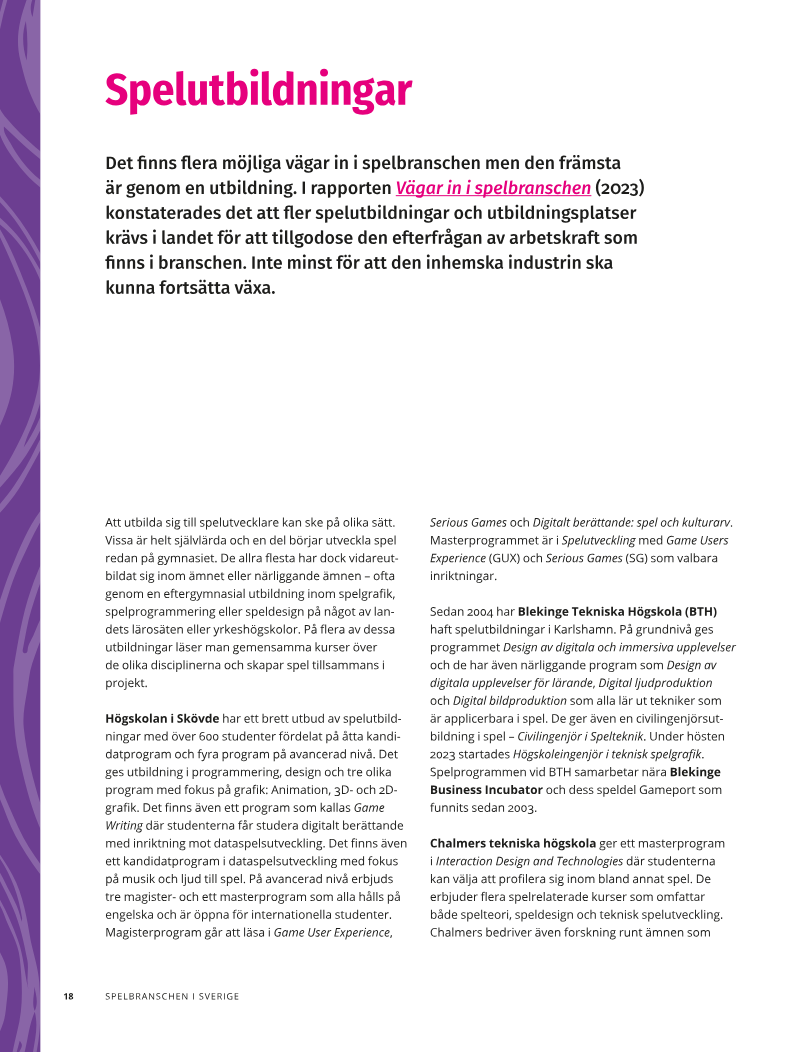
It comprises approximately 65 distinct programs that attract over 6,000 annual applicants. The sector focuses on project-based learning to simulate real-world studio environments.
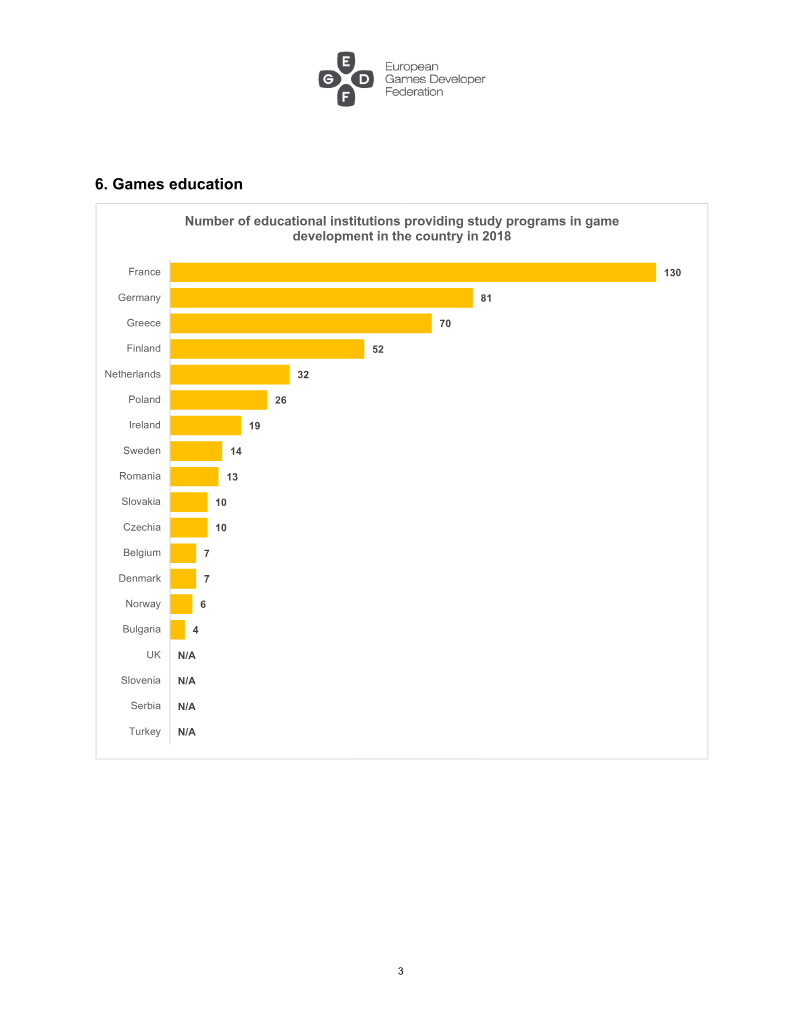
The Nordic game education sector functions as a mature, highly specialized ecosystem, comprising approximately 65 distinct programs that attract over 6,000 annual applicants. The primary objective of this educational landscape is to bridge the gap between academic training and the evolving needs of the regional game industry. By prioritizing project-based learning and curricula that emulate real-world studio environments, institutions across Sweden, Denmark, and Finland aim to supply a workforce capable of meeting the demands of both large-scale studios and the rapidly expanding mobile and mid-sized sectors.
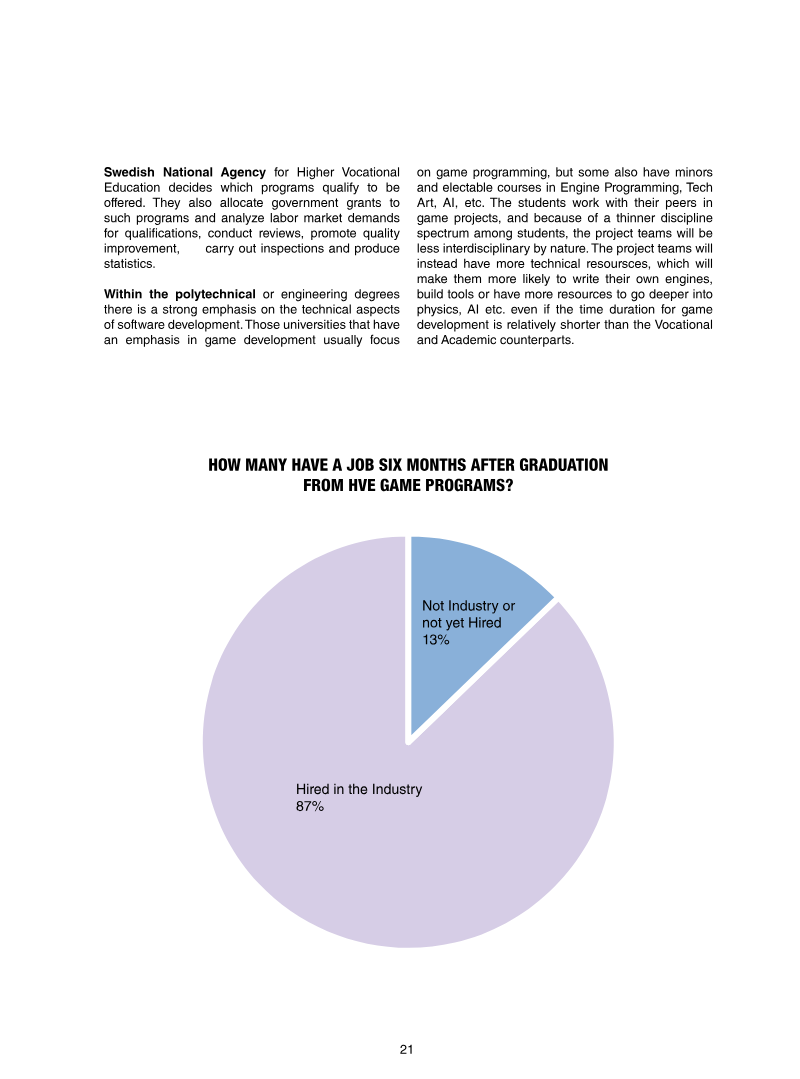
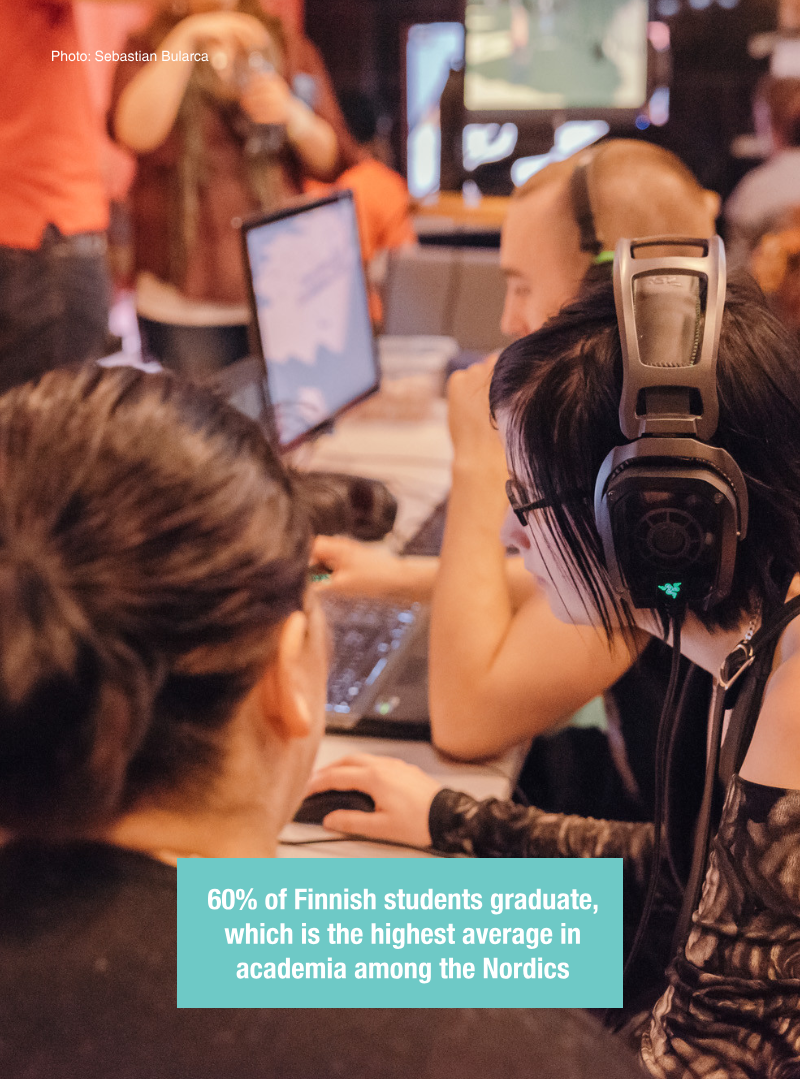
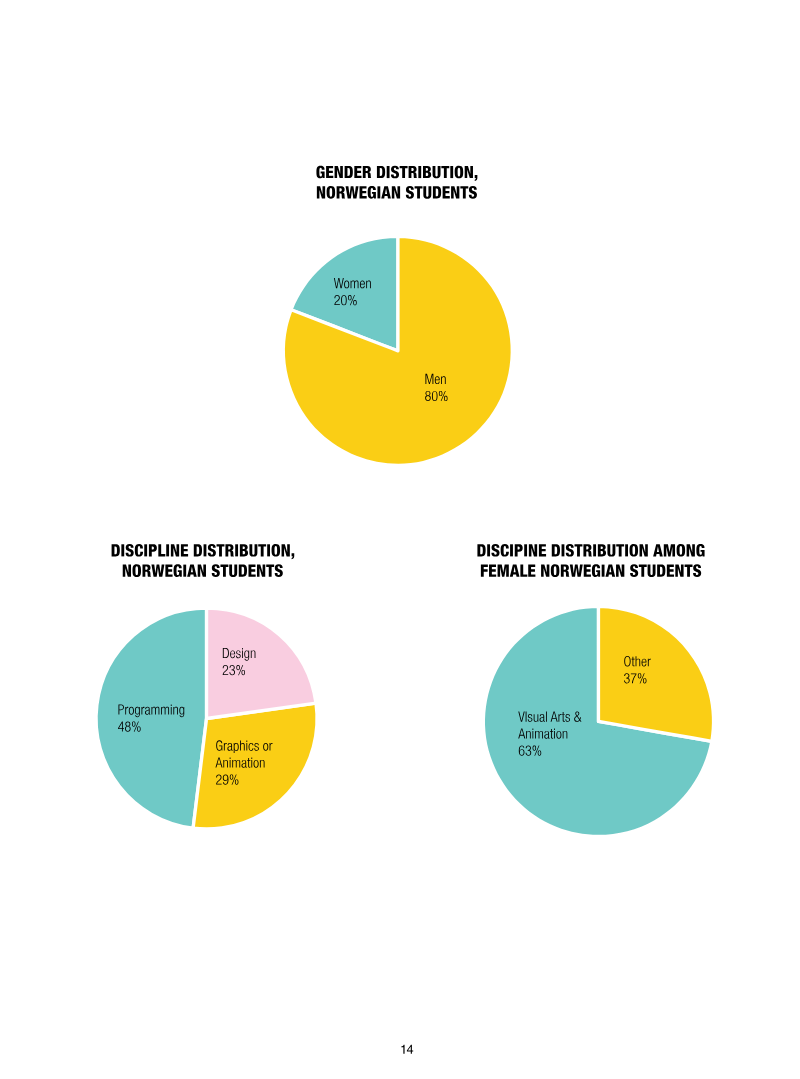
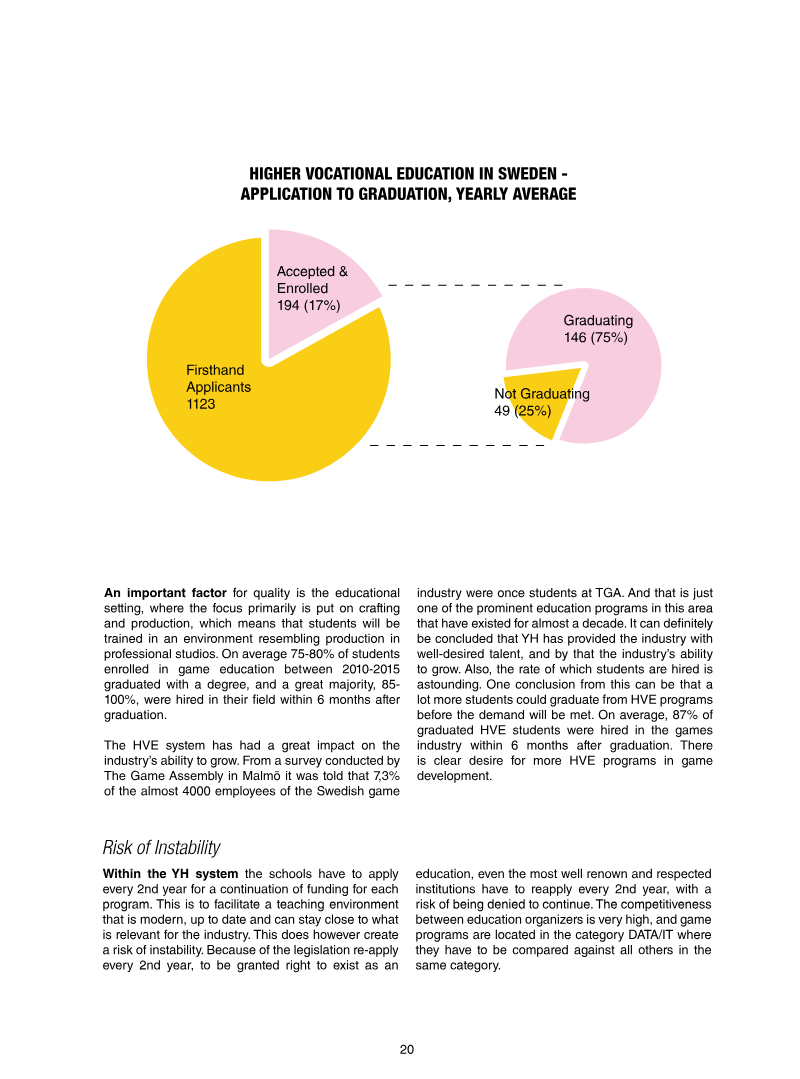
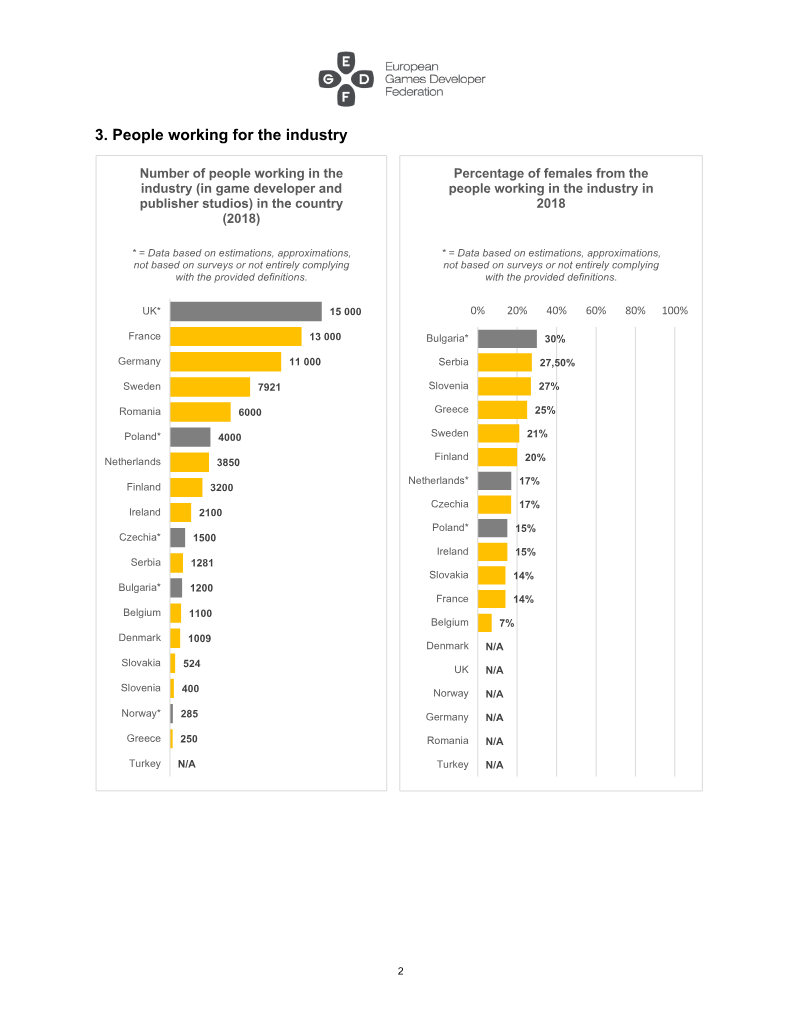
Employment outcomes remain a strong indicator of success, particularly within Swedish higher vocational programs, where 80 to 87 percent of graduates secure industry roles within six months. Finland currently leads the region in academic efficiency with a 60 percent graduation rate, though the broader Nordic average remains closer to 40 percent. Despite these successes, the sector faces structural challenges, including funding instability in Sweden’s biennial re-application system and a persistent gender gap, with women representing only 20 to 26 percent of the student body and remaining largely concentrated in graphics and animation disciplines.
Looking forward, the industry requires a shift toward more versatile talent profiles. While technical proficiency remains essential, there is an intensifying demand for professionals skilled in data analytics, user-focused design, community management, and leadership. As the region navigates the integration of emerging technologies like virtual and augmented reality, the sustainability of the Nordic game sector will depend on continued investment in research, incubation, and curricula that balance specialized technical expertise with broader, business-oriented generalist capabilities.
Dataspelsbranschen · 2025
Dataspelsbranschen · 2025
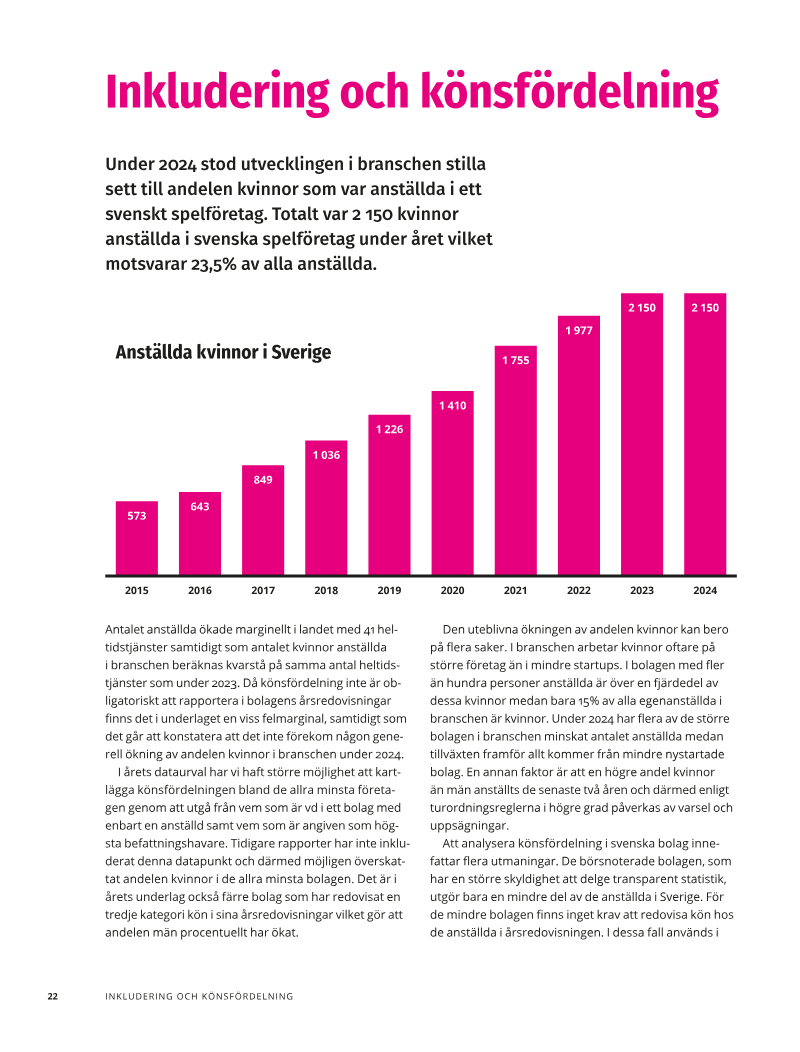
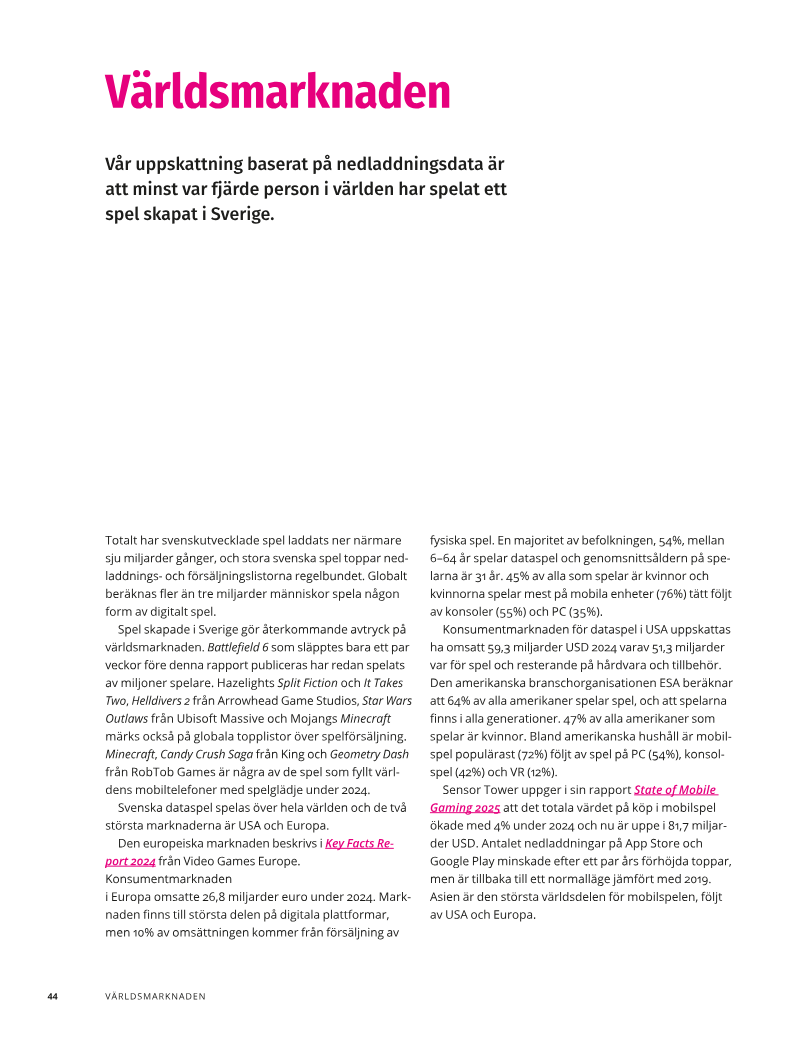
Dataspelsbranschen · 2025
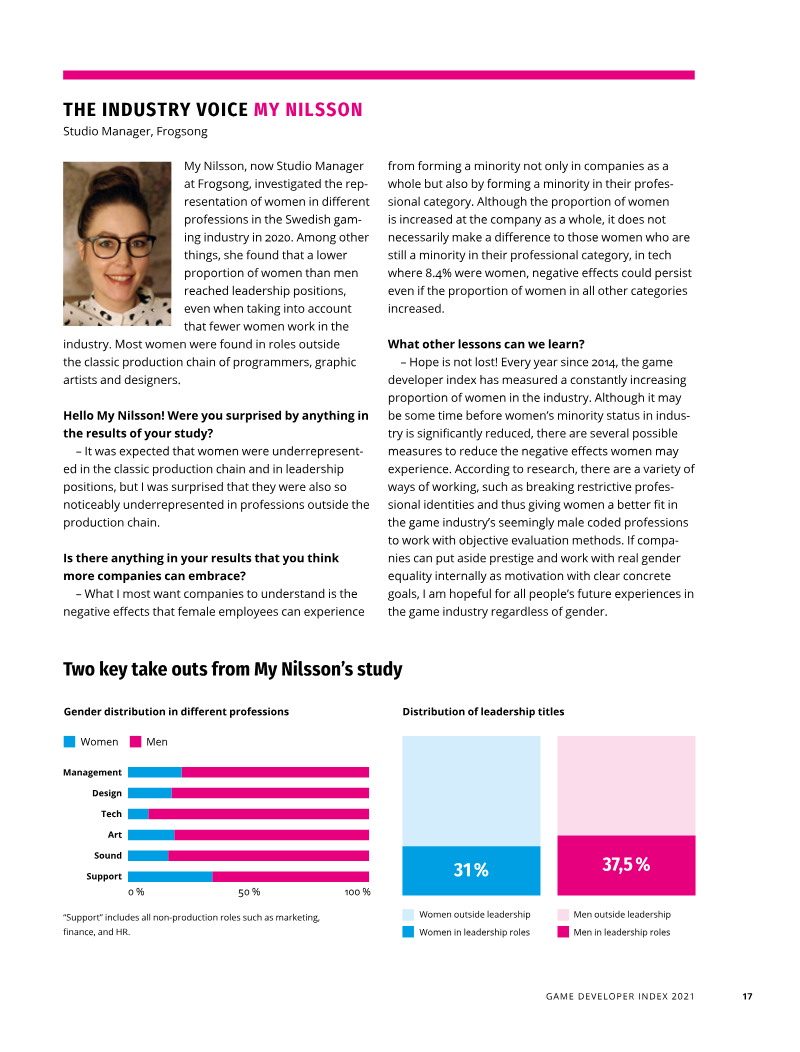
Dataspelsbranschen · 2025
Dataspelsbranschen · 2025
Dataspelsbranschen · 2025
Dataspelsbranschen · 2024
Dataspelsbranschen · 2024

Swedish Games Industry · 2024
Swedish Games Industry · 2024

Dataspelsbranschen · 2024
Dataspelsbranschen · 2024
Dataspelsbranschen · 2016