Employment reports and market data
Documents

How to Enable Digital Growth in Europe
The European video game industry serves as a critical engine for the continent’s digital transformation, yet its potential remains constrained by a fragmented regulatory landscape and insufficient financial support.
- Network neutrality is crucial for the European games sector, as easing it risks dividing Europe, allowing network providers to slow access to competing virtual services, and strengthening dominant media companies over independent developers.
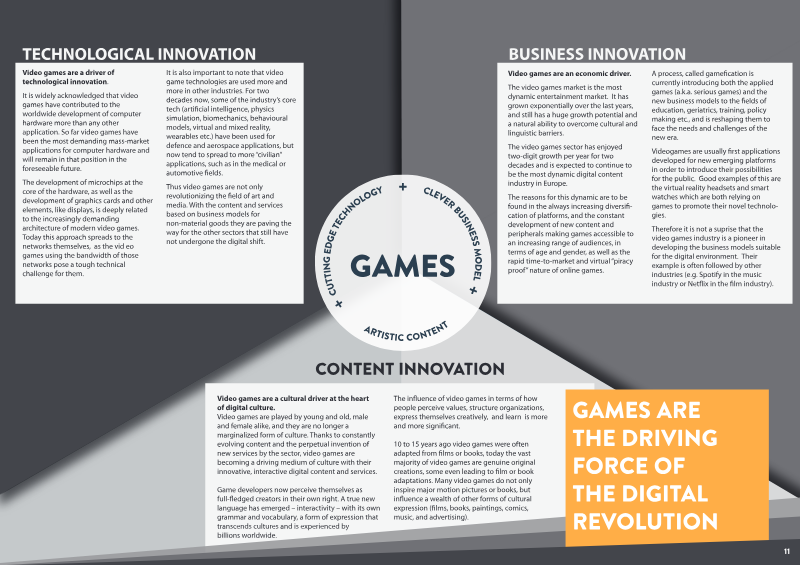
- Video games are a driving force in the digital revolution, creating a new interactive language that transcends cultures and influences other forms of cultural expression like films, books, and music.
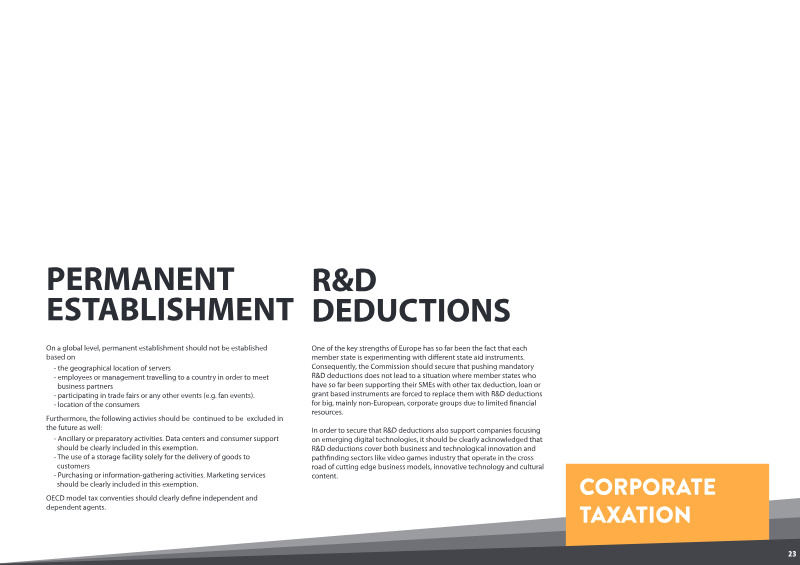
- European game developers are frequently targeted by patent trolls, with legal battles in the US potentially costing hundreds of thousands to millions of Euros and fully occupying developers.
Dossier de Prensa AEVI 2016
AEVI was founded in 2014 to unify Spain’s video-game ecosystem and to position the sector as a leading technological and cultural industry.
- The Spanish video-game market generated €996 million in 2014, marking a 6.8% year-over-year growth and establishing Spain as one of the four largest markets in Europe.
- Piracy remains a significant economic challenge, with 240 million illegal downloads and 2 million physical infringements causing an estimated €226 million in lost revenue in 2014.
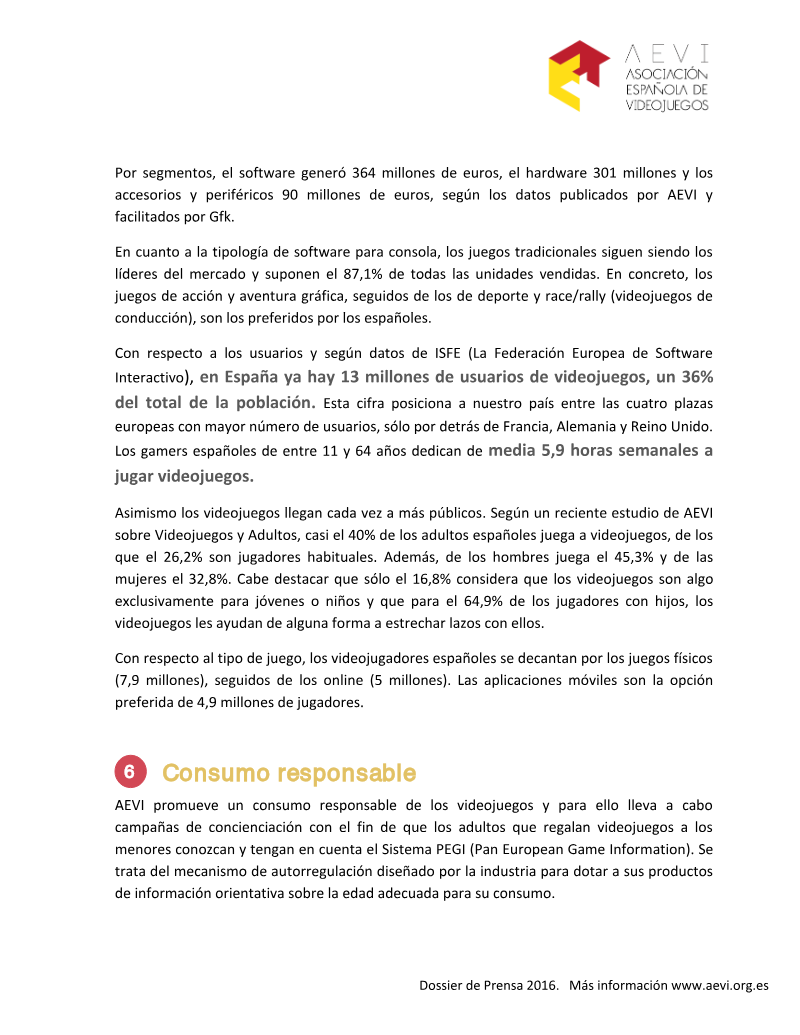
- The sector served 13 million users in 2014, representing 36% of the population, with players aged 11–64 averaging 5.9 hours of gaming per week.
Innehållsinnovation och internationell tillväxt i kreativa näringar: Sverige
Sweden’s creative industries function as a vital, export-driven base sector that currently lacks the cohesive national strategy and institutional support necessary to maximize its long-term economic potential.
- Sweden’s creative industries lack a cohesive national strategy, leaving the sector marginalized between cultural policy and business frameworks despite its role as a vital export-driven base.
- To improve competitiveness, Sweden must elevate content innovation to the same policy priority level currently afforded to technical innovation.
- Current economic statistics fail to capture the sector's true value, necessitating a reform of data collection methods to provide an accurate foundation for policy and investment decisions.

Biz Daily: Games industry and mental illness
The public discourse surrounding Markus Persson, the creator of Minecraft, highlights a significant disconnect in how society perceives mental health when wealth and professional success are involved.
- The public discourse following Markus Persson’s $2.5 billion sale of Mojang to Microsoft reveals a systemic bias where mental health struggles are invalidated by high socioeconomic status.
- Media coverage of Persson’s expressions of isolation and lack of purpose frequently dismissed his mental health concerns as superficial or attention-seeking rather than genuine human struggle.
- Societal perceptions of mental health remain inconsistent, as physical illnesses typically garner empathy regardless of wealth, while emotional distress in the wealthy is often met with cynicism.

Biz Daily: Why is Rovio cutting up to 260 jobs?
Rovio, the developer behind the Angry Birds franchise, is undergoing a significant corporate restructuring involving the redundancy of up to 260 employees, representing approximately 50 percent of its total workforce.
- Rovio is laying off up to 260 employees, representing approximately 50 percent of its total workforce, to pivot away from an unsustainable merchandising infrastructure.
- The company is refocusing on its core gaming operations after a period of rapid expansion that saw staff numbers grow to roughly 800 between 2009 and 2013.
- While total turnover declined by 9 percent in 2014, gaming revenue grew by 16 percent, eventually accounting for 70 percent of the company's total turnover.
Biz Daily: GREE restructures with new offices in Berlin and Melbourne
GREE, the Japanese mobile game publisher, is undergoing a significant strategic restructuring of its international operations.
- GREE is restructuring its international operations by closing a significant portion of its San Francisco presence, which recently saw a 30 percent reduction in staff.
- The company is establishing new offices in Berlin and Melbourne to shift its focus toward European and Australian markets and better align with Western consumer preferences.
- GREE acquired the mobile game developer Twiitch in Melbourne to gain expertise in 3D, mid-core strategy games and modernize its portfolio away from traditional card-battle titles.
Biz Daily: Why did GREE sack 30% of its SF office?
GREE, a prominent Japanese mobile gaming platform, has initiated a significant restructuring effort by laying off 30% of its San Francisco-based workforce.
- GREE has laid off 30% of its San Francisco workforce as part of a broader international contraction that previously included closing its London office and Vancouver development studio.
- The restructuring aims to address profitability challenges and recurring project cancellations despite the company generating approximately $800 million in annual revenue.
- The company is struggling to transition from its historical dominance in the Japanese feature phone market to achieving a breakout hit in the global smartphone gaming sector.

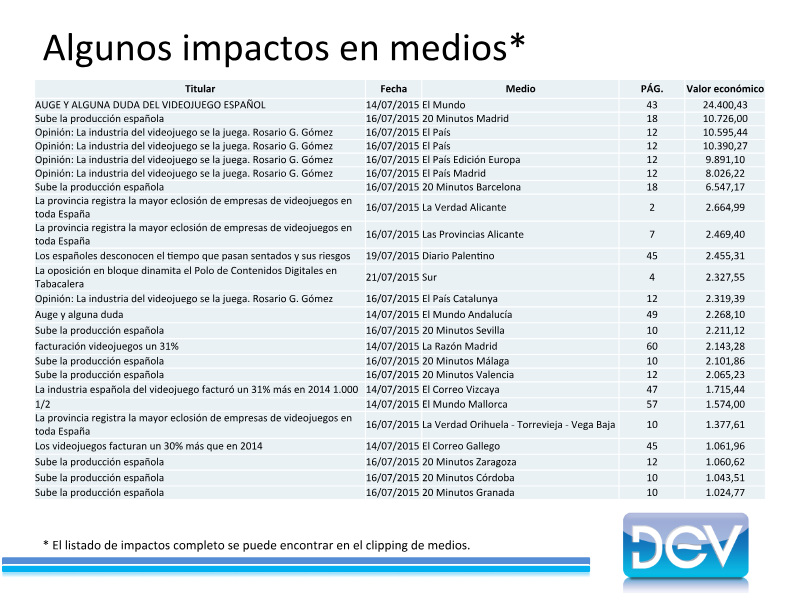
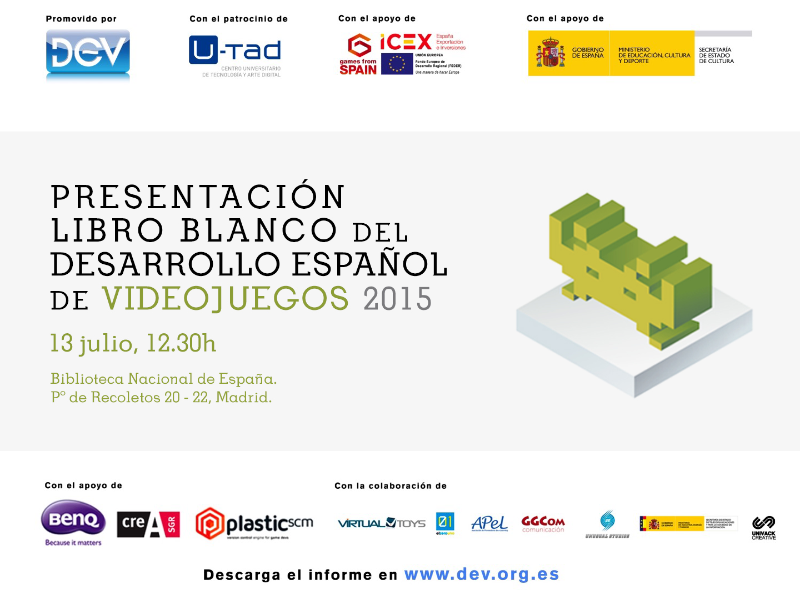
Libro Blanco del Desarrollo Español de Videojuegos 2015
The 2015 Libro Blanco del Desarrollo Español de Videojuegos serves as a comprehensive industry analysis detailing the economic performance and growth trajectory of the Spanish video game development sector.
- The Spanish video game industry reached a total turnover of 413 million euros in 2014, marking a 31% year-over-year increase.
- Market revenue is highly concentrated, with 50% of total industry turnover generated by only 5% of the companies.
- Employment within the sector grew by 28% in 2014 compared to the previous year.
Why Nordeus is opening an office in London
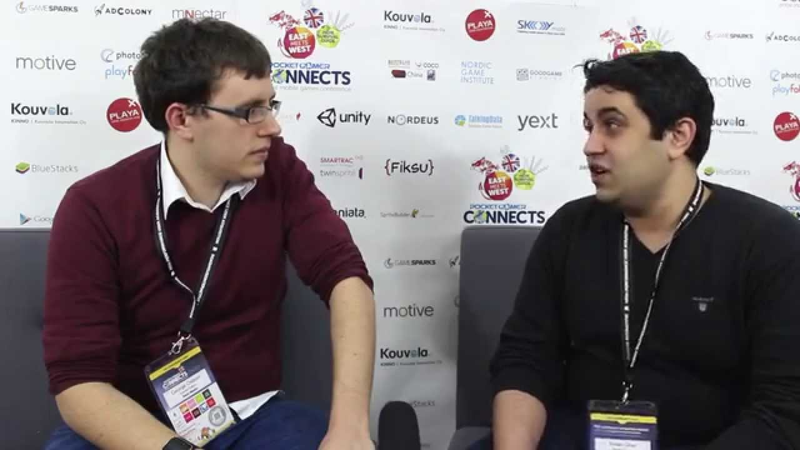
Nordeus, the developer behind the successful football management title Top Eleven, has established a new studio in London to expand its global footprint and tap into a broader talent pool.
- Nordeus has established a new, autonomous studio in London to access a broader talent pool and expand its operations beyond its Belgrade headquarters.
- The London studio is tasked with defining its own creative direction and exploring new genres, with a goal to launch at least one new title within the year.
- Nordeus is currently scaling the London office by hiring for key roles, including game designers, developers, and artists.

Finnish Game Industry Report 2014
The Finnish game industry underwent a period of unprecedented expansion between 2008 and 2014, evolving into a global powerhouse defined by mobile-first development and the successful implementation of free-to-play monetization models.
- The Finnish game industry experienced explosive growth in 2014, with turnover reaching approximately €1.8 billion, a 100% increase from the previous year, though accounting practice changes affect direct comparability.
- The industry's turnover per employee significantly increased, from €75,850 in 2008 to €720,000 in 2014, largely due to digital distribution and the Free-to-Play (F2P) model in mobile games.
- Employment in the Finnish game industry has grown steadily, reaching 2,500 people in 2014, up from 1,147 in 2008.
Developer Satisfaction Survey 2014: Industry Trends and Future Outlook Report
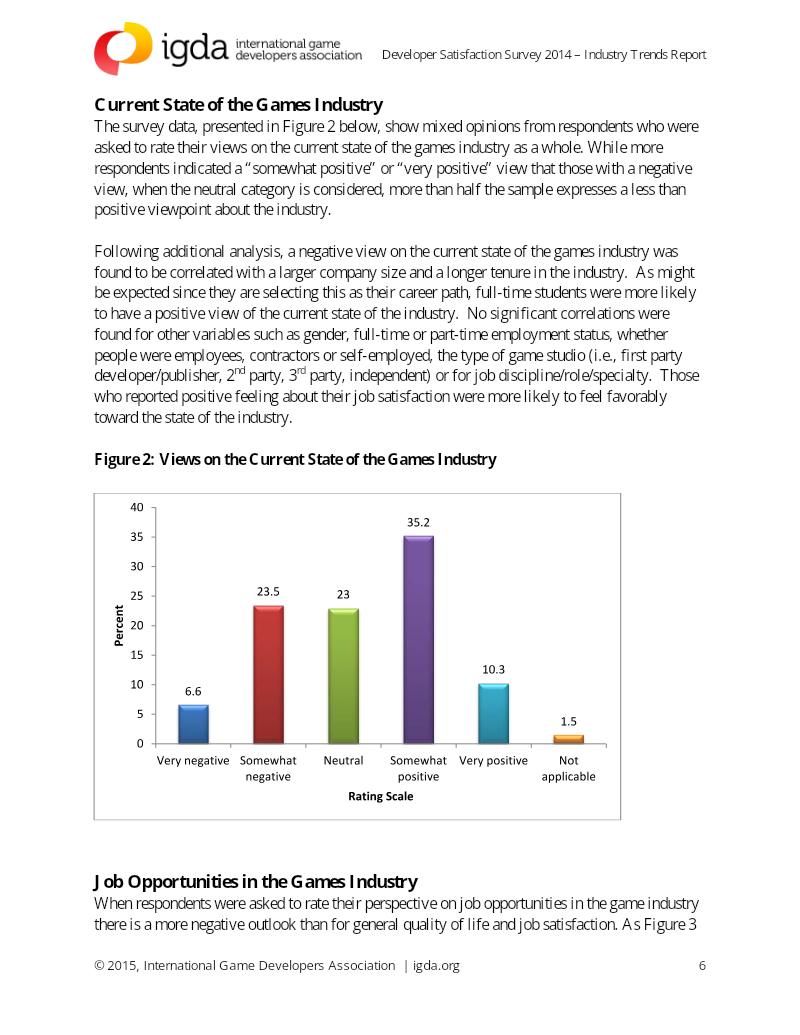
The 2014 game industry landscape is defined by a dichotomy between individual professional satisfaction and broader systemic anxiety.
- While 90 percent of developers are confident in their own company's growth, there is widespread pessimism regarding the availability of new job opportunities across the industry.
- A majority of 53 percent of developers maintain a positive one-year outlook, though the traditional AAA model is facing significant internal scrutiny from veteran professionals and large-scale studio employees.
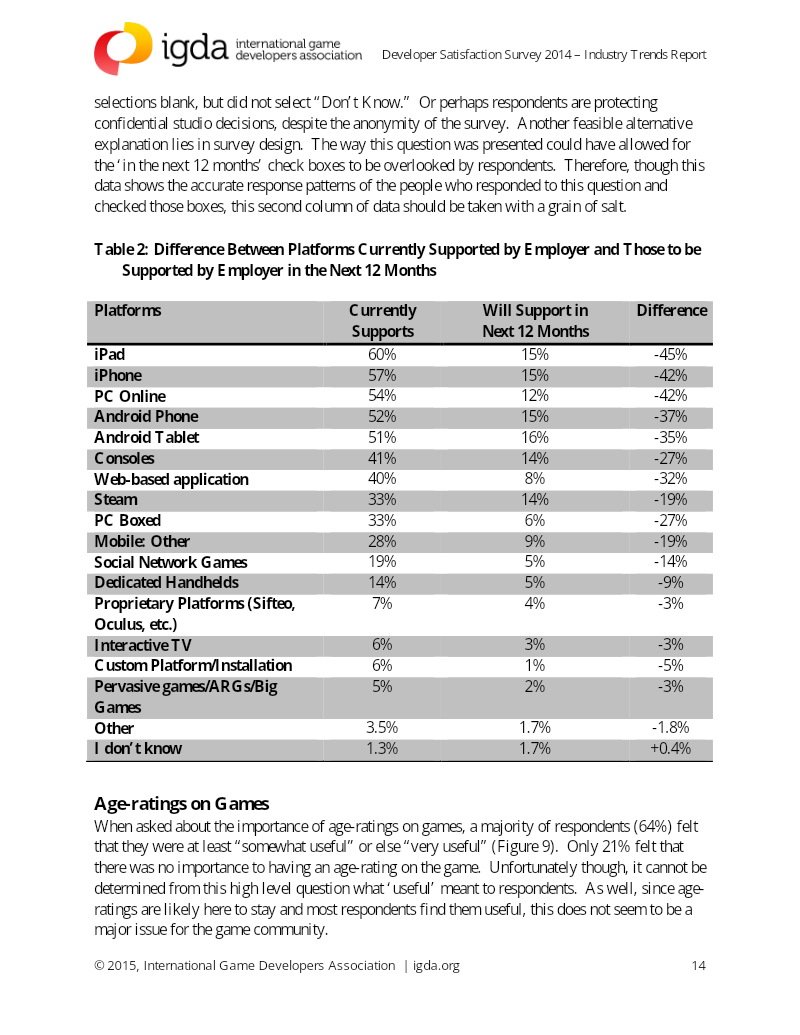
- Developers report a strategic misalignment between current development priorities and essential future platforms, specifically noting that Steam and proprietary ecosystems remain under-addressed.
Dutch Games Monitor: The Netherlands 2015
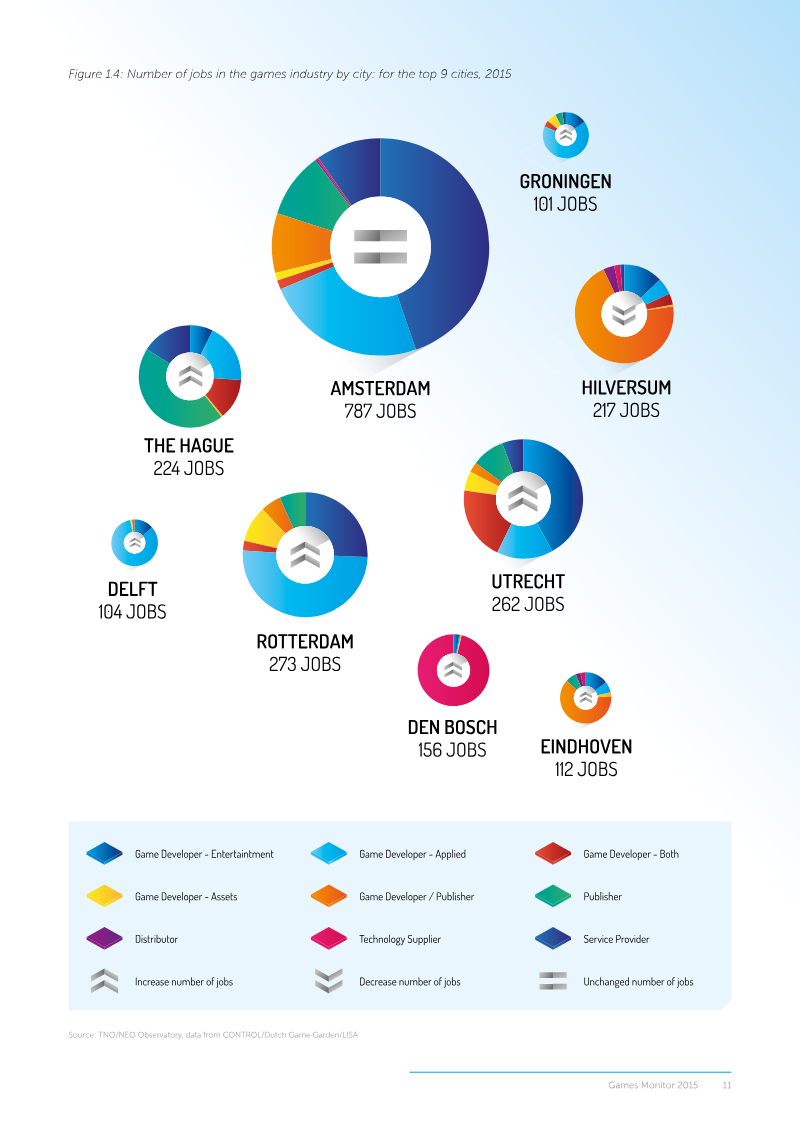
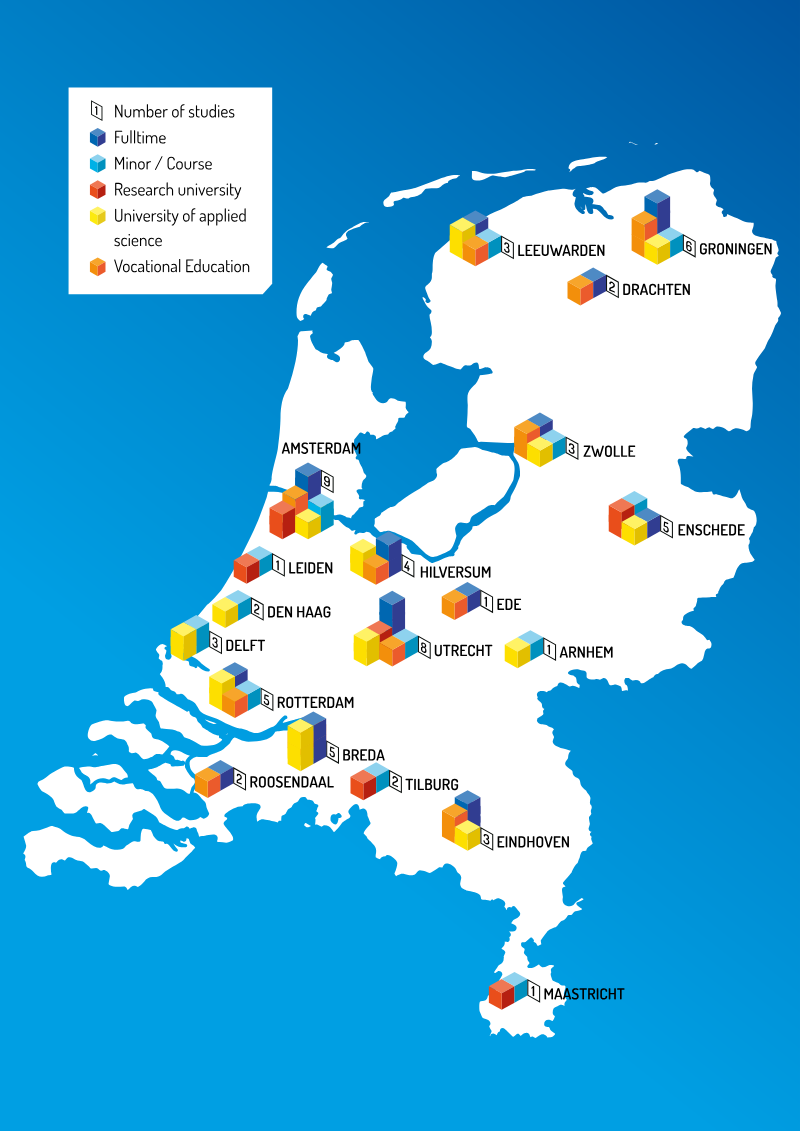
The Dutch games industry underwent a period of rapid expansion between 2011 and 2015, characterized by a 42 percent increase in the number of firms to 455 companies.
- The Dutch games industry saw its number of professionals grow from 2730 in 2011 to 3030 in 2015, an annual job growth of 2.6%, which is above the national average of -0.4% for the same period.
- Over half of Dutch game companies are less than 5 years old, and the average company size is 7 employees, indicating a young industry dominated by small studios.
- Access to funding, availability of qualified staff, and sales are the top three challenges for Dutch game companies, with over 40% reporting issues in obtaining funds.