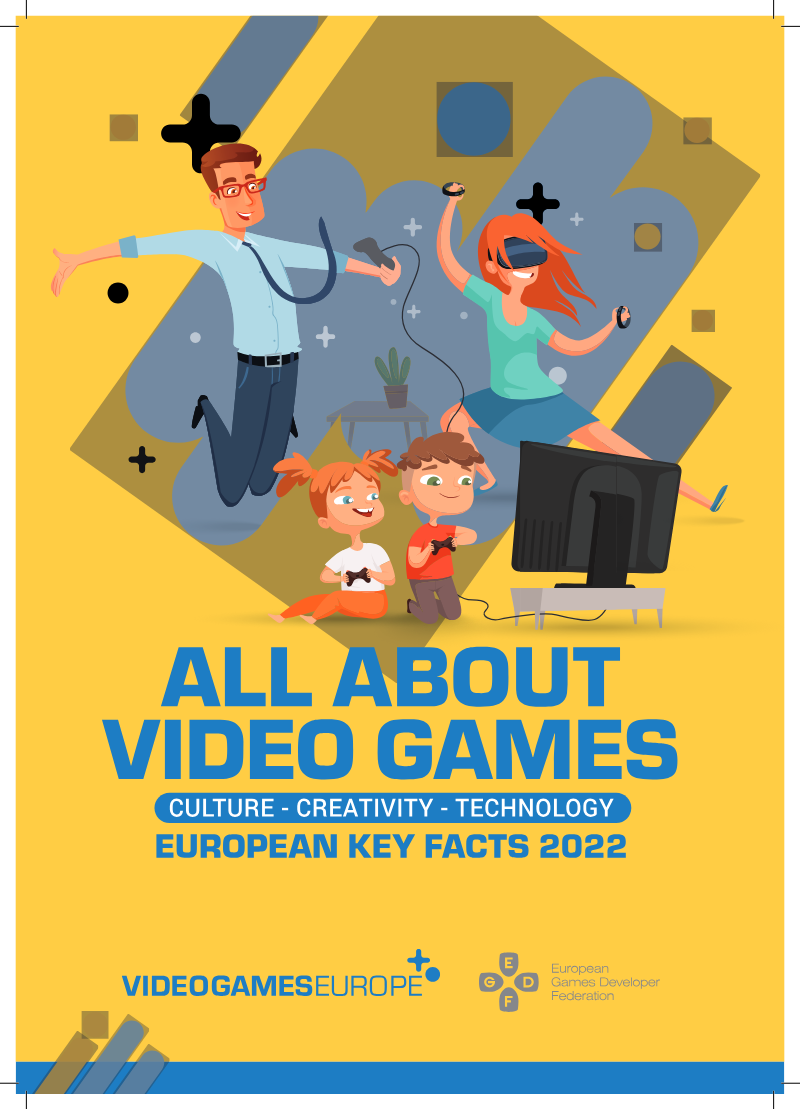
Gaming in Europe: Key Facts 2022
202232 pages~25 min full read
The European video game industry demonstrated significant economic resilience and social expansion in 2022, generating €24.5 billion in revenue and achieving a 5% year-on-year growth rate. This sector now engages approximately 126.5 million people, representing 53% of the population aged 6 to 64. Demographic shifts indicate a maturing and diversifying market, as women now comprise nearly 47% of the player base and the 45-64 age group has emerged as the largest playing demographic. While engagement has stabilized at an average of 8.8 hours of weekly playtime, the industry’s economic footprint is bolstered by a workforce of over 110,000 employees, which saw a 12% increase in staffing levels.
Despite this robust growth, the industry faces a critical talent shortage that threatens future expansion. Projections suggest a widening digital skills gap, exemplified by Sweden’s anticipated deficit of 25,000 developers by 2031. To sustain its trajectory, the sector is increasingly focusing on workforce diversity—where women currently hold 23.7% of roles—and the implementation of comprehensive social responsibility frameworks. These include the expansion of the PEGI rating system and the deployment of advanced parental control tools to ensure a safe environment for the evolving player base.
Environmental sustainability has also become a central pillar of the European gaming landscape. Through collaborative efforts like the Games Consoles Voluntary Agreement, the industry achieved a reduction of 54TWh in energy consumption across previous console generations. Major publishers and trade associations across 18 countries are now prioritizing carbon neutrality, with sector-wide initiatives successfully offsetting significant carbon footprints. These combined economic, social, and environmental strategies reflect a maturing industry that is balancing rapid commercial growth with long-term ecological and demographic responsibilities.
European Games Developer Federation · 2023
European Games Developer Federation · 2022
European Games Developer Federation · 2021
European Games Developer Federation · 2021
European Games Developer Federation · 2016
European Games Developer Federation · 2012
AEVI · 2022

AEVI · 2025
European Schoolnet · 2024
Video Games Europe · 2024
Video Games Europe · 2024
Video Games Europe · 2024
AEVI · 2024
Video Games Europe · 2023
IIDEA – Italian Interactive Digital Entertainment Association · 2022
Dutch Games Association · 2022
Dutch Games Association · 2022
8Bit · 2026