AR reports and market data
Documents

How developers can bring augmented reality games to the masses in 2019
Augmented reality represents a significant frontier for the gaming industry, yet the transition from experimental technology to mainstream consumer adoption remains a challenge.
- Mainstream AR adoption is currently hindered by the lack of established design standards and the friction caused by requiring users to scan physical surfaces to anchor virtual objects.
- Mobile AR platforms like ARKit and ARCore have expanded the potential user base to hundreds of millions of devices, yet developers struggle to move beyond simple 2D mechanic adaptations.
- Successful AR experiences currently rely on high-quality character design, the use of portals for immersive windows, and intuitive 3D navigation.

The business of immersive (AR/VR) games
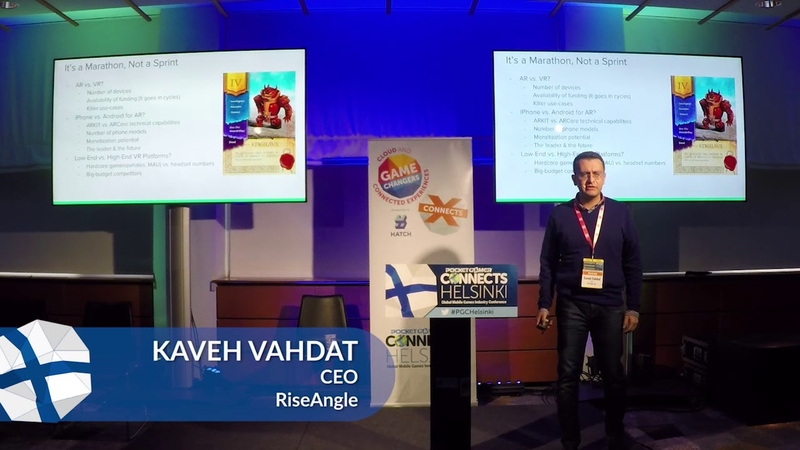
The business of immersive gaming, specifically within the augmented reality (AR) and virtual reality (VR) sectors, represents a high-potential but nascent market that requires a long-term, strategic approach.
- The immersive gaming sector is in a nascent stage comparable to the pre-smartphone era, characterized by high long-term potential despite current hurdles like hardware fragmentation and motion sickness.
- Major technology firms including Apple, Google, and Facebook are treating extended reality (XR) as a core business pillar, ensuring sustained investment in the development of future smart glasses and lightweight headsets.
- Mobile AR offers a massive reach of approximately one billion devices but suffers from near-zero organic discoverability, whereas VR platforms with 10 to 20 million headsets provide better initial visibility for new titles.
The business of immersive AR and VR games
The immersive gaming industry, encompassing virtual reality (VR), augmented reality (AR), and mixed reality (MR), represents a rapidly evolving sector with significant long-term potential.
- The immersive gaming market is projected to reach a $100 billion valuation within five years, with gaming-specific revenue accounting for $15 to $20 billion of that total.
- The sector is currently in a high-growth phase, expanding at an annual rate of 50 to 100 percent despite ongoing hardware limitations and cyclical investor interest.
- Developers should employ a multi-platform, modular IP strategy to ensure content remains transferable across mobile, PC, and console environments as hardware standards evolve.

The future of XR games
Extended reality represents a transformative frontier for interactive entertainment, positioning itself as a foundational technology that will eventually mirror the ubiquity and social integration of mobile telephony.
- The XR industry is transitioning from solitary, immersive gaming toward utility-driven applications that integrate digital content with the physical environment.
- Current hardware barriers, including high costs, bulk, and motion sickness, are being addressed to facilitate a shift toward lightweight, socially acceptable form factors like smart glasses and contact lenses.
- Mobile AR frameworks such as ARKit and ARCore are serving as the primary testing grounds for interaction design before the industry migrates to dedicated, sophisticated hardware.
Shipyard Games on making location-based mobile games
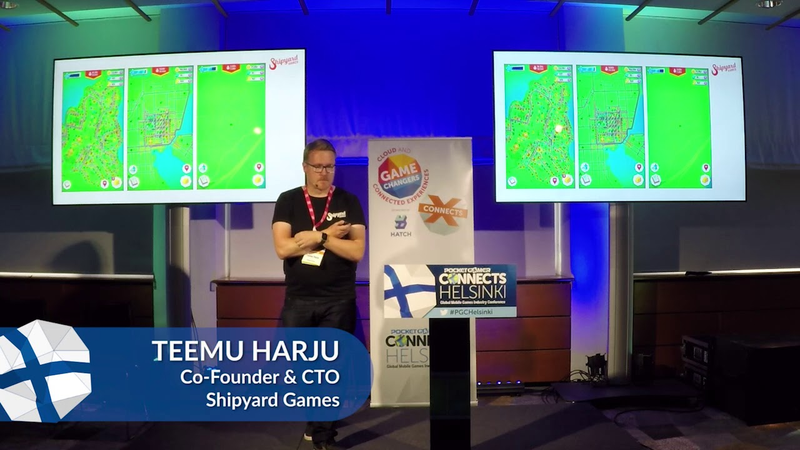
The development of location-based mobile games requires a careful balance between integrating real-world geographic data and maintaining a cohesive, engaging game experience.
- Location-based games must balance real-world geographic data with gameplay needs to avoid alienating players who do not move frequently.
- Developers should use reverse geocoding to convert GPS coordinates into recognizable street addresses, ensuring players immediately understand the game's connection to their physical surroundings.
- To avoid the 'uncanny valley' of map data, studios should selectively curate information rather than attempting to replicate every real-world detail, which often leads to a cluttered aesthetic.
Innovating new location-based gameplay in The Walking Dead: Our World
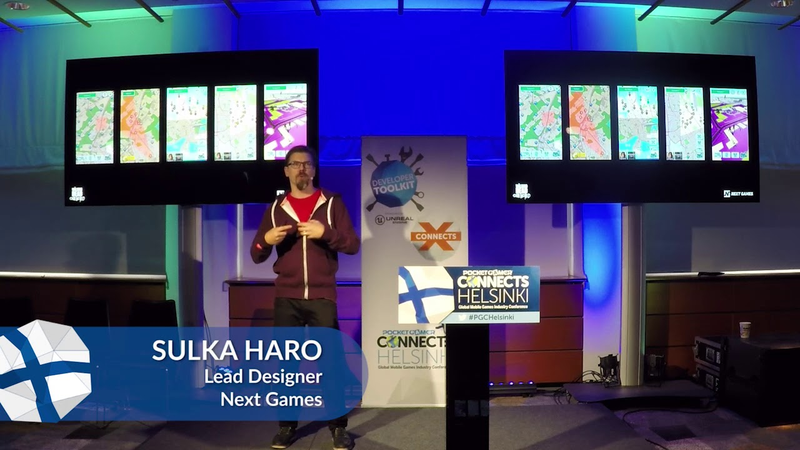
The development of The Walking Dead: Our World focused on innovating within the location-based mobile gaming genre by prioritizing social cooperation and accessibility over traditional competitive mechanics.
- The Walking Dead: Our World shifts the location-based genre away from constant movement by allowing meaningful gameplay while stationary, addressing the 'traveling salesman' problem found in earlier titles.
- The game features 10-to-15-second mission bursts in a first-person shooter perspective, designed to accommodate short play sessions during commutes or adverse weather.
- Social cooperation is facilitated through a guild system where players complete shared 'bingo board' tasks and use virtual flares to teleport teammates to rare mission locations.
HoloLens and Beyond: AR Game Design Challenges and Open Problems
Augmented reality (AR) game design presents unique technical and creative challenges that differ significantly from traditional screen-based gaming.
- AR game design requires moving away from 2D interface conventions in favor of integrating UI elements directly into the 3D environment and utilizing spatial audio for immersion.
- Developers must implement dynamic navigation meshes and spatial mapping to allow virtual entities to move through unpredictable, cluttered physical environments without collision errors.
- Hardware limitations as of 2018, specifically restricted fields of view and weak GPU capabilities, necessitate aggressive optimization of geometry and occlusion to maintain consistent frame rates.

Augmented reality games for kids – Lessons learned from Sky Whale AR
The development of Sky Whale AR, an augmented reality (AR) expansion for a Nickelodeon-branded mobile game, serves as a case study for addressing the technical and ergonomic challenges inherent in creating AR experiences for children.
- To mitigate physical fatigue in children, AR sessions should be limited to approximately one-minute, high-intensity intervals with minimal edge-based screen interactions.
- Developers should adopt a non-gated approach to AR, ensuring it remains an optional feature that does not compromise the core 2D gameplay experience, as seen in the April 2018 launch of Nickelodeon's Sky Whale AR.
- Rather than relying on unreliable surface detection, developers should prioritize device movement as the primary control input to improve tracking consistency.
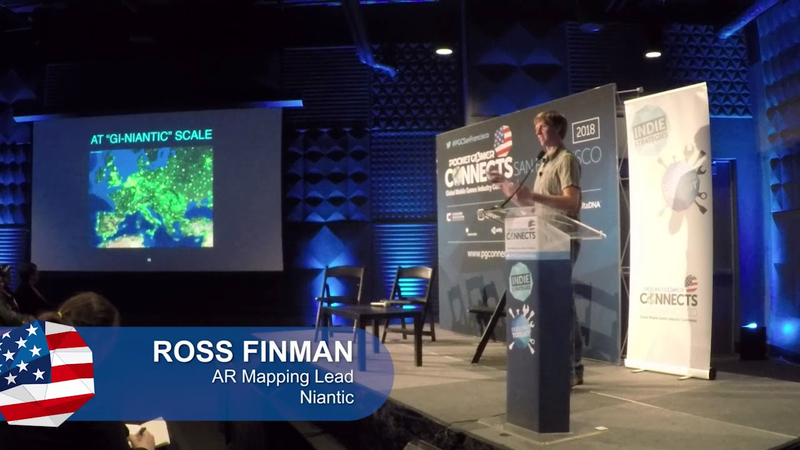
Niantic's AR mapping lead on using Earth as an AR gameboard
The integration of the physical world as a primary game board represents the next frontier for augmented reality (AR) gaming.
- The future of AR gaming involves shifting from simple digital overlays to a hybrid model where physical geography, objects, and social interactions dictate core gameplay mechanics.
- AR interactivity is evolving through four levels, progressing from basic digital overlays to the long-term goal of bidirectional interaction where digital content appears to manipulate physical objects.
- The current state of the AR gaming industry is analogous to the mobile gaming market in 2007, indicating it is in an early developmental phase that requires the creation of new, AR-specific mechanics.
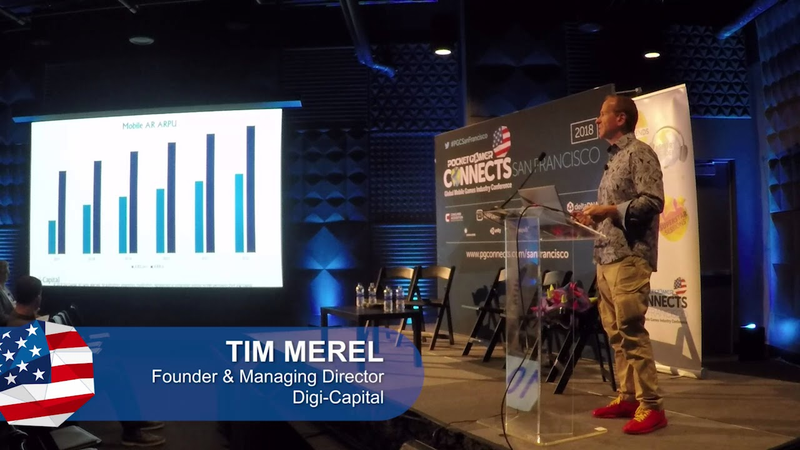
Mobile AR/VR/MR – Where's the market headed and what do the numbers look like?
The mobile augmented reality (AR), virtual reality (VR), and mixed reality (MR) market represents the fourth wave of consumer technology, characterized by rapid growth and increasing scale.
- Mobile AR is the dominant growth sector, projected to reach a 3.5 billion user base and $85–$90 billion in revenue over the next five years, significantly outpacing VR.
- VR is forecast to remain an entertainment-focused niche, reaching 50–60 million units and $10–$15 billion in revenue within five years.
- Asia is set to become the largest regional market, eventually accounting for over 50% of global AR/VR revenue, with China leading in mobile AR and the U.S. maintaining a lead in VR.

Saturn Animation on using augmented reality for storytelling
Saturn Animation has transitioned from producing 2D interactive storybooks for children to developing immersive 3D augmented reality (AR) storytelling experiences.
- Saturn Animation has pivoted from 2D interactive storybooks to 3D augmented reality (AR) to increase user engagement by encouraging physical navigation of digital environments.
- The studio standardized its development pipeline on ARKit and ARCore to ensure performance stability, prioritizing high-fidelity experiences over broad device compatibility.
- Spatial design in AR requires high-quality 3D assets that maintain visual consistency from all viewing angles, necessitating a departure from traditional flat-screen interface design.
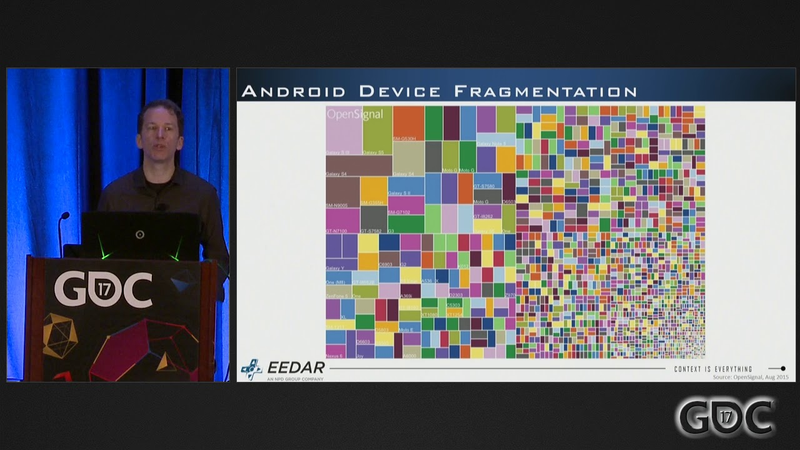
Awesome Video Game Data 2017
The video game industry in 2017 is defined by a maturing hardware market and a shift toward a core-focused portfolio.
- The U.S. gaming industry generated $23.5 billion in 2017, with mobile gaming accounting for approximately one-third of that total revenue.
- Console sales for the PlayStation 4 and Xbox One outperformed previous hardware generations by 34 percent, demonstrating strong demand for high-fidelity gaming.
- Market success is highly concentrated, as the top 2 to 10 percent of titles capture the vast majority of industry revenue.