1 free read left. Create a free account for unlimited reading + AI research.
Create free account
The business of immersive AR and VR games
Key insights
6 takeaways- 01The immersive gaming market is projected to reach a $100 billion valuation within five years, with gaming-specific revenue accounting for $15 to $20 billion of that total.
- 02Early entrants benefit from significantly higher discoverability compared to the saturated mobile app market due to the current lower volume of competing titles.
- 03The sector is currently in a high-growth phase, expanding at an annual rate of 50 to 100 percent despite ongoing hardware limitations and cyclical investor interest.
- 04Studios should utilize a Minimum Viable Product (MVP) approach to gather user data and adapt to emerging technologies like smart glasses while mitigating design challenges such as VR motion sickness.
- 05Developers should employ a multi-platform, modular IP strategy to ensure content remains transferable across mobile, PC, and console environments as hardware standards evolve.
- 06Monetization strategies should prioritize organic growth through app store optimization and influencer partnerships rather than paid acquisition, given the current dominance of premium models in VR and the emerging potential of freemium models.
Ask AI about this video
Transcript
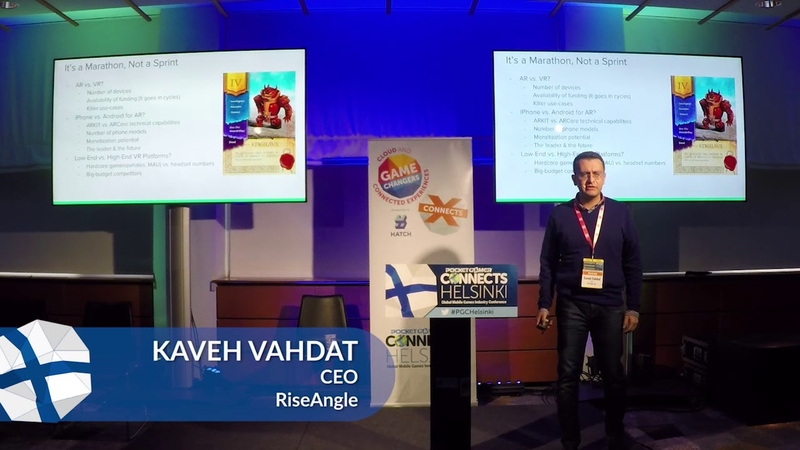
[Music] okay hi my name is Corvette founder and CEO of rise angle and we are gonna talk about business of immersive games so if you're you are a game studio looking into VR and error games or you are already in the space there are lots of questions on your mind the biggest one being are we there yet if you're not there yet what's the right time to enter the market for us should we go for a RV or which platform should we focus on what monetization method should we go for what genre is the best runner that works out and finally how to fund it so I hope at the end of this talk you get a little bit more insight sets into the whole space that helps you answer those questions a little bit about us right angle you are San
francisco-based company we have three VR games in the market for low and VR for gear VR oculus go and also one of them for Google cardboard our best IP word of mazes we are also releasing for oculus rift soon also an on VR version of that for mobile soon and our first a or game coined billionaire er we are gonna release it also soon so let's take a look at the current stats of the market and recent developments and some of the forecasts so terms VR AR MRX are lots of terms VR for now it let's just simplify it we are being when you detach yourself from reality virtual reality AR when you actually see the reality through a device and you see also like virtual items alongside the actual reality augmented reality M are being mixed
reality more about holograms when you actually don't need a device to look through and you just see virtual objects in the environment it's the extra extender reality is a term that is being used recently as an umbrella that covers everything market sizing gross there are lots of forecasts just summarizing everything in five years it seems that we are gonna have a hundred billion dollar industry for air and view are out of that fifteen to twenty billion dollars of that are gonna be games one of the things that makes us very bullish about the space in general is that almost all of the big tech names have some sort of involvement in the in this space one way or another as far as the headset numbers again that there are lots of numbers not confirm so much but overall headset sold for we are so far excluding Google cardboard is around 15 to 20 million headsets on the other hands for a or compatible smartphones they seem to surpass based on different
forecasts one billion devices by the end of this year which is a very interesting number so introduction of a RTD or Core camera FX was a big deal for a our introduction of standalone if your headsets was a big deal for VR and is gonna continue hopefully it's gonna help the adoption rate for the for those but and the shape and form of the headsets could be completely different they could be smart glasses in a few years and we think those are quite a possible option for future of both VR and AR and we believe Apple could is in a very good position to be the leader of that market for Isis for the consumer market and also games so why do we even want to believe VR and AR what are the opportunities so these are rapidly growing markets 50 to 100
percent per year which is a great number we are in very early stage so you if you win part of the market you can be very dominant and have the first mover advantage is not so much great content or great games out there yet which is an opportunity for someone that does that is still limited presence of big-budget competitors in the market and one important thing that not many people talk about is that just by having gave your year product you get much more visibility for example compared to mobiles at least at the start for example there are 800,000 games on Apple's App Store more or less for over 1 billion devices comparing the same thing with Lo and oculus store there are about 10 million headsets oculus go and gear we are on the oculus store for low-end with less than a thousand games so why just releasing a
game for VR there you get eight times more visibility to start with compared to Apple's iPhone again for AR is even kind of better we haven't released our air game yet to give you the actual data but a your games category is a recent category in Apple's App Store equal weight with 17 other categories that is less than like 100 games and then you'd basically have a great opportunity just by releasing an error game if Apple recognizes that as a year game for having a lot of visibility so but why don't we want to be in VR and a other challenges so there are so many platforms and you're changing so shipping for a lot of platforms is a hassle user adoption is not quite there yet total number of your headsets are not a lot quality of hardware is not great your headsets have friction have motion sickness for a our smartphones are really not the natural choice for a year so you have to look through device
you want your hands to be free to actually get have good involvement with physical world you can't do that killer use cases best practices are not very clear monetization is limited in many cases there is not enough app advertisers or at pool for buren AR so that part is limited and your and that there are design challenges and fundraising goes in cycles for example right now a our fundraising is better than VR VR is a little bit of gap of disappointment investors expected 800 plus percent grows per year that's similar to smartphones not fifty to a hundred percent is not good enough for them so and then this thing can kind of goes in cycles so a year from now VR could be better than air but for us we actually we are very bullish on the whole industry we that's our bet we are there to stay and then one thing if I wanted summarize everything else and
that is that it's a marathon it's not a sprint so it's a very very exciting space but you have to be patient and you have to build for the long term fundraise for the long term find ways to survive in this market until you get there but I always say if it's not too early sometimes it's too late so there are still it's kind of like the early days of Facebook or smart phones that there was a lot of opportunity but in the hand side when you look back so what how do we do that one of the things that work on IPS and think about how you can make your IP is transferable between different platforms what we call it is that your emergency first company but not immersive only for our best IPS we also think about from day one how we can release it on mobile as pcs consoles how we can license it to other things like books toys animations another thing is
that these are evolving markets so I mean by two years from now the headsets could could be very different I mean rumored is XOR glasses by Apple they they are rumored that they are gonna come at 2020 who knows but I mean it could be a very different market so you definitely want to have a Minimum Viable Product approach to the market for us one of our games actually was the Minimum Viable Product for our next game and it gives us gave us a lot of insights to the next game that we wanted to create our next game is an episodic content again so we are actually thinking about future episodes etc so that's something you may want to have in mind it don't go for very long-term development projects by the time that you are done I mean the whole market could be different here design multi-platform in mind from the start is easy to do by just in and having a lot of his French is from the start for example again one of our
games we were thinking okay so for three degrees of rhythm VR we may want to have walking as the best movement oyster when it comes to six degrees of freedom we are Romana have teleport but then when you go to smartphones what do we want to have for when we go to pcs what do we want to have but these things if you think from the start and have a cohesive strategy it's gonna actually be much easier later on the road modular design so short kind of short gameplay sessions are important so for VR mainly because the hardware is not there yet so average gameplay time is not really great people get motion sickness etc for a or because it's actually unfamiliar user interface and your uux at this point so for example for our error game upcoming error again what we did is that you actually have
two completely different UIs one is the familiar you are you play part of the game on your mobile but then each game you go to the a to the physical board with another URI which will guide the player true that you play a game short gameplay a session come back to the previous view I do some stuff there and then you can start the next game so this way you can kind of basically family or raise people more with the differences so AR or we are I mean if you want to enter this space well number of devices right now is in favor of a our ability of fundraising is in favor of AR one thing that I would like to mention is that for killer use cases V as the company of your firm believers that the killer use case for VR is going to be interactive storytelling and we think your is the greatest medium ever created for storytelling just second two books that's that's something that we are not
very clear when it comes to AR games so we are not very clear what a killer use case is going to be there so that that's that's for us one thing on favor of viewer that we have a clearer picture and vision of what we think is gonna be the clearest case so iPhone versus Android for a or it's kind of similar to iPhone versus Android in general so cost of user acquisition is like more in the iPhone ecosystem a number of phone models is much less than iPhone so shipping is much easier monetization but potential is better for iPhone a or kid versus like your core technical capabilities I wouldn't say it depends on the version so it's not a really significant determining factor for us because I mean one of the future versions one could be a little bit better than the other but again we think Apple is a great in in a great position to be the leader of this market so
that's that's something that we are betting more on the iPhone ecosystem for that hello and VR or high-end VR so more of the hardcore gamers and vales and then big spenders are on the high-end VR vs. headset numbers are more on the low and VR I mean comparatively low and VR headsets are kind of more than twice that they are high-end VR headsets right now so it depends what you want to do I mean if you you have a sort of game that is more in favor of the at building a community for example you may want to go for low and VR low and we are but if you have a game that is more actually you want to monetize it fast you go for high-end your but at the same time have in mind that in the high-end VR you have also many more big-budget competitors actually that's a lot of big triple-a companies either created one or two games or want to create games but
they start with high and we are because that's where they can show more of what they can do so is better for their branding so is you have more competitors there so monetization should we go for premium freemium with ads freemium with virtual goods etc so most of the viewer experiences right now are premium but then again it depends what you want to do for example if you have a game that it has a distinctive graphic style that people actually watch the video and buy the game go for a premium but if for example your game has very unique game mechanics that actually people have to try it then actually maybe freemium is a better choice for you another important thing to have in mind if you actually have a multi-platform strategy in mind from the start so then have in mind that for example some of the publishers if the
diversion on the console is paid they really don't want to have a free version on mobile so it is important to actually have a strategy that if you work with publishers they they like it all across all platforms for how to acquire users for paid acquisition versus App Store optimization free channels so we are in favor of free channels for now so App Store optimization works very well on both AR and VR is not very well known that it works and also working with social influencers youtubers pure blockers all good channels paid acquisition there we haven't found very good ways of acquiring users through paid acquisition for VR yet your similar right now as far as the games honors so there are these hyped channels once in a
while and then did the same thing goes in your I mean if you asked if you were a beaver in August last year and I believe that at that point horror was the hive's honor for VR and then a lot of people were playing it but maybe a better option is that you actually check the search numbers one of the ways that you can check the data for example use Google Keyword tool to check the search number see what kind of gains people actually search for when it comes to VR and then compare it with actually the inventory that is on different platforms and say okay so what's missing there Amil or what are these honors that you actually like and they're missing are those platforms and any other considerations I that I will actually let that part for your questions if you want to know more about different aspects so just to sum it up we think this is a great space to be in
it's gonna take a while before it picks up maybe they use their day a great user adoption rate comes when a great company like Apple introduces eggs or glasses for example that could be in a few years it makes sense to be early in the market but you have to also be very willing to change and be flexible and also have a long-term strategy for surviving and fundraising or actually any other way of monetizing your efforts during this time and yeah I hope the talk gave you a little bit more idea of if you want to enter this market a way to go thank you if I'm open to any questions we do have a little bit time for questions if you guys want to ask the finish are very shy and they it's not
really a question just one in your opinion on something I wasn't an event in UK for you okie and several developers talking and their comments were that VR in the ER is dead business-wise they were not talking about the technology itself but they were saying that the investors were not interested in investing in this kind of of technology so I wanted to know what what is your opinion about it so fundraising investors VR is in gap of disappointment right now actually again I mean investors are kind of they expected really like huge growth it's not a or not so much I mean they are investors that you are interested in that they are the ones that they are not for the from the business perspective actually outside of the games actually there is investors interest in balls because when you go to companies they can actually buy the headsets as part of the whole
thing it's not a big deal for them to pay like even a few thousand dollars for one headset could be like any hololens or I don't know any other headsets so but that part also goes to use cases so and then that that becomes like that okay so what is the actual use case that I'm using yeah but more so from VR investors kind of stay away right now AR is a mixed feeling I've seen in the investors like at least in the recent but again I mean these things go in cycles so is a year from now could be very very different this year specifically the 2018 was kind of the year that is kind of the winter up for VR as far as the fundraising so but yeah yeah thank you very much guys big and thank you
[Music]
Summary
The immersive gaming industry, encompassing virtual reality (VR), augmented reality (AR), and mixed reality (MR), represents a rapidly evolving sector with significant long-term potential. Current market forecasts suggest the industry will reach a $100 billion valuation within five years, with games accounting for $15 to $20 billion of that total. While the market is currently in an early, high-growth phase—expanding at 50 to 100 percent annually—it remains characterized by cyclical investor interest and hardware limitations.
Strategic entry into this space requires a long-term perspective, as the market is a marathon rather than a sprint. Developers are advised to adopt a multi-platform, modular approach to intellectual property, ensuring content is transferable across mobile, PC, and console environments. Because hardware standards are still shifting, utilizing a Minimum Viable Product (MVP) strategy allows studios to gather data and adapt to technological advancements, such as the potential emergence of smart glasses. Design considerations must account for current hardware constraints, including motion sickness in VR and the unfamiliar user interfaces inherent in AR.
Visibility remains a primary advantage for early entrants. Compared to the saturated mobile app market, VR and AR platforms offer significantly higher discoverability due to a lower volume of competing titles. While monetization remains challenging—with premium models currently dominating VR and freemium models showing promise—developers should prioritize organic growth through app store optimization and influencer partnerships over paid acquisition. Ultimately, while the industry currently faces a period of investor caution, the long-term outlook remains bullish, particularly as major technology firms continue to invest in the infrastructure necessary for mass consumer adoption.














Comments