1 free read left. Create a free account for unlimited reading + AI research.
Create free account
Shipyard Games on making location-based mobile games
Key insights
6 takeaways- 01Location-based games must balance real-world geographic data with gameplay needs to avoid alienating players who do not move frequently.
- 02Developers should use reverse geocoding to convert GPS coordinates into recognizable street addresses, ensuring players immediately understand the game's connection to their physical surroundings.
- 03Success in this genre relies on blending recognizable real-world landmarks with intuitive interfaces to create a personal, meaningful experience without becoming overly complex.
- 04Gameplay mechanics should be restricted to functional areas, such as road networks, to prioritize game-like utility over exhaustive geographic accuracy.
- 05To avoid the 'uncanny valley' of map data, studios should selectively curate information rather than attempting to replicate every real-world detail, which often leads to a cluttered aesthetic.
- 06Onboarding tutorials must be dynamic and adaptable, as developers cannot control the specific environment where a player initiates the game.
Ask AI about this video
Transcript
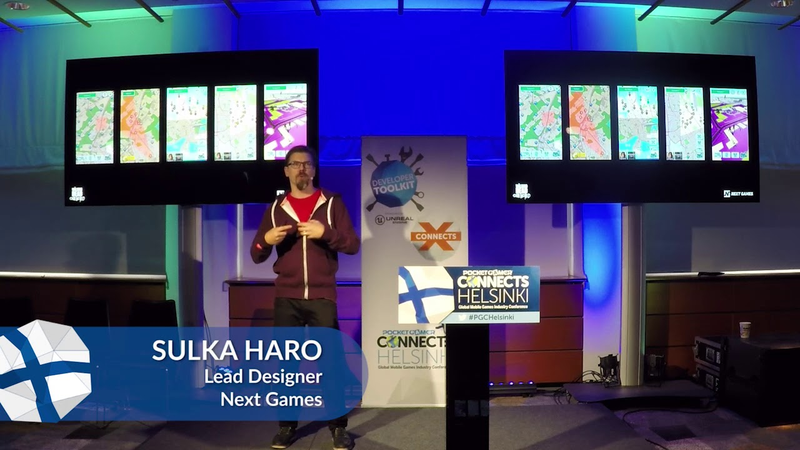
[Music] okay good afternoon everyone I hope you have still some energy left for the for the last presentation of today I'm here to talk about location-based mobile games - my name is Tim O'Hara and I started in mobile games in 2011 I joined that then fairly new company called gray area we were making the very first location-based game ever I would say called shadow cities it was a very ambitious and very pioneering product at that time it didn't end up being a huge success but it's a it's a kind of routing for us we we really made the made the first location-based game since then I've worked in in various
different mobile gaming companies and and quite recently founded our a new gaming company where we're back making location-based games again that company is called shipyard games we founded the company like a year and a half ago with some some friends I knew back from gray area days we're currently a six person studio working here in in Helsinki and simply put our vision is to build a new genre of location-based games we really believe in location-based games Pokemon go really really kind of made location-based familiar for everybody and we truly believe that there's an opportunity for for way more cooler gaming then the location-based games over at the moment I'm gonna talk about things things that we've learned while
we've been doing this you know 15 minutes is not a long time for explaining how to make location-based games but I try to focus on what I believe is that is the really most important things as an example I'm gonna use our yet unreleased title we're making a location-based city building game and you're gonna see screenshots of the game and and at the end of the presentation I hope I can show a video short video clip it hasn't yet been released it's been in in beta testing quite close beta testing for for now and we're hoping to to open it to a bigger audience as soon as as soon as possible this year is the definition of what a location-based game is in in Wikipedia it's a pervasive game in which the gameplay evolves and progresses real players location and I would claim that
you have to be pretty careful when when deciding what what kind of factors you actually want to tie to the players physical location and how much progress you actually want to want to title to real world location if the gameplay changes quite a lot let's say game is completely different in Helsinki and in New York the complexity and let's say the design really gets out of hand quite quickly and and and one good point also is that commonly players don't really move too much even though they are playing location-based games so I would claim that there they are playing up to two or three different locations mostly and if the game would be a very different in very different locations it kind of a big part of the gameplay would be left out of many many players we kind
of believe more in that location-based game should should in no way blend the real world with the game world it doesn't necessarily have to be your physical location as long as the game is so recognizable that that the place that is is depicted in the game is really familiar to to you so that you know know where the where the game is played and everything in the game kinda becomes way more meaningful to you when they are in places that you know in in a way this is also augmented reality so when you are actually in that physical location we can change the gameplay a bit and some things maybe work a bit differently and in a way we're augmenting the reality around you using
the the data that we get from from maps as well as in our games I think this is the probably the most important part when when making a location-based game you need to kind of assume that the player understands nothing nothing when they start playing the game you shouldn't just throw them in in a game and kind of assume that they realized that this is their physical location the the more game-like the world feels the less kind of recognizable it becomes and on the other hand if we would be building a game on top of a Google Maps probably everybody would realize that this is this is based on location but then again it would be most likely a really really boring game I'm going to show an example how we we can try to solve this problem mmm this is a comment from play this
Claude tester probably the the most obvious thing that comes to mind trying to communicate location-based in a game we need to ask permission to use location data unfortunately as people we've been taught to basically just accept everything every part that comes up and probably doesn't realize at all what they were doing so this is a comment like it's not a big deal I usually act except that anyways so at this point probably the user has no idea yet that the game is location-based game hmm we try to concretize really clearly that we are looking for your location and actually surprise surprise the easiest way to communicate to the player that we know where you are is to tell them by text so we utilize quite a lot like reverse geocoding in our games so it basically means that we turn the GPS
coordinates into into text based addresses so the first thing we show that the player before we even show the game world is that hey this is the place where you are this is Helsinki that's quite a name I got oh that's actually where our office is located and it's surprisingly immediately clear we use reverse geocoding for for a lot of stuff also in our game it's really easy way to to add more context in the game when the game world entities actually have physical addresses in the world because people usually know no streets and and kind of familiar streets around them hmm this is the comment from the exact same tester like 20 seconds after he just accepted the location permissions okay so they found me even on the street I'm at which is kind of scary this I think
this shows perfectly that we were able to communicate the user that this is a location-based game being scared is quite strong emotion obviously we don't want to scare I use it for for the big part of the users that's like wow effect hey I'm actually on that Street and well well in some cases obviously GPS and technology it's a bit difficult so in some cases we get the street wrong but in that case also the comment is basically that they are not on that Street but anyways the message I think was delivered this this is a location-based game this is a really long topic I probably won't go too deep into this designing early game user experience is really hard but partly due these all sorts of permissions and terms of services and privacy things that we we kind of have to have the fee to the user but also the
gameplay experience how it how it begins it's basically we have no control with it can be can be anything the user can can start the game on a train on a bus at home at the couch and we've been actually trying trying different different kind of things implementing implementing tutorials and trying to teach the game as well as possible and honestly haven't really found a good solution yet and it's one one big part where we're working on at the moment well it's kinda obvious that we have no control of the world where the player is playing the game kinda true kinda not that we obviously have control over the over the data that we we put in the game but but that data can be very different for different players based on where
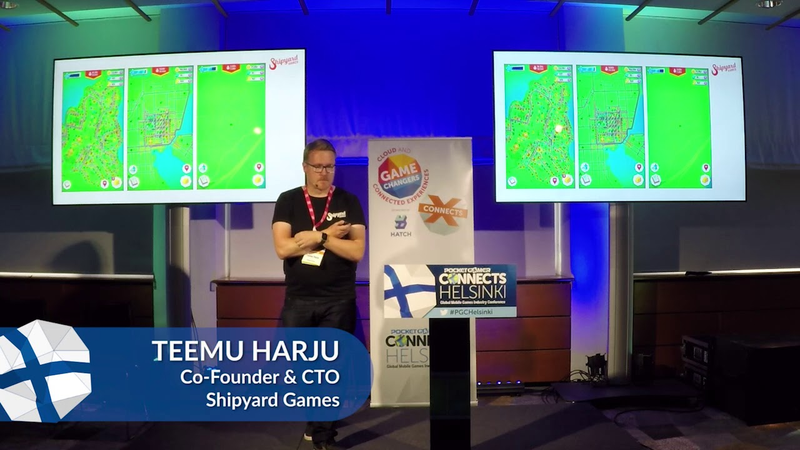
they're playing the game here are a few screenshots from our from from our testers so like I said we're building a city building game in a real world so everything is basically yeah like I said we have no control that there's a middle one picture here it's actually from downtown helsinki city building games usually are gonna using a great play grid based structure when building the city in there it sits really nicely great great paste and yeah it's gonna be beautiful with when you're building it on the left-hand side that is actually from ESPO in autonomy the the university campus area we had a really eager tester there who was basically built the whole whole place full and that kind of naughty shows how different it can be to a different player playing a different location and then there's the right-hand
side where there's basically one three having having no control over the game world is a big issue and what we've tried to do in this game is that we're basically limiting every every action you're doing in the game mmm you have to be close to a road to be able to build building the game and it has been kind of for us the the the key thing in our game mmm it's gonna get a bit technical I want to talk a bit bigger a bit about maps I don't necessarily think that every location-based game needs needs a map but they really help with kind of what I said about blending the game world and the real world kind of their only way at the moment I don't think like a our technologies are are quite there yet so a bit about maps maps are
full of information hmm if map has only a little information it's basically a really bad map so for a game you really need to be careful and pick only the Asian so data from from maps when you're building the game world mmm here are some again few screen sets I don't know how how visible they are but I'm kind of trying to show on the left-hand side there's well almost everything that we can get get from the data source that we're using it has way more roads real world buildings all sorts of stuff it kind of makes it immediately look less like a game on the right-hand side is actual screenshot from the from the game obviously it being a city builder we we don't want maybe the real world buildings there
and there's also some other stuff that we've we've done to make it not look like a nap and really to look like a game and and we've really really focused on that so mmm maps have lots of data it's really tempting you to use it use it all but but like try to try to have a real reason to include stuff in your game I'm gonna quickly talk about concept called uncanny valley it's it's a concept used when talking about robots that look very human-like and what kind of emotions that trigger in humans so the more human like a robot looks the more weird for a human it feels and you know in a way the same thing happens when you're trying to generate game worlds from real world data the more accurate you try to make it the more weird it really starts to
look this may be not the best best example but it's kind of trying to to illustrate what happens there's the small detail start to mean maybe a bit too much so when when showing a game for game world from close to the ground it gets really difficult to do it so a bit higher up it's easier you can kind of ignore the small details and I'm trying to try to make it more game-like so like a first-person shooter in a in a real city it's not something that I would necessarily start implementing and also a fact that like a lot of cities hardly work work as cities so it might be difficult to even then make a game like game level on them difficult thing to remember earth is not flat I would really like it to be it would make a lot of stuff but easier this is a bit of like a geek stuff for for map projection
nerds but if you're making a location-based game make sure that you understand what these are and for the end of the presentation this is the title we're working like I said it's still in pretty close beta test and I would like to show video if technology allows [Music] yeah that was it fairly short marketing video hope you got that in yeah thanks a lot if you have any questions again so quickly so there's a newsletter you
can also subscribe at our website if you're in if you're interested in when we're gonna release the game are the individual cities entirely like self-contained or is it like a shared world between Claire's for now they are contained every day everybody is building their own city we started with a single-player experience first but we will definitely be adding adding multiplayer it's it's kind of a tricky thing for city builder but we have lots of ideas we first want the single-player experience to work very well more questions so in the early game experience in the
basic tutorials and so on what are your thoughts on forcing the player to move around since I'm getting that's a key component in the indie game play forcing the player yeah so they can't complete yeah it's one place yeah yeah it's it's there like like I mentioned I I kind of had had it on the slide but kind of then figured out it's such a big topic that I probably better better go through it quite quickly but yeah yeah it's a it's a really really difficult problem to solve and basically if you look at current location-based games kind of none of them try to teach you too much very early and it's going to do nothing and kind of just throw you in the in the deep and then and force you to learn the game by playing but we really don't want to want to do that we we can't at the first version that we did for the game was that we we actually throw the player to a unknown location where they can
kind of in a sandbox environment play the tutorial but we're not necessarily sure that's that's a good thing because that kind of breaks the the feeling that hey know I'm in Helsinki when I start the game and then we throw you in somewhere in Alaska or something and it's just really confusing that so we somehow need to be able to make let's say tutorial very dynamic in the game [Music]
Summary
The development of location-based mobile games requires a careful balance between integrating real-world geographic data and maintaining a cohesive, engaging game experience. Shipyard Games, a Helsinki-based studio, emphasizes that the primary challenge in this genre is effectively communicating the game’s reliance on physical location to the player without causing confusion or discomfort. Because players often play in limited, familiar environments, developers must avoid creating gameplay that is overly dependent on specific geographic locations, as this risks alienating users who do not move frequently.
A critical finding in designing these experiences is the importance of transparency regarding data usage. Developers should utilize reverse geocoding to translate GPS coordinates into recognizable street addresses, which helps players immediately grasp that the game is tied to their physical surroundings. However, designers must navigate the "uncanny valley" of map data; attempting to replicate the real world with perfect accuracy often results in a cluttered, non-game-like aesthetic. Instead, developers should selectively curate map data to prioritize gameplay functionality, such as restricting building mechanics to road networks, rather than attempting to render every real-world detail.
The early-game user experience remains a significant hurdle, as developers have little control over where a player initiates the game. While tutorials are essential, they must be dynamic enough to function regardless of the player's starting environment. For city-building titles, the goal is to blend the real world with the game world through recognizable landmarks while ensuring the interface remains intuitive. Ultimately, the success of a location-based title depends on the developer’s ability to transform raw geographic data into a meaningful, game-like environment that feels personal to the user without becoming overly complex or intrusive.