AR reports and market data
59 game industry reports, presentations and talks about ar from writers such as PocketGamer.biz, Game Developers Conference and Extra Credits, newest from 2025. Every document has a summary and key insights with the page they come from.
Documents

How to Make Money in XR - 10 Tips for Success | Develop:Brighton 2024
The extended reality market demands a strategic focus on high-quality, immersive interactions that provide a distinct value proposition over traditional gaming platforms.
- Successful XR titles prioritize high-quality interaction mechanics, such as the tactile feedback in 'Walking Dead: Saints and Sinners' or the physical movement requirements in 'Gorilla Tag', to create memorable gameplay.
- Data from November 2023 indicates that top-performing XR games correlate with higher review counts per sale, and there are specific price points—often around £22.99—that show a higher likelihood of achieving top-50 sales status.
- Market growth is driven by three distinct segments: core XR enthusiasts who play multiple times a week, 'XR curious' users who bought headsets during COVID-19, and a rapidly expanding demographic of younger players.

Market Update: UEFN Monetization, Meta’s Vision, and the Future of Consoles
The gaming industry is currently navigating a period of structural transition, characterized by a shift toward platform-driven economies, hardware innovation, and evolving financial models.
- Epic Games is expanding UEFN monetization to empower creators, though the long-term impact remains uncertain regarding whether this revenue is truly additive or if it cannibalizes existing Fortnite store spending.
- Meta is prioritizing an entertainment-focused strategy for its hardware, exemplified by the $799 price point for its latest AR glasses, which aims to attract early adopters to build an app ecosystem despite current limitations in user comfort and content depth.
- The gaming investment landscape is shifting toward specialized financing models, such as UA (user acquisition) financing, which allows companies to raise capital specifically for scaling growth rather than relying solely on traditional equity rounds.

Interview with Yi Yuan, at Hiverlab: Southeast Asia
The interview underscores a shift in Southeast Asia’s convergent-content market from speculative metaverse enthusiasm to a pragmatic, ROI-driven landscape where augmented reality has become the primary vehicle for marketing and tourism initiatives.
- Southeast Asia’s convergent-content market has shifted from speculative metaverse projects to a pragmatic, ROI-driven focus on augmented reality for marketing and tourism.
- Success in the region is measured by quantitative metrics including dwell time, interaction density, and social-virality indicators rather than technological novelty.
- Large-scale AR deployments are currently anchored by government funding and mobile-first infrastructure, utilizing WebXR and 5G networks to ensure scalability.

XR: X-plore, X-plain, X-amine
The extended reality (XR) sector is currently defined by a massive influx of capital from major technology firms, most notably Meta’s forty-billion-dollar investment in Reality Labs and Apple’s entry into the premium spatial computing market.
- The XR sector is currently defined by massive capital investment, highlighted by Meta’s $40 billion commitment to Reality Labs and Apple’s entry into the premium spatial computing market.
- The industry is shifting its strategic focus from gaming-centric hardware toward general-purpose, productivity-focused computing to mirror the adoption patterns of PCs and smartphones.
- The market is bifurcating into two distinct segments: Apple is targeting the high-fidelity premium space, while Meta is prioritizing mass-market volume.
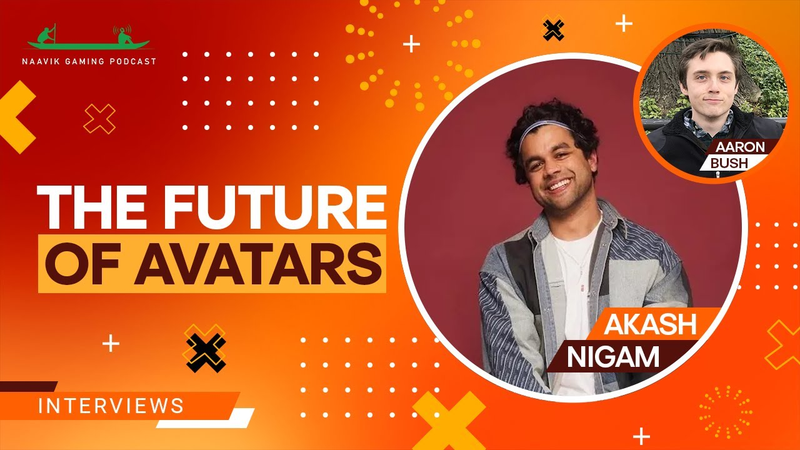
The Future of Avatars
Avatars are transitioning from static digital representations into persistent, user-owned identities that serve as the primary medium for human expression and communication in immersive 3D spaces.
- Avatars are evolving from static representations into persistent, user-owned digital identities that function as the primary social infrastructure for immersive 3D spaces.
- The industry is shifting toward interoperable character frameworks that allow digital identities to move seamlessly across diverse gaming and mixed reality environments.
- Machine learning is being utilized to retarget animations and assets across platforms, effectively breaking down the limitations of proprietary walled gardens.

The Design of HoloVista: Crafting Mechanics for Immersive Storytelling
The development of HoloVista centers on a thematics-first design philosophy, prioritizing the exploration of memory, identity, and the influence of social media as the foundational pillars of the experience.
- Prioritizing thematic pillars—specifically memory, identity, and social media influence—over initial influencer-based concepts allowed HoloVista to establish a cohesive narrative identity.
- The development team improved narrative clarity by pivoting from a complex branching structure to a more focused, linear experience.
- Replacing diegetic realism with structured, intuitive mechanics like camera-based interfaces and hidden-object photography increased player immersion.
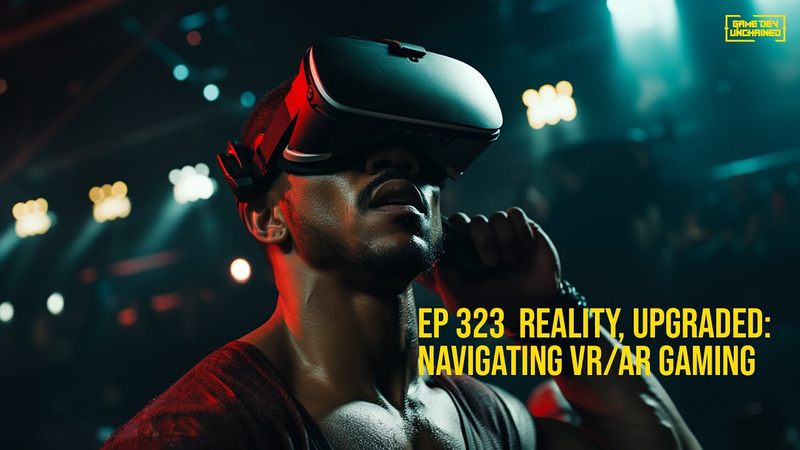
Reality, Upgraded: Navigating VR/AR Gaming with Alex Silkin | 323
The virtual and augmented reality landscape is currently undergoing a pivotal transition, shifting from a niche gaming segment toward a broader, more integrated computing platform.
- The VR/AR industry is transitioning from a niche gaming segment into a broader spatial computing platform, driven by competition between Meta’s standalone ecosystem, Sony’s high-fidelity hardware, and Apple’s Vision Pro.
- Corporate-led 'metaverse' strategies focused on productivity have largely failed to gain consumer traction, as users prioritize entertainment and social engagement over top-down virtual environments.
- Platforms like Roblox and Fortnite demonstrate that successful virtual interaction is built on gameplay-first design and organic, user-generated content rather than speculative corporate branding.

Embracer Restructuring / Apple’s AR / Not-E3 Week
The gaming industry is currently undergoing a structural transition characterized by a move away from aggressive, acquisition-led growth toward fiscal discipline and a focus on established intellectual property.
- The gaming industry is shifting from aggressive, acquisition-led growth to fiscal discipline, as evidenced by Embracer Group’s transition from a decentralized roll-up strategy to a centralized model to address debt and operational inefficiencies.
- Rising interest rates and higher capital hurdle rates have forced developers to abandon high-volume, 'shots on goal' development strategies in favor of sustainable production and the cultivation of established mega-franchises.
- Launching unproven intellectual property has become increasingly risky due to heightened competition for consumer attention across the broader entertainment spectrum and rising costs for user acquisition.

Apple Is Hiding Something About The Vision Pro...
This analysis examines the Apple Vision Pro, evaluating its technical capabilities, potential use cases, and the broader implications of its market entry.
- The Apple Vision Pro functions as a foundational social experiment and platform-building exercise rather than a polished consumer product for the mass market.
- While eye-tracking and gesture-based navigation represent a significant technological leap, the device is currently hindered by a restrictive two-hour battery life and excessive physical weight.
- There is a marked disconnect between Apple’s marketing of a seamless augmented reality future and the practical realities of social isolation and physical discomfort during domestic use.
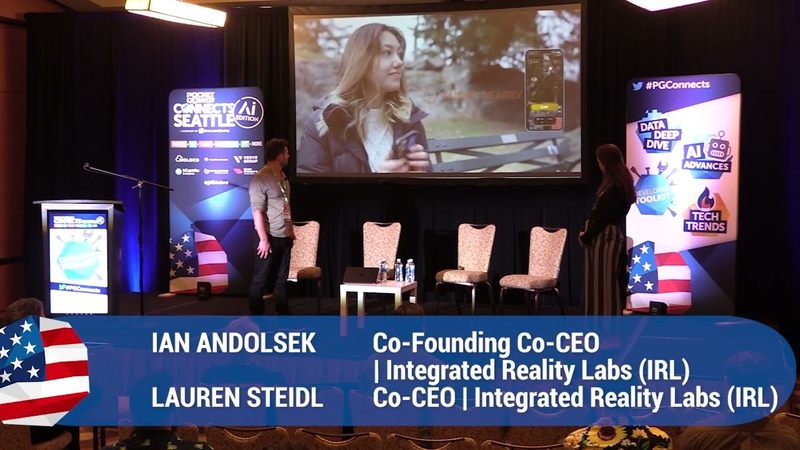
Session: Integrating Games with Reality, Lauren Steidl, & Ian Andolsek,
Integrated Reality Labs explores the emerging category of integrated reality (IR), a gaming framework that leverages real-world sensor data to facilitate social, location-based play.
- Integrated Reality (IR) is a gaming framework that uses sensor data like Bluetooth, GPS, and NFC to enable screen-free, location-based social play, distinguishing it from screen-reliant augmented reality.
- The platform aims to professionalize unstructured social games by replacing manual coordination and self-reported outcomes with automated game logic and sensor-verified interactions.
- Integrated Reality Labs is developing 'Slap,' a flagship product designed to automate game mechanics like eliminations and proximity tracking for large-scale, long-term social games.

'Insurrection 1944': Bringing Interactive Storytelling to a Museum's Audience
Insurrection 1944 explores the integration of mixed reality (MR) technology into cultural heritage sites, specifically the Museum of the Liberation of Paris.
- The 'Insurrection 1944' project successfully integrated Microsoft HoloLens mixed reality into the Museum of the Liberation of Paris to reconstruct historical environments where physical artifacts were absent.
- Since its 2019 launch, the installation has hosted over 10,000 visitors and achieved high satisfaction rates across diverse age demographics, effectively attracting younger audiences to the museum.
- To overcome technical barriers for non-technical users, the project utilized a mediator-led model where museum staff managed all hardware, allowing visitors to focus exclusively on the 25-minute narrative.

Keep Redlining OUT of the Metaverse
The Black Developers Initiative (BDI) at Niantic serves as a framework for addressing systemic exclusion within the gaming industry, specifically targeting the lack of representation for Black-led development teams.
- The Black Developers Initiative (BDI) at Niantic aims to dismantle the industry's 'pipeline of privilege' by providing Black-led development teams with essential funding, mentorship, and resource access.
- Industry demographics have remained stagnant, with the percentage of Black developers holding at approximately two percent since 2014, according to IGDA data.
- Systemic barriers to entry include limited access to capital, confirmation bias in hiring and publishing, and a reliance on 'battlefield promotions' that favor existing professional networks.