1 free read left. Create a free account for unlimited reading + AI research.
Create free account
How developers can bring augmented reality games to the masses in 2019
Key insights
6 takeaways- 01Early hit titles in the AR space are likely to emerge from virtual pet and social experience categories as the industry moves toward a convergence of AR and VR technologies.
- 02Mainstream AR adoption is currently hindered by the lack of established design standards and the friction caused by requiring users to scan physical surfaces to anchor virtual objects.
- 03Successful AR experiences currently rely on high-quality character design, the use of portals for immersive windows, and intuitive 3D navigation.
- 04Developers should prioritize creating experiences that justify the effort of setup, as current environmental requirements like clear floor space are incompatible with casual, on-the-go gaming.
- 05Mobile AR platforms like ARKit and ARCore have expanded the potential user base to hundreds of millions of devices, yet developers struggle to move beyond simple 2D mechanic adaptations.
- 06Multiplayer AR development is currently limited by synchronization complexities that impede casual social interaction.
Ask AI about this video
Transcript
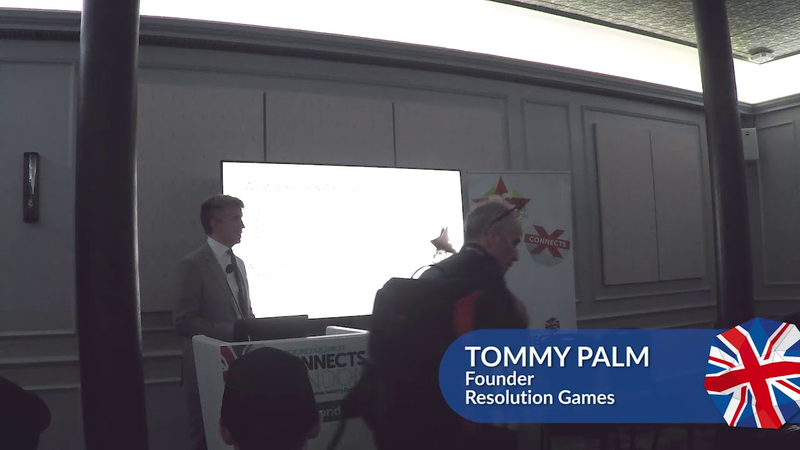
[Music] so my name is Tommy pom from Sweden I'm a CEO and a co-founder of a studio called the resolution games who is focusing a lot on what we call visual computing so Bjorn a on and yeah I'm gonna talk primarily about a or but also touch a little bit on view so I'm an engineer from being I've always been very interested in in human evolution and progress and if you look at some very very important milestone in the history of our species it basically
starts with information technology around somewhere hundred thousand fifty thousand years ago when we start using language to communicate with it was a huge upside we had on the Neanderthals and that we could speak and convey a complicated chain of thoughts to each other yeah we don't have much evidence on exactly not when this happened because text wasn't invited until some 5000 years ago and I read very fondly that the first evidence of text we have is some scribbled from an accountant and his name is saved in history I think it's very funny yeah then some 500 years ago Gutenberg invented the printing press here in the in the West and that was important because it started and making books much more readily available to to more people and then Internet some 50 years ago came along and made information much more accessible today
about all of you here have smartphones that you use to instantly look up something you don't think is factual or you're curious about and very soon we'll have VR and AR that will help us find information very quickly so this comes in parallel with revolution in AI and voice recognition as well and one really cool thing is here is how quicker these milestones happen because this information is spread quicker to a lot of people and I think that this is going to to happen faster and faster of course so if this is such a major breakthrough in humanity why we're talking about games well when it comes to V or na or it's fundamentally game technology used to to create experiences you need to build virtual worlds virtual objects animation voice acting things like this something that game companies
typically is very good at and having the course so from my point of view I think it's it's a you know I started with games because I love playing games and then eventually I found out that I really enjoyed making them and now we're at point of history in time when when making games it's actually incredibly important than you can you can get a really an exciting position in our society by by being able to create this type of interactive software but in my brief talk today I'll talk a little bit about game as a business just to set the stage have started five games companies resolution games my fifth startup yeah talk a little bit about the a or potential and and compare a or MVR a little bit and and look at two of the AR games that we've been working with internally so first just my view of what
AR is so so we'll have a common language I think about Robocop you know looking forward having a helmet on that helps you instantly calculate things being connected to a computer through a camera feed and I think that's actually one of the biggest components that you don't think about I think that's big one of the biggest changes that's gonna happen in our society soon we've all accustomed to carry around our smartphone but it's it's a very big step to have a camera that's always on with you and that camera doesn't necessarily need to for you to save the video file all the time but have it connected to a processor who can help you instantly find out what it is that you're trying to do and then be contextually aware of your surroundings and today we have obviously helped mounted a or such as magiclip which haven't really come yet and then we have mobile AR that is already available but
hasn't really taken off either so fairly fairly new so first of all i just wanted to say something about making games as a business it's incredibly difficult that's one thing I've learned about working professionally with games for past 20 years you need to make a lot of games in order to make sure that one of them is very successful eventually um and I have found out that it's it's from my point of view it's a little bit like art game needs to be about something new they have need to have a new component it's very difficult to copy paste what somebody else have done and be successful with that you need to change at least something and bring something new into that mix in order for people to be truly excited about what it is that you do and that's also in these new buzz
words you know in the 90s used to be multimedia and there's a lot of blockchain talking and things like this now yeah but we're talking about a or and specifically when you talk about marketing and things like that there is this blue ocean red ocean scenario where where mobile games is typically a red ocean scenario with a lot of shorts in the water the competition is very fierce when it comes to V or an AR it's more of a blue ocean scenario there's plenty of it's a new space there's plenty of fuel food for everybody it's very helpful when you start a business to be here according to my experience so what does V or an a or have in common I at resolution games we released five VR titles so far and we've we've learned
a lot for for working with that for four years especially there's a lot in the production cycle itself that is very similar so the production pipeline that the skillset that you need to create experiences I've heard that unity is used for 70% of all apps in the VR space that's something that I absolutely believe both unreal and unit is extremely powerful tools when creating this also this brings us a new ability the controllers themself all of a sudden you have an ability to actually work in the 3d space which is something that's very exciting and probably eventually will also come to 2d screens in PC I'm sure that there will be a really interesting you can model things for instance or play games that were made for for VR with a PC if somebody brings
those controllers over now and what is different well most things actually if you look at especially the use cases on how you play games a or games can be much more social experience with the people in the same room who are not on the same device as you are for instance yeah so so it is hard some games can work to bring across and I'll talk about one of the games that we work with for that yeah one of the things that I was very interested in seeing this year in the keynote of oculus was that for the first time oculus was speaking about a or and and saying that there is a lot of similar similarities between them and eventually they think that these two technologies will will merge somehow the perfect a or glasses will also have the
to play VR games yeah if you look what you know I think that a or primarily will be used for is things that help you access data faster Virtual Assistants for instance is a use case that is we're starting to see more and more getting suggestions on what you want to type and things like this and having a camera and a microphone that is constantly following your situation will help you faster find what you're looking for which is very very important in our lives so less less clicking and less breaking a conversation because you want to show a certain video and you end up looking for it for a really long time so the first kind of case study I wanted to go through is something we call bait under the surface and we released a
fishing game back in 2016 for VR called bait and it's been very successful in VR headsets we have more than two and a half million downloads of that game primarily for mobile VR so it felt like a natural place for us to start we already had a lot of assets and gameplay that worked really well so we started creating a mobile version a mobile a or version of this game that we call baked onto the surface we had already also developed a multiplayer game for for Facebook spaces where you could play ice fishing with your friends and we saw that was very fun too to have this type of social activity with us I did a lot of interviews with journalists fishing and talking about the game at st. apps really fun but we started with this project back in the summer of 2017
and we had a very small team originally being very agile we didn't know exactly what would work but we wanted to try and find some really nice aspect of this that would work because as I said they are very different platforms we tried with with making a fish tank where you could fish different type of fishes and then collect them in a tank and they create your tank we didn't feel that that worked really well so we dropped that track is that developed a lot of different environments where where we had more than 70 different fish species that you can find some of them rare and we managed to to make a lot of 3d assets specifically for this game and a lot of
it it's also potentially could be used for for the VR game as well as who build from from a bait shop that's available in the VR game that we have updated the graphics so you can walk around in the space and and interact with objects there one thing that works really well in in VR and also in a or is characters so we spend a lot of time at focusing on making interesting characters non playable characters that you can meet in-game that you want to help out by by solving missions and thanks for them and these are just some examples of different characters that we with added this is one of the court scientists that
helps you give you mission excetera and you help her on this island to to find fish species yeah we worked a lot with different user interface this is something that is fairly there is not a lot of standards around a or user interface similar as with VR there will eventually be standards but right now there's a lot of time you can spend on trying to optimize so it's it's easy to use we we also spent a lot of time on on visual effects so you'll try to merge the real world with the virtual objects as much as possible here's a list of different things that we did like cracking up the surface so that you know looking down
adding depth to things that typically works really well as as an optical illusion for for a or and we this is an example of what it looks like so you crack the hole in your inner surface you need to scan for for a flat surface first and then it opens up a fishing hole and then there is a bunch of interactive objects and you can fish there we even made a multiplayer version of this so you could have fish with friends and one of the things that we discovered is that these tools are still rather crude from a game developers point of view it's very easy from from a designer to say that you you want to have like somebody's fishing and then your friend can join you at the same fishing hole that's what we would like but in reality you have to do was dance
to sink your phone so it it knows it's seeing exactly the same thing so it turned into a very complex user activity to get to to this very casual thing that fishing is and we came to the conclusion eventually that it actually isn't a good match with fishing and and mobile AR so we we've recently decided to actually put this project on hold for now even though from my point of view it looks fantastic and I would love to play it but it just doesn't really work and a lot of it is the fact that it requires much more of the users to scan these surfaces so if you think about typically places where
you play your mobile phone your favorite mobile phone games it's it's in a very casual environment you take it up when you're on a tube you play it in the bathroom etc and a lot of these places don't have good surface area to play so typically a desk or a big floor is good places to to fish or to open a hole in and even if you talk about the floor then you end up being very very far from the virtual objects that you want to interact with any questions I would love to to answer it's such a small group we can be fairly interactive I don't have a ton of time so so this second game yes so question yeah I'll get there in my in my kind of
conclusion slide there yeah other example that we worked on is a or game for for magiclip together with drove we also made an Angry Birds game [Music] [Music] you you recognize the familiar gameplay from from the 2d game except this is in real 3d so you can go in and come very close to the characters and it works really great obviously the the magically
platform is still very very small and as a small number of players but from a developer point of view this was very interesting and I definitely think that there's a lot of people that tested the game loves it and think that it's very intuitive and true today original um one of the things that work really well in this project is two characters there's a lot of humor and you can come come very close to them yeah so a little bit to complete it and come back what these things that you really can do today I think one of the things that I really love that's magical about AR is creating portals and be able to to go into C windows into these virtual environments and navigate around in the 3d world characters work exceptionally well it's as you probably know if you're the M verbs very hard to do credible characters takes a lot of effort but but
it pays out if you if you make something that is believable and as I said 3d navigation is one of the really big things certainly yeah all of a sudden you have a very logical way of moving the camera around in this 3d space yeah but as I said scanning for surfaces it still requires a lot about the user so I don't think casual games is very good in this space right now you need to do something that people are willing to engage to a lot more so multiplayer experience is probably better of that reason that you're doing it together with your friends or or it becomes a bigger more interesting topic for somebody to to do you know and if you think about a lot of where games are mobile you are downloaded it's that is a big
challenge for for AR games because if you're on the tube and you download it you can't play it instantly so currently there is hundreds of millions of devices that is a are capable with a or Corneille or chips I'm sure that we will see some hit AR games in the market they are being pushed from Google and Apple quite heavily I would would be not so surprised if they contain virtual pets for instance that is something that that works really well because of what I've talked about and and I'm sure long-term a or will be super super interesting and then this is an opportunity to to get people more familiar with technology and as a developer to to to learn what you can do so I would advise anyone to to give it a try and it's lovely to see all
that artwork is wearing in the process coming through to your ideas and there was a very open honest conclusion you gave there but I think also that's a really nice way to show that AR is very exciting it's pioneer stuff still but thank you so much tom [Applause] [Music]
Summary
Augmented reality represents a significant frontier for the gaming industry, yet the transition from experimental technology to mainstream consumer adoption remains a challenge. While mobile AR platforms like ARKit and ARCore have expanded the potential user base to hundreds of millions of devices, the industry currently lacks established design standards and intuitive user experiences. The primary thesis is that while AR offers a "blue ocean" opportunity for developers, success requires moving beyond simple adaptations of existing 2D mechanics to create experiences that leverage the unique spatial and social capabilities of the medium.
Key findings from development efforts, including projects like Bait! Under the Surface and an Angry Birds title for Magic Leap, highlight that technical limitations often hinder casual play. Specifically, the requirement for users to scan physical surfaces to anchor virtual objects creates friction that is incompatible with the casual, "on-the-go" nature of mobile gaming. Furthermore, multiplayer AR experiences currently suffer from synchronization complexities that make casual social interaction difficult. Despite these hurdles, certain elements consistently succeed: high-quality character design, the use of portals to create immersive windows into virtual worlds, and intuitive 3D navigation.
The industry is currently in a pioneering phase where developers must experiment with new interaction models. While mobile AR is currently constrained by environmental requirements—such as needing clear floor space or desks—the long-term trajectory suggests a convergence between AR and VR technologies. Developers are encouraged to view AR as a tool for contextual awareness and data access, with virtual pets and social experiences serving as likely candidates for early hit titles. Ultimately, the industry must prioritize creating experiences that justify the effort of setup, as the current "red ocean" of mobile gaming contrasts sharply with the open, albeit unrefined, potential of the AR landscape.