1 free read left. Create a free account for unlimited reading + AI research.
Create free account
Mobile AR/VR/MR – Where's the market headed and what do the numbers look like?
Key insights
6 takeaways- 01Mobile AR is the dominant growth sector, projected to reach a 3.5 billion user base and $85–$90 billion in revenue over the next five years, significantly outpacing VR.
- 02VR is forecast to remain an entertainment-focused niche, reaching 50–60 million units and $10–$15 billion in revenue within five years.
- 03Market growth is expected to accelerate following the anticipated introduction of tethered smart glasses in 2020, moving the industry out of its current experimental phase.
- 04Asia is set to become the largest regional market, eventually accounting for over 50% of global AR/VR revenue, with China leading in mobile AR and the U.S. maintaining a lead in VR.
- 05The platform landscape is defined by competition between Apple’s ARKit and Google’s ARCore, with ARCore expected to gain significant market share through expansion in China.
- 06Venture capital is shifting away from simple platform ports, prioritizing startups that use computer vision and machine learning to solve real-world problems through native mobile AR applications.
Ask AI about this video
Transcript
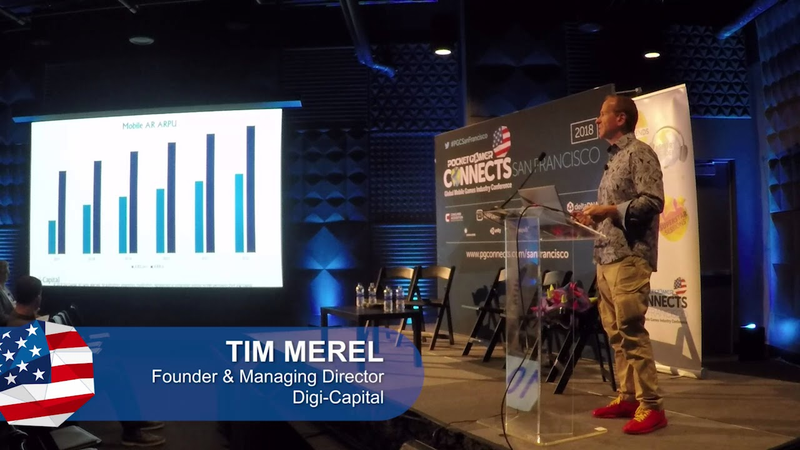
[Music] [Music] so I'm Tim Merrill from digi capital and when our VXR our advisor so we do four things we use reports on the market to help folks know where the markets going analytics tools we do strategy consulting topological small companies startups as well and investment banking help efforts to buy and sell their companies my background I'm a software engineer investment banker lawyer and founder I'm sorry purchase from both the creative engineering perspective as well as from the investment and in financial perspective mr. V R and X are are the
fourth wave of consumer technology each wave has been bigger faster and had more impact than one that came before us so the PC took about twenty years from when the Apple to launch to win most folks had a PC at home the internet took about seven years from when that really got going to her most folks had broadband at home with mobile took about three years from when Steve Jobs launched the iPhone to where again many folks had a smartphone who they are a VR even though the market really launched Transtar 2016 by the end of this year you'll have an installed base around 900 million for a kit our core Facebook camera effects so it's still very early days but the scale is already being to build this is how the market looks as itself thinks in terms of virtual and augmented in terms of the high-end premium solutions or whether they be PC based or standalone and the mobile ones again either a smartphone or or standalone and there are a bunch of different players already flying at the platform level to
see who's got to win a lot of familiar names some very very large ones some of the smaller Zeeman or I've heard of the cell the industry sees itself we've been that's quite right this is how we see the industry it's really about users use cases and the companies that actually make that possible said about 28 different sectors here it's a bit of an eye chart terms of the size of the logo so I'm sorry about that but you get a feel for already the complexity that's in the industry and these are the guys who are going to make the industry sing or not I start in terms of the industry scale with installed basis and for the folks in the room who ministry mobile are the chart hall that's quite helpful again we'll have about 900 million installed base by the end of this year approach three and a half billion within five years so it's really this the only scale market in our own VR globally for the foreseeable future if you take mobile they are out and then anybody in the market in the room who doesn't know what mobile I are is for the headset market the scale is
quite different here you're seeing VR we think we'll get to about 50 to 60 million installed base in the same time frame so much much lot for smart glasses again it's going to start to approach 50 million so really the only scale market here is mobile IR for every perspective it's not exactly the same picture although there's some common themes what you see is that we forecast that they are so mobile IR and smart classes will approach eighty-five to ninety billion revenue in five years time while VR will be around ten to fifteen billion so much smaller market it's still a very good deep market but not the same scale mobile we think will be the largest component of that if you look at it by the individual markets it's quite different and again the scales are different here they are is a much broader application sort of platform in other words you can use it for e-commerce for advertising for a lot of non games apps games enterprise or
location-based and so on the VR side of the market is basically an entertainment market so that's games video location-based entertainment and so on so very different sorts of use cases across the different markets and different types of sources of revenue diving in to the different business models looking it from an app store perspective for our last year games dominated and this year again we expect games to dominate revenue for our particularly mobile IR we're going forward we expect all the other categories to take more than half of all our revenue in five years time so games will still be the largest single category a lot of opportunity but we're seeing a bit of a Cambrian explosion of different use cases different business models coming up on the VR side it's games it's dominated so far in five years time it'll be 85 to 90 percent of revenue so everything else on from an app store perspective so in-app purchases and premium revenue is very small and the VR side ecommerce for AR
again it's early days but we expect it to be the largest single revenue stream for the AR market and the easier lis example that is how's the lifestyle retailer Krystal's couches and so on they've already demonstrated that they get 11 times sales uplift using mobile IR in their app versus using a standard mobile app now an e-commerce getting a 5% uplift is huge 11 times it's completely unheard of from advertising perspective it's a broadly similar picture in terms of timing and growth but again you're seeing a bunch of different categories and that's where Facebook intense it in particular will do very well out of this market out again putting a lot of effort into it for enterprise it's very early days we think that when Apple enters the market and we've been forecasting them entering with smartphone tethered smart glasses in 2020 that'll be a catalyst and then we expect that market uptake very quickly going from the business models to countries and this pictures
might not be what you expect last year the u.s. generated more revenue than China for a RvR across the piece so going forward using the natural advantage that China has in terms of installed basis in terms of mobile specifically we think that China will be the largest single country market globally growing at a much faster rate in the US if you didn't to say that the US and other Western countries want to extremely well from a RvR we forecast that they should when you combine China Japan South Korea India the other major Asian markets we think that AR and VR should from Asia should count for almost half of all our VR revenue globally then followed by Europe then followed by America so if you don't have a view on the Chinese market in particular there's a big opportunity that you're going to be missing out on again looking at that by the different countries in VR specifically the US will have a slight edge over China in overall terms and that's to do with the install base of consoles that are capable of running VR
Sony in particular as well as the gamer economics in Western countries but again if you combine all the Asian countries together there'll be a pressure will be approaching half of all VR revenue in five years for our different picture and that's really where China China's dominance we think will win out we expect China to generate almost half again what the US will generate in five years time and again Asia combined over half of all our of all our revenue in five years so the regional it's Asia then Europe then North America and then the other markets now mobile specifically and here the platform war that began well in China it began at the start of last year in the West it began in the middle of last year and again here we're talking about phone and tablet they are not smart glasses all major players have come in and this is one of those sesame Street moments you know which of these things is not like the other which of these things is
not the same if you look at the major Western players they've all come out and said we're building the biggest AR platform in the world we're huge Jack Ma did a partnership with Starbucks the largest single Starbucks in the world just opened in Shanghai last year it was mobile AR enabled from the start he's thinking about how he sells coffee we think Czech Mars approach is the right way to approach this you've got to think about it in terms of users use cases and then ultimately how you gonna make money out of this market so the technology is very important that's not the major thing it's about the users in the use cases looking at the individual mobile our platforms the big big three in the West are they are cute camera fix and our core our kit will be the largest platform this year get passed by our core globally next year and the alcohol will eventually be a much larger platform in terms of the total installed base the Facebook camera effects it's a different sort of a platform it's more of an advertising entertainment platform tonight is general purpose as the others but even
that we expect will actually passed a are kept globally in five years taking faithful camera effects out of the mix and looking just at the major ones with our cute they are caught you have to think about the different country markets and because Google pulled out of China for several years ago really the choice our core market whether it's implementations of our kit out core from Google in China or whether its domestic AR core you get a very different dynamic here what you see is our kit will dominate for the next couple of years being it passed by our core outside of China in 2020 which will eventually be larger but not that much bigger and we can we see the Chinese version of our core approaching the global level of AR kit in five years from an RP perspective so average revenue per user there's no contest our kit is a superior commercial platform today and will be in five years broadly speaking as a developer you'll need about two our core users take as much money as you make from one hour kit
user so what we think that means is that for the best developers they'll probably start with our kit first when you then combine all that into a consumer revenue you get a very clear picture they are kit is the superior commercial platform and will continue to be so from a game developers point of view what we expect is a dynamic that you often see in the broader mobile mobile games world where they all start with AR and we start with iOS or in this case they are kit if they are successful then do a port onto a our core which is relatively straightforward some developers may actually just focus on our kit because of the scale of the market so it really depends on what you're trying to achieve however this picture looks very different in China where because of the dominance even though Apple took 85 percent all the Chinese premium smartphone market last year Android phones dominate there so it's a different picture that you have to think about it differently for that market from an e-commerce perspective there's only a slight premium for e-commerce
I always versus Android so they are capable dominate for the next couple of years then get passed by I our core globally but again that split between China and the rest of the world and advertising there's a slightly smaller premium but a broadly similar picture so again hey I'll get dominating the next couple years and then getting passed by IARC okay I'll call globally but again divide it between China and the West at a total consumer platform level from revenue perspective they are Cube dominates the next couple of years thing gets passed by our core globally and again that's divided between outside China inside of China so again commercially tokens your revenue perspective and keeps the biggest single platform if you think about it that way now jumping that to the money side of things and thinking about how VCS think about it and where the money's coming from so again if you were again how many startups are in the room okay if you guys if this is for you guys you need to understand how this market works because they see mobile IO as part of a continuous fruit into
computer with computer vision now if that picture around the different sickness was complicated for startups this is much more complicated because usually you have a bunch of different VCS will come into any one round so there are hundreds of hours of VCS who've invested into the different sectors at different stages of the market picks a certain video there are a lot of folks who invested early on into the 360 video market just around VR things could be more challenging for them as the scale that market is the smaller the two markets for some of the other spaces you're seeing a lot of really interesting and very intelligent investing happening now around mobile art and computer vision specifically in terms of the actual dollars what you see is that it's been kind of lumpy there's broadly being about 300 to 500 million investment to a quarter for the last five last five or six quarters as a stable level but it made some really big big lumps whether it be improbable raising half a billion or unity or magically so to understand it from a start-up perspective you need to look at
the number of deals the volume and what you see here is there was a bit of a spike around some of the the early VR stuff but it's stabilized more and what we're seeing is a lovely steady level of early-stage VC investment but the nature that that investment has changed so to get a handle on that we we know quite a few folks in the industry so we spoke to a few friends in Sand Hill Road and in China to get a feel for how they're thinking about the market so wanna give you the top line as to the major points and again with all this stuff this is really the top line of what's in the reports that we produce so if you want more detail go to the website there's a huge amount of detail there the report itself is about 230 odd pages now said so it's a lot of detail under this they see mobile I on computer vision and machine learning I think ends of the spectrum any of the folks here either at Google IO or did you watch the livestream anybody in the room okay great well if you saw the example that have a
strongest visceral reaction from the audience because I was that they what was happening chat with a partner about this afterwards Google showed that how they solved a fundamental critical problem using mobile iron computer vision now I don't know about you guys when I come out of say Embarcadero station and it says go south I don't know where South is so I can't find my way well Google showed was a version of Google Maps where it uses computer vision and it shows you where South is and actually gives you a little fox that goes where you're going so you look at as we're going you're not late for the meeting anymore now what's really interesting about that is when thinking about use cases we often think about the difference between critical and valuable valuable might be technical difficult to do it might be really exciting you might be really cool but actually you know transforming the users experience critical and I think this is a critical example fundamentally changes these er experience and enables the user to do something they couldn't do in any other way this isn't possible with any other technique and so that sort of thing is
what pcs are particular excited about in a mobile AR space so from a game development perspective you've got to think about yes of course you could do a pokemon go knock off you could do something like that but is there actually critical to anybody from a user's perspective is that going to change the experience is it something that you couldn't do any other way so don't just think about it's cool think about what you're doing which is going to make a huge difference for the user at the other end of the computer vision it's being used in a very broad set of use cases it's not just mobile IR it's it's it's autonomous driving it's all over the place and again that space is one that faeces are very excited about our it's very early stage now if anybody has said to you that this is the year for a on VR it isn't yet from a revenue perspective we think that it's going to start kicking up next year and if we're right and we've been forecasting Apple entering with smart glasses for in 2020 for a couple of years now if they come in with you know it's gonna be a huge catalyst then 2020 we expect to see that inflection point but again we'll wait
and see what Apple does you never know but in this space we be exist I'm not expecting exits are bigger than 50 to 100 million in the next 18 24 months because dominant companies take time to emerge it takes time to emerge from being a monkey to being a half man half monkey to being a man doing a giant killer robot so talking of giant robots computer vision of machine learning is further into the cycle we're already a few years in here so the wavy seas are thinking about this there's thinking for the next generation of tech giants could come out of this space in the next three to five years so it's more advanced again depending on what you're doing from the games perspective if you're really leveraging computer vision in a really critical way from a user's perspective it could be interesting mobile AR is going to take time to develop us to learn what works and what doesn't is one of the big thing so you know give you a simple example if you know you don't walk around with your phone like this all day because your arms gonna get tired so it tells you short sessions are a good thing that
example from Google before you know the hot phone where am I great go you're done you're not doing this all day so you need to think about the stuff personal it was it we're really at the earliest stages of mobile are from the UI and UX perspective and the you're gonna make a lot of mistakes a lot of people gonna make a lot of mistakes the other piece is for consumers and enterprises actually adopting this at scale is not a given so just because you have that huge installed base of our kit and our core capable copulating systems and phones it doesn't mean that something's actually gonna download your app so for consumers you know Pokemon go was the poster child I've heard a lot of folks describe Pokemon go as the best worst example of mobile I are because it was mobile but it was also pretty basic but you know a lot of consumers think they've tried at some third of it it's going to take time for enterprises completely different your average IT department and they're gonna corporate doesn't think about 3d you know that's a games thing so it's going to take the time for them to adapt VC's are looking for startups to dominate a vertical first and then go
horizontal you know Facebook's the classic example they started they dominated universities and then they took over the world so if you go into a VC and you say we're building a mobile AR platform they won't laugh at you in the room but when you close the door you'll hear it if you're not a South Park fan this will make no sense to you at all so I apologize if you are hopefully it will VCS are interested in native mobile they are and by that what I mean is most of what you're seeing the app stores at the moment around AR not just games but mobile I are are ports from other platforms so they've taken a game that works in another space and they've moved it across so taking something from VR and they've moved it across V seas are not remotely interested in that it's not interesting in the slightest if you're doing something which is genuinely new which you couldn't do in any other way that we're basically if you weren't using mobile R it wouldn't make sense or if you try to do it just using a standard mobile game or on PC it wouldn't work that starts to become interesting so that that innovation it's about native
pcs love the computer vision of machine learning startups with real-world solutions to fundamentally transform industries not research projects it's less applicable here so I won't go into that one at the moment PCs are investing in more than 20 sectors in the space but they're not the same V sees so the temptation is to see VCS as being moneybags with legs which is probably not true in the main they're all investing in different sectors there are specialist funds who are only investing in this space but for generalist VCS will probably make one or two bits in this space so you need to understand what's in their portfolio what their preferences are what stages they look at and lastly vistas themselves could pose a risk folks who've on startups and anybody who's done run multiple companies those are not have enough money for lights and Raman and being able to pay a few people occasionally is a problem I think too much can actually give you just as much of a headache so don't try to take too much money too early on and I think we're down to the
last ten seconds so thank you very much and I'm happy to take questions afterwards [Applause] [Music] [Music]
Summary
The mobile augmented reality (AR), virtual reality (VR), and mixed reality (MR) market represents the fourth wave of consumer technology, characterized by rapid growth and increasing scale. While VR remains primarily an entertainment-focused sector—projected to reach 50 to 60 million units and $10 to $15 billion in revenue within five years—mobile AR is emerging as the dominant, high-scale platform. Mobile AR, including smartphone-based solutions and smart glasses, is forecast to reach an installed base of approximately 3.5 billion users and generate $85 to $90 billion in revenue over the same five-year period.
The industry is currently defined by a platform competition between Apple’s ARKit and Google’s ARCore. While ARKit currently holds a commercial advantage in terms of average revenue per user, ARCore is expected to gain significant market share, particularly as it expands within the Chinese market. Geographically, Asia is positioned to become the largest regional market for AR and VR, eventually accounting for over half of global revenue. China, in particular, is expected to lead in mobile AR, while the United States maintains a slight edge in VR due to its established console gaming infrastructure.
Investment trends reflect a shift toward computer vision and machine learning, with venture capitalists prioritizing startups that offer "critical" rather than merely "valuable" solutions. Investors are increasingly skeptical of simple ports from other platforms, favoring native mobile AR applications that solve real-world problems in ways that are impossible through traditional interfaces. The market is currently in an early, experimental phase, with significant growth expected following the anticipated introduction of tethered smart glasses in 2020. Success for developers and startups requires focusing on specific vertical markets, understanding the unique constraints of mobile AR user experience, and avoiding the pitfalls of over-capitalization in the early stages of development.