AR reports and market data
Documents

Panel: Fads or Here to Stay: Cloud Gaming, VR/AR, Crypto Movement, NFTs?
Emerging technologies such as blockchain, NFTs, and the metaverse represent permanent shifts in the gaming landscape, though their current market influence is often overstated by speculative hype.
- Blockchain and NFTs are shifting from speculative hype toward niche utility, specifically focusing on verifiable digital asset ownership and creator incentives.
- The long-term viability of blockchain in gaming depends on achieving cross-platform interoperability, allowing assets to move seamlessly between disparate digital environments.
- AR and VR adoption remains stalled by a lack of 'killer applications,' necessitating a potential pivot toward non-gaming sectors like education to justify hardware costs.
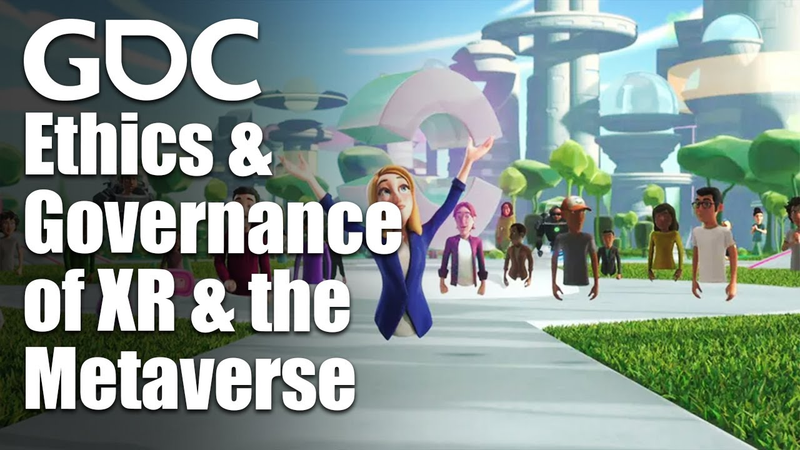
A Brave New (Virtual) World: Ethics and Governance of XR and the Metaverse
The metaverse represents a critical juncture in digital evolution, forcing a choice between centralized corporate control and a decentralized, interoperable future.
- The metaverse currently faces a significant adoption hurdle, with approximately one-third of respondents in the GDC State of the Game Industry report expressing doubt that the technology will deliver on its promised potential.
- Governance models within decentralized autonomous organizations (DAOs) are prone to plutocracy when voting power is tied to token ownership, which risks centralizing wealth and influence rather than fostering democratic participation.
- The future of the metaverse will likely mirror the evolution of the early internet, where walled gardens eventually lose relevance as users demand greater interoperability and the freedom to move their digital assets between platforms.
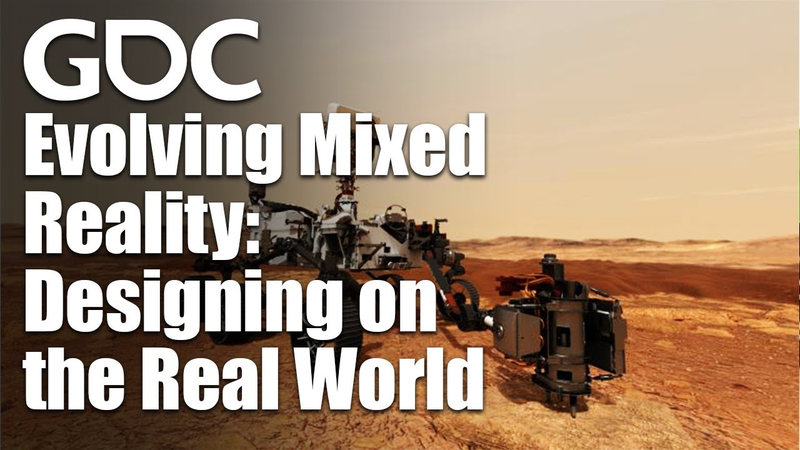
Evolving Mixed Reality: Designing on the Real World
The evolution of mixed reality is shifting from static, tabletop-based applications toward complex, room-scale spatial computing that demands deep integration with unpredictable physical environments.
- Mixed reality development is shifting from simple, single-plane, user-directed experiences toward complex, world-aware applications that utilize semantic understanding of physical environments.
- Developers should implement 'fallback' systems that allow applications to degrade gracefully—from full spatial tracking down to 3DOF or 2D experiences—when environmental data is insufficient.
- In-situ debugging tools that allow developers to record, pause, and scrub through sensor data in real-time are critical for resolving bugs tied to specific room geometries, lighting conditions, or transient events.
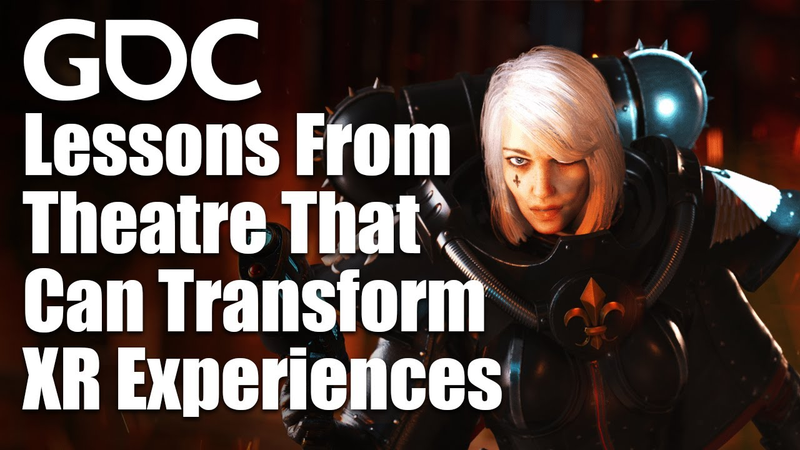
Lessons From Theatre That Can Transform XR Experiences
Extended Reality development gains significant depth by adopting fundamental theatrical principles, shifting the medium from a passive viewing experience to an active, spatial reality.
- XR developers should treat physical space as a core design element by authoring experiences that adapt to the user's environment, such as virtual characters using real-world furniture for cover.
- To increase immersion, developers should move away from traditional cinematic framing and instead stage narrative action around the player, forcing them to look and interact to follow the story.
- Enhance interpersonal presence in XR by layering responsive gestures and 'look-at' mechanics into character AI, allowing virtual entities to acknowledge and interact with the player's physical movement.
Faking Mixed Reality: Building Reality Simulators
Developing for experimental hardware requires a strategic shift toward virtual simulation to mitigate the high costs and logistical friction associated with physical device dependency.
- Building a custom simulator for experimental hardware like the Magic Leap significantly reduces iteration bottlenecks by allowing developers to work without constant access to limited, specialized devices.
- To ensure high-fidelity simulation, developers should incorporate known hardware quirks—such as controller connection delays or tracking dropouts—directly into the simulator to catch bugs early in the development cycle.
- Using photogrammetry, specifically tools like Reality Capture, allows teams to create accurate 3D representations of physical office spaces to simulate real-world occlusion and environmental interaction.

Pokemon Go Was Just The Beginning - Our Augmented Reality Future - Extra Credits
Augmented reality (AR) represents a transformative technological shift comparable to the advent of the internet, moving beyond current smartphone-based applications toward lightweight, wearable hardware.
- Augmented reality (AR) is transitioning from smartphone-based applications like Pokémon Go and Yelp’s Monocle toward wearable hardware such as consumer-grade glasses and contact lenses.
- The technology aims to turn the physical world into a personalized interface, enabling real-time access to context-aware data like professional schematics, language translation, and navigation.
- Widespread AR adoption offers significant productivity gains across specialized sectors, including medicine, construction, and logistics, by reducing the friction between digital information and physical reality.

A Recipe for Mixed Reality in 'Mario Kart Live'
Mario Kart Live: Home Circuit demonstrates a sophisticated approach to mixed reality by anchoring digital gameplay elements within a physical environment through a unified coordinate system measured in centimeters.
- Mario Kart Live achieves spatial consistency by anchoring digital gameplay to a physical coordinate system measured in centimeters.
- The system utilizes a hybrid SLIEKF architecture, combining sparse gate landmark detection with 160Hz inertial measurement unit (IMU) data to mitigate tracking drift.
- Precise alignment between the physical video feed and digital field of view is maintained by using OpenCV to eliminate lens distortion.
(P)Layer Character: Designing Immersive Narratives for Location-Based AR Layers
Effective augmented reality narrative design centers on the concept of seasoning physical environments with digital layers rather than attempting to overwrite reality.
- Effective AR narrative design should 'season' physical environments with digital layers rather than attempting to overwrite reality.
- Developers should utilize reverse level design, constructing narratives around existing physical architecture to ensure the experience remains grounded in the tangible world.
- To mitigate player self-consciousness in public spaces, designers should issue direct prompts that invite participants to define their own roles within the fiction.

When Trainers' Eyes Meet: Creating Real Time Combat for Pokemon GO
The introduction of real-time combat to Pokémon GO serves as a strategic initiative to bolster player retention and re-engage lapsed users by transitioning from traditional turn-based mechanics to a faster, more interactive system.
- The transition to real-time combat was a strategic move to increase player retention and re-engage lapsed users by shifting away from traditional turn-based mechanics.
- Developers balanced accessibility and competitive depth by combining simple tap-to-attack controls with tactical features like protect shields and secondary move slots.
- To mitigate pay-to-win concerns and ensure competitive integrity, the game utilizes tiered battle leagues (Great, Ultra, and Master) defined by specific combat power caps.
The State of Magic Leap | Unchained Report
Magic Leap has transitioned from a high-profile consumer augmented reality startup to a struggling enterprise-focused entity, marking a significant pivot in its corporate strategy.
- Magic Leap has pivoted from a consumer-focused augmented reality startup to a niche enterprise provider after failing to achieve a $10 billion valuation or a mass-market price point.
- The company underwent massive restructuring, resulting in the layoff of approximately 1,000 employees as it struggled to deliver on early promises of consumer-grade spatial computing.
- Technical limitations, including high production costs, limited field-of-view hardware, and a lack of compelling content, prevented the product from achieving widespread consumer adoption.

The World as Your Canvas: Telling Location Based Stories
Location-based gaming transforms the physical world into a dynamic, high-resolution game engine, leveraging real-world environments to foster deep emotional investment and social connection.
- Location-based gaming utilizes 'context hacking' to integrate real-world landmarks and public spaces into narrative frameworks, shifting player engagement from screen-bound experiences to integrated, physical adventures.
- Development requires a 'reverse level design' approach where the physical environment dictates the narrative flow rather than traditional, pre-scripted level layouts.
- To ensure safety and immersion, developers should prioritize heads-up audio cues over visual distractions, allowing players to remain aware of their surroundings while interacting with the game.
Game Tools Across Other Industries | Unchained Report
The integration of game development tools into non-gaming sectors is driving a significant shift in global production workflows.
- Non-gaming sectors, including automotive, architecture, and film, are adopting real-time game engines to replace low-fidelity design processes with final-quality, real-time rendering.
- The primary drivers for this cross-industry integration are increased cost efficiency and the ability to iterate rapidly on high-fidelity assets.
- Automotive and manufacturing industries are currently leading the adoption of these tools to streamline design phases and reduce reliance on physical prototyping.