1 free read left. Create a free account for unlimited reading + AI research.
Create free account
The future of XR games
Key insights
6 takeaways- 01The XR industry is transitioning from solitary, immersive gaming toward utility-driven applications that integrate digital content with the physical environment.
- 02Long-term growth strategies for XR extend beyond entertainment into sectors such as medicine, sports, and industrial design.
- 03Current hardware barriers, including high costs, bulk, and motion sickness, are being addressed to facilitate a shift toward lightweight, socially acceptable form factors like smart glasses and contact lenses.
- 04The industry aims to mirror the ubiquity of mobile telephony by leveraging mobile-powered, cloud-integrated architectures to democratize information and professional training.
- 05Small, agile studios currently hold a competitive advantage in the XR market due to lower saturation levels compared to the traditional mobile gaming landscape.
- 06Mobile AR frameworks such as ARKit and ARCore are serving as the primary testing grounds for interaction design before the industry migrates to dedicated, sophisticated hardware.
Ask AI about this video
Transcript
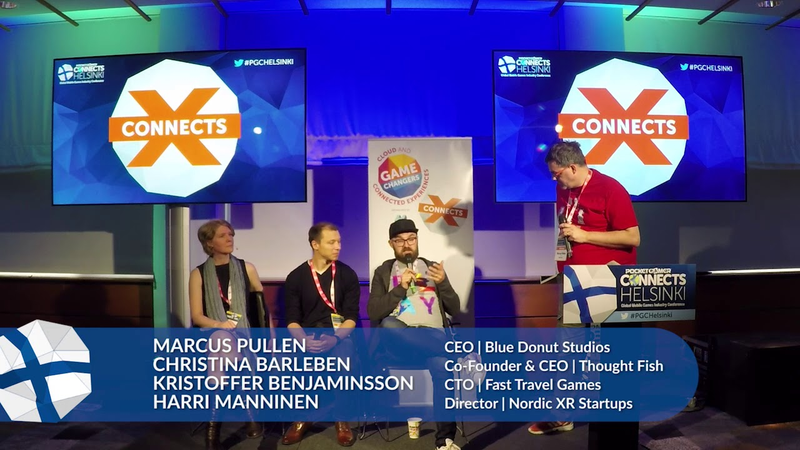
[Music] hello Helsinki always wanted to say that Ashley I don't know how many points will get for the next year vision song contest but please be gentle with us okay so we are going to talk about the future of AVR but I want to get some hands up in the air who's used VR are fantastic and you know I'll put my hand up as well and who also has used augmented reality yeah very good not surprised and who's used mixed reality okay not so many and anybody out there that's used in oh if I said LR what the heck new reality anybody use that no I'm not surprised that's actually pretty cool okay so we'll be covering that as well okay so I've got a range of questions
and not a lot of time probably more questions than I've got done so I'll try and get these through and I know I do have a habit of rabbiting so please Patti tell me off if I'm going on - too long thank you sweetheart okay and everybody you want to get settled down if you want to come closer we do buy it but not very hard so feel free to come closer okay I'm going to kick off the first question which is where are the biggest opportunities for this is a tough one because I'm going to say virtual reality and augmented reality in a way it's not fair we should really split this shouldn't we between virtual reality conference day one augmented reality conference day two but I don't think they've got the stamina for that so if you mind if we start with Christina and work away what do you think at the moment are the biggest opportunities for either or both Fiat or
AR are the biggest so it's super hard because I think that with both we were still very at the beginning so we have the technical opportunities to do super cool stuff I think as I mentioned before that we have lots of boundaries in our hands because of what was done before and how this should feel and and be like and I think the truce is something really new so I think that we are at the moment directly on the verge where we can do the step into when it comes to augmented reality to really pull this vision off we we see when we see science-fiction movies so where you look around everything you see can be recognized and can be can be labeled and you can get additional information on it and the cool thing is and it's all meaningful to me because we have so cool filters and so much ways of tracking people that we can make the experience tailored to you and this frightens me and this is also a
big opportunity it's a big opportunity but the privacy issues and just yeah I mean for me obviously one of the biggest opportunities right now is that we can you know we can take people and put them in any context that we want we can make information available in a way that we haven't been able to do in the past there's no reason why you have to live in a specific place to participate in know if it's education or if you are doing you know a hazardous work or whatever it could be you can do things that you couldn't do before because you know you your brain really buys into the simulation and then on the other way around you can actually bring information you know a virtual information into the actual world and make information information available where it's needed in the way that we haven't before so instead of looking at your phone or at a computer you will
have the information right where it's actually needed so two super good opportunities and of course I mean I mean gaming we could entertain people in a completely new way which is super cool yeah that's you guys hit the nail on the head and I think creatively especially I think commercially you know as Christina mentioned we're still very much early day and I would you know recommend everybody to be patient as as D as the industry grows already I mean if I take the commercial angle here already especially with b2b we're seeing massive opportunities there and n growth and especially you know you mentioned the sense of presence that you can have virtually not having to be present physically but but you know in terms of like design and and let's say industrial design where we're seeing you know people create platforms of applications which allowed them to to this design
very complex complex things from around the world and also you know just I mean III often hear the fact that you know VR is so it's so counterintuitive to all the social trends we're seeing because it makes you feel like isolated but that doesn't have to be the case I mean you can you can be fantastically connected in VR I mean if you guys have ever tried something called the way VR for example which allows you to participate in you know musical gigs and raves with people from all around the world in fantastic locations I mean that if that's not social if that's not immersive and has presence I don't know what is so I think you don't just on a commercial side be patient and but but do you look at where the commercial opportunities are for example in gaming I think you know there are certain platforms that are performing better than others there's you know the location based experiences for example arcades are doing well so that gives you
an idea that people are very interested in this stuff but it's still early days so you know it'll take time to to get there yeah that's interesting what you said they're having about about the the social side you've got a theme running across from AR to VR the idea that data data is seen as the new kind of powers there's a commodity it's cache intelligence and the ability to access that decoupled from our device so I want to come and come on two devices hardware in a minute but you you've Illustrated a point about yeah content is there but but but the kind of games yeah but what we can do with information what we can provide to people this was a really interesting aspect I thought you were you were all bringing up is is how what's in it for me that's always my first question about anything and in a game you know there's two things is is it fun you know I was
talking to some friends a moment ago and they were talking about the business process the sales opportunity the curve dealing with the numbers and we said oh yeah but is that game is it fun and then look to me what oh yeah I didn't think about that and you know there's that side and there's that what's in it for me and if you and you're talking about empowerment so I know it's a bit of a worn out old phrase empowerment for people but the idea that you're giving them something you're improving your and democratizing which I really like okay so food for thought there but the idea of the technology where we are now with augmented reality I think it's it's it's jumps ahead of virtual reality in terms of its adoption and how the technologies worked with virtual reality that's been around since I had to say a lot of been
around for most of it you know since the late 70s and the 80s yes headsets a lighter fidelities is higher we're looking at more real-time rendering effects and you know just the VR experience is great isn't it I mean I don't you know I don't know how many different games everybody's played here but hopefully you've seen a good broad depth of and I probably Joyce for having my back see you guys over that it's very rude I'll step back a little bit you know the experience is great but I mean I wonder how many of you feel frustrated it's so good that you want to do more in a way there's that natural ledge literally isn't there that you want to go I always want to go and I can't get it Oh grab it I can't pick it up okay so so let's get your points about what I say is headsets suck and how do
we get over that folks take away home there's there's a lot of smart people working on that problem and and III - you know I usually look at this you know you remember what did mobile phones look like in the in the late 80s early 90s like I am born and raised Helsinki so we were pretty far along with that stuff but I used to be carrying bricks around you know even to school I was among the early adopters so you know I mean it's it's unrealistic to think that we would have like you know classes like yours and mine in the immediate future but I'm I'm you know the next step that you people will be super impressed with will be the oculus Santa Cruz coming out next year which will be $6 for a fully wireless inside out tracking and once you get rid of the wires it already opens up another world because even though you know you might not be moving around that much the just the fact that
you're having a wireless headset is is something and you and if you go to the AR side where I think you know we're still sort of you know looking through a phone screen is you know it's it's it's very very sort the early early stage of it you know that we have like there's gonna be really smart people at Apple for example looking at really closely about a AR headset and and I know like those guys effectively changed you know the UX of mobile phones so I'm guessing you know I'm super excited about this or the next generation of headsets and you know for me it's never been like a headset suck yeah I mean it's it's also a logistical thing right so so some of them are so bulky and and requires so much setting up that that you know once you put it away one time you probably won't be taking it out and I think a lot of this is already you know will be will be solved and in the next generation of headsets so I I'm not concerned about that at all so you have Hardware own own
own one and ass a Holley mention you know it's it's improving but it's a long way to go but it's also from a software perspective and you know from a user perspective how you interact with the world how you behave how you decide experiences that really makes a big difference I mean with every new kind of platform with every new kind of wave what people do is that they put what they already know and it's not going to be super know it's it's gonna be a big leap so what we will see in the coming years is also ask developers learn how to make good experiences and overcome know the obstacles that we have now it's gonna be less frustrating it's gonna be you know more seamless and the mental image you have what you wanted to do and what actually happens in you know the aurorae or it's gonna be a better match and then of course notice there's a lot
of science going on motion sickness is one of the biggest things in envy or how do we overcome that and we have all kinds of no clever and not a clever ways of achieving that but also research doing you know peripherals that's gonna no trick your body and brain even even more to buy into the expert so again as Harvey mention it's it's you know it's early days we are I kind of look at it as when when the web started and we have lots of gray pages with blinking welcome to my home page that's where we're operating hamsters yeah and then looking you know 20 years ahead where we are today with the web and apps and everything you know obviously that's gonna be yeah and remember we're still basically and if you like if you say this is the sort of first generation of commercial your headsets I mean look at already the leap from dk1 oculus dk1 to like the vipro right now or even you know the Vario prototypes not not to
talk about them a bit it's you know we've already come a long way even in a relatively short period of time and people do tend to forget it yes but also now just looking I guess the biggest problem we we have is not so much that's themselves I mean price is obviously one one thing but getting people to actually try it on and see what VR and a or actually means with flat screen you look at a picture and you know what it is with a or and vo you have to try it and once you've done that once and you can understand wow this is really mind doing and really changing how I look at games or no applications that's when it's going to be a big thing okay Christina I think we hopefully some of you saw Chris is fantastic talk and some of the demonstrations about about on the augmented reality side so go for it thank you it's me okay I think I'm sorry
to say that but headset sucks they suck I don't like it I don't like to wear them they are heavy I like the immersion which you can generate but it's they're expensive I need to buy it so that was the beauty when I started was they are but you can just work with the phone so that is really super everyone has has a smartphone everyone can do it that's super awesome but one thing which augmented reality will learn now is actually one big hindrance for people to really wear the hat sets is they feel dumb because they think other people will look at me while I'm doing crazy things and I cannot see what I'm doing and I don't have some control of my like player work ready player one where everybody's in the streets with their headsets already lots of these experiences are exposed so we have an invariant we have one cinema where you can do a really cool viewer experience
but it's in the public hall and everyone can watch you play it and no one is playing that because everyone is frightened how they look and we will have the exact same problem with a smartphones and augmented reality but we didn't realize it yet because you're standing there in the park with your phone doing this and being really weird and and moving weird and everyone is just like okay what is this crazy woman doing over there but can't we just make a funky dance out of it yeah that that we could do or we could also and and this is one thing you also see in in the augmented reality games we are trying to reduce the amount where people are standing there and doing this a lot so I think that will be a really neat mixture between really interacting with your phone in the normal way as you would write an email or what's up or something or really doing this but I think this is something we have to cover and this is also something where I'm super excited that we will have glasses
on some point where we will have contact lenses at some point where we maybe have an implant at some point so I'm super excited about this stuff but I know this is way in the future and we're doing the Pioneer steps etcetera but we need to start somewhere yeah I mean it's like the the birth of automate or automobiles and flights out how long flight took hundreds of years before flight that's become a almost a disposable commodity air travel there's obviously economic problems with that but the idea of the trivialization of the technology is a tipping point so with a smartphone you know in the early days of the mobile phone this is a fantastic place to talk about mobile phones isn't it you know I remember my first mobile phone it was huge and I was an IT consultant and I would be going oh don't know about move yes yes I can just about hear you too now you know I can have a conference call
with four or five people and just have it set on the table or I don't really care I don't give a toss about my phone really but from as you can see I've broken it you know and that's the thing is that you look at science fiction that you know the world of the dirty kind of grubby you know there's some great things like the expense where they took have mobile technology it's just it's just there isn't it it's so embedded is that do you see that happening soon or is that kind of trivialization of their technology where are we early days still I think this will happen quicker than we we think the reason so many yeah so many parties working on that I mean we all know that this is such a big hindrance the VR headsets are a hindrance the augmented reality can only take off really really fast and in a spectacular way when you don't do this so this will happen soon so that's great for us as
developers I'm not so sure about consumers so it's that's let's let's not sit over there for a moment and say what's in it for me as a consumer is the journey is a journey worthwhile is it worth me investing in iterative designs that come out should I be buying them or should I be saying like we do with with the PC hardware days go I'll wait till next year for the next version I mean again I I think it's it's it's gonna come to a point to where you know the offering from you know a Content perspective and the price point on the whole perspective can only swear it makes it worthwhile for people right now there's a lot of good things out there it might not be worth spending too much money but the price has already come down quite a bit so yes they're always
going to be people that say well we never wait for next year and also kind of depends on which segment you're in if you are into a business down you know putting on a headset might not be an issue at all because it allows you to do things that you couldn't do before whereas if you're gonna wear it in public then yeah it's a very big big deal so I guess as with everything it's like you know when the first headset came snow with your hands-free you look stupid and you know wondering what people were talking into walls etc now it's socially acceptable and everyone is wearing headphones or a screen and no one questions that so the same way they are and video you know it looks awkward now because it's it's new once people get used to it it's it's gonna be fun yeah that that's a great point I mean if you look at maybe it's only in the streets of Helsinki but you do see people walking around like this everywhere so we're not far from you
know I think that looks stupider than wearing a lightweight headset at some point so but I agree with Christopher I think I think content will be the key driver here when when when there's gonna be content that's absolutely a must have you know the the the killer app I think I think you know I mean it's like Christina was saying like you tend to you know underestimate how fast things go and then suddenly you know the tipping point has been reached and then you know everybody's gonna want one especially especially today it happens so so quick you can't be a you know being a futurist in this age is is a bit it's a bit silly isn't it really because you just can't predict what's going to happen and you know with with our parents generation the idea of you're gonna spend eight hours sat in front of a piece of plastic that lights up is there going to be about six inches from your face and you're gonna be holding this thing you're going to call a mouse and it's going to take over the world I think they're nuts so you know yeah
Christina yeah talking about the killer app which will all convert us to either a ROV or I think we are all social creatures and I think what we need to really hit off by the view or a are and person I believe stronger in a are because it's more naturally social is actually neither a game or or something else it will be a social network so it will be a kind of social network which is running which is using a are where you can if it my last slide where you can leave messages for someone just just lying somewhere you know if someone is going to a bar you leave a virtual and augmented reality present there and buying him a beer or you you said communicating in the complete different way and I think that we need something like that really pull off the technology and everyone wants to be a part of it because the whole cities every city could be crowded with a user-generated
content cities could have multiple time of dimensions we could even have have an art layer above the world where we don't have to tech and real world anymore but we can tack virtually on on walls and stuff like that so this will be a neat mixture which will bring us into the technology so it so essentially the Oasis for like we have improve our deep layer one now here's where here's where there's a divergence right is because if in the sort of the VR utopia Oasis is the place where you put on a VR headset then and you're you're transformed and you you you you know you're in fantastic worlds and then there's the a our utopia where there's like multiple layers to reality right so if if if if I'm you know unhappy with the crowd I'm seeing let me just press right here and and you guys look totally different I'm like okay or I'm an unhappy with with the place we're in and let me just you know change the scenery so I think I think
but that's gonna read there we go get into technicalities of the AR cloud and things like that but it it's I feel they're the future there's a divergence and I'm not sure which sort of utopia or is there gonna be - I don't know I think the killer is really when you let people do things they couldn't do before so with the offices you can visit the places you could have a go I know physically and where they are you can bring you know again information stuff that can never really happen and enrich in the world and when you do that and it's meaningful enough then people want to have it okay okay so the the idea of a socialist interconnectedness is really important now my next question is because we are in a conference about mobile technology in mobile games it would be rude not to ask could mobile actually be the future of VR I think I think it already that's happening
because the the oculus sand alone headsets to Santa Cruz will be powered by mobile technology so in that sense I would say yes in the sense that do we need like a piece of plastic as I had said where with our phones into I would say now yes the short answer no but as Howie says I mean if we're going for form factors there are you know smaller lighter longer battery life etc etc and then you know low-power GPUs and CPUs are definitely the way to go having said that you know with the cloud with 5g you know a lower latency etc you could really know offload most of the processing somewhere else so I believe the future is the combination that you know you will use both to the office to drive something that is really really
high fidelity yeah I was talking to her about this at lunchtime and that was the thing we were saying oh how does cloud gaming play in the the space of hey our of VR we were saying very quickly look that if that can work that's an incredible liberator oh one of the things that that I'm interested in as well is how do you think VR lar can be a democratizing force so actually think about it there's the political side of that but also in the social side I mean again when I brought up the example of Education you know participate and take you know the best courses on the planet wherever you are you could meet with people you don't have to fly you don't I mean it really cannot remove the barriers from doing things so from that perspective is definitely something that will make the world smaller on the other hand you know with information available
you know it's very viable that you would walk around and you will see exactly who everyone is what kind of diseases they have and I must they make etc so it's two sides of the coin it will definitely make the world smaller and and the information more approachable but might not always be a good thing so yeah I was gonna ask about social responsibility do we as developers and as consumers have a social responsibility making sure that we we don't overstep the line we don't invade people's privacy but we have permission between ourselves to share this information the permission based economy does that so right yeah I mean of course we have the social responsibility I mean every person on the planet should take the responsibility to not stepping over the line the only bad thing is that everyone he finds lying that it is specific
different points so yeah I think this is this is this is super important and it's also something which is super important when you're doing games so when when when we were thinking about our games and our and our technology is what what was very important for us from a very personal perspective is that we are not not building time killers so so something which sucks you in and eats up all your lifespan and spits you out and you you didn't gain anything yeah so this is something we really didn't want to do and we see there a really big opportunity and a are so so one little example when we were starting to build up the technology what happens was we divided the whole world into different colors and there was a color blue for here's a water space and directly in front of the office I was testing the Ted the tech and directly in front of the office there was a water source I was really like but there was no review
there was no nothing and I was so angry because we we worked so hard on that and there was still the back and it was really like oh my god I have to storm in I don't know whatever I have to do I have to do it and I didn't like it and then I just looked around in my crazed and I was standing directly in front of an ancient water pump where there was an ancient water pump I I walk this street 1,000 times and I never saw it and then I actually pumped it and there was water pouring out now it was so amazing and this this thing happens to me over and over and over again when I'm engaging with one of our games because there is there's always this disturbance I looked at the map and there is something hey okay look oh my god I have never seen that before and this is this is a beauty I think and this is the beauty of AR that I can I can make you see the real world with new eyes I can give you information you
wouldn't have never perceived before and I can get you out of your your standard days and this is something I really love about doing what I do you're talking about hyper reality so making the real more real through augmented reality and virtual reality we've said one of the big criticisms of virtual reality is is an isolationist thing and we've already blown that myth and we've already said no actually this can enable communities that are disparate to come together okay so next question and we worry about the the bottom of the hour here virtual reality there's no place for small developers as a small developer there's no point you trying to do virtual reality augmented reality is only for the big players so just go home please hurry can you give me a response to that stupid question one of the greatest VR
games that has been made in the last couple years the game called beat Sabre which is an absolutely fantastic combination of you know physicality music rhythm and and wonderful visuals and that's made by a team of three guys in in the Czech Republic so I would I would give that a resounding that's a lie definitely I mean whenever and then this I'm echoing with both Christopher and Christie and I've said we are in a new paradigm the old rules don't work and it's usually the smaller teams and the more innovative people who are willing to experiment and to try and not be tied to the old rules who will do well so I would definitely say you know smaller teams go for it Christopher I mean in the way that the market looks right now it really only small players doing a lot of things so the big players will come when
the market grows which is a great opportunity for smaller devs to actually go in and do things I mean it's a super good opportunity since you know the marketplace I mean there are a lot of games happening a lot of experience being made but there's still a much better chance of actually seeing and and be seen then if you go do a traditional mobile game for instance you know it's it's much more crowded so I would say the majority of VR developers are small studios and then we we are twelve people so we're kind of a big studio yes I would say that it's the opposite right right now yeah yeah yeah we are twelve people as well so we are we're not a big studio however when you do when you want to do something like location-based augmented reality apps or context-sensitive what I prefer much more there is a lot of base text to develop if you want to do it from scratch I mean we were happy that we
could secure a big big fund for for doing innovative stuff and we have been investing in the technology for a very long time but I think that we are at that interesting point where I explicitly want to see what small developers are doing in this space and what kind of ideas they're coming up with this was also the reason for us to say that we're opening up our technology for just everyone so every developer who wants to explore the augmented reality space as welcome to do this and they can draw from our based technology because we want to see I mean we don't have all the ideas of the world and we want to see what is possible and and where it's all leading us so we were strongly counting on small developers to jump onto that and though there wasn't products so that's that's incredibly disruptive and very counter counter how again talking about the the indie market how and we work in the ball games as well industry and the difference is we
found historically games developers are very much I can't tell you what I'm doing but I dare say I'm really calm not in Finland though now you say this is UK so I don't know what it's like this much cooler over here where is in the ballgame industry everybody says look hey this is what we're doing yeah and it's fantastic love it put it so that seems to be a very important thing that the idea that you're very open to the idea of we wouldn't get it out there we are more about getting it into people's lives because we believe in it in its positivity and I have to say personally as much as we're working that we believe in the technology sometimes it's very hard on your own to highlight this and for me but I've got a lot out of this conversation believe me man that's gonna be great for my business cases so but I can see as well from the from their consumer point of view and I'm just cause I just want to
get some questions in because I'm sure people have got lots of questions I've got a couple a little questions I want to fire at you one word is magic leap you've got you've got to turn one sentence only magic leap try and tried it last Sunday was positively surprised because I went in with low expectations yeah again it's it's it's not no selling their vision complete device it's definitely showing you know the path of what will happen so promising promising like it so because I did super excited that is going to be my take-home phrase and I'm over 40 in English and the and using super in the vernacular for me I'm not used to it yet but thank you very much for that but no that explains I think as well it's it's not superlative in this in this context that it is incredibly exciting so both be you know somebody using it
but also making it we were in it we're pioneers aren't we that's pretty cool so what I want to do is Patti can we get some questions there yes okay that's always great year yeah brilliant yeah thanks for the discussion I think it's clear that both we are an AR can be used for both entertainment and utility but how do you see the drivers and emphases in the future I mean where will the emphasis lie how much of the future will be in utility and how much of it will be in entertainment I think you know whenever you have a new technology technological platform it's usually driven by entertainment first and people wanting those experiences and and eventually it will turn into you know something that's used professionally so I come from you know the entertainment standpoint more than the b2b standpoint
so I'm sayin entertainment if I have to choose I believe that eventually it's gonna be you know more utility is gonna be for all kinds of things where I know entertainment is going to be a big chunk birthing you know things like AR it's going to be everywhere it's gonna replace so much of the committee that we have today you know screens whatever so that's content going to be bigger than than entertainment only I think I think AR will be really big in utilities and everything else it will be it will be fun in entertainment as well but I mean it is now used to you stand in front of a car and hear technicians can can see how it is all built-in IR and and and tinker with stuff and and there are so many application what does make sense the first comes customer actually jumping onto our technology before we even released it came from the sports sector funny leave so it's it
will be totally mixed yeah we've all experiences in cultural activities virtual museums and medical as well so yeah I'd say that as well I don't want to say about VRS and because it's different technology to I know you can and obviously memo but you know look a film is filmed just for entertainment no and you know what hi guys thank you so much like some really really insightful stuff there um I'm Debra Bailey from fortune fish we're moving into AR and it's super exciting but what do you think for the long term kind of do you think err on mobile like air corps air kit how do you guys think as a stepping stone to headsets is it will it be possible to leverage kind of mobile AR knowledge in a profitable way when headsets become a reality because we're trying to convince people to get on board from a money perspective and like looking at the long run well is it is it going to be worth you doing stuff
on mobile AR if headsets are coming in future so how do you see that mobile are as a stepping stone to headsets is that a profitable way to look at it well I'd like to start that off allured say yes it has been we were small business we were same before were developers so we even smaller than these guys I was compared to us and it's enabled us to be able to to do the things that we needed to and save you know a cost for development it's enabled us to reduce our time to market as well that's really important I think eventually you know both AR and VR it's going to be quite similar you know is if you turn off lights with your overheads it's gonna be the VR but I believe you know the end game of a of a oven is not fully immersive I believe what we do with VR today is no much closer to what you will be doing now how you interact and how you cannot tell the story or how you get
people's attention etc but of course the AR kit and Al core of today is definitely helping you understand you know the real world and how to place objects how to handle occlusion etcetera cetera so it's two sides of the same coin I was a I wanted to say the same so it's it's super important that we now with mobile AR I mean it's exactly what we're doing so the technology we build up is so much Beck and magic that it doesn't really matter is it a phone is it contact lens is it in the end glass or whatsoever so it it was really important for us to build it up in a way that we target mad market to make as many experiences as possible but making the technology so versatile that at the end it doesn't really matter what end device you use however we think that is paramount that at this moment we need to figure out what kind of innovation is okay for the user how can you interact what is the user
understand I could show you pictures of the way we visualized the world at the beginning when we started to do these GPS based context sensitive augmented reality games and what totally didn't work but we needed the process to come to the point where we are now and there are so many things where you don't get people to understand your technology or the ars space at all if you never make all the you have to do trial and error at some point well I'm afraid we've gone into what we would call in football our injury time in fact we've had penalties I don't know who's one of the end of the win and do we win I think we've won I think we've all won so can we give a really really big round of applause to our fantastically awesome panel thank you very much Christina Christopher and Harry thank you so much for coming up okay thank you [Music]
Summary
Extended reality represents a transformative frontier for interactive entertainment, positioning itself as a foundational technology that will eventually mirror the ubiquity and social integration of mobile telephony. While current hardware remains constrained by bulk, high costs, and lingering social stigmas, these barriers are viewed as temporary technical hurdles. The industry is actively prioritizing the refinement of user experiences, specifically focusing on mitigating motion sickness and enhancing accessibility to facilitate a transition toward lightweight, socially acceptable form factors such as smart glasses and advanced contact lenses.
The strategic trajectory of the sector emphasizes a shift from solitary, immersive gaming experiences toward utility-driven applications that foster social connectivity and real-world engagement. By leveraging mobile-powered, cloud-integrated architectures, developers aim to hyper-realize the physical environment, transforming XR from a niche entertainment medium into a tool for democratizing information and professional training. This evolution is supported by the widespread adoption of mobile AR frameworks like ARKit and ARCore, which serve as essential testing grounds for refining interaction design before the eventual migration to more sophisticated, dedicated hardware.
Small, agile studios currently lead this innovation, finding a competitive advantage in a market that remains less saturated than the traditional mobile gaming landscape. Although entertainment remains the primary driver of current growth, the long-term outlook anticipates a significant expansion into medicine, sports, and industrial design. By focusing on meaningful, utility-based applications, the industry is positioning XR to become an indispensable component of daily life, moving beyond the limitations of early-stage hardware to create a future where digital and physical realities are seamlessly integrated.