AI reports and market data
Documents
Will AI Destroy Indie Game Dev?
The integration of artificial intelligence into the game development industry presents a complex challenge, primarily centered on the distinction between data processing and the act of human creation.
- Current AI models can analyze and replicate existing creative works, but they lack the ability to comprehend the underlying human creative process or the intent of the original creator.
- While AI is effective at generating static assets like still images, it struggles with maintaining long-term continuity and creative coherence in complex projects.
- The creative spark in writing often manifests as a subconscious process that current AI technology cannot replicate because it lacks the lived experiences and biological variables that define human personality.
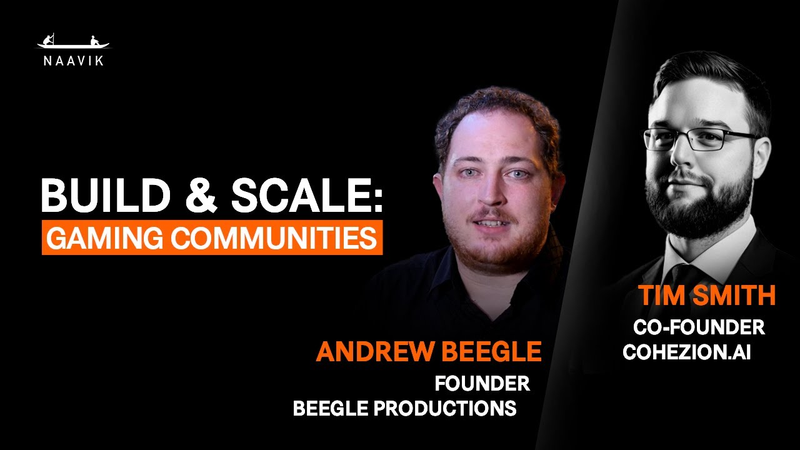
Building and Scaling Communities in 2025
In the current gaming landscape, establishing a dedicated community prior to launch has transitioned from a supplementary marketing effort to a fundamental requirement for market survival.
- Building a dedicated community before launch is now a fundamental requirement for market survival rather than a supplementary marketing task.
- Development strategies have shifted from top-down, influencer-led marketing to a bottom-up approach where developers collaborate directly with players to refine gameplay.
- Studios must utilize agentic AI and advanced social listening tools to synthesize massive volumes of unstructured feedback into actionable, data-backed development insights.

State of the Game Industry 2025
The global game industry entered 2025 defined by a paradox of technological advancement and profound structural instability.
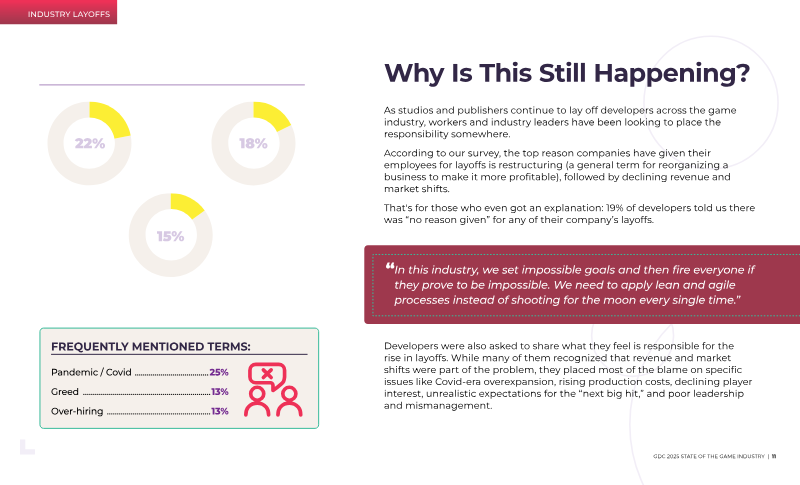
- The industry is experiencing significant instability, with 41% of developers affected by layoffs or studio closures and a shift toward smaller teams, as AAA representation drops to 15% while solo developers rise to 21%.
- Financial access is tightening, forcing 56% of all developers and 82% of independent creators to rely on self-funding due to a scarcity of venture capital and publishing deals.
- Generative AI adoption is cooling; while 52% of developers use the technology, 51% cite ethical concerns regarding IP theft and job displacement, leading 27% of companies to abandon the tools.

Why His Game Has Taken 10 Years To Make (Ken Levine) — Full Time Game Dev Podcast Ep. 034
The decade-long development of the title Judas represents a fundamental shift in creative methodology, moving away from traditional production cycles toward a research-heavy, iterative process.
- Ken Levine’s upcoming game, Judas, has been in development for 10 years, reflecting the extreme time and resource investment required for modern high-end game production.
- The 'Narrative Lego' system is a modular design approach that allows developers to create highly personalized, non-linear player experiences by rearranging story elements rather than relying on a strictly linear script.
- Effective game development requires a willingness to kill features that do not serve the core identity of the project, even if the developer initially believes they are essential.
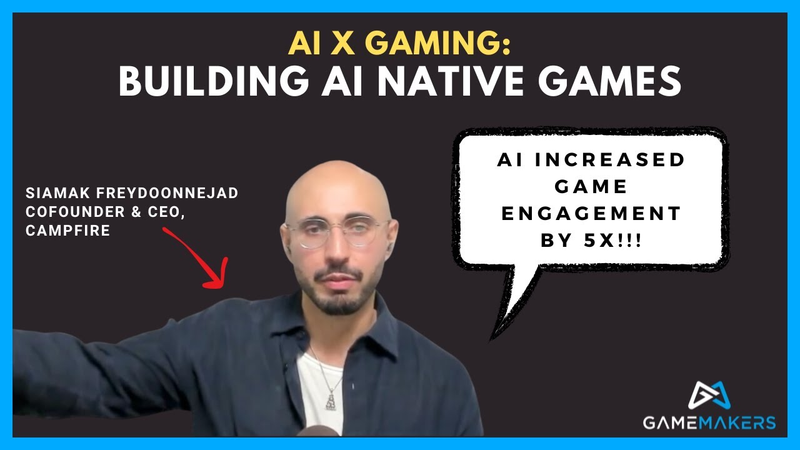
How AI Increased Game Engagement By 500%
The gaming industry is undergoing a fundamental shift toward AI-native development, where generative technology serves as the primary driver of player engagement rather than a peripheral feature.
- Campfire discovered that players spent five times longer interacting with AI companions than engaging with traditional game mechanics, a finding that shifted the company's focus toward AI-native gaming.
- The company developed Sprites.AI as a toolset to simplify AI agent creation, allowing developers to manage personality traits, memory, and conversational flows without needing deep expertise in complex AI building blocks like RAG or Chain of Thought.
- To address the stochastic nature of AI outputs, Campfire implemented a monitoring framework that qualitatively analyzes agent performance to ensure interactions remain engaging and fun for users.


State of Mobile 2025
The global mobile economy reached a significant milestone in 2024, with consumer spend hitting $150 billion.
- The global mobile economy reached $150 billion in consumer spend in 2024, driven by a 25% surge in non-gaming revenue despite a four-year decline in total app downloads.
- Mobile gaming revenue recovered to $80.9 billion, with 80% of earnings generated by titles older than two years and a record eleven games surpassing $1 billion in annual revenue.
- Generative AI became a primary engagement catalyst, with chatbot downloads increasing by 635 million and generating nearly $1.3 billion in revenue.

The Truth About Gaming's Crisis: 2024 Recap & 2025 Predictions
The global gaming industry is currently navigating a profound transition from an era of unchecked expansion to a period defined by operational efficiency and fiscal discipline.
- The gaming industry is shifting from an era of unchecked expansion to fiscal discipline, evidenced by the fact that only 15 percent of Steam playtime in 2024 was dedicated to new releases.
- Chinese developers are successfully capturing Western market share by leveraging sophisticated, quasi-social gaming platforms and high-end production capabilities, putting pressure on established giants like Microsoft, Ubisoft, and Unity.
- Generative AI is transitioning from a simple production assistant to a foundational element of game design and live-ops, which is expected to significantly lower development costs by 2025.
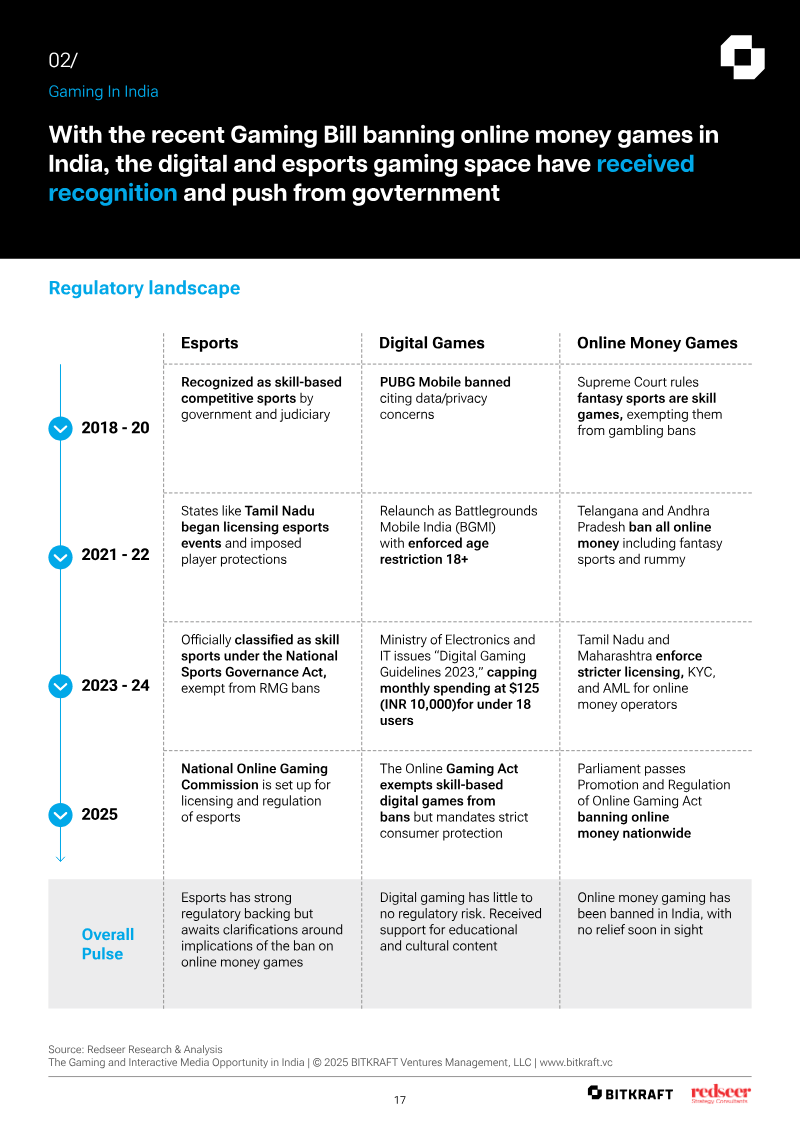
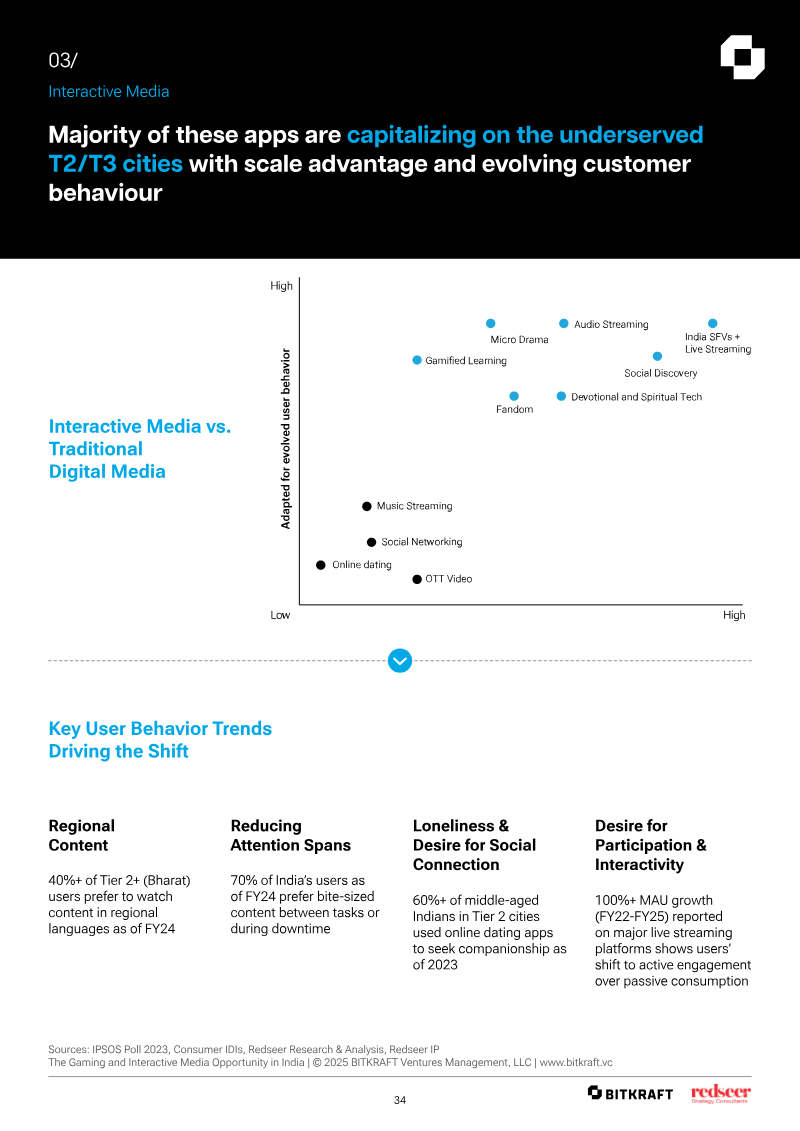
The Gaming and Interactive Media Opportunity in India
India’s gaming and interactive media sector is undergoing a rapid transformation, evolving from a $2.4 billion market into a projected $7.8 billion industry by fiscal year 2030.
- India’s gaming and interactive media market is projected to grow from $2.4 billion to $7.8 billion by fiscal year 2030.
- The industry is shifting its focus away from online money games toward core and mid-core digital gaming, esports, and interactive media platforms due to regulatory changes.
- Market expansion is driven by a mobile-first strategy that targets Tier 2 and Tier 3 cities through culturally relevant, vernacular content.

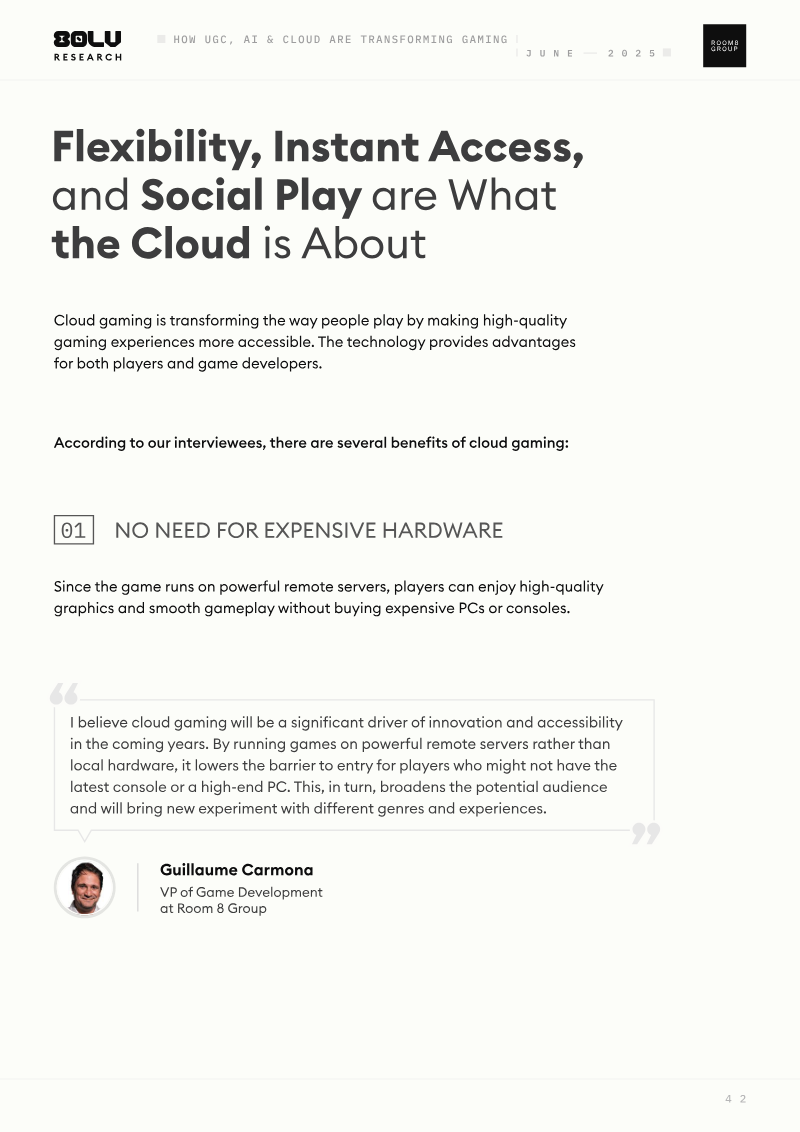
How UGC, AI, & Cloud Are Transforming Gaming Report
The report argues that user-generated content (UGC), artificial intelligence (AI) and cloud gaming are reshaping the industry by lowering entry barriers, democratizing creation and expanding cross-platform reach.
- Cloud gaming revenue grew from $1.1 billion in 2020 to $6.9 billion in 2024, with projections reaching $18.7 billion by 2027 and a trajectory to become the dominant play model within a decade.
- Cloud gaming subscribers have surged from 62.5 million to nearly 396 million over the last four years, while AI-driven development tools are projected to generate $4.2 billion by 2029.
- Indie developers are increasingly competitive, with indie releases on Steam generating $4 billion in 2024, a figure that now matches AAA revenue streams.


The Future Of NPCs: What Gamers Demand From Next-Gen Characters
The evolution of non-playable characters (NPCs) has failed to keep pace with the rapid advancements in game graphics and narrative complexity, leading to a significant gap in player immersion.
- 99% of gamers believe that integrating advanced AI into NPCs would positively impact gameplay, while 88% expect it to significantly improve overall immersion.
- 81% of players are willing to pay a premium for games featuring intelligent NPCs, and 79% report a higher likelihood of purchasing titles that utilize this technology.
- 78% of gamers indicate they would increase their playtime in titles featuring advanced, autonomous NPCs, suggesting a direct link between AI sophistication and player retention.
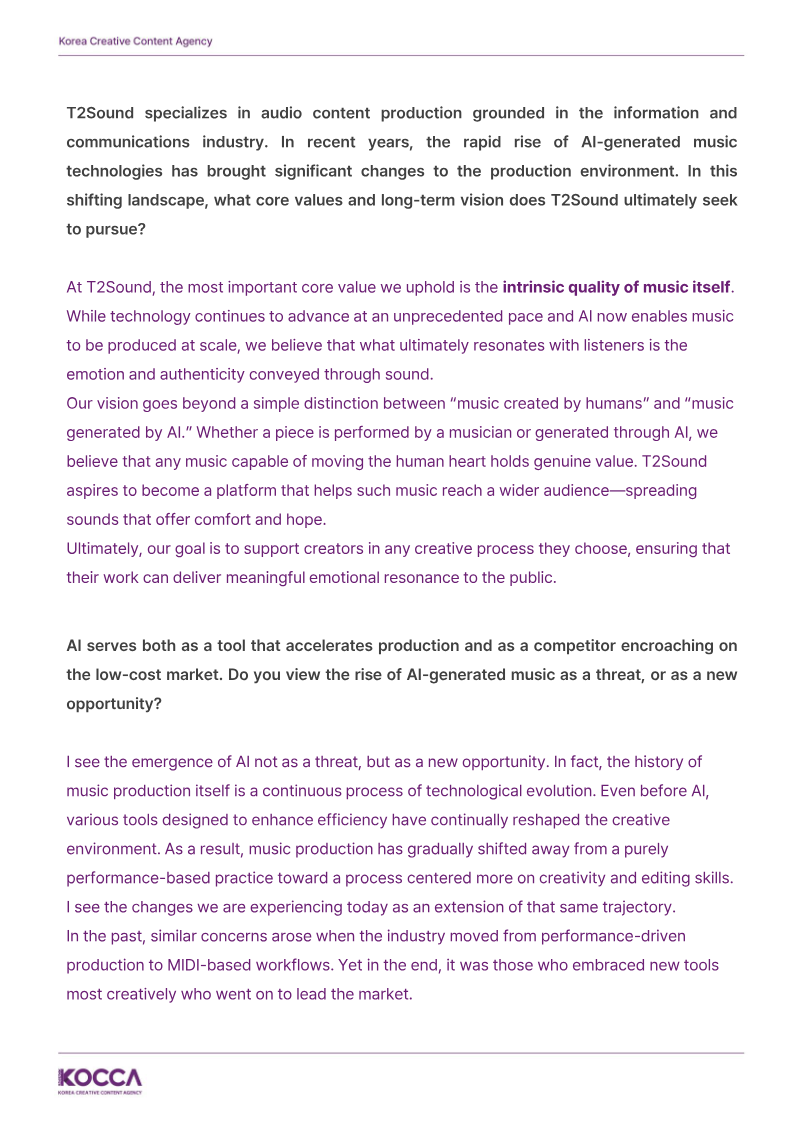
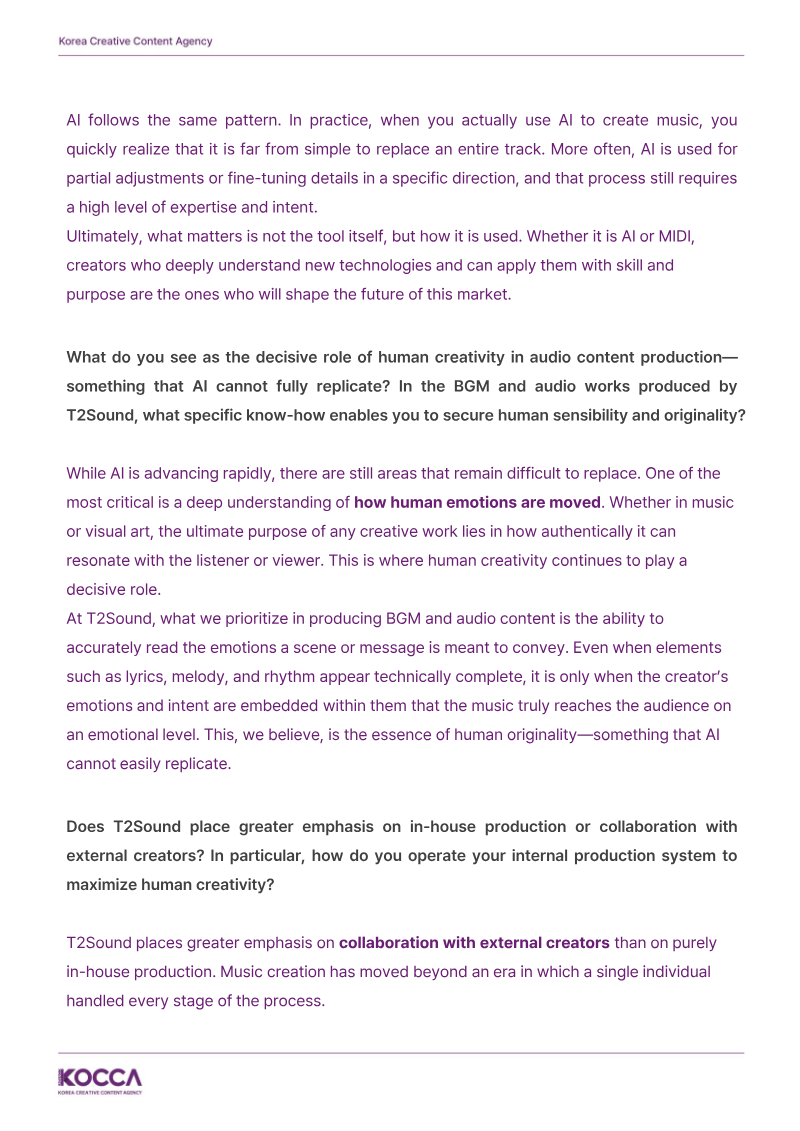
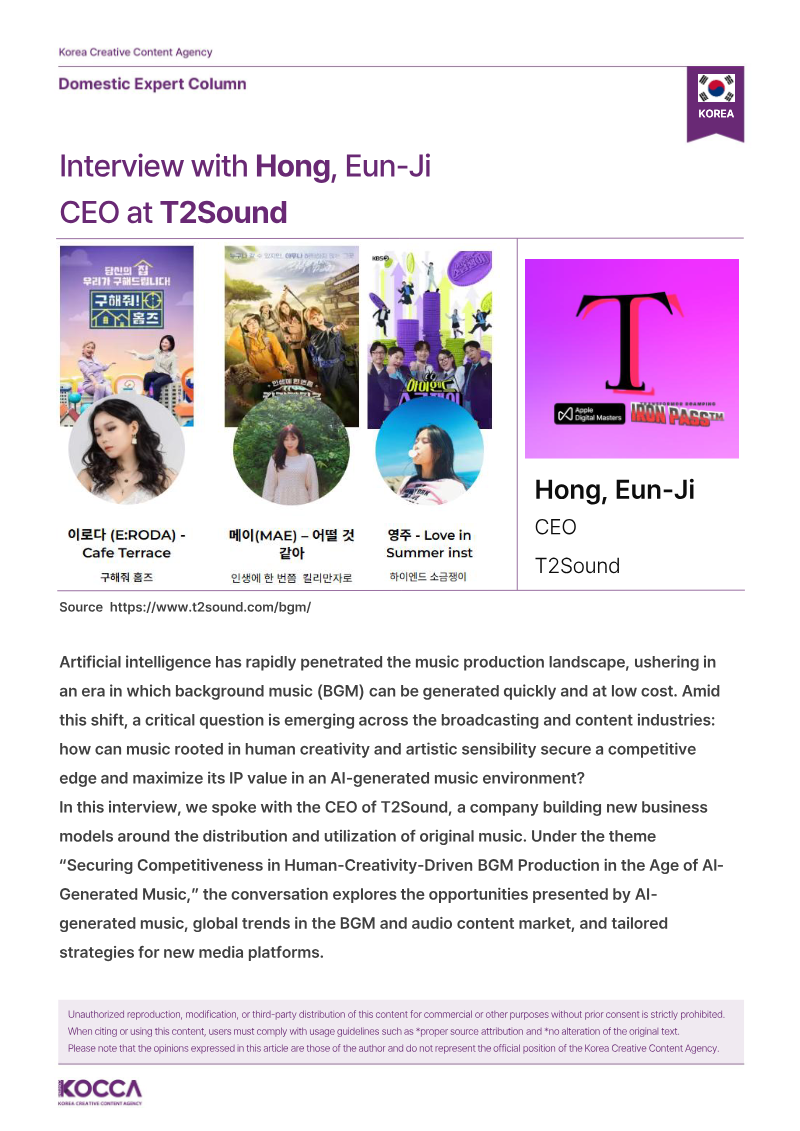
Securing Competitiveness in Human-Creativity-Driven BGM Production in the Age of AI-Generated Music: South Korea
The interview with Hong Eun-Ji, CEO of T2Sound, examines how background-music (BGM) producers in South Korea can preserve competitive advantage as AI-generated music becomes increasingly affordable and rapid.
- Human creativity remains the primary competitive advantage for BGM producers, as the ability to convey authentic emotion and intent cannot be replicated by AI.
- T2Sound maintains market competitiveness by prioritizing meticulous mixing and mastering to ensure high-quality emotional resonance, rather than competing solely on speed or cost.
- Global demand is shifting away from generic background music toward tracks with distinctive sonic signatures, with Korean BGM gaining traction due to its unique emotional texture.
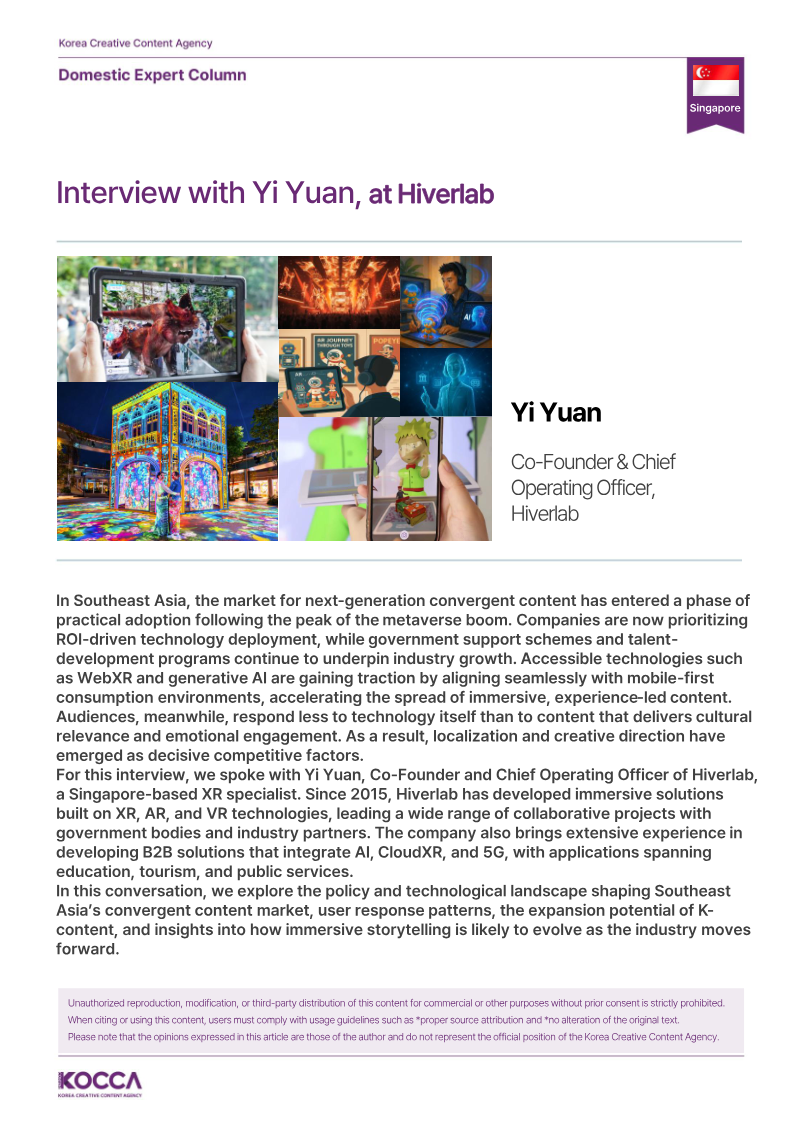
Interview with Yi Yuan, at Hiverlab: Southeast Asia
The interview underscores a shift in Southeast Asia’s convergent-content market from speculative metaverse enthusiasm to a pragmatic, ROI-driven landscape where augmented reality has become the primary vehicle for marketing and tourism initiatives.
- Southeast Asia’s convergent-content market has shifted from speculative metaverse projects to a pragmatic, ROI-driven focus on augmented reality for marketing and tourism.
- Success in the region is measured by quantitative metrics including dwell time, interaction density, and social-virality indicators rather than technological novelty.
- Large-scale AR deployments are currently anchored by government funding and mobile-first infrastructure, utilizing WebXR and 5G networks to ensure scalability.