4 1 + 1 2 2 = 2 3
Source: Study Report on African Video Games: Premier Results in Francophone Countries33 + =243 276
Source: Study Report on African Video Games: Premier Results in Francophone Countries2 + 231 = 253
Source: Study Report on African Video Games: Premier Results in Francophone Countries11 + 59 = 70
Source: Study Report on African Video Games: Premier Results in Francophone CountriesThe situation was more muted in Nigeria and Kenya, with increases of $2\%$ and $9\%$ respectively.
Source: The African Mobile Apps Landscape (2021)Between Q1 2020 and Q1 2021, overall installs increased by 41%
Non-organic installs increased on Android by 54% , compared to just 19% for iOS
Source: The African Mobile Apps Landscape (2021)The first set of restrictions in March 2020 had a huge impact on downloads of gaming apps, which increased by 50% in Q2 2020 compared to Q1, compared to non-gaming apps which only increased by 8%
Source: The African Mobile Apps Landscape (2021)![or null if not a data key, "label": ["...", "value"], "dataKey": ["..."]} or null if not a data key, "label": ["...", "value"], "dataKey": ["..."]} or null if not a data key, "label": ["...", "value"], "dataKey": ["..."]} or null if not a data key, "label": ["...", "value"], "dataKey": ["..."]} or null if not a data key, "label": ["...", "value"], "dataKey": ["..."]} or null if not a data key, "label": ["...", "value"], "dataKey": ["..."]} or null if not a data key, "label": ["...", "value"], "dataKey": ["..."]} or null if not a data key, "label": ["...", "value"], "dataKey": ["..."]} or null if not a data key, "label": ["...", "value"], "dataKey": ["..."]} or null if not a data key, "label": ["...", "value"], "dataKey": ["..."]} or null if not a data key, "label": ["...", "value"], "dataKey": ["..."]} or null if not a data key, "label": ["...", "value"], "dataKey": ["..."]} or null if not a data key, "label": ["...", "value"], "dataKey": ["..."]} or null if not a data key, "label": ["...", "value"], "dataKey": ["..."]} or null if not a data key, "label": ["...", "value"], "dataKey": ["..."]} or null if not a data key, "label": ["...", "value"], "dataKey": ["..."]} or null if not a data key, "label": ["...", "value"], "dataKey": ["..."]} or null if not a data key, "label": ["...", "value"], "dataKey": ["..."]} or null if not a data key, "label": ["...", "value"], "dataKey": ["..."]} or null if not a data key, "label": ["...", "value"], "dataKey": ["..."]} or null if not a data key, "label": ["...", "value"], "dataKey": ["..."]} or null if not a data key, "label": ["...", "value"], "dataKey": ["..."]} or null if not a data key, "label": ["...", "value"], "dataKey": ["..."]} or null if not a data key, "label": ["...", "value"], "dataKey": ["..."]} or null if not a data key, "label": ["...", "value"], "dataKey": ["..."]} or null if not a data key, "label": ["...", "value"], "dataKey": ["..."]} or null if not a data key, "label": ["...", "value"], "dataKey": ["..."]} or](https://files.gameindustrylibrary.com/figures/12987/e2abf3a300bbb4f40fc1aece6534cf40a15d6c035e18e79d1443b138557fe0c9.jpg)
or null if not a data key, "label": ["...", "value"], "dataKey": ["..."]} or null if not a data key, "label": ["...", "value"], "dataKey": ["..."]} or null if not a data key, "label": ["...", "value"], "dataKey": ["..."]} or null if not a data key, "label": ["...", "value"], "dataKey": ["..."]} or null if not a data key, "label": ["...", "value"], "dataKey": ["..."]} or null if not a data key, "label": ["...", "value"], "dataKey": ["..."]} or null if not a data key, "label": ["...", "value"], "dataKey": ["..."]} or null if not a data key, "label": ["...", "value"], "dataKey": ["..."]} or null if not a data key, "label": ["...", "value"], "dataKey": ["..."]} or null if not a data key, "label": ["...", "value"], "dataKey": ["..."]} or null if not a data key, "label": ["...", "value"], "dataKey": ["..."]} or null if not a data key, "label": ["...", "value"], "dataKey": ["..."]} or null if not a data key, "label": ["...", "value"], "dataKey": ["..."]} or null if not a data key, "label": ["...", "value"], "dataKey": ["..."]} or null if not a data key, "label": ["...", "value"], "dataKey": ["..."]} or null if not a data key, "label": ["...", "value"], "dataKey": ["..."]} or null if not a data key, "label": ["...", "value"], "dataKey": ["..."]} or null if not a data key, "label": ["...", "value"], "dataKey": ["..."]} or null if not a data key, "label": ["...", "value"], "dataKey": ["..."]} or null if not a data key, "label": ["...", "value"], "dataKey": ["..."]} or null if not a data key, "label": ["...", "value"], "dataKey": ["..."]} or null if not a data key, "label": ["...", "value"], "dataKey": ["..."]} or null if not a data key, "label": ["...", "value"], "dataKey": ["..."]} or null if not a data key, "label": ["...", "value"], "dataKey": ["..."]} or null if not a data key, "label": ["...", "value"], "dataKey": ["..."]} or null if not a data key, "label": ["...", "value"], "dataKey": ["..."]} or null if not a data key, "label": ["...", "value"], "dataKey": ["..."]} or

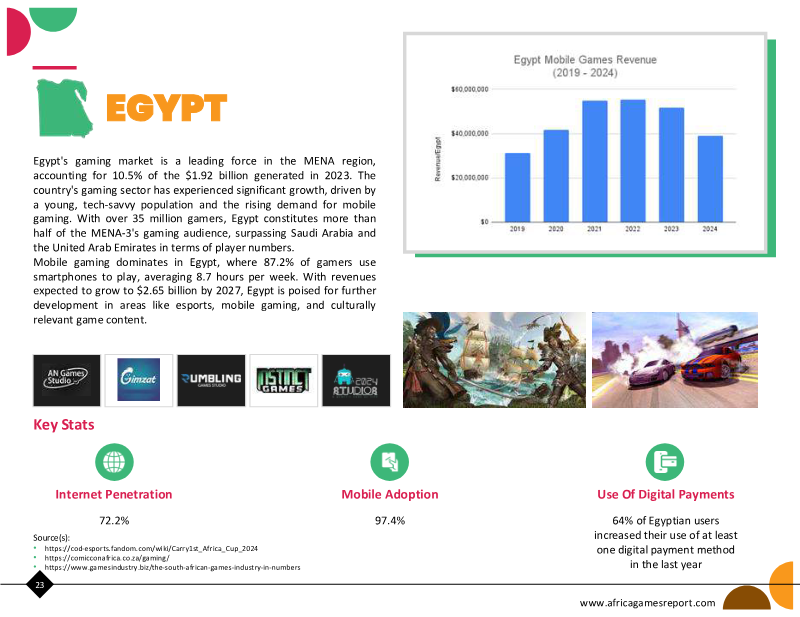
This bar chart illustrates the projected revenue for mobile games in South Africa from 2019 to 2024, showing a significant increase in revenue from 2019 to 2022, followed by a slight decline in 2023 and 2024. The revenue is measured in US dollars, with figures ranging from approximately $80 million in 2019 to over $110 million in 2022.

This bar chart illustrates the projected revenue growth of the mobile games market in Nigeria from 2019 to 2024, showing a significant upward trend over these years. The revenue is expected to increase substantially, reaching over $60,000,000 by 2024.
![or null if not a data key, "label": ["...", "value"], "dataKey": [{"label": "...", "value": ...}] or null if not a data value, "label": ["...", "value"], "dataKey": [{"label": "...", "value": ...}] or null if not a data value, "label": ["...", "value"], "dataKey": [{"label": "...", "value": ...}] or null if not a data value, "label": ["...", "value"], "dataKey": [{"label": "...", "value": ...}] or null if not a data value, "label": ["...", "value"], "dataKey": [{"label": "...", "value": ...}] or null if not a data value, "label": ["...", "value"], "dataKey": [{"label": "...", "value": ...}] or null if not a data value, "label": ["...", "value"], "dataKey": [{"label": "...", "value": ...}] or null if not a data value, "label": ["...", "value"], "dataKey": [{"label": "...", "value": ...}] or null if not a data value, "label": ["...", "value"], "dataKey": [{"label": "...", "value": ...}] or null if not a data value, "label": ["...", "value"], "dataKey": [{"label": "...", "value": ...}] or null if not a data value, "label": ["...", "value"], "dataKey": [{"label": "...", "value": ...}] or null if not a data value, "label": ["...", "value"], "dataKey": [{"label": "...", "value": ...}] or null if not a data value, "label": ["...", "value"], "dataKey": [{"label": "...", "value": ...}] or null if not a data value, "label": ["...", "value"], "dataKey": [{"label": "...", "value": ...}] or null if not a data value, "label": ["...", "value"], "dataKey": [{"label": "...", "value": ...}] or null if not a data value, "label": ["...", "value"], "dataKey": [{"label": "...", "value": ...}] or null if not a data value, "label": ["...", "value"], "dataKey": [{"label": "...", "value": ...}] or null if not a data value, "label": ["...", "value"], "dataKey": [{"label": "...", "value": ...}] or null if not a data value, "label": ["...", "value"], "dataKey": [{"label": "...", "value": ...}] or null if not a data value, "label": ["...", "value"], "dataKey": [{"label": "...", "value": ...}] or](https://files.gameindustrylibrary.com/figures/12987/7c73c080e9da4075eef804241ee03465f68a3aafe9c9b624a216a2bf1efd9c1e.jpg)
or null if not a data key, "label": ["...", "value"], "dataKey": [{"label": "...", "value": ...}] or null if not a data value, "label": ["...", "value"], "dataKey": [{"label": "...", "value": ...}] or null if not a data value, "label": ["...", "value"], "dataKey": [{"label": "...", "value": ...}] or null if not a data value, "label": ["...", "value"], "dataKey": [{"label": "...", "value": ...}] or null if not a data value, "label": ["...", "value"], "dataKey": [{"label": "...", "value": ...}] or null if not a data value, "label": ["...", "value"], "dataKey": [{"label": "...", "value": ...}] or null if not a data value, "label": ["...", "value"], "dataKey": [{"label": "...", "value": ...}] or null if not a data value, "label": ["...", "value"], "dataKey": [{"label": "...", "value": ...}] or null if not a data value, "label": ["...", "value"], "dataKey": [{"label": "...", "value": ...}] or null if not a data value, "label": ["...", "value"], "dataKey": [{"label": "...", "value": ...}] or null if not a data value, "label": ["...", "value"], "dataKey": [{"label": "...", "value": ...}] or null if not a data value, "label": ["...", "value"], "dataKey": [{"label": "...", "value": ...}] or null if not a data value, "label": ["...", "value"], "dataKey": [{"label": "...", "value": ...}] or null if not a data value, "label": ["...", "value"], "dataKey": [{"label": "...", "value": ...}] or null if not a data value, "label": ["...", "value"], "dataKey": [{"label": "...", "value": ...}] or null if not a data value, "label": ["...", "value"], "dataKey": [{"label": "...", "value": ...}] or null if not a data value, "label": ["...", "value"], "dataKey": [{"label": "...", "value": ...}] or null if not a data value, "label": ["...", "value"], "dataKey": [{"label": "...", "value": ...}] or null if not a data value, "label": ["...", "value"], "dataKey": [{"label": "...", "value": ...}] or null if not a data value, "label": ["...", "value"], "dataKey": [{"label": "...", "value": ...}] or

This bar chart from a game industry report illustrates the perceived importance of various factors versus their current poor or really poor status. It compares the percentage of respondents who consider each factor "Critical or Important" (orange bars) with those who rate it as "Poor or Really Poor" (red bars).

Revenue 580 Million USD (2023)
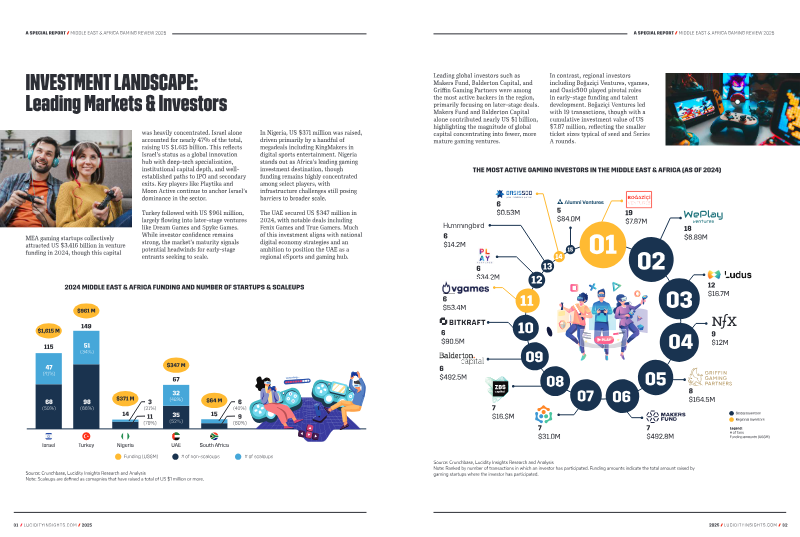
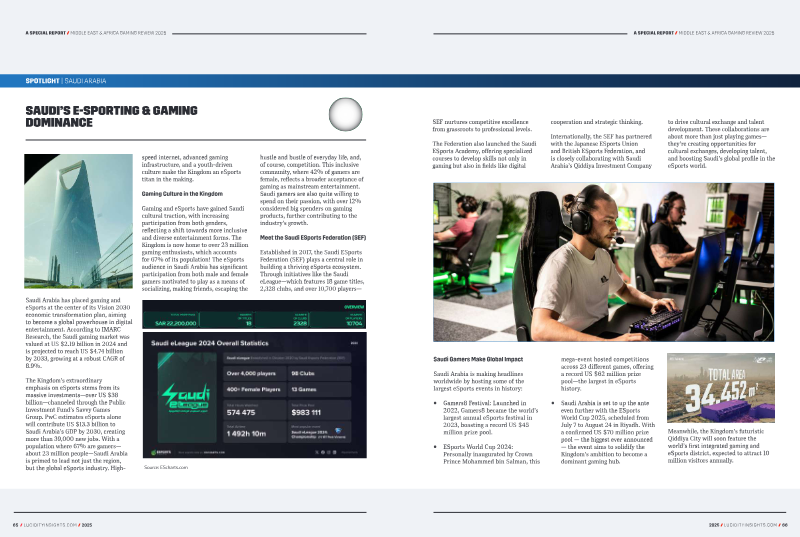
The Middle East and Africa gaming landscape is poised for rapid expansion, with market value projected to rise from US $7.4 billion in 2024 to over US $19.4 billion by 2033, reflecting an 11 % CAGR driven largely by mobile-first adoption and a vibrant startup ecosystem. Key hubs—Saudi Arabia, UAE, Turkey, Israel, and emerging African markets—are attracting substantial investment, hosting record‑setting esports events such as Saudi Arabia’s $70 million World Cup, and positioning the region as a growing share of the global gaming economy. Mobile dominance, government‑backed visions, and esports infrastructure are reshaping competitive dynamics across the region. Funding flows reveal a highly concentrated investment landscape dominated by global players and regional leaders. Israel leads with nearly US $1 billion raised across 146 startups, followed by Turkey’s $961 million and Nigeria’s $371 million. The UAE lags behind but is rapidly scaling, with Dubai Vision 2033 earmarking $1 billion for talent and tech to achieve a $200 billion GDP contribution by 2033. Turkey’s “unicorn factory” status is underscored by Peak Games’ $1.8 billion acquisition and Dream Games’ record $2.6 billion raise, while Saudi Arabia’s Vision 2030 funding fuels a burgeoning local ecosystem that could produce future unicorns. Digital payment adoption and Web3 innovation are accelerating growth, particularly in the UAE where blockchain publishing and VR/Metaverse platforms such as Fenix Games and True Gamers are attracting capital. In Africa, mobile-first adoption has driven revenue to $1.8 billion in 2024, with Egypt, South Africa and Nigeria dominating startup activity. The continent’s youthful demographics and entrepreneurial momentum position it as a dynamic frontier, with African studios like Sea Monster gaining traction through capital, mentorship and infrastructure support. Legacy hardware sales remain a key revenue driver, with story‑rich single‑player titles and console sales generating multi‑billion dollar revenues. However, the rise of subscription models, microtransactions and expansion packs is reshaping monetisation strategies across all segments. Overall, the Middle East and Africa are emerging as a mobile‑first, VC‑backed powerhouse with significant potential for global influence in gaming and esports.
Gaming in Africa 2024 reveals a market that is overwhelmingly mobile‑centric, with 92 % of respondents playing on phones and 81 % using smartphones. Android dominates, accounting for 92 % of downloads from Google Play, while iOS remains a minority. The region’s gamers are highly engaged: 78 % played in the previous day and a third spend three or more hours per session. Puzzle games lead at 40 %, followed by sports and football at 36 %; female players show a particular affinity for puzzles, twice the rate of male gamers. Motivations cluster around entertainment (73 %) and relaxation (64 %), with social interaction and competition also significant drivers. The market is poised for rapid expansion, fueled by a youthful population and high smartphone penetration. In Kenya, mobile‑first economics and widespread mobile money usage create a fertile environment for in‑game purchases. Across the four surveyed countries, 63 % of players have made microtransactions, using credit cards, mobile money, Google Pay or airtime; Kenya’s mobile‑money share exceeds 60 %. Spending patterns show that roughly one‑third of gamers spend $5–10 per month, while 26 % spend less than $2. Barriers include a preference for free titles (47 %) and limited disposable income (44 %). Demand for culturally relevant content is strong, yet 56 % of respondents report no awareness of African‑made games. Support for locally produced titles remains uneven. In Nigeria and South Africa, only 42 %–46 % of respondents care about a game’s origin, with enjoyment as the primary purchase driver for approximately 70 %. Interest in black protagonists is moderate at 38 % overall, dropping to 28 % in Egypt and 33 % in South Africa. These findings underscore a mobile‑driven, youth‑led market with growing appetite for local content but still constrained by payment preferences and awareness gaps.
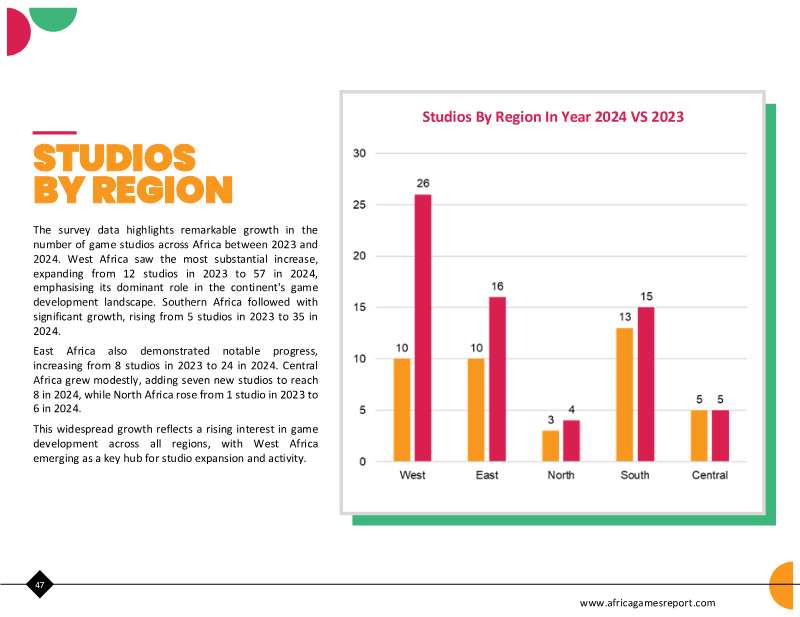
The African games industry is undergoing a period of rapid expansion, with total revenues projected to surpass $1 billion in 2024. This growth is primarily fueled by a mobile-first market that accounts for nearly 90% of the sector’s revenue, driven by a young, tech-savvy population and increasing smartphone penetration. While South Africa remains the most lucrative individual market, Nigeria has demonstrated the most significant momentum, with mobile revenues increasing fivefold since 2019. On a global scale, the Middle East and Africa region has emerged as a growth leader, maintaining an 8.9% year-on-year increase despite the historical dominance of North American and Asian markets. The developer ecosystem has matured significantly, expanding from a handful of entities to approximately 250 studios by 2024. West Africa has emerged as the primary regional hub, experiencing a nearly fivefold increase in the number of active studios over the past year. Development is characterized by a youthful, male-majority demographic that favors the Unity engine to create entertainment-focused content for mobile platforms. High-profile international partnerships with brands like Microsoft Xbox, Disney, and Gameloft, alongside the success of global titles like Candy Crush and PUBG Mobile within the region, signal increasing integration into the global gaming economy. Despite these advancements, the industry faces substantial structural and financial hurdles. Infrastructure remains a critical concern, as developers struggle with unstable power and high-speed internet access. Furthermore, a significant performance gap exists in funding and institutional support; only 3% of developers receive government funding, and over half of the continent's developers currently earn no income from their work. This has led to a trend of conservative, small-scale investment. To transition from early-stage prototyping to commercial acceleration, the sector requires a collaborative model focused on building talent pipelines, implementing rebate programs, and establishing localized payment methods to unlock the continent's full economic potential.
The African video games industry represents a rapidly expanding mobile-first frontier, characterized by a player population that surged from 77 million in 2015 to 186 million in 2021. With annual revenues projected to surpass $1 billion by 2024, the continent is positioning itself to replicate the success of other emerging markets like Brazil and India. Growth is currently concentrated in regional hubs across South Africa, Nigeria, Ghana, and Kenya, where a young demographic is increasingly integrating local cultural themes into digital entertainment. This evolution is supported by a complex value chain where mobile gaming accounts for the vast majority of engagement, mirroring global trends where mobile platforms generate over $92 billion in annual revenue. Despite this potential, the ecosystem remains in a nascent stage, with 63% of studios operating for five years or less and 59% of developers never having secured external investment. While high-profile deals such as Carry1st’s $27 million funding round and GBarena’s $15 million acquisition of Galactech signal growing investor confidence, the broader market is still dominated by hobbyists. Only 36% of developers currently earn a living from their work, and over half of those rely exclusively on domestic revenue. Technical development is heavily centralized around the Unity engine, which is utilized by 64% of the market, reflecting the industry's focus on accessible mobile content. Significant structural barriers continue to impede the transition from a hobbyist community to a professionalized global competitor. Infrastructure deficits are the primary concern, with 60% of industry participants citing poor power supply and high internet costs as critical obstacles. Furthermore, government support is nearly non-existent, currently reaching only 3% of the sector. To achieve sustainable maturity, the industry requires a coordinated effort to stabilize infrastructure, formalize talent pipelines, and attract informed investors who understand the unique dynamics of the African market. Addressing these catalysts is essential for transforming local creative potential into a robust, revenue-generating economic sector.
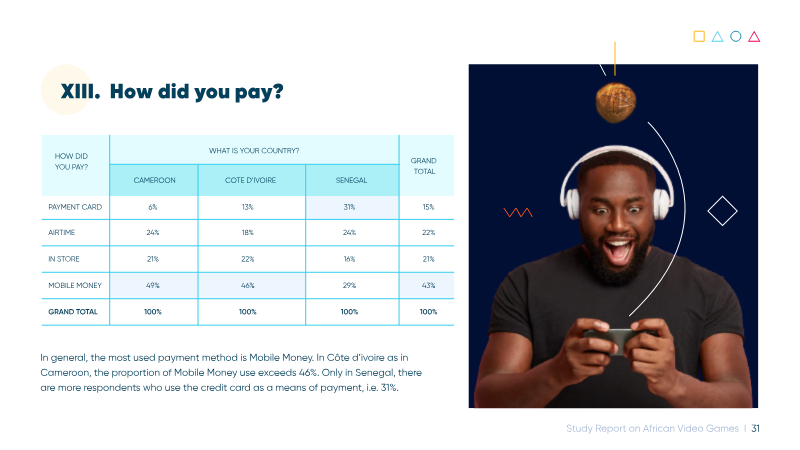
The study investigates the emerging video‑game ecosystem in West Africa, focusing on Senegal, Côte d’Ivoire and Cameroon, to assess current player demographics, awareness of locally produced titles, and the factors shaping market potential. By surveying 785 gamers between July and August 2023, the research aims to inform development initiatives such as the Game Hub Senegal incubator, which seeks to nurture talent, provide mentorship and financing, and foster a community around African‑themed games. Findings reveal a heavily male‑skewed player base—approximately 80 % men—and a concentration of respondents aged 19‑25, who together account for roughly 45 % of participants in each country. Android devices dominate, with over 80 % of gamers using this platform, and most players engage in one to two sessions per day. Despite this activity, exposure to African‑origin games is minimal: 60‑66 % of respondents have never played a locally developed title, and more than 82 % report never having heard of such games. Among the few who have, evaluations are generally positive, describing the experiences as “good” or better. Motivations for playing centre on “challenges and evolution,” cited by about 37 % of respondents, followed by social interaction with friends (16 %) and graphics quality (8 %). Financial barriers are pronounced; roughly 51 % lack a bank card, limiting their ability to spend on games. For those who do make purchases, the primary drivers are acquiring the game itself (≈ 42 %) and unlocking new levels (≈ 18 %). Overall, the data suggest that while payment infrastructure and awareness of African‑produced games constrain current consumption, the region’s youthful, mobile‑centric audience and strong appetite for challenging content position the market for rapid expansion in the near term.
The African mobile app market experienced a period of rapid acceleration between Q1 2020 and Q1 2021, driven by a young, mobile-first population and the unique conditions of the COVID-19 pandemic. Analysis of 6,000 apps and 2 billion installs across South Africa, Nigeria, and Kenya reveals that overall app installs grew by 41% during this period. Nigeria led this growth with a 43% increase, while South Africa saw the most immediate surge in downloads following strict lockdown measures. The gaming sector proved particularly resilient, with installs jumping 50% in Q2 2020 as consumers sought home entertainment. This trend extended to monetization, as in-app advertising revenue surged by 167% between Q2 2020 and Q1 2021. Furthermore, in-app purchasing revenue peaked in Q3 2020, accounting for one-third of the year's total revenue. While Android remains the dominant platform with a 54% increase in non-organic installs, iOS also showed growth despite a 21% rise in cost-per-install. Several structural trends define the current landscape, including the rise of fintech apps addressing the needs of unbanked populations and the emergence of super apps that consolidate multiple services to overcome device storage limitations. Despite this progress, challenges remain regarding connectivity, as mobile internet adoption in Sub-Saharan Africa stands at 26%, well below the global average. To succeed, marketers are encouraged to move toward a multi-moment maturity model by integrating durable measurement foundations, focusing on high-value user acquisition, and utilizing remarketing strategies to drive long-term engagement.