SAVY GAMES GROUPL | $4,900.0 | 3 | SCOPELY | taggames | VINDEX
Source: Gametech Report: Global & MENAP Outlook Q3 2023Playtika | $465.0 | 2 | | youda GAMES | |
Source: Gametech Report: Global & MENAP Outlook Q3 2023more than 100 ecosystem stakeholders joined us in celebrating the official Adaverse KSA launch.
Source: State of Web3 in Saudi Arabia: 2024 KSA Reportaiming to plant 10 million trees by 2030
Source: State of Web3 in Saudi Arabia: 2024 KSA Reportled an 11m round in Hong Kong-based MANTRA (OM), a blockchain realm
Source: State of Web3 in Saudi Arabia: 2024 KSA Report$10 million fund backed by Cardano and EMURGO.
"amassed 500k+ social media followers"
Source: State of Web3 in Saudi Arabia: 2024 KSA ReportThe Saudi fintech sector has attracted substantial funding, with over $552 million invested between 2020 and 2021 [27]
Source: State of Web3 in Saudi Arabia: 2024 KSA Report
The figure illustrates the distribution of various features in a dataset used for evaluating the performance of a recommendation system. The dataset is divided into two categories: in-game features and non-in-game features. ### In-Game Features: - **Exclusive/Limited-Time Bundle**: This feature represents the presence of exclusive or limited-time bundles in the dataset. - **Cross-platform Compatibility**: This feature indicates whether the features are available on multiple platforms. - **Multi-Buy Options for In-Game**: This feature shows whether the features offer multi-buy options within the in-game environment. - **Recommendations from Family Members**: This feature represents whether recommendations are based on the preferences of family members. - **Local Payment Methods Support**: This feature indicates whether local payment methods are supported within the in-game environment. - **Faster/Convenient Checkout**: This feature shows whether checkout processes are faster or more convenient. - **Additional In-Game Content**: This feature represents additional in-game content available within the dataset. ### Non-In-Game Features: - **Engaging Gameplay Features**: This feature includes elements that engage players in the game. - **Removal of Unfair Monetization**: This feature indicates whether unfair monetization practices are present. - **Trusted Security/Fraud Prevention**: This feature shows whether the system provides trusted security and fraud prevention measures. - **Rewards, Perks, or Cashback**: This feature represents the presence of rewards, bonuses, or cashback mechanisms within the dataset. - **Lower or Discounted Prices**: This feature indicates whether prices are lower or discounted within the in-game environment. ### Analysis: - The figure shows that the dataset includes a significant number of in-game features, with 43.9% being related to rewards, perks, or cashback. - The non-in-game features are also substantial, with 39.8% being related to r

The map shows the locations of various cryptocurrency exchanges in the United States. The exchanges are represented by icons, and their names are listed next to them. The map also shows the location of the eFAWATEER.com website, which is located in San Francisco.

The figure illustrates the results of a visual question answering (VQA) system applied to an image from the MS-COCO dataset. The image depicts a map of Africa with three highlighted regions, each containing an icon representing the flag of Egypt. The flags are shown in a semi-transparent overlay on the map, indicating the regions where the VQA system has identified Egyptian flags. The context provided suggests that this figure is part of a study on the performance of VQA systems in identifying objects within images. The specific focus here is on the accuracy and precision of the system's predictions, particularly in terms of object detection and recognition. The sub-caption "Egypt" indicates that the flags shown are specifically for Egypt, which is one of the countries in Africa. The map serves as a geographical reference to contextualize the locations where the flags are found. Overall, the figure aims to demonstrate how well the VQA system can identify and localize objects (in this case, Egyptian flags) within an image, providing insights into the system's capabilities and limitations.

Where do gamers purchase games & in-game content?

This image from a game industry report illustrates the projected growth in revenue and the number of gamers from 2023 to 2028, showing a 5-year revenue CAGR of 7.2%. It forecasts revenue increasing from $1,925 million in 2023 to $2,723 million in 2028, alongside an increase in gamers from 68.3 million to 82.7 million over the same period.

96% of gamers surveyed in UAE
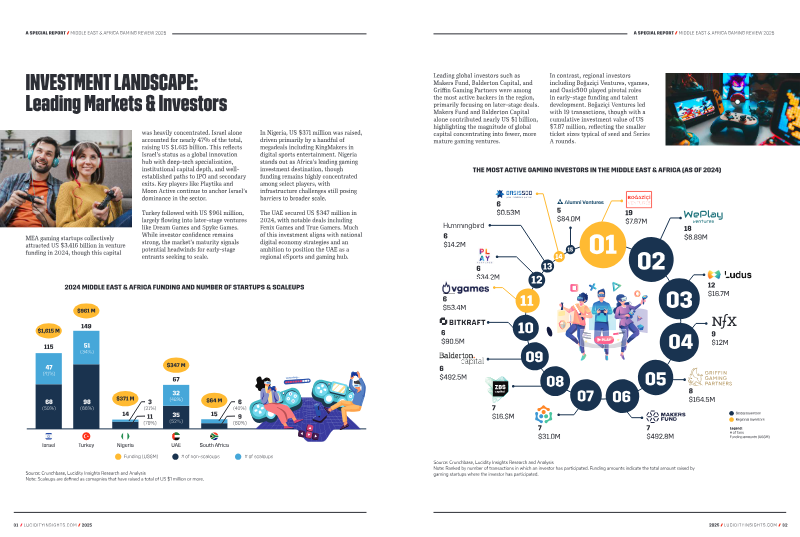
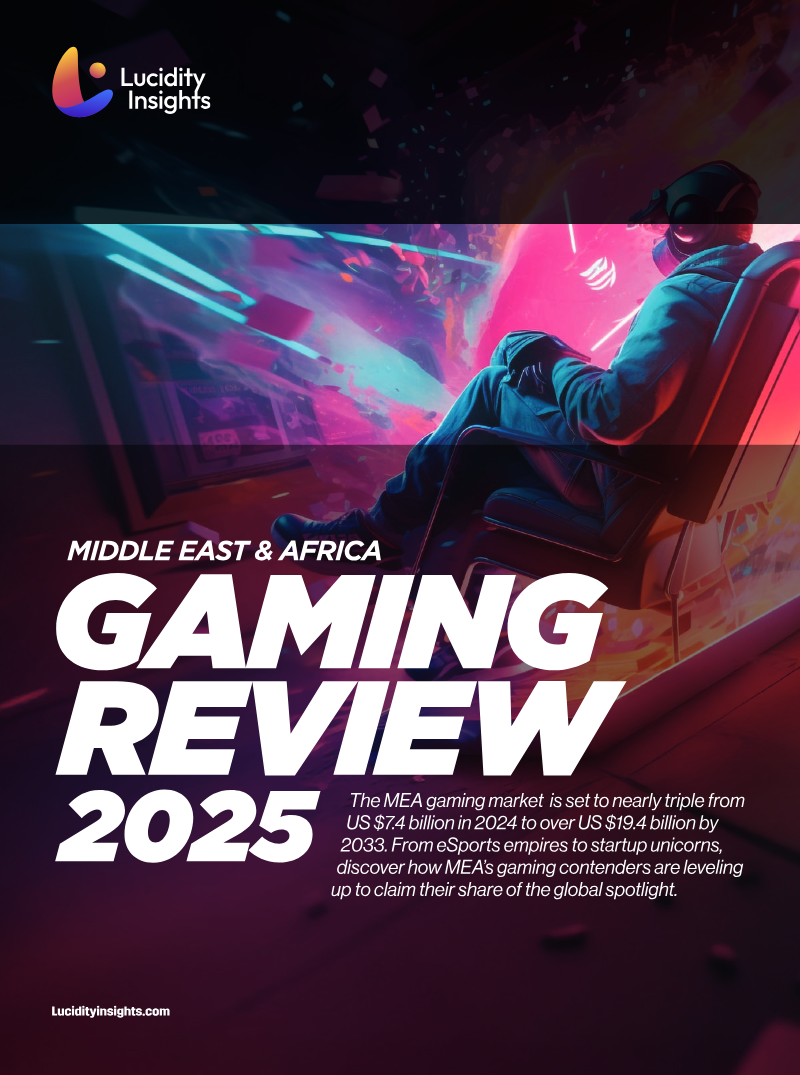
The Middle East and Africa gaming landscape is poised for rapid expansion, with market value projected to rise from US $7.4 billion in 2024 to over US $19.4 billion by 2033, reflecting an 11 % CAGR driven largely by mobile-first adoption and a vibrant startup ecosystem. Key hubs—Saudi Arabia, UAE, Turkey, Israel, and emerging African markets—are attracting substantial investment, hosting record‑setting esports events such as Saudi Arabia’s $70 million World Cup, and positioning the region as a growing share of the global gaming economy. Mobile dominance, government‑backed visions, and esports infrastructure are reshaping competitive dynamics across the region. Funding flows reveal a highly concentrated investment landscape dominated by global players and regional leaders. Israel leads with nearly US $1 billion raised across 146 startups, followed by Turkey’s $961 million and Nigeria’s $371 million. The UAE lags behind but is rapidly scaling, with Dubai Vision 2033 earmarking $1 billion for talent and tech to achieve a $200 billion GDP contribution by 2033. Turkey’s “unicorn factory” status is underscored by Peak Games’ $1.8 billion acquisition and Dream Games’ record $2.6 billion raise, while Saudi Arabia’s Vision 2030 funding fuels a burgeoning local ecosystem that could produce future unicorns. Digital payment adoption and Web3 innovation are accelerating growth, particularly in the UAE where blockchain publishing and VR/Metaverse platforms such as Fenix Games and True Gamers are attracting capital. In Africa, mobile-first adoption has driven revenue to $1.8 billion in 2024, with Egypt, South Africa and Nigeria dominating startup activity. The continent’s youthful demographics and entrepreneurial momentum position it as a dynamic frontier, with African studios like Sea Monster gaining traction through capital, mentorship and infrastructure support. Legacy hardware sales remain a key revenue driver, with story‑rich single‑player titles and console sales generating multi‑billion dollar revenues. However, the rise of subscription models, microtransactions and expansion packs is reshaping monetisation strategies across all segments. Overall, the Middle East and Africa are emerging as a mobile‑first, VC‑backed powerhouse with significant potential for global influence in gaming and esports.
The Q4 2023 Gaming Industry Report presents a global market that expanded to $212 billion, with the MENAP region contributing $2.8 billion and experiencing a 30% quarter‑over‑quarter rise in both gamers and investment activity. Mobile gaming remains the dominant platform, accounting for 46% of the global player base, while indie PC titles capture a growing share of revenue at roughly 30%. The report also highlights the continued diversification of the industry, noting that game‑to‑movie adaptations generated over $1.4 billion in 2023, underscoring cross‑media opportunities. Regulatory scrutiny intensified across the sector, with a 15% increase in litigation and high‑profile antitrust cases against major platform holders such as Google and Apple. Significant fines were imposed for deceptive practices, reflecting a tightening legal environment that could reshape market dynamics. M&A activity rebounded sharply in Q4, with transactions totaling $68.7 billion—a 769% jump largely driven by the Activision‑Blizzard deal—while global venture capital funding fell. In contrast, MENAP venture activity rose 30%, indicating a strategic pivot toward emerging markets including Asia, Africa, and MENAP for future consolidation. This trend presents both challenges and opportunities for indie studios, potentially enabling higher‑quality titles through increased resources. Shorooq Partners focuses on early‑stage gaming investments within MENAP, targeting pre‑seed to Series A deals with ticket sizes of $1–8 million. The firm prioritizes studios that possess strong intellectual property, robust monetization models, and software solutions that enhance processing efficiency and scalable user connectivity. By engaging through conferences such as the WN Conference Abu Dhabi and LEAP 2024, newsletters, and partnership initiatives, Shorooq aims to nurture the growing MENAP gaming ecosystem.
The analysis focuses on mobile application usage patterns observed during the Ramadan period of 2026 across the Middle East and North Africa (MENA) region. The primary objective is to quantify shifts in user engagement, subscription behavior, and platform preference relative to the preceding year and a broader baseline average. Key metrics examined include overall app usage, subscription growth, in‑app purchases, and social media interaction. Findings indicate a pronounced rise in overall app engagement during Ramadan 2026, with total usage increasing by approximately 111 % compared to the same period in 2025. Subscription activity shows a 42 % uptick, while in‑app purchase volume climbs by 91 %. Social media engagement metrics—measured through likes, shares, and comments—exhibit a 63 % increase. When benchmarked against the average growth rate for the same timeframe (2025‑2026), these figures represent a significant acceleration, suggesting heightened consumer activity during the holy month. The data set covers all MENA markets and aggregates daily usage logs from a representative sample of mobile devices. The methodology involved longitudinal tracking of app sessions, transaction records, and social media interactions over the 30‑day Ramadan period. Comparative analysis was performed against both the previous year’s Ramadan metrics and a rolling 12‑month average to isolate seasonal effects. In conclusion, the Ramadan period of 2026 drove substantial growth across multiple facets of mobile app consumption in MENA, with overall usage and monetization metrics surpassing historical trends. These insights underscore the strategic importance of tailoring app offerings, promotional campaigns, and user experience enhancements to align with cultural and religious calendars in the region.
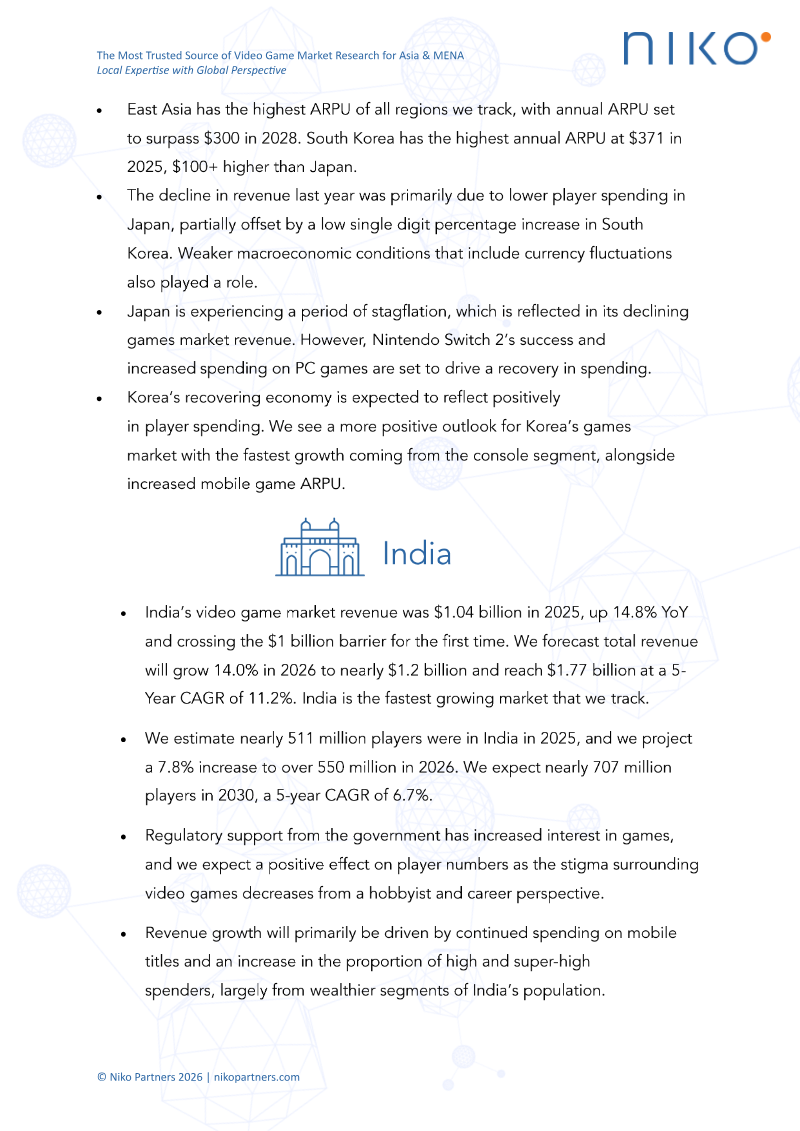
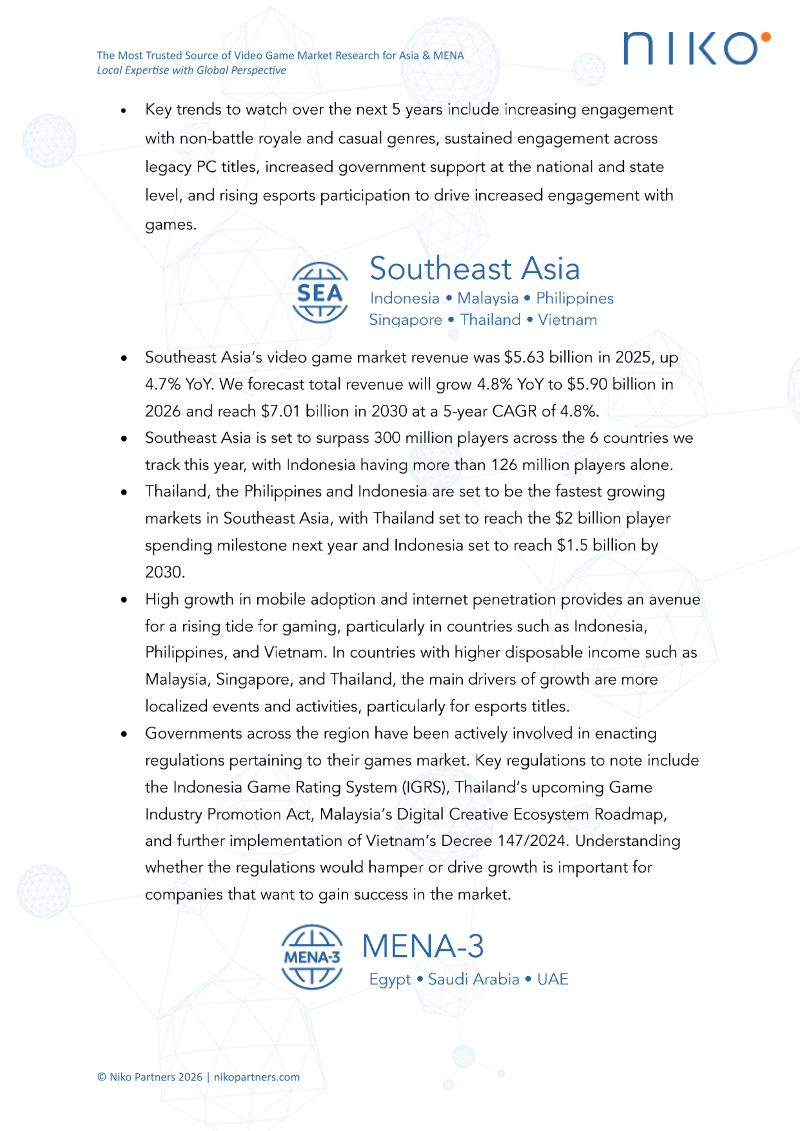
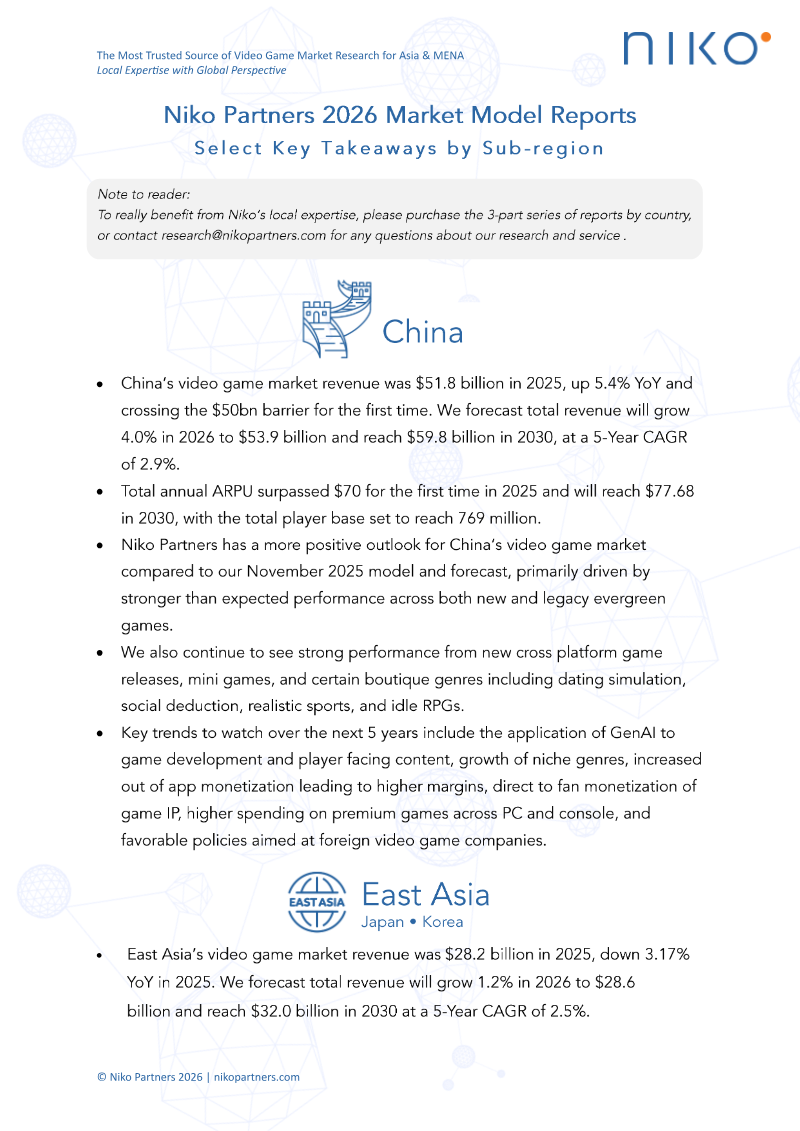
The video game markets across Asia and the Middle East are entering a period of recalibrated growth, with total revenues across key sub-regions projected to reach significant milestones by 2025. China remains the dominant force, with revenues expected to hit $51.2 billion in 2025, supported by a 4.1% year-over-year increase. This growth is fueled by a 24% rise in game approvals and proactive government subsidies. While China maintains a steady long-term outlook with a 3.0% five-year compound annual growth rate, India emerges as the fastest-growing market. India is projected to surpass the $1 billion threshold in 2025 with a 16.2% year-over-year increase, driven by the PROG Act of 2025, which pivoted the industry away from real-money gaming toward traditional video games and esports. Regional performance varies significantly based on local macroeconomic conditions and hardware cycles. East Asia, comprising Japan and South Korea, shows a more optimistic outlook than previously anticipated, with a revised five-year growth rate of 1.7%. This shift is attributed to the successful launch of the Nintendo Switch 2 and a recovery in the South Korean mobile sector. Conversely, Southeast Asia and the MENA-3 region (Saudi Arabia, UAE, and Egypt) face more tempered expectations. Southeast Asia’s growth forecast was lowered to 3.5% due to headwinds in Thailand and Indonesia, despite strong performance in Vietnam. Similarly, the MENA-3 forecast was adjusted downward to a 6.4% growth rate as economic challenges in Egypt and slower mobile growth in Saudi Arabia offset increased government support for localization and age-rating reforms. The data, derived from Niko Partners’ 2025 half-year market model updates, covers PC, mobile, and console platforms across 13 distinct markets. The methodology integrates proprietary market models, macroeconomic indicators, and qualitative regulatory analysis to provide a comprehensive five-year outlook through 2029. Overall, the findings suggest that while mature markets like China and East Asia are stabilizing, emerging markets like India and Vietnam are becoming critical drivers of global industry expansion.
The video game industry in the MENA-3 region—comprising Saudi Arabia (KSA), the United Arab Emirates (UAE), and Egypt—is experiencing rapid expansion driven by a young, tech-savvy population and significant government investment. In 2024, player spending in these markets reached $2 billion, a 4% year-over-year increase, and is projected to exceed $2.7 billion by 2028. While the region is home to 70.3 million gamers, it remains economically diverse: the UAE boasts the highest annual average revenue per user (ARPU) at $84.60, whereas Egypt represents a high-volume market with over five times the player base of the UAE but a much lower ARPU of $3.50. The monetization landscape is defined by a shift toward multi-platform engagement and a high percentage of unbanked or underbanked consumers. Approximately 67% of the MENA population lacks access to traditional credit or debit cards, creating a significant barrier for standard app store transactions. In Egypt, credit card penetration is as low as 2.8%, leading to the dominance of local digital wallets like Vodafone Cash. Conversely, KSA and the UAE feature high internet penetration and 5G coverage, with players increasingly favoring hybrid free-to-play models, premium titles, and subscription services. Direct-to-consumer (D2C) payment platforms and web shops are identified as critical tools for navigating these market complexities. By bypassing the traditional 30% commission fees of major app stores, developers can offer localized pricing, regional payment methods, and enhanced loyalty rewards. Findings indicate that 53% of paying mobile and PC gamers in the region have already made purchases through official game websites. Successful market entry requires a tailored approach that includes high-quality Arabic localization, culturalization of content, and the integration of local payment networks such as Mada in Saudi Arabia and Fawry in Egypt. The analysis is based on a survey of 1,200 gamers, expert interviews, and proprietary market data. It concludes that the MENA-3 region offers a strategic bridge between Eastern and Western markets, providing a gateway to nearly 400 million Arabic speakers worldwide for companies that adopt flexible, region-specific monetization strategies.
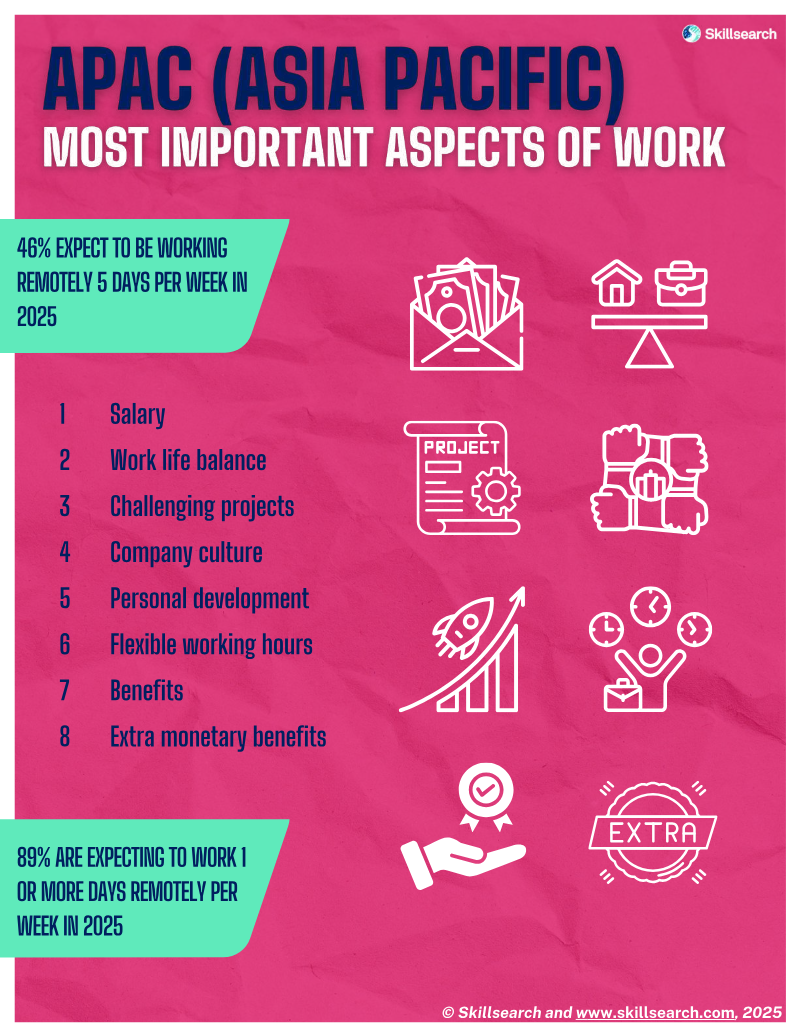
The video game industry across Asia and the Middle East and North Africa (MENA) is undergoing a period of significant transformation as of 2025, driven by shifting player demographics and evolving monetization strategies. These regions represent the primary engines of global gaming growth, characterized by a massive mobile-first audience and a rapidly expanding middle class with increasing discretionary income. Market dynamics are increasingly defined by the convergence of social media, competitive gaming, and cross-platform accessibility, which have collectively lowered the barrier to entry for new consumers while deepening engagement among existing enthusiasts. Strategic focus in these territories has shifted toward hyper-localization and the integration of emerging technologies to enhance user retention. In the MENA region, government-backed initiatives and large-scale investments are accelerating the development of local infrastructure and talent, positioning countries like Saudi Arabia and the United Arab Emirates as central hubs for international esports and game development. Meanwhile, the Asian market continues to lead in the refinement of live-service models and the adoption of innovative payment ecosystems that bypass traditional storefront limitations. The current landscape emphasizes the necessity of understanding regional regulatory environments and cultural nuances to achieve commercial success. As the industry moves forward, the integration of artificial intelligence in content creation and the rise of niche gaming communities are expected to further diversify the market. Companies that prioritize local expertise and adapt to the unique technological preferences of these diverse populations will be best positioned to capitalize on the sustained upward trajectory of the Asia and MENA gaming sectors.
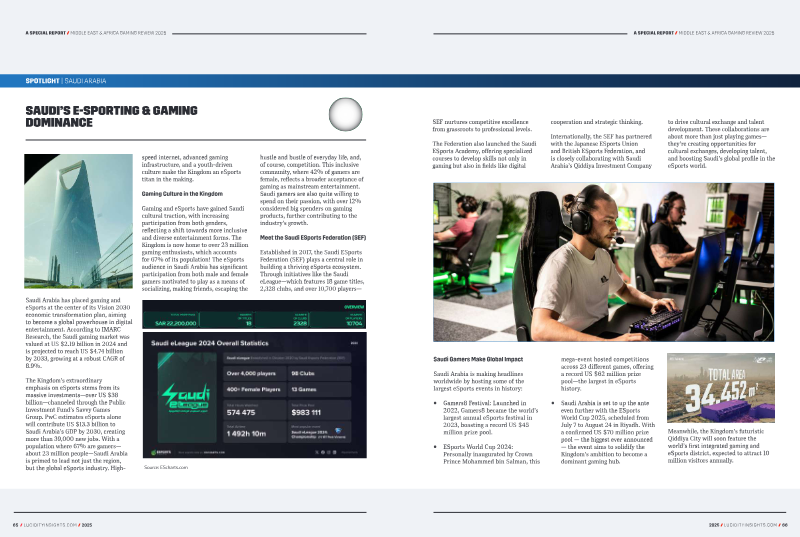
Saudi Arabia is rapidly establishing itself as a premier regional hub for Web3 innovation, propelled by the strategic objectives of Vision 2030 and a demographic profile characterized by a young, digitally native population. The Kingdom has secured a dominant position in the MENA venture capital landscape, capturing over 50 percent of regional funding in early 2024. This financial momentum is bolstered by robust government support, significant investments in gaming and esports, and a burgeoning startup ecosystem that is increasingly applying blockchain technology to sectors such as fintech, environmental sustainability, and secure ticketing. Despite this rapid expansion, the ecosystem faces structural challenges that must be addressed to achieve mass-market adoption. Industry stakeholders identify regulatory uncertainty, market volatility, and a persistent shortage of specialized talent as primary barriers to sustainable growth. Furthermore, the current technical complexity of decentralized applications remains a significant hurdle for the average user. Experts emphasize that for Web3 to integrate successfully into the broader economy, developers must prioritize the creation of intuitive, value-driven user interfaces that abstract away technical complexities, shifting the focus from decentralization for its own sake to practical, real-world utility. The long-term success of the Saudi Web3 sector depends on the continued alignment of technological development with national economic diversification goals. By fostering deeper collaboration between government regulators, academic institutions, and private industry, the Kingdom aims to create a stable and business-friendly environment. As the ecosystem matures, the transition from foundational infrastructure to sophisticated, user-centric applications will be critical in cementing Saudi Arabia’s status as a global leader in blockchain innovation and digital transformation.
The Middle East and North Africa (MENA) gaming market, specifically within the Gulf Cooperation Council (GCC), represents a high-growth frontier projected to reach $3.24 billion in player spending and 38.9 million gamers by 2028. This expansion is fueled by 96% internet penetration, high per capita income, and substantial government investment. Despite Arabic being the fifth most spoken language globally, a significant supply gap persists, as only 3.5% of Steam titles are currently localized for the region. This disparity exists even though 41% of regional gamers prioritize localized titles and over 50% highly value content tailored to their linguistic and cultural background. Successful market entry demands a sophisticated approach to localization that transcends literal translation. Technical execution must account for right-to-left user interface formatting and complex cursive script rendering to avoid the legibility errors that have plagued previous major releases. Strategically, developers should utilize Modern Standard Arabic for text while employing regional dialects for voice-overs to enhance immersion. Culturalization is equally critical, as 40% of players are more likely to recommend games that include accurate religious considerations and regional festivals. Conversely, 27% of players will abandon a title if it relies on inaccurate stereotypes or disrespectful portrayals, highlighting the reputational risks of superficial localization. Case studies indicate that deep culturalization can lead to exponential growth, with some titles seeing their MENA-based revenue and daily active users jump from 3% to 80% of their global total within months. Achieving these results requires integrating regional voice talent, ensuring historical accuracy, and leveraging local influencers for community engagement. To navigate these sensitivities and technical requirements effectively, international developers benefit most from partnering with regional experts. Such collaborations ensure that games resonate authentically with Arabic-speaking audiences, transforming a title from a foreign product into a culturally relevant experience.
The analysis presents a forward‑looking assessment of the global gaming market with a particular focus on the MENAP region, outlining the strategic opportunities that are reshaping the industry in 2024 and beyond. Central to the outlook is the rapid convergence of emerging technologies—virtual reality, artificial intelligence, mobile platforms, quantum computing, GPU‑as‑a‑Service, and cloud gaming—which together are accelerating content creation, distribution, and consumption across diverse consumer bases. Investment activity is framed around a thesis that prioritises three core pillars: high‑value content and intellectual property, software efficiency solutions that lower development costs, and user‑generated‑content ecosystems that drive engagement and monetisation. Funding targets range from pre‑seed to Series A rounds, with typical ticket sizes of $1 million to $8 million, reflecting confidence in early‑stage ventures that can capitalize on the identified technology trends. The outreach strategy includes participation in high‑profile events such as the World Gaming Conference in Abu Dhabi (15‑16 February) and LEAP 2024 in Riyadh (4‑7 March), complemented by a dedicated “Gaming Investor” newsletter, a GameON podcast, and sponsorship opportunities for research partners. Overall, the findings underscore a vibrant growth trajectory for gaming in both established and emerging markets, driven by technological innovation and a robust pipeline of investable startups. Stakeholders are encouraged to engage through subscription services, collaborative research, and direct investment to capture value in this rapidly evolving sector.
This analysis examines the state of the global and MENAP (Middle East, North Africa, and Pakistan) gaming sectors during the third quarter of 2023. The primary thesis suggests that while the global industry is undergoing a period of "cautious recalibration" characterized by significant layoffs and a shift toward profitability, the MENAP region remains a resilient growth outlier. The scope covers global investment trends, game engine pricing shifts, and emerging market demographics, with specific deep dives into the Egyptian and Jordanian markets. Key findings indicate that the global gaming market exceeded $250 billion with a 9.9% CAGR, yet Q3 2023 saw over 2,000 industry layoffs driven by M&A activity and a focus on operational efficiency. Despite these global headwinds, the MENA region grew by 6.9% year-over-year, reaching a market size of $5 billion. This growth is fueled by a youthful demographic where 70% of the population is under 30. In Egypt, the largest regional market by population, 60% of top-performing games are casual or hyper-casual, though a significant challenge remains as 40% of gamers are unbanked, necessitating innovation in fintech and alternative payment infrastructures. The investment landscape shows a return to pre-pandemic levels, with $454 million in global venture capital secured in Q3, primarily in early-stage deals. Asia led transaction volume with 39 deals, while Jordan emerged as a regional leader in funding, securing 30% of MENA deals. The report concludes that the future of the industry will be defined by the integration of Generative AI—expected to impact over 50% of the development process within a decade—and a strategic pivot toward emerging markets to offset rising talent costs in Western territories. Methodology relies on data from partners including AppMagic and Konvoy, alongside internal venture capital tracking.
The report argues that the MENAP region is poised to become a major hub for gaming, driven by rapid mobile‑gaming adoption, esports growth and an expanding local startup ecosystem. It identifies talent development, IP creation and cross‑industry collaboration as key levers for sustained expansion, while noting challenges such as technical upskilling, content localisation and stakeholder coordination. Globally, the gaming market is shifting toward cloud‑based development and AI‑powered tools, with 68 % of studios already using AWS for Games and a projected $7.1 bn market by 2032. Generative AI is expected to reach a $7.1 bn valuation in gaming by 2032, growing at 23.3% CAGR, and private deals now account for 68 % of total investment activity. In MENAP, the market is projected to hit $2.8 bn by 2026 at a 10% CAGR, underpinned by mobile adoption and esports expansion. Mobile‑first development dominates, with 70 % of developers prioritising data analytics and 50 % investing in AI tools. In‑app purchases, advertising and subscriptions drive revenue, with IAP rising 28 % YoY to $374.1 million and ad revenue up 6.1%. Platform shifts such as iOS SKAN 4.0 and Android privacy changes are reshaping monetisation strategies, while cloud‑gaming infrastructure is projected to grow 250 % by 2030. Investment flows reflect these trends: seed‑stage funding in MENAP has reached $15 million across 20+ startups, and international firms target the region for free‑to‑play and Web3 opportunities. Funds like SHFT’s $15 million Gametech Fund aim to provide capital, expertise and networking to help local studios compete globally. The overall outlook indicates a 6.1% YoY revenue growth for global and MENAP gaming, with a 15 % rise in mobile gaming and a 43 % share captured by platform‑based titles.
The bulletin delivers a data‑driven assessment of the five most influential mobile game genres in Asia and MENA for 2022, combining a 9,000‑respondent survey from Niko Partners with AppMagic’s analytics of Apple and Google Play stores. The analysis covers China, India, Indonesia, Japan, Korea, Malaysia, Philippines, Saudi Arabia, Singapore, Thailand, UAE, Vietnam and Egypt, providing a comprehensive view of regional spending patterns, download volumes, and player demographics. RPGs dominate the market, generating 50 % more revenue than the other four genres combined and achieving the highest monetization score (7.7) thanks to strong spend in East Asia. Strategy games rank second in revenue and third in downloads, yet exhibit the lowest engagement score (5.2) due to shorter play sessions and lower player longevity. MOBAs deliver the second‑highest revenue per download (5.4) and lead in average weekly playtime, but their esports engagement is modest. Puzzle titles enjoy the largest download base (highest engagement score of 6.0) but suffer from low monetization and esports relevance. Battle Royale games, while generating the lowest total revenue, excel in esports metrics (score 9.5) and maintain high engagement levels. The methodology blends survey‑derived player profiles with AppMagic’s download, revenue, and esports viewership data across 21 metrics, weighted into four categories—monetization, engagement, esports appeal, and overall genre score. The resulting scores (1–10) rank RPG as the top genre overall, with Battle Royale leading in esports influence and Puzzle offering the broadest download reach. The bulletin concludes that developers targeting these markets should tailor monetization strategies to RPG’s high spend, leverage MOBAs’ loyal user base, and capitalize on Battle Royale’s esports traction.