Transcript
[Music] Welcome to the Navit Gaming Podcast, where it is our mission to explore the business and future of video games. We bring together the industry's brightest builders, investors, and thinkers to keep a pulse on current events, dissect emerging trends and games, share lessons learned, and have a great time. This podcast is also part of Navik's growing ecosystem which ranges from free and premium research to consulting and advisory services. For more information, visit [Music] www.navic.co. This episode is brought to you by Neon. For the first time in our industry, developers can finally have their own DTOC channels to save on app store fees and build closer relationships with players. But there's a catch. Selling direct means either building complex infrastructure yourself or choosing among legacy providers whose inexperience in games or questionable
reputations pose real risk to your business. Luckily, there's Neon, the DTOC platform built for games. As a merchant of record with customizable web shops optimized for conversion and modern APIs that let you use your existing live ops tools, Neon is trusted by some of the biggest names in gaming to help you sell direct without the typical overhead. To start selling direct and finally take control over your full player experience, simply head to neonpay.com or check out the link in the show notes. This episode is brought to you by Leveler, the Discord community intelligence platform helping game studios cut through the noise. With powerful social listening and sentiment analysis, Leveler tracks millions of Discord messages to tell you exactly what your players care about. No more guesswork, just realtime insights into what's working, what's not, and what your community wants next. To learn more about how Leveler can help your team
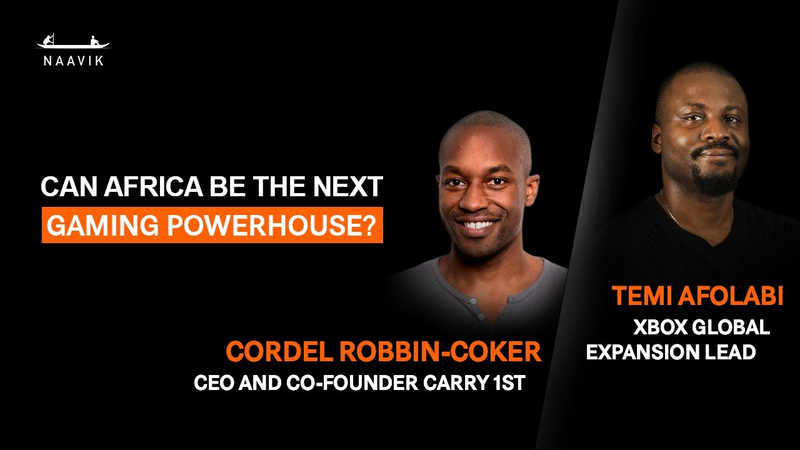
unlock immense value from Discord, simply visit leveler.com or check out the link in the show notes. And with that, let's jump into the episode. All right, what's up everyone and welcome to the Navic Gaming Podcast. I'm your host, Alex, and this is the interview and insight segment. As we always do at Navic, we're looking to cover the juggernauts of gaming, PC, console, mobile, AAA, ad networks, but also the pockets of games that don't have a light shine on them too often or might be emerging, meaning that the market isn't fully mature or has room to grow. In my last show, we covered the global growth of China, venturing into publishing into the West, and the production of highfidelity AAA games like Blackmouth Wukong. And today, we're going to set our sights on another continent where games are experiencing massive growth, albeit in a smaller market. We're talking about the Africa gaming market today, which amounted to 1.8 million last year, growing 12.4% year-over-year, defying the global average of 2%. The number of African gamers rose to about 350 million, a 10% growth rate. But in
breaking down this market, we're not going to take these numbers just at face value, but really discuss what the opportunity in this market is from a consumer perspective and from a development perspective. What is hard about this market? and what are some of the things that have to go right for it to become a gaming hub. And so I'm really excited to be hosting the conversation today with two guests who live and breathe this market, but from different vantage points, which I hope will give us some color on the roles that the startup side and both AAA are playing in propelling the space forward. My first guest is Cordell Robin Coker, co-founder and CEO of Cary First, a mobile games publisher located in Cape Town, South Africa, I believe. Um, this is actually Carrie First's second appearance on our show as Lucy, one of the other co-founders, I think, appeared on our show quite some time ago. So, welcome Cordell. Thank you for having me. Exciting. Um, and my next guest is Tammy Aphalabi, who is leading Xbox global expansion for Africa and the Middle East. Tam of course will share his own story, but I will succinctly
call him an awakened consultant. Um, using his strategic powers for good. Um, and I'm very excited to have you both on today. It'll be fascinating to discuss uh the perspective of Africa from the AAA seat. So, welcome Tammy. Thank you, Alex. It's great to be here with you. Hi, Cordell. Looking forward to chatting with you guys. Awesome. Um, all right. So, I know you guys gave a talk together at HBS, so you guys already know each other, but um, with our standard course of things, I'd love for you to share a little bit about yourselves for our audience. Um, your background, you know, who were you before this? Um, Cordell, why did you file Carrie first? Tammy, why'd you join Xbox? Um, and as a bonus question, I would love to know what your favorite game is from the African gaming market. And I guess how you classify that is up to you. So, um, Cordell, why don't you kick us off? All right, let's do it. So, I'm uh originally from Sierra Leone in West Africa. Left when I was about six during a war in the '9s and uh and then
grew up in the States. I um went to school sort of on the west coast and then started my career in finance and investing. So somewhat unusual for uh someone in the gaming industry. I was first an investor for about 7 years with the Carlile group and had the opportunity to move back to West Africa with them and start investing in businesses across the continent. Um, that was a lot of fun, but ultimately I decided that I wanted to kind of get in the action myself. And uh, having always been a big big gamer growing up before I started working like 100hour weeks on Wall Street, I thought that it would be really really interesting to see if I could build a a game company focused on on Africa. Um, been lots of twists and turns since which we can talk about, but it's been a really interesting ride. And your favorite game? Favorite game? uh African game is Moncala Adventures. I had to pick uh one of ours and it's
African because it's built by Carrie First and uh actually it's built originally by a twoperson studio in Ethiopia called Kenna Games. Um but since then we've we've been uh building and publishing it. So Malaur. Yeah. Very cool. Um I assume similar to Monala the board game. Precisely. Okay. Very cool. All right. Um, so you too are you're not an enlightened consultant, you're an enlightened uh you're an enlightened banker. All right, Tammy. Yeah. Um, I think, you know, that's really interesting because I think it speaks to um just how nent the market is where a lot of us in this market are sort of transplants from other um industries. Um, but yeah, with me, I think uh I was born in the UK, but I was raised in Nigeria. Um, so I'm I have two Nigerian parents. Um and then you know being Nigerian in uni I got a law degree because those are your options law finance or be a doctor or
something. Um so after that I moved back to Nigeria and I worked as a consultant for a few years and then I moved to finance. I've been all over the place and I remember during the lockdown that was sort of an inflection point for me in terms of career and what I wanted to do and I sort of casually hosted an esports tournament with my brother which turned out to be really big. He didn't expect it to be but everyone was stuck in the house so it became a thing and then suddenly you know opportunities to work in gaming as a career sort of popped up as you know go leading on from that and then I got the chance to work at Xbox um in global expansion and here we are. All right. And your favorite game? Yes. My favorite game from Africa currently um I'm going to pick a game that's not out yet. Uh, it's called Legends of Arishia, but you can see all about it and hear the story just because I'm really really interested in the law and the African history, the cultural history it brings. And it's based on a culture that I personally am a part of
as well. So to see that on a global platform that sort of, you know, shows me where this could lead. Um, so I'm very excited about that. Uh, I also really like Angaferoot, which is from um, Free Lives in South Africa. Um, I played it recently and it's got a sort of a kick pad that you can kick while you play, which sounds really simple but is extremely fun. Um, so yeah, those are my favorite games from Africa right now. Awesome. Yeah, and we'll definitely talk a little bit about um I think that spec that game specifically in our section um about, you know, Africa as a development hub. Um, but guys, it was great to hear a little bit about both of your backgrounds. um you know like you both said you know from different industries coming to gaming and would also love to see how that informs your perspective on an emerging market like Africa but um I want to kick off our first topic right and so Cordell when we did our kickoff call you asked an interesting question can Africa be the next China um and I actually think that's a great way to strategically kick off our discussion
today um as a founder of a mobile games publisher in Africa you must certainly believe there's a big future ahead for this market Um, and so to we're going to start with the consumer perspective, but from your vantage point, what about Africa now tracks with the prior behaviors of the early premature Chinese gaming market? Yeah, I I definitely think it it can and it really all starts with demographics really just just people. So Africa has one and a half billion people and it's incredibly young. So median age of like 19. And so the the first thing is you know folks are coming online and it is similar to China and Southeast Asia a mobile first market. And so people are when they start gaming the first thing that they engage with is mobile freeto play. And so if you think about all of the play patterns um that took off as
freeto play I would say really kind of was born in Asia. um players on the continent are are really really I would say well adapted and engaged uh to those and and you don't have that transition from let's say a traditionally console or PC market that that then is is adapted I think the sim big similarities highly highly social so you have some of the highest rates of engagement on social media um a lot of people's lives are exist online and when you think about sort of mobile, it really is the center of people's lives when you think about uh things like finance, mobility um and sort of gaming and social is really no different. So I I think there are a lot of core similarities. I also think there will need to be certain adaptations in order to really crack the market um in a similar way that that you've had to see um regional publishers
in in China and and in Southeast Asia. Tammy, any reactions to that in terms of what's tracking and similar between the early Chinese market and Africa? Um yeah, I think you know the mobile dominance is a big thing. Um, I think the main difference that sticks out to me is that China is pretty is homogeneous the word I'm looking for? I hope I'm not using the wrong word there. Well, it's one country, one language, whereas Africa might have the market size, but then we have different languages, different cultures, you have different governments you need to work through and things like that. But in terms of young population, mobile driven, um, free-to-play popularity and very culturally strong themes. So there's a lot of potential for like localization and making things key for each um unique to the individual markets. So I I'm sort of hesitant to go too far into the comparison because of the big differences. Um I often think
about the African market as being slightly more similar to Southeast Asia for instance um in terms of where we are because there's also a big technology gap between China and Africa as of present moment. I see. Yeah. And I think that's where I was going to go with my next question which was you know what are the actual install bases like? Um what is the console attach rate the PC attach rate and the mobile attach rate in Africa? And I'm sure it does vary by country, but across the board, um, what would you, if you had to say, what percent of people own a PC, a console, and a mobile device, what would that be? Yeah. Yeah. Um, I think typically, and a big thing about this market is data. So, um, you know, in the last few months, we've gotten um, Carrie First have done one and Malia have done like reports as well to sort of consolidate information. Um so depending on who you ask you're going to get the mobile numbers are going to be in the 90% range. So anywhere from 85 80 to 90% is mobile and
then you have um PC and console with around the 15% range 10 to 15% range and that feels very accurate in you know my lived experience as well. So yeah I think the data holds up there. So I'd say it's a 85 to 90% um mobile market and then PC and console sort of split what's left. Okay. So that's the split between the people who have the devices. But what is the actual like penetration rate of those devices across the actual population? So in the for the continent of Africa does 90% of them own a phone. So on on a mobile so I guess smartphone penetration which is the important thing uh because you can't play games well fun games you can play on future phones so like phone penetration is over 100% because you have a bunch of people who have multiple devices um which is a weird quirk of the market mobile penetr or smartphone penetration is like 40ish%
I see um and uh so call it 600 million people and then and then sort of the percentage of those that are gaming is then you know call it 350 to 400 million folks. Yeah. So that's how it shakes out which is pretty interesting. It's growing as you said double digits every year for the last 10 to 15 years and um but it's still really really early right. it's in the it's in the first quartile or whatever uh you want to sort of decide to to choose. So yeah to some extent it's also encouraging right because it's you know it's a you like growth it's very simple answer get more phones in the hands of more people um and then they will play more games uh and so I think it's a different challenge for you know what's happening in the west which is just a huge utter you know I guess concentration of content and then that content fighting for attention um so
okay so we talked a little bit about the console and PC attach rates um you know obviously Tam as you said 80 95% mobile um what genres of mobile games are actually being played regularly if you had to break down the market into that into percentages um you know in the within the mobile gaming market I mean okay that's a that's a good question um I would say casual games would be first uh in my opinion um so that would be the main genre uh I'd go sports maybe a close second so casual games typically and again it depends on who you're coding with these numbers, but I see casual gaming range from the 30 to 40% range. Um, and that's typically has it at first. Uh, you have sports games typically soccer games, but sports games typically come in second. Um, and then you have, it varies, RPG, shooters. Shooters are pretty um pretty popular on the continent as well. I I put those as the top three uh in my
experience. And I'd say I'd go 40, 35, 25 maybe. Okay. Um, and for those games, I guess specifically, would you say that they're those are games that are internationally based that are being played? Um, or are there local storytelling elements or local games that are in that in those top five to 10 games in Africa? No. No. It's typically international games that have scaled into Africa and are doing well. Um, you know, we have the odd, and I'm sure we'll get into African successes later on, but you know, you have a game like The President by Mean, which did very well on the global market. Um, but typically it's the other way around, right? It's you have a Call of Duty, League of Legends, um, Candy Crush, um, FIFA. So, it's usually the, uh, major global IPs, um, and the ones that have mobile versions naturally can feed off that and and continue to grow. So yeah. Yeah, that's that's t typically
what we see as well. There's a little bit of a divide depending on the country and how and just the demographics. So South Africa tends to be a little bit more mature kind of similar spend and maturity. Um even iOS to Android split as like southern Europe. Um whereas if you take the behemoths Nigeria which has a couple hundred million people, Egypt which has a hundred those are young kind of maledominated competitive uh geos and so that's where you get your shooters your RPGs your strategy games and then in southern Africa is more like your your puzzle your tabletop games and so on. Um, interesting. And yeah, agreed. We one of the original the things that we were doing is is building original IP for the African continent. And and we learned pretty quickly that most the biggest bigger challenge was that
Africans wanted to play the same games as folks in the States. And how do we make that accessible for them uh based on certain challenges? There's honestly one exception and uh it's a game called Niger Ludo which is obviously a Ludo game uh made by a single developer who I think is uh is a government worker. We reached out to him like 5 years ago. Um one dude and it's just always at the top of the charts and we have no idea why. Um but he's cracked like some play pattern or or social dynamic. I actually have a I have a thesis. I think it's local multiplayer basically to be able to pair up with friends and play in the same place. Um, but that's one of the few exceptions. Uh, but typically it's it's global games that are topping the charts. Very interesting. Speaks to um culture a lot as well because Ludo is a really popular game to play with friends and family here. It's um sort of a board
game. Do you guys know Luda? Do you know, Alex? I have not played but I have heard of the game. Yeah. Yeah. Okay. So yeah, it's a board game, but you can play online as well with friends, and it's a lot of fun. Yeah. Um, and I think that obviously I think it ties into a lot of what can be done to localize something to a very specific market. What did you grow up playing? I grew up playing perhaps Monopoly Go, sorry, Monopoly and life. And I don't play Monopoly Go now, but you know, one could see that the market has that play pattern. They're familiar with this game and therefore it's easier to get into. But um you know Cordell you said something that's really interesting about um actually what we really want to do is just get global IP into the hands of players right and that brings us to kind of switching over from you know what is actually opportunity on the consumer side and what's exciting the growth rate the low install base of mobile phones um and smartphones that could just simply grow but now more over to the side of the the the challenges right and when we we talked last year you you pointed out three um and I want to dive into each of those three
different challenges Um and I think I believe if I recall from memory a lot of that is around infrastructure payments and go to market. Yeah, absolutely. So the the first we we would call technology and and there are a couple layers to it. One is device. So you know the the the gift of mobile is you don't have to buy a $1,000 dedicated gaming device in order to play. But the curse is that the devices have a really wide spectrum of capabilities. And so if you think your iPhone 14 or 15, whatever is the latest, um, versus which is basically like a superco computer in your phone is probably more powerful than your laptop was 7 years ago. Um, versus like a $75 Chinese-made Android phone um, from Techno or Infinix. like the processing, battery life, the and the sort of graphics are completely different. And
so one challenge is that you know when you have games that are built in the west in these environments where bandwidth is essentially free, it's a utility like turning on the tap um and devices tend to be super powerful. you tend to have games which are built in a way that don't really work for a couple billion people across Africa and and honestly the global south. And so tech from a device standpoint is is one piece. And then the second is broader connectivity particularly with like competitive games where and that's kind of easier to fix because it's just about servers and having points of presence that are closer to players on the continent which is pretty rare for your big game companies but is pretty easy to do with cloud now. Interesting. um you know doubling down before we move to payments and some of the stuff around go to market but you know it's you said
that it's one of the biggest problems and um I'm curious from a gaming you're a game publisher who are you relying on to make this headwind you know go away uh like you said it's easy to stand up servers but like why has infrastructure been challenging for so long if it's easy to stand up servers I would say with regard to that we're dependent on on global major global game companies to to recognize that there is an emerging player base and and to do the minimal work required to to stand up servers. So in in that situation, you know, you have AWS, you have sort of Google Cloud, you have Azure, um, across all the major markets on the continent, and it's just convincing, you know, your your your major game companies that it's worth doing. And so we've we've worked with a couple companies like Activision, um, and some others to set up servers,
but so I would say that's it's on them. And then as far as like making games that aren't 4 gigabytes on download and don't require uh you know an incredible computing, it again kind of sits with with the game companies to to care enough to to do so and to see that opportunity. Tammy, are you hearing that? That's a cry for help. Um how do you respond? Um, listen, I I mean I'll respond to the extent that I can respond. I think I agree that those are definitely opportunities there. Um, I can say those are conversations that, you know, we have. Um, I'm not always a part of those conversations, but I know that they happen. Um, and it's something that I personally would advocate for is because I think also it's one thing to see that this market has a lot of potential, but I think there's an opportunity to be proactive about creating the market,
right? I think we can project all this opportunity, but if we really put the effort into it, I think the opportunity is even larger than we tend to see. Um, so yeah, I mean that that's my response. I think those are the same challenges we see. So things around even around like local currency payments like we're having those conversations all the time trying to solve for that and Africa is a really big continent as well. It's quite fragmented. So it's yeah there's several steps to it but these are these are the challenges that companies like ours are looking into. All right. And you mentioned payments. Um, and I want to shift over because I think that's another challenge that you've mentioned a lot because the payment system is very different from the west and potentially diversified. But, um, from your guys' perspective, what is the most common like localized game pricing model in Africa? And I mean that in the question of how do people pay and what do they typically find themselves paying for? It's it's a really good question. So I
believe of the three challenges that this is by far the most important because it speaks it speaks to the unit profitability of a player. And if a game company thinks that they can make money uh on a given cohort of players, they will do the work with regard to uh tech localization go to market in order to serve them. And so to answer your question directly today there are a really fragmented range of payment methods. So in any given country you will have you know things like mobile money which are wallets linked to telecom companies. You'll have unique local wallets like Venmo but with different names. you will have direct instant bank transfer which is much more seamless in many of these countries like Nigeria and South Africa than than the US like much more um and you will have different like offline to online
methods. So in North Africa you can go to a post office or a grocery store and give cash and top up a digital wallet. So the cool thing is that the payment methods are available. People use them to buy stuff. they're ubiquitous. Um, but the challenge is that if you want to serve the 10 largest countries, you probably need 80 different payment methods in order to like have ubiquity and and obviously that just looking at at your eyes there. Uh, meanwhile in the US, you're trying to find like a merchant of record so you do zero payments. Like you're just like just have it go through Steam, you know, like or just Stripe, Stripe, PayPal, that's it. Um, 100%. Like we're in the west super spoiled with with the ubiquity of cards and like interoperability across every country, every bank, every network. Um, and so and so that's the challenge. So,
so folks have the appetite to make inapp purchases and we've found that when you make payments available for them for the right IP that they monetize at incredibly high rates. Um but you got to bridge the gap. And I guess how similar to my first question of who are you relying on to do that? Is that more of something that you are trying to solve on the carry first side or is there kind of like a large wave to consolidate payment methods to be a bit more consistent across the country or is it we're just a little bit too far beyond the point of return where the only solution is to basically figure out how to service the top 10 of those 80 payments. This is one fortunately where we feel like the solution is in our hands. So part of what we do at Carry First is work with big international uh game companies to help them monetize in the region. And so we've built our own
payment system where we aggregate over 120 methods across the region. Um and we have our own sort of thirdparty web shop where folks can distribute in-game content and leverage our payments backbone to be able to have players be able to pay for stuff. So, um, that's one place where we feel like we can double down and actually solve the problem, um, without having to wait for other folks basically. I see. Okay. Um, and I guess Tammy, any reactions to that? Maybe from the Xbox perspective, you know, a place that absolutely is the merchant of record in a lot of different places. How are you guys seeing the presence of Xbox payments in Africa? Yeah. Um, it's interesting because, you know, my role, um, primarily I work with game developers to bring games to Xbox, but as soon as someone hears I work at Xbox, they're talking to me about payments, about how, oh, I can't do this on the store. I can't like, and I'm like, guys, I wish I could put you in
touch with who to speak to. Um, so yes, I would say by far and away it's the biggest opportunity um, in the industry. Um, from my point of view, um, like I said, we've had talks with companies as well at a Microsoft level. Some of that is public. We've had talks with companies like Flutterwave and so on and so forth. Um, and I think in Nigeria specifically, if you saw the matrix for FinTech, financial tech companies in Nigeria, there's got to be like 600 of them. It's it's really moving money and how to move money and efficient ways of moving money. It's just an endless opportunity. Um, and it's it's really interesting because if I was to try and transfer money to you, I could get it from my bank to your bank in less than a minute right here. So, you would think that would translate to consumer things like gaming and Netflix and so on and so forth. So, I think you know things like carry first and pay first, I think it's really smart for people to get ahead of this but for the creative industries.
So, again like like I said there's 600 of them. So they you need some that are differentiating and are sort of looking to serve the market, the gaming market, the you know the specities of this market, how people can do um inapp purchases and so on and so forth. Um so yes, I think that's that's a that's a great problem to be solving right now. Um and from an Xbox point of view, it's it it would be the key to um unlocking significant revenue from the console, more so than Um, and I guess I I guess you know it's we talked about this struggles with payment and you know Cordell you mentioned that if people can pay they genally generally do actually maybe monetize at the same kind of clip as um as someone would in the west but um I want to kind of ask maybe you know if I had to pitch my weakest part of the market it's probably here you know a small market can be great if there's a lot of purchasing power but um you know gaming is expensive um and in that
actual that research article that you guys did with some of they highlighted that although many African gamers purchase games, you know, less than a third of them spend up to $5 monthly versus, you know, the Asia's pride of having spent, you know, $3,000 on loot boxes. Um, and so I guess I'm just curious, right? Like, and this is probably rather complex, but when I try to answer the question about whether or not Africa will be the next China, um, there may be some fundamental things that need to change about the economy as a whole. Um, you know, Africa's GDP per capita is three times lower than it is in China. Um, and obviously I know that that's hard to calculate given the number of countries, but do you think that behavior would change over time? Um, and I guess again you probably are riding back seat to a lot of GDP growth and things like that. So I guess how do you guys react to, you know, just Africa being a lower spend market? I have a thought. So I think a couple of things. One, there are different dynamics in different markets. I think the the prevailing
benefit of the continent is that there are a lot of people, right? So, it's 20% of the global population. By 2050, it's going to be a quarter of the global population. So, even if they're spending relatively less um than global average, you can still build a business on the continent. So, that's the first piece. The second piece I actually think is more proximal which is like Africa today is a $2 billion market out of call it a $200 billion market by player spend which is 1%. Right? But it's like 3 and a.5% of global GDP. So the issue to me between you know 1% and 3 and a half% is access and and the ability for folks to actually pay. Um, so yes, is it relatively sort of less wealthy than many places? Sure. But could it be a 7 to10 billion market without actually changing anything about player behavior
or income per capita or anything like that? Yes. As well. And to me, that's like an opportunity worth going after right now. Makes sense. Um, Tam, I guess from your from the Xbox perspective, you know, what does the AAA side um, you know, why does the AAA side see the African consumer as attractive? Why? Um, so one, it's the very young population. Um, I think 50% of the continent is under 20 years old. So, you have a long time to monetize this audience. Um, mobile first. So which means in my mind anyway you can build for the specific market without having to sort of translate other things. It's um we're very mobile adoptive is technology adoptive is the word I'm looking for. So that's the main thing and I think there's also scope for new stories. So like I said I personally look at it from an Africa creators point of view. Um, and I think the creators is what brings the consumers. And I think in terms of African lore and stories,
um, like I said, there's this game Legends of Arishia, but then there's also Heru from Kenya. And there's a lot of like locally relevant but in globally interesting material coming out of Africa. So I think from a consumer's point of view and from a creator point of view, I just think it's the next frontier. Um, and then also I think there's potential for growth. Like a nent market is always good. So like the math Cordell just did makes perfect sense. You could get from 2 billion to 7 billion just by unlocking what we already have here because a lot of people talk about the African market. And I think the gap there is we need to stop talking about how many of those people are there and talk about how many of them we can actually monetize and how we can monetize them. If not, you're just people love to say the 50% under 20, but if you can't get their money, then it's just numbers. So I think the fact that with a few infrastructural changes you could triple sort of your market profits and all that um if you
get the servers in if you solve the payments problem and then you have more localized content and you create things for the region um sort of like League of Legends have done in Southeast Asia where they proactively sort of created a market for themselves and now they have like I think it's 1.5 million monthly active users in the region but that was like we're going to make we're going to create this demand by investing in the ecosystem and I think that's that's a huge opportunity um on the continent for AAA studios. Got it. And lastly um it's also a big opportunity for the from the creator point of view. It's the co-development opportunity as well. Right. So I know a few AAA studios that we work with and um they've reached out to me more than once to all right what are some African studios that are doing well? How much external development can we do with them? and we've already started exploring those opportunities. So, and I think that's only going to grow. Fantastic. Yeah. And that actually leads us into our next topic which is discussing this market from the
developers perspective. Um and you know right now you know I you just mentioned actually co-development and that's actually think something that we'll discuss a bit later on but um if you had to make a a call you know who are the biggest market leaders in terms of development on the continent um like countries I would say where are like the hubs of gaming in Africa from the development perspective I think um the first and obvious one would be South Africa um and then after South Africa it would be some combination of Nigeria, Kenya and Egypt. uh depending on who you ask. Um I think Egypt from a market point of view is up there with South Africa as well. Um but from a creator's point of view, I would definitely say South Africa would be the leader and then those three rounding up the top four. Um and I guess like where are we at? I think uh maybe business countwise. Um how many studios would you say there actually are in Africa right now? in
Africa. Founded Founded in Africa. Okay. Um, this is interesting because this is another one where every number you look at is different. So for Nigeria, I've seen reports that say 80 and I've seen reports that say 130. So to give you an idea. So if I was to average that out to 100 in Nigeria, and Nigeria is one of the more populous nations, I would say maybe we had about maybe 700 studios. But then if I was to say studios that you know have reached a level of sophistication that you know you want to be working with them where they might release something for a global audience soon in the near future. I would then put that number a lot lower to the honestly 70 to 100 on the continent. I see. Okay. Um and I guess maybe that's sort of you know I'm as answering that question because I want to start talking about doing development in Africa and potentially what the advantages are and what the challenges are. Um, and so, you know, I
watched your interview with the, um, Legends of Arishia team. Um, and, you know, as with many art forms, you know, the West and Japan have kind of dominated a lot of the lore um, for a long time. Hollywood. It's just like Hollywood and anime um and maybe some stuff from Europe. But now we've got China, China's IP growing obviously with K-pop and a lot of um Korean dramas that that kind of cultural, I guess, like legacy is also growing and becoming popular in the West. But I wanted to ask you, you know, in my recent episode with about China going global, we discussed China's kind of competitive advantage. And from one, this was from again one guy's perspective. it doesn't stand for all of China, but it was the speed of iteration and the processes that teams have adopted to effectively prototype. Um, and so I'm curious from your perspective, what do you think is Africa's, you know, gaming edge? Um, and I would love actually Cordell and Tammy for you to both give me what your perspective is. Um, and then also what the biggest technical and specified skill gaps are that are absent on the
continent. Okay. Um so wait the first one was what is the biggest opportunity advantage? Yeah. What what is the biggest like what is this thing that um makes Africa development have an edge over another country's development or continent's development? Um so one I think fortunately or unfortunately it's cost effective. Um so I think in Africa at the moment you can get real quality for a fraction of what you can get it elsewhere. And I think that's highlighted more in animation recently, but it's gonna we're going to see that more in gaming. So like, you know, you could get something on Disney like Aaju and so on and so forth. Um, so that that is one main thing. Uh, the fact that a lot of African developers will be mobile native. Um, which means they can serve this market and other markets with skills that are sort of designed for that. Um, and then I think it's also adaptability, right? So a lot of African developers have to do other things
because of the lack of investment in gaming. Um and that leads to new skills. So a lot of developers I work with on the side are you know creating an app or a video training simulation for an oil and gas company to train their staff and things like that. So you get really hands-on people that are cost effective but very driven. Um, and I think also the African gaming industry attracts a very certain specific type of person at this stage of the industry. If someone is in this industry now, they're in it because this is their passion. They don't want to do anything else. They're not interested in doing anything else and they're going to keep doing this so they get good at it. So, I think it's just the first move advantage, right? It's if you're a AAA studio or you're a global company is you want to take advantage of that first. You want to build that brand equity and that loyalty and then you also want to take advantage of the upskilling that's been happening gradually. So like the studios I speak to that work with African studios when
they start off they give them the most simple things to do and I'm like really guys but then it's like you know what just knock this out of the park and there'll be something else and that's typically what the experience is and I think um and I think a lot of African devs look at the market like that. They they literally just you know give us a foot into the door. So like at Xbox we do um a prototype fund and we do a porting fund and the prototype fund is really for like developers who have just started and you want help creating a prototype that you can then take to other people and in my 3 and 1/2 years here the way the quality has jumped up every year is honestly it's mindboggling like it's not it's exponential growth that we're seeing. Um so the earlier you tap into that the better I think. M and then you about gaps, right? Yeah. The gaps. Yeah. Um right. Um the skills gap is I do think we need more mentorship um in the sense that there's
the gap in a lot of the people haven't worked on worldass IP or worked with international studios and are as aware of the best practices. So a lot of them are building the plane as they're flying it, right? They're learning things on the fly. And a lot of times when they come into our programs, you know, they get a mentor for a few months and you can see the difference, right? It's just availability of information. So I I think it's that and then it's just the opportunities to hone your skills working on, you know, top IP that is wellunded. Um, a lot of times funding is a gap. So people are working on things part-time. That takes away from efficiency as well and how much you can iterate till you get it right. I see. Um, Cordell, any responses uh differences and potentially opinions on strengths and weaknesses of development? I I would say similar observations, but our approach to how we look to sort of solve the problems and work and sort of
capture the opportunity are we're on say different sides. Not to be adversarial, but you know, you you I do see and I and I do say to folks occasionally that I that I do be believe that Africa can be the next sort of scaled highquality lowcost developer of games in the way that China was has been uh for a number of years and now they're just the best developer of games, right? Like if you look at where midcore games are coming from, they're just they're China. But if you if you if you roll back to prior stages of development um it's basically really really large um young wellskilled and lowcost talent base across engineering, art and animation. And so our our approach is to try and be like the 10-centent, right? to be the big company um that has the the commercial
projects where you can hire the folks out of engineering programs, train them up, have them work on on things which will ship and and build the ecosystem that way. um if you if you ship some successful games obviously there will be folks who will want to spin off and leave your company and start their own studios but they'll do that from I would say a base of strength having learned sort of the craft so so that's that's one thing and then the second piece is that we do pair up our like art animation and engineering which is on the continent with product management game design and and data and economy from top game companies in Europe, the Middle East, and um Europe and the Middle East. And again, it's an opportunity for some of that like knowledge transfer. Um and in the meantime, you know, you try and make money. And so I think we Yeah, it's very important for me. Uh so I I think
generally speaking there is a lot of lore around the indie developer and and I think that ecosystem that grassroots ecosystem is super super important but I also think there's a place for the like scaled corporate dare I say that that is like putting the infrastructure in hiring people training them up and and shipping stuff globally. Um so that's that's kind of the the nuance that we bring. Yeah, that's really interesting because I think actually that does exemplify a pattern that China showed on showed very early. Um, and it was a lot of collaboration with studios in the west to learn from studios in the west about how to do things bestin-class, adopt them, integrate them and then you know figure out okay this is what everybody else is doing and this is what works for us and then kind of getting that knowledge sharing done that way through Tammy which you've had as you mentioned like through co-development. Um, and so I was actually going to ask you guys what you thought is the right path for knowledge sharing, which you know, Cordell, you kind of already mentioned that and Tammy, you as well from the co-development side with Xbox,
you know, putting studios in Africa in partnership with big AAA studios in the west. Um, Cordell basically building up like a corporate 10-centent empire inside Africa. Um, you know, having people and recruiting talent to to to games. Um, yeah, I think one of the interesting things is that, you know, labor obviously writes itself by access to education and lucrative functions. And so if you can be a company that can pay people a lot to work in games, well then people will study game making and tech and and actually be invested in that discipline. Um, but I was curious like I think you guys mentioned something about the government's role in all of this and Africa being so fragmented that I presume it varies widely across the country but you know Dubai for example providing incentives for talent from global markets to move to Dubai to do development there. Are you guys seeing that kind of activity where not only are you growing talent inside um from Africa's native talent pool, but recruitment of global talent
to move and relocate and start studios in Africa? Um okay, I'll take that. Um so relocating global talent, short answer is no. I haven't seen a lot of that happen yet. Um I do see that happen in different countries in the Middle East. Uh but from a government support perspective, I think African governments are becoming quite awake to the potential of gaming. I will say they haven't quite figured out how to support, but the intention is there and you know we sort of work with them to find the best ways to support these studios. So for instance um in Nigeria recently, I think it was last year, we started a new ministry called the Federal Ministry of Arts, Culture and the Creative Economy. And one of their first events was to attend a developer hangout that we had and the minister came to hear more about the industry say what they s thought they could do from a policy advocacy standpoint to you know ease of doing business. Um so but things like that it will take time to see what the results actually are. Um South
African government um the you know local government in Cape Town but even the national government you know there's tax breaks for some gaming events. um little things like that to sort of plant the seeds of encouraging the industry. Um I know in places like Morocco they reached out we signed an NDA with the Moroan Ministry of I think it was information u on just like training upskilling some developers there running some Xbox programs there. Um in Kenya you have a lot of tech hubs that are funded by the government as well. So, I'd say overall everyone's looking at gaming's potential, especially for employment, um, as a cultural export. Um, we've got Lagos Games Week next month. There's a lot of the Lagos State government will be supporting that as well and so on and so forth. So, I think there's a lot of government awareness that this is an industry that we should be supporting that has a lot of opportunity to scale. Um, in terms of how well that is going
so far, I think I'm going to give it a couple more years before I start giving out report cards. But, um, I'm I'm very pleased that the intentionality is there and you know that because only if in fact I'll give you a quick story. Just a couple days ago with the um, Lagos Games Week team, we had to speak to some government officials about being involved with the event and coming to it and so on and so forth. And a lady at the ministry told us, "Honestly, I hate gaming. My son is up till 3:00 a.m. every day. We literally had a fight this morning about this. He's got exams coming up." And then so we had to spend the whole time sort of defending the industry. Like look, first of all, by anything um and so on and so forth, but by the time we were done and we explained, so I showed them Legends of Barisha like this exports our culture and we're employing people in an actress. we have a historian working on the game to make sure it's culturally accurate and so on and so forth. And by the time we left the meeting, she was
like, "Oh, I absolutely have to attend this. Just make sure you talk to people about the dangers of gaming as well." Right? So, that just shows you like you're dealing with a market where there's a bit of suspicion, but it's trending in the right direction, right? They're willing to listen and come on board. So, I had a mom like that, too. So, I think there's suspicion. I think it might be an age thing as well. She like was talking to his computer at all hours of the night. I'm like he's talking to people. He's not talking to them. That's amazing. Um Okay. Yeah. I mean I think it's just interesting just because it is you know a lot I think the government typically does play obviously a big role and access infrastructure all the things that kind of like as we mentioned need to go right to help um this continent really become a burgeoning gaming hub. But before we move on to our final conclusion topic about sort of the future of Africa, I want to briefly touch upon um the games themselves, right? And so what sort of games do you see African developers making today? Are there any genre platformer trends or patterns? You know,
we talked about multiplayer being challenging. And I guess kind of where I'm going with this is there might be some genres and types of games that Africa would have the best edge at making. Just like in China, we started with midcore RPGs on mobile because that was something that was not being made somewhere else and the country had the unique capability of doing it very very well. Um, so what is that? What is like the game that you think is has the best chance of being made successfully and going global in Africa? It's a good question. like when we were doing more ecosystem building, we launched a program with Crazy Crazy Labs um called Crazy Hubs and it was an incubator and one of the I would say most successful games spun out of it called The President. At the time, our thinking was basically that hyper casual or hybrid casual was the place to to do so because you had um studios that were small,
right? couple folks um that the ecosystem was pretty fragmented, the bar as far as like learning the craft and the repeatability was relatively low. And so, you know, originally I think that that was our thinking. Um, today I still think sort of hyper casual, hybrid casual, um, where you need, uh, lots of new interesting ideas from a really wide range of folks to find the ones which are going to pop and hit the KPIs so that you can scale. I think I think that's an interesting play. We're not doing it, but um, but I could see it uh, being successful. H um, right? So I think it's interesting because I think there's a slight difference between like what games would be most successful from African developers and what games would they be best at making, right? So I think most successful on the continent would be something that's you know data light um
social things like that. Um mobile native but what I think we're best at making right now is narrative driven games. Um, and that's because Africa is very rich on like oral traditions and mythology and it's like very casually. A lot of the sort of TV series that are local to like Africa and Nigeria are great stories that could be games, right? They're really there's a lot of mysticism in Africa as well. There's a lot of So like you could get into that. There's a lot of Africa is as a continent is obsessed with the concept of family. So there's so many different things you can play with. There's so many different ways you can play with that. Um and then Africa also has a recent history that leads to so many story potentials like so for instance teams in Kenya. I've seen a few games around um what's it called when you hunt
um animals for their tusk again? Um poaching. Poaching. poaching, right? Around poaching and Messiah warriors and stopping poaching. Um, a team I worked with, K content, they literally went and lived with some Messiah um, warriors for a few weeks to learn how they made their homes, how they moved around, things of that nature. That's an originality and it's new to the rest of the world in a way that could be really interesting. um Kenya as well. There are games about like colonial times, but you know, in a way that's also interesting without just being heavy. So, it's like there's a game about colonial Kenya, but it's from the POV of a seven-year-old girl that's lost in trying to find her family. And it's called, you know, local buildings and local texts and music and all that. And I think all that is so rich and would bring something new to global audiences in a way that's that would do really well. So I think those would be the games that um Africans would be best at making. Wow. Yeah. I think and I think that really resonates. I think
there are just so many stories that are have not been told. Um and it would be and it would be new from the perspective of the West and probably really um enjoyable also from you know I've always enjoyed playing like Ghost of Tsushima. you know, to some extent I'm half Japanese, but it was very wonderful to play that kind of game and experience and think about um you know, a culture and a regime and and the Shogun era about what what it used to be like and to the cultural ministries uh of I was Morocco or something you said that she didn't like games, but I think I personally learned a lot about history um and culture through video games. So, we can tell her that. But I want to close out today with some questions about the future of investing and development on the continent. Um, and so Cordellis is going to go to you first, but um, you know, where does money and investment into Africa come from for games? And you've done so much of this, but how have global investor perceptions of Africa as a gaming market evolved over the past decade?
I think they've changed a ton. So for context, our company is about 7 years old and when we launched saying we were building an African gaming company, we were at just a really unfortunate uh intersection of you know folks didn't want to invest in African startups and gaming wasn't really considered an investable asset class and we were like in the middle of that ven diagram and what we've seen over in the years thereafter is I would say a lot of international uh VC and family office money begin to look at Africa as an investment destination. Now originally it was all fintech and then logistics and we've been coaxing them to to the consumer side um because there is this big opportunity and and then obviously postco uh the market for sort of gaming investment just completely blew open and people realized that there was this
massive sleeping giant. So today, I would say I don't get uh weird looks when I tell investors that that we're building an an African gaming company and and that we're looking to build sort of the 10-centent of Africa. So I would say over time, you know, perceptions have improved and there's more access to capital. With that said, I think it's still pretty hard to raise money for for consumer businesses and gaming businesses in the region. And I think honestly, we just need some we just need a couple wins, right? It's like if you were a Turkish game indie game studio 10 years ago, you probably couldn't raise any money, but today if if you are, you just show them your deck and you get, you know, 50 bucks. So you uh uh success kind of breeds uh subsequent demand and and that's how I think about it. We just need to win. That's awesome. Yeah, it's a really good way to put it. Um thanks
to the dreams of the world leading the way. Um Tammy, uh a kind of a question about the future of Africa. Do you see a future where AAA Studios exists natively in Africa or do you think it will be comprised of smaller indie developers for the next decade? Oh, next decade. Um, I think it's quite fragmented. So, put it this way. In the next decade, I'm almost certain that there will be a couple on the continent. Most likely from South Africa. I think they're trending. You depending on who you ask, we might already have one in South Africa actually. Um, but I think will it be dominated by indies? I think that's more likely. Um, I think we might have a few like big headline studios that sort of consolidate um some of the talent, but I also think I was just at in Dubai for the games expo and I think the way AI is going to open up this industry really soon, I think all bets
are off. Um, I think we might actually have that because then you need a lot less people to do really great work, which depending on who you ask, that might be a good thing, might be a bad thing. I don't know. But I do know that that has sort of changed my perception of how quickly things are going to move and how soon we can get a AAA studio from Africa. Um, but I think in the in the sort of short term it's going to be African studios getting co-development on AAA titles and getting those expertise getting that mentorship and who knows some people from AAA's might come to Africa to set up studios based on what they're seeing. I can see that happening soon. So, if you say a decade, I would say yes, a handful. Um, not like I think they're going to explode to be like 25 or anything like that, but I do think we could get a good number in the next 10 years based on how things are trending. Maybe about a dozen. I I think that's possible. But I do think the indie scene is going to rise. The floor of the indie developer in Africa is going to rise significantly. Um, especially with international exposure
and just the more AI tools that are dedicated to gaming. um we're going to see a lot of change. Got it. That's good perspective. Um and then kind of in in line with that, you know, I guess for the both of you, paint for me your the ideal leadership background that you think is necessary to found a game development studio of kind of any capacity in Africa. Um and I'm asking this question because I think especially in the west, veteranship is very important. Um and I wonder you know who are the leaders that you would recommend Africa to choose given that it doesn't have that robust catalog of I did game development starting in 1980s and worked on like sharewware um cohort and dem demographic right you literally mentioned that actually one of the strengths of Africa is that it's you know sub a lot of it is sub 25 um and so since it's skewed towards the youth what are you guys looking for when you're looking for a studio that you think is upcoming and talented and has an ability to execute and get that win Cordell as you mentioned you want to go first semi.
Oh, okay. All right. Oh, he said poor deal. All right. Um, so yeah. So, what am I looking for when I meet a studio head in Africa? Yeah. Yeah. No, I mean like most things in life, I'm just looking at how determined is this person to get this done? Um, how innovative are their ideas? Um, and I think I really believe in how you do anything is how you do everything. So, I judge a deck really seriously, right? if you give me a deck or a trailer, I it lets me know the sort of person I'm dealing with. Um, then we can get into the nitty-gritty of what the game is actually like and so on and so forth. Um, I'm a huge fan of proactivity. Um, just in the sense that so when I speak to the studio head and he's and they're bootstrapping, but he's just been at Africa games week and he's going to his thing at Kenyan, you know, it's important not to go around just to go around. But when I see like, okay, you're proactive, you get team, you get things done. And I think also in Africa, anyone who can keep a team together for prolonged period is doing a great job
cuz it's not like everyone's getting paid a lot. It's not like, so if you come to me and like, all right, we've got these five developers, we met in college or whatever, and we're still working on this game. Then I'm like, okay, this is a team that's going to see this through to the end, right? This is these guys are going to keep going. They're not gonna be bored of this next year. So I think that's a big thing for me really is do I see the persistence do I see and then also how good they are collaboration right so when I meet a studio and you say oh I've got this guy on my board of advisers and he's from EA Sports well then that has me thinking okay so you're proactive you found this person and you convince them to believe in your project enough to come on board well then you'll probably do well on our platform as well and handle those relationships properly and so on and so forth And then lastly, just have something out already. Like I I really kind of get frustrated when I'm constantly talking to people and they've got something really cool, but they just refuse to release it because they're going to keep working on. It's like I
want to talk to someone who's tried and failed and now they're doing a new one and so on and so forth. So yeah, th those are the things I typically look for in the studio. All right. I I would say I think about someone who can a build any kind of business. Um so or any kind of startup. I I think we have tons and tons of creative talent, tons of energy, um tons of sort of skilled and uh emerging technical talent. But the big challenge is like can you go from creating a work of art to shipping something that makes money and moving and then and then shipping your next thing. And so I think storytelling is important but the different kind of storytelling which is like can you talk to a TI or an international VC or someone from a top gaming company and
tell the story of why they should invest in what you're doing so that you can have your team work full-time and not have three side hustles. Um, and so that you can sort of, you know, push things through to the other side is I think we have a lot of hustle, a lot of scrappers, but I think we we need some like core resources to be able to ship games and and that that's so that's what I would think. All right. Business. Yeah, business builder. Excellent. Um, all right. I mean, basically founding qualities for any entrepreneur is what you guys essentially summarized, but um All right. And then I guess final question um you know and this is actually for Cordell you know you founded Carrie first as you said earlier almost seven years ago at this point um and I'd love to know from your perspective what has been the largest you know reccalibration shift to your priors um you know something that you thought would come true um but it hasn't and it you know things hadn't didn't exactly go as planned um over the past
seven years that have surprised you. Uh it's been a long journey and I would say generally speaking uh we we felt like we would be much further along. I thought I would be uh exited and laying on a beach right now with with lots of yeah re reality reality hits all of us startup founders. Um, look, I I would say the biggest delta from where we were thinking at one point is we did think that you could do sort of Chinese style third party publishing where you control the IP um you do all the live ops and and the go to market and and all of that stuff. And what we have found is that today those those big IP holders are like 70 to hundred billion dollar conglomerates. So a you're not publishing Call of Duty Mobile because you're just right like like C Limited grew up basically um publishing League
of Legends, but League of Legends was a was a startup. That'd be like me going to another like series B stage startup and saying, "Can we work together?" as opposed to going to a $70 billion company. Right? So that's one. That's probably the biggest one. And so what it's led us to is more of like a a dumbbell approach where on one side you work with the big folks to solve like a specific issue which is monetization and like community building around games. And then on the other side you build your own IP earlier probably than we thought we would. Um whereas we thought we could just be a third-party publisher and and adapt and ship other people's games, it it just hasn't played out that way. Really interesting. Yeah. Yeah, it is interesting because it's like it again they began they grew together, right? And so you're kind of looking for that pocket partner and you have to identify potentially who would be your League of Legends early on. Um fascinating. Um well guys, I think we're
we're we're over time here and I just want to say that this has been such an interesting conversation. There are actually so many things I wanted to ask about like discovery and go to market um that we weren't able to discuss today. Um but thank you both so much for coming on the show and um it's been really awesome to learn about the opportunity in Africa and your journeys along the way. So that's it for us. Um Cordell and Tammy, thank you very much. Thank you. Have a great pleasure. It's been fun. Thank you. Awesome. As always friends, if you've got feedback or ideas, hit me up at alexanderavic.co. Um, I am always open. And with that, we're out. Um, that's our episode. See you next time. If you enjoyed today's episode, whether on YouTube or your favorite podcast app, make sure to like, subscribe, comment, or give a fivestar review. And if you want to reach out, or provide feedback, shoot us a note at [email protected], or find us on Twitter and LinkedIn. Plus, if you want to learn more about what Navic has to offer, make
sure to check out our website, www.n at navic.co. There you can sign up for the number one games industry newsletter, Navic Digest, or contact us to learn about our wide ranging consulting and advisory services. Again, that is www.navic.co. Thanks for listening and we'll catch you in the next episode.
Auto-generated captions from YouTube — names and numbers may be misheard.





















Comments