The African games industry is undergoing a period of rapid expansion, with total revenues projected to surpass $1 billion in 2024. This growth is primarily fueled by a mobile-first market that accounts for nearly 90% of the sector’s revenue, driven by a young, tech-savvy population and increasing smartphone penetration. While South Africa remains the most lucrative individual market, Nigeria has demonstrated the most significant momentum, with mobile revenues increasing fivefold since 2019. On a global scale, the Middle East and Africa region has emerged as a growth leader, maintaining an 8.9% year-on-year increase despite the historical dominance of North American and Asian markets.
The developer ecosystem has matured significantly, expanding from a handful of entities to approximately 250 studios by 2024. West Africa has emerged as the primary regional hub, experiencing a nearly fivefold increase in the number of active studios over the past year. Development is characterized by a youthful, male-majority demographic that favors the Unity engine to create entertainment-focused content for mobile platforms. High-profile international partnerships with brands like Microsoft Xbox, Disney, and Gameloft, alongside the success of global titles like Candy Crush and PUBG Mobile within the region, signal increasing integration into the global gaming economy.
Despite these advancements, the industry faces substantial structural and financial hurdles. Infrastructure remains a critical concern, as developers struggle with unstable power and high-speed internet access. Furthermore, a significant performance gap exists in funding and institutional support; only 3% of developers receive government funding, and over half of the continent's developers currently earn no income from their work. This has led to a trend of conservative, small-scale investment. To transition from early-stage prototyping to commercial acceleration, the sector requires a collaborative model focused on building talent pipelines, implementing rebate programs, and establishing localized payment methods to unlock the continent's full economic potential.
The Game Hub Senegal · 2024
Lucidity Insights
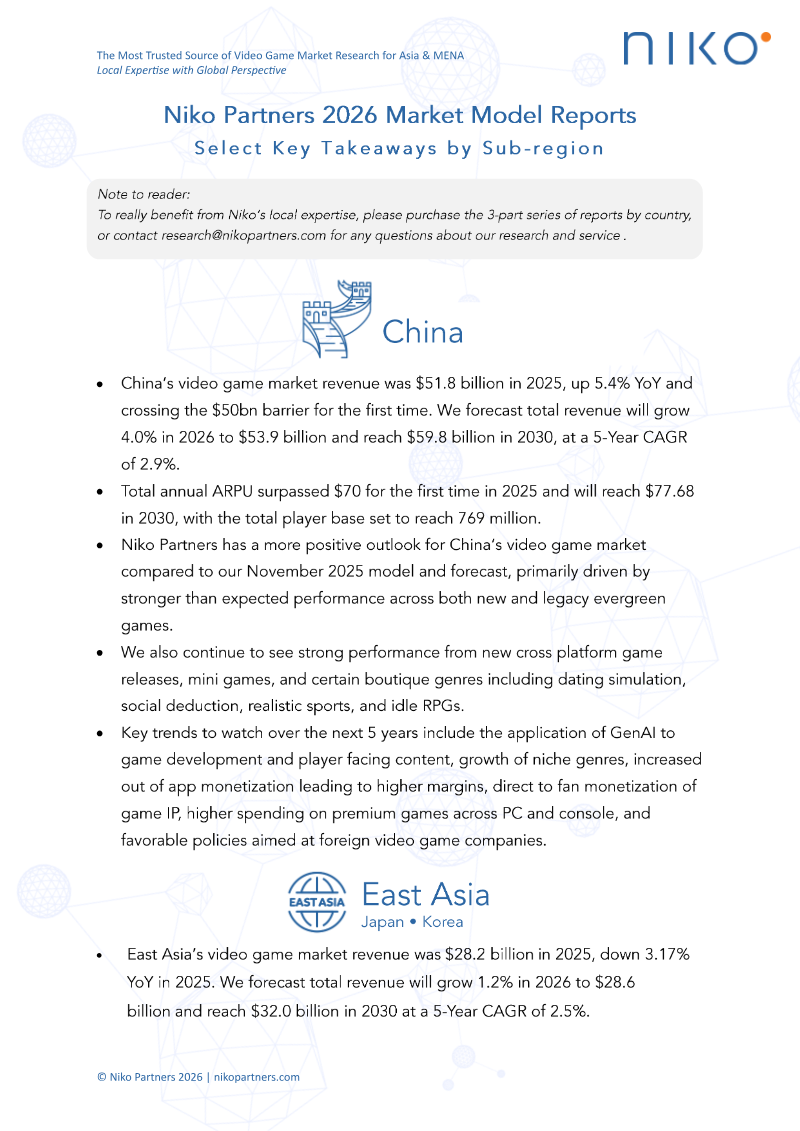
Niko Partners · 2026

game · 2026
InvestGame · 2026
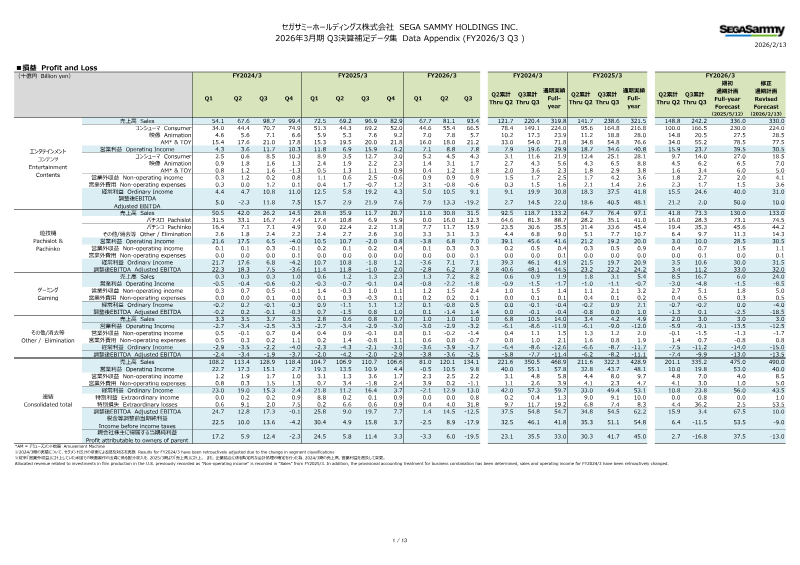
Sega Sammy Holdings · 2026
Kadokawa Corporation · 2026
Newzoo · 2026
InvestGame · 2026
InvestGame · 2026
Aream & Co · 2026
Nippon Ichi Software · 2026