1 free read left. Create a free account for unlimited reading + AI research.
Create free accountReport GeoPoll
1 free read left. Create a free account for unlimited reading + AI research.
Create free accountReportGeoPoll
92% of respondents play on phones, and 81% use smartphones. Android accounts for 92% of downloads from Google Play.
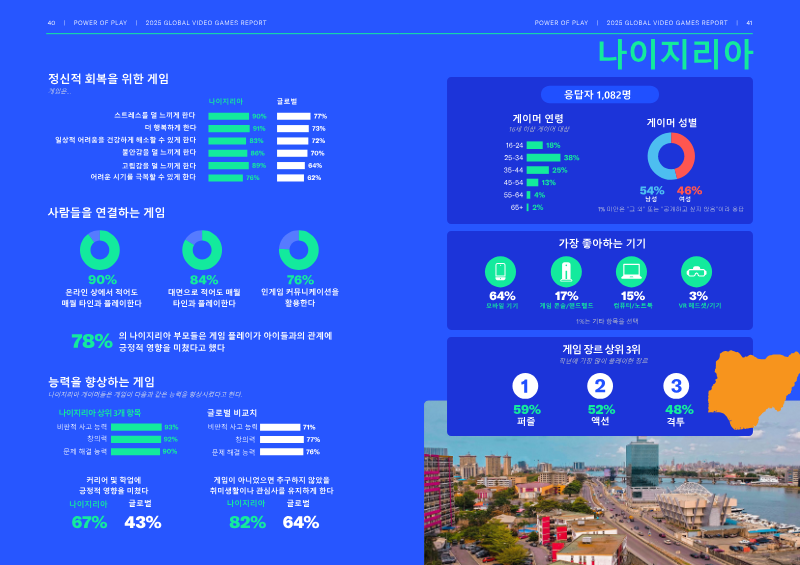
Gaming in Africa 2024 reveals a market that is overwhelmingly mobile-centric, with 92% of respondents playing on phones and 81% using smartphones. Android dominates, accounting for 92% of downloads from Google Play, while iOS remains a minority. The region’s gamers are highly engaged: 78% played in the previous day and a third spend three or more hours per session. Puzzle games lead at 40%, followed by sports and football at 36%; female players show a particular affinity for puzzles, twice the rate of male gamers. Motivations cluster around entertainment (73%) and relaxation (64%), with social interaction and competition also significant drivers.
The market is poised for rapid expansion, fueled by a youthful population and high smartphone penetration. In Kenya, mobile-first economics and widespread mobile money usage create a fertile environment for in-game purchases. Across the four surveyed countries, 63% of players have made microtransactions, using credit cards, mobile money, Google Pay or airtime; Kenya’s mobile-money share exceeds 60%. Spending patterns show that roughly one-third of gamers spend $5–10 per month, while 26% spend less than $2. Barriers include a preference for free titles (47%) and limited disposable income (44%). Demand for culturally relevant content is strong, yet 56% of respondents report no awareness of African-made games.
Support for locally produced titles remains uneven. In Nigeria and South Africa, only 42%–46% of respondents care about a game’s origin, with enjoyment as the primary purchase driver for approximately 70%. Interest in black protagonists is moderate at 38% overall, dropping to 28% in Egypt and 33% in South Africa. These findings underscore a mobile-driven, youth-led market with growing appetite for local content but still constrained by payment preferences and awareness gaps.

Deconstructor of Fun · 2025