Video Game
Game
Documents about Video Game
Argentinean Video Game Industry: 2020 Relevant Data Report
This report provides a comprehensive overview of the Argentinean video game industry in 2020, based on a survey of 71 studios.
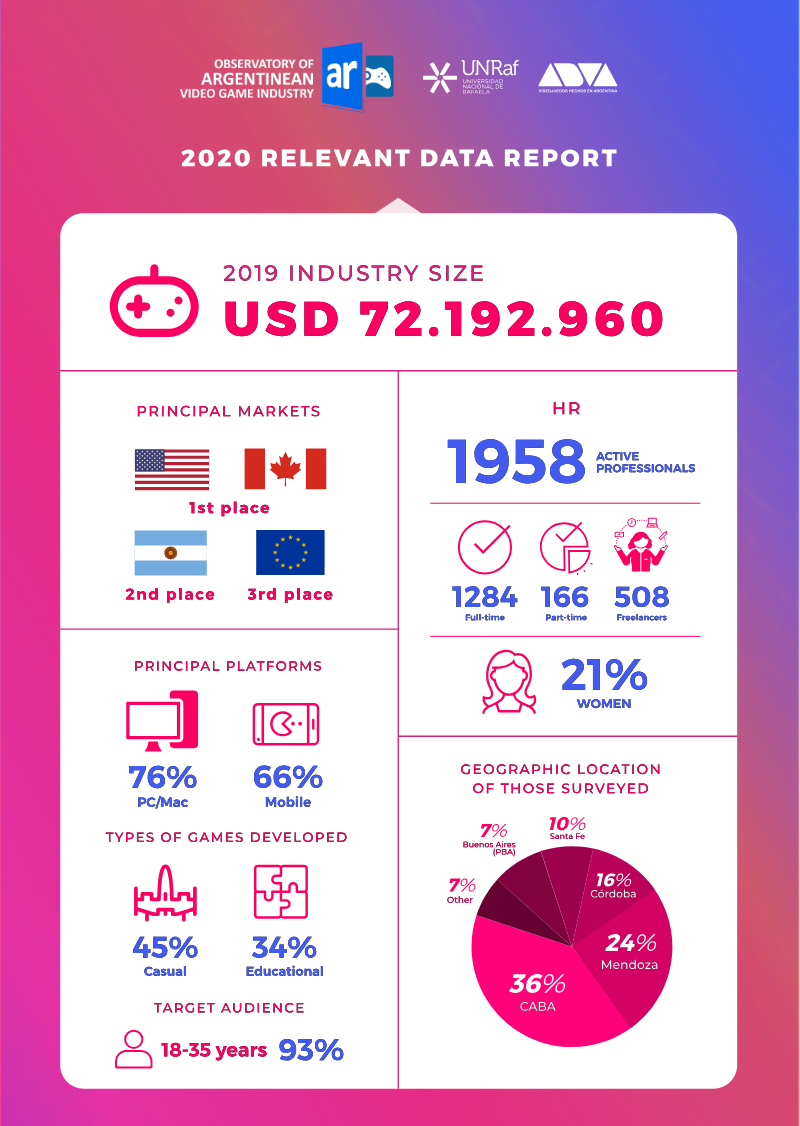
- The Argentinean video game sector is young and geographically concentrated: 36% of the 71 surveyed studios are in Buenos Aires City, followed by Mendoza (24%), Córdoba (16%), Santa Fe (10%), and Buenos Aires Province (7%), and about 60% were incorporated between 2015 and 2020.
- The sector's estimated size for 2019 is at least USD 72,192,960, calculated conservatively from employment figures and average hourly costs, and it employed roughly 1,450 formal workers (1,284 full-time, 166 part-time) plus 508 freelancers.
- Gender gaps are pronounced: women average 21% of employee-status workers but only 6% of company partners, and 18% of studios report no female employees.

Time to Game at Fever: Facts, Figures & Inspiration of the Video Game Industry in Belgium 2023
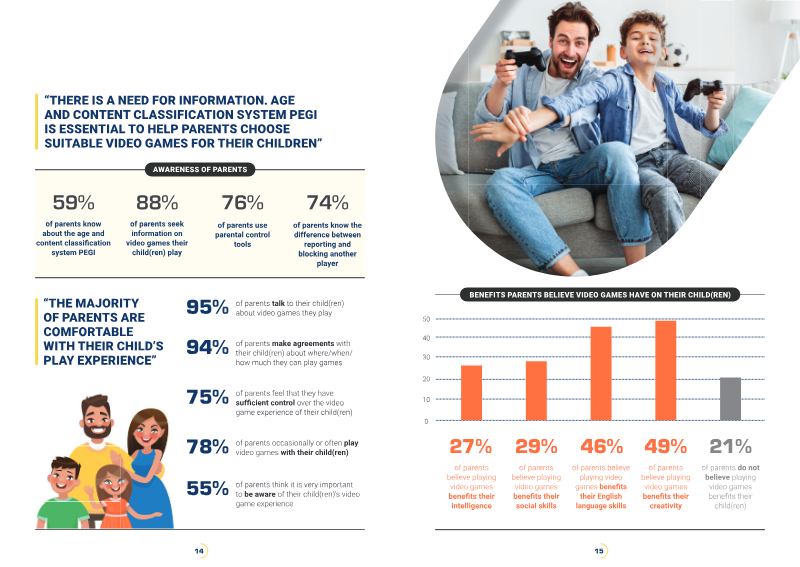
This 2023 report from the Video Games Federation Belgium (VGFB) provides an overview of Belgium's video game industry, covering development, sales, player demographics, parental guidance, and educational and inclusion initiatives.
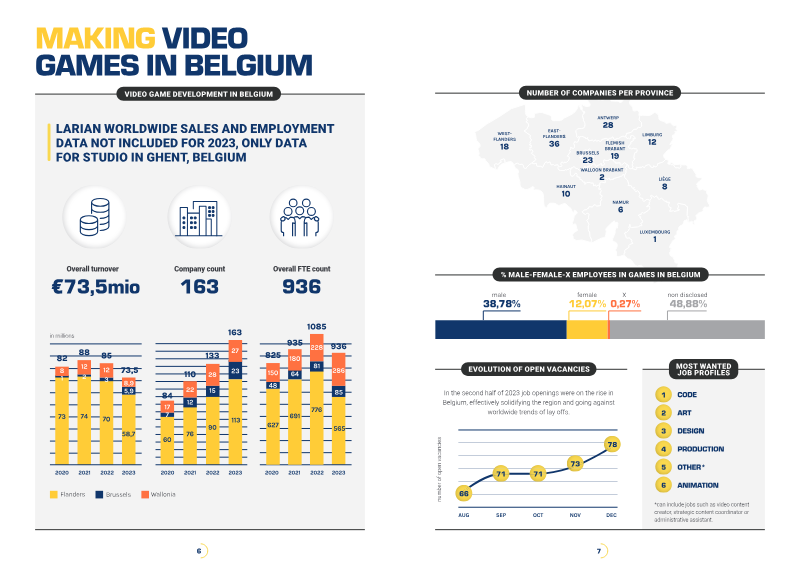
- Belgium's video game sector generated an estimated €73.5 million in turnover across 163 companies employing roughly 936 full-time equivalents, with Flanders hosting the largest share of studios, followed by Brussels and Wallonia.
- The economic value of video games in Belgium reached €708 million, a 21.6 percent increase, with PlayStation 5 sales rebounding strongly after chip shortages constrained supply in 2022.
- Job openings in Belgium's game industry rose in the second half of 2023, a notable contrast to global layoff trends.

Time to Game: Facts, Figures & Inspiration of the Video Game Industry in Belgium 2024
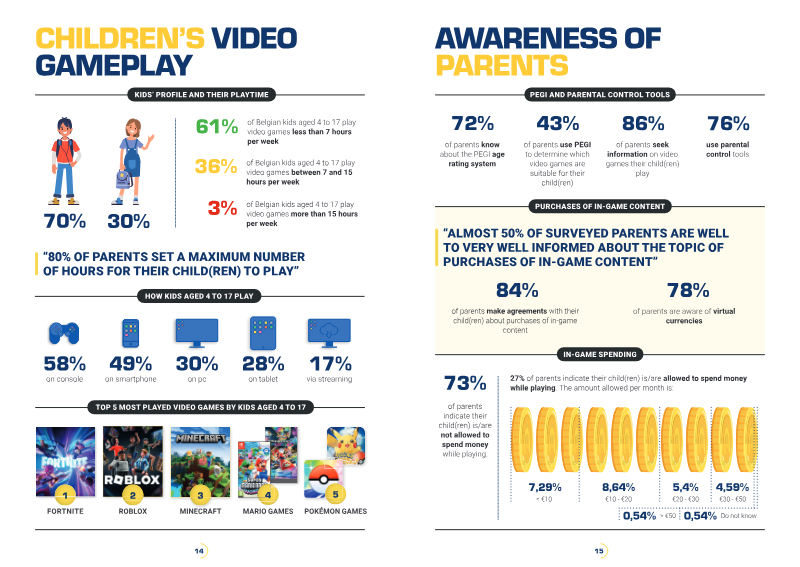
The "Time to Game" report, published in 2024 by the Video Games Federation Belgium, provides an overview of the Belgian video game industry, covering consumer spending, game development, player demographics, children's gameplay habits, and parental awareness of safety tools.
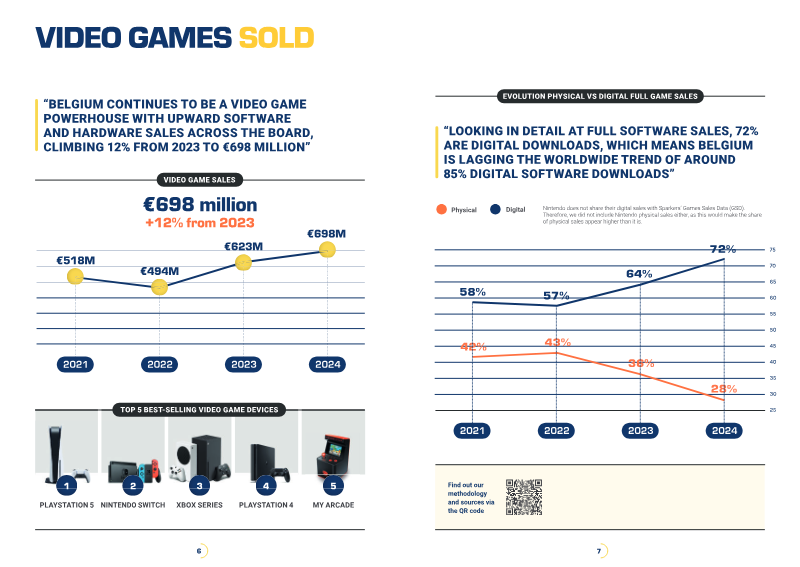
- Belgian video game software and hardware sales rose 12% from 2023 to reach €698 million in 2024.
- Belgium counted 6.2 million gamers in 2024, with more than a third aged over 35, and adventure, puzzle, and shooter games were the most popular genres.
- Digital downloads accounted for 72% of full game sales in Belgium, lagging the worldwide average of around 85% digital, while physical software made up 28%.

Time to Game 2025: Insights Into Belgium's Video Game Sector
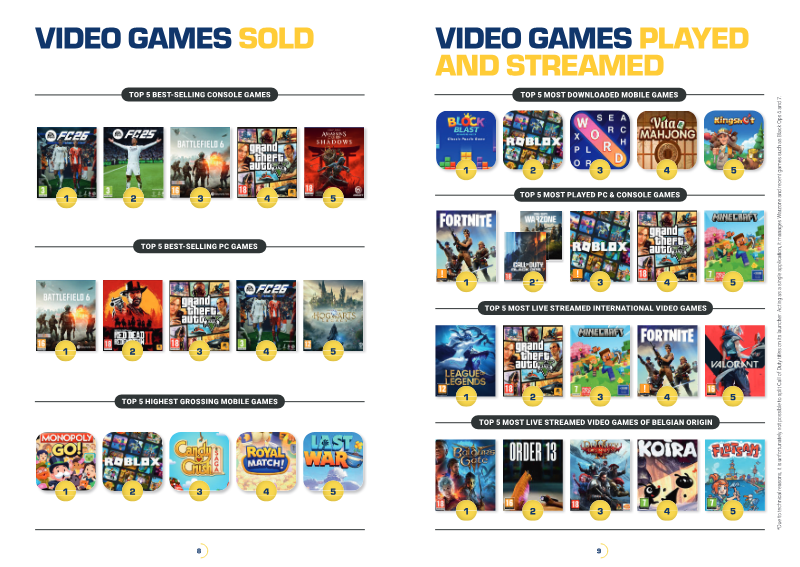
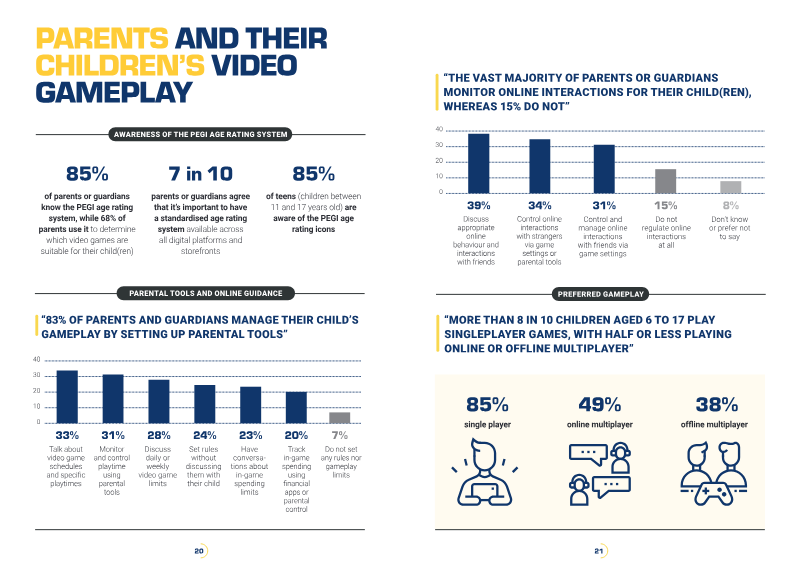
The "Time to Game 2025" report provides a comprehensive overview of Belgium's video game sector, encompassing consumer sales, market trends, player demographics, and parental awareness.
- Digital downloads accounted for 75 percent of full-game unit sales in Belgium in 2025, up from 58 percent in 2021, as physical full-game sales continued to decline.
- Total video game sales in Belgium reached roughly €698 million across software and hardware, with the PlayStation 5, Nintendo Switch 2, and Xbox Series X|S among the top-selling consoles.
- More than half of Belgians aged 6 to 75 play video games, equivalent to 6.3 million players, with an average player age of 34.7 years and a near-even male-female split overall.
Healthy Aging and the Surprising Benefits of Play
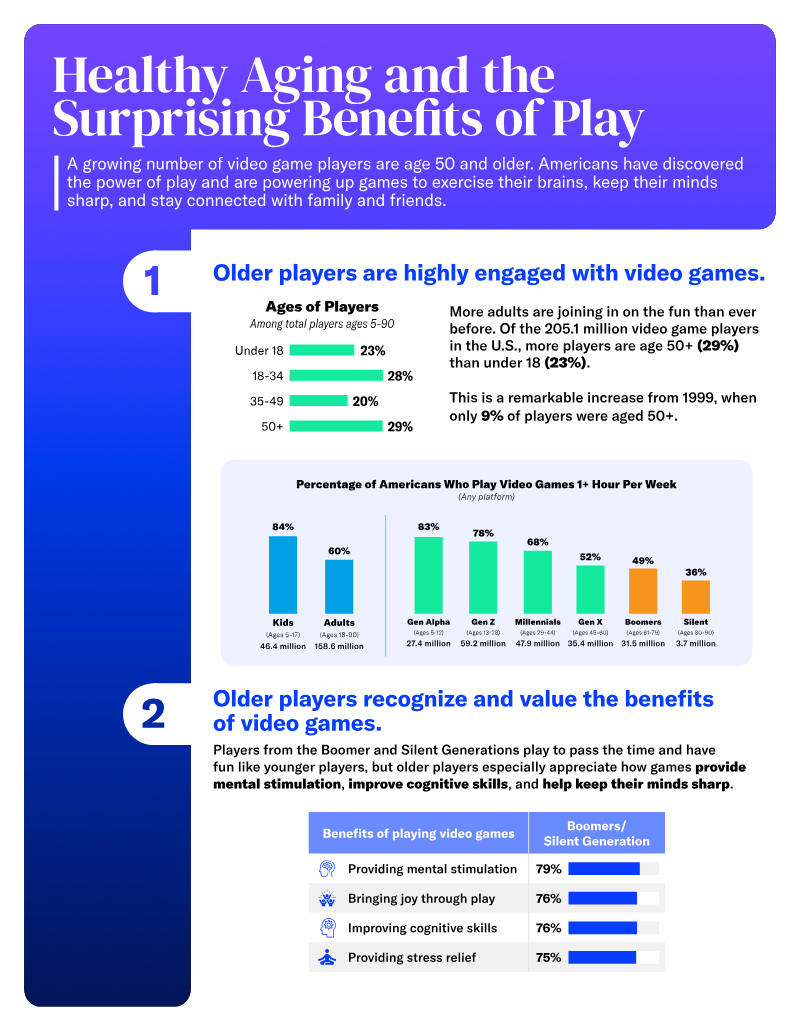
The document explores the increasing engagement of older adults with video games and the associated benefits for healthy aging.
- Individuals aged 50 and older now constitute 29 percent of the 205.1 million video game players in the United States, a significant rise from 9 percent in 1999.
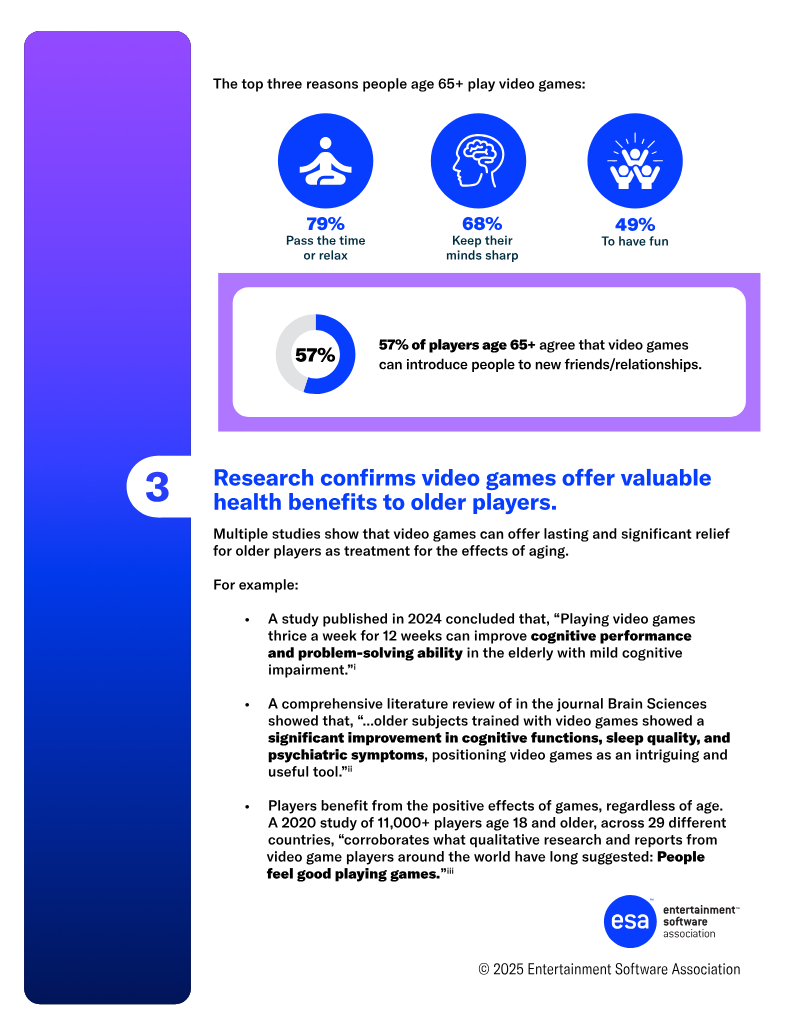
- Mental stimulation is a primary motivator for 79 percent of older players, with 68 percent of those aged 65 and older specifically gaming to maintain cognitive sharpness.
- Clinical research involving over 11,000 participants indicates that playing games three times per week for 12 weeks can improve problem-solving abilities and cognitive performance in individuals with mild impairment.

Benefits of Video Games in K-12 Education
The document is a report from the Higher Education Video Game Alliance (HEVGA) and the Entertainment Software Association (ESA) on the use of video games in K-12 education in the United States.
- The report cites ESA research indicating that more than three quarters of children under 18 play video games at least weekly.
- The authors state that there is good evidence to suggest that students develop better attitudes toward learning and demonstrate higher levels of engagement when game-based learning is included in the curriculum.
- The authors argue that games let students work through problems at their own pace, since a student can repeat a well-designed game as many times as needed.

Video Game Market Update: Q3 2026
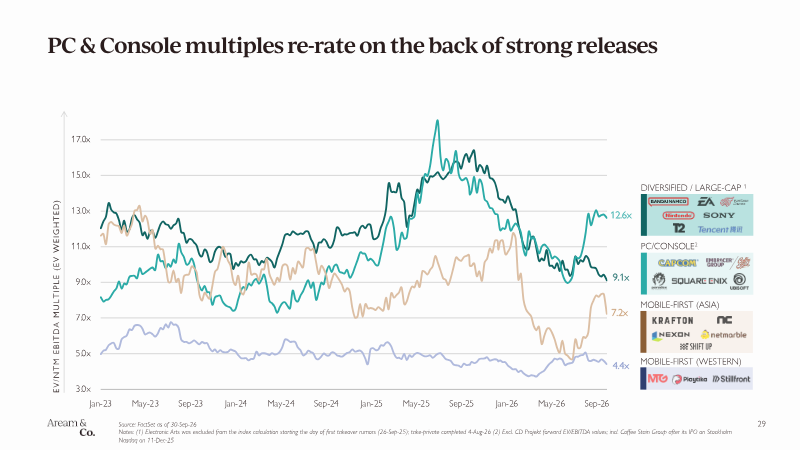
This Aream & Co. market update, covering Q3 2026 and subscriber-only, reviews the video game sector using data from InvestGame, Sensor Tower, Alinea Analytics and FactSet, with figures as of 30 September 2026.
- Q3-26 M&A recorded 54 deals worth 57.8bn, with the 55bn EA take-private closing in August.
- Mobile IAP spend fell 7% year on year in Q3-26 to 19.6bn, on a smaller installed base.
- Console revenue fell 12% year on year to 14.1bn in the latest reported period, the steepest quarterly drop in two years, with all three platforms declining.

The Video Game Industry: A Resource for Organizers
The document is a 2022 resource published by UNI Global Union, supported by the Strategic Organizing Center, that profiles the video game industry for workers and unions.
- Low pay was the most commonly cited workplace problem among survey respondents who reported at least one issue, at 66 percent.
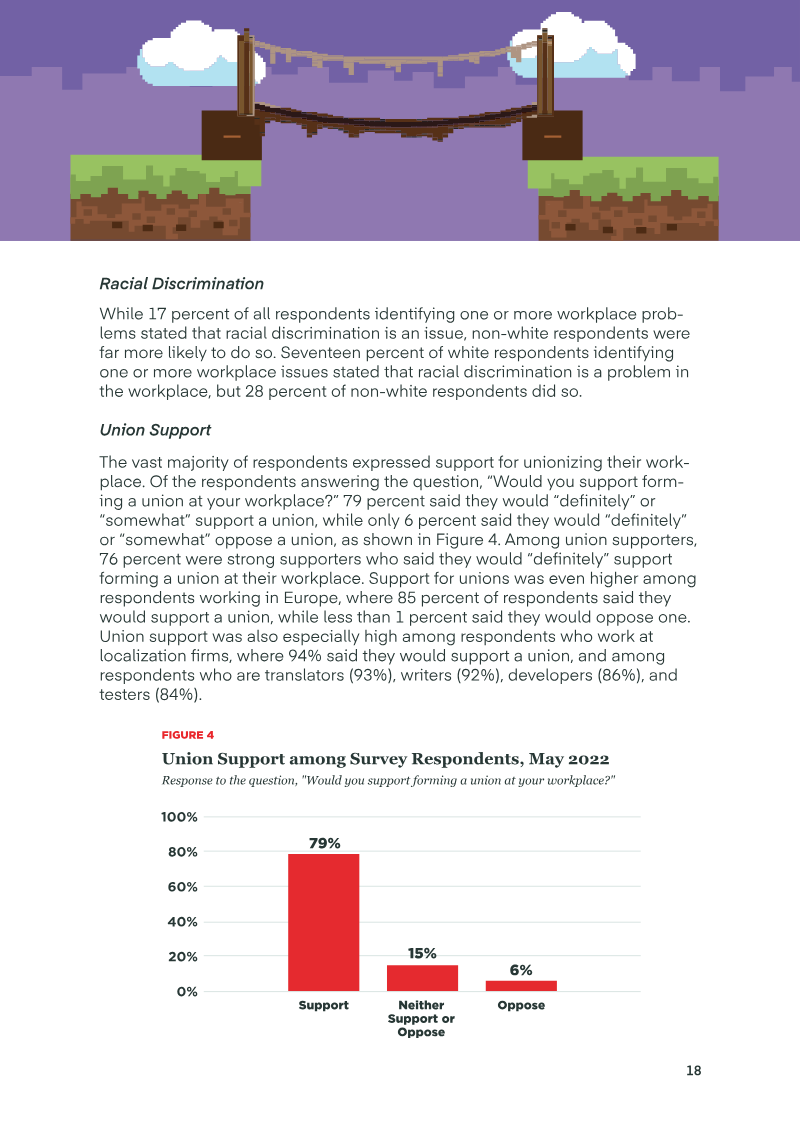
- Of respondents answering the union question, 79 percent said they would definitely or somewhat support forming a union at their workplace.
- Mobile games accounted for 52 percent of industry revenue in 2021, roughly US$90 billion, according to NewZoo.

U.S. Video Game Industry: Technological Advancements and Privacy Issues
The U.S. video game industry, a significant global economic force with over two billion gamers, faces critical challenges related to rapid technological advancement and escalating privacy concerns.
- The U.S. video game industry is a $60.4 billion annual revenue sector employing 240,000 people across more than 42,000 businesses.
- Gaming platforms face severe cybersecurity threats, evidenced by 12 billion cyberattacks recorded against gaming websites over a 17-month period.
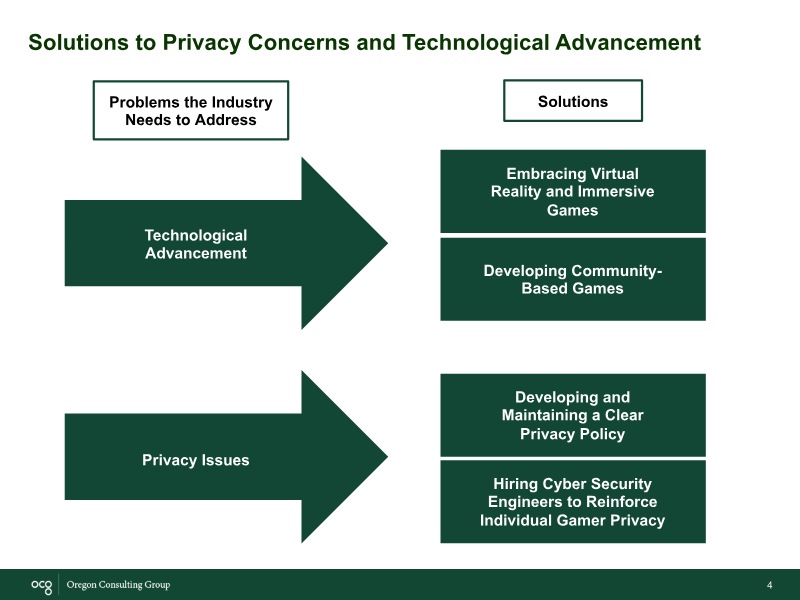
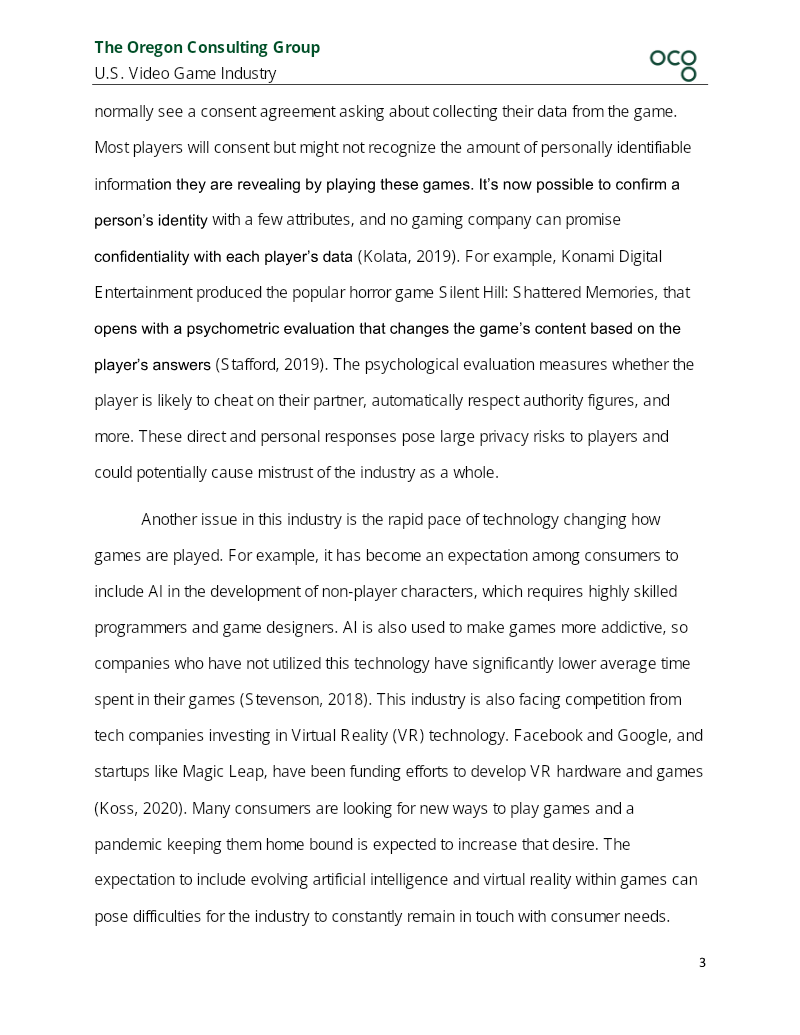
- Privacy risks are exacerbated by the re-identification of anonymized data and the use of psychometric evaluations, necessitating investments in specialized cybersecurity engineering similar to models used by Microsoft.

Video Game Market Update: Q2 2026
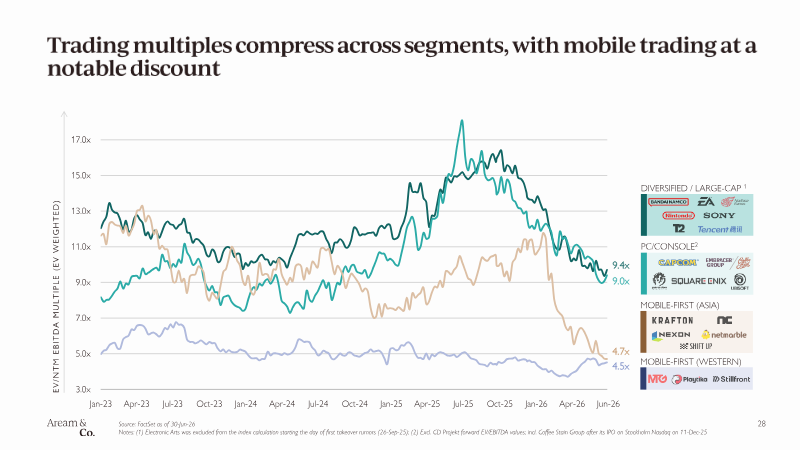
Aream & Co., a gaming-focused investment bank, publishes this Q2 2026 market update covering the video game industry.
- Private gaming investment reached 3.1bn in Q2 2026, up roughly 6x year on year, on broadly stable deal count.
- M&A reached 54 transactions with 2.3bn of capital deployed in Q2 2026.
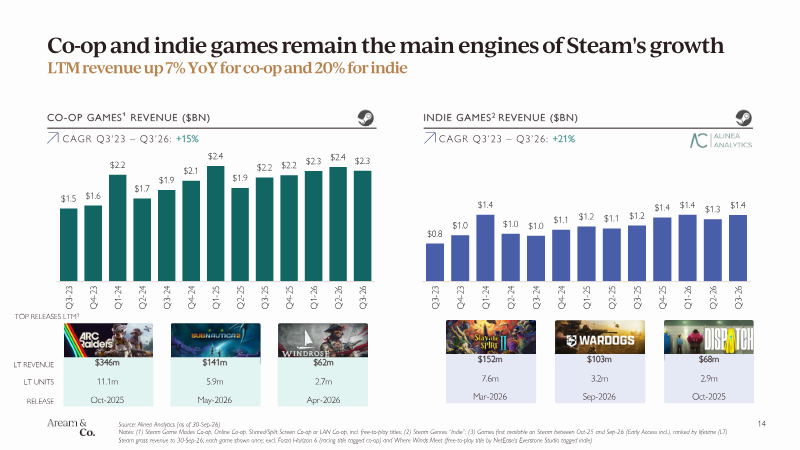
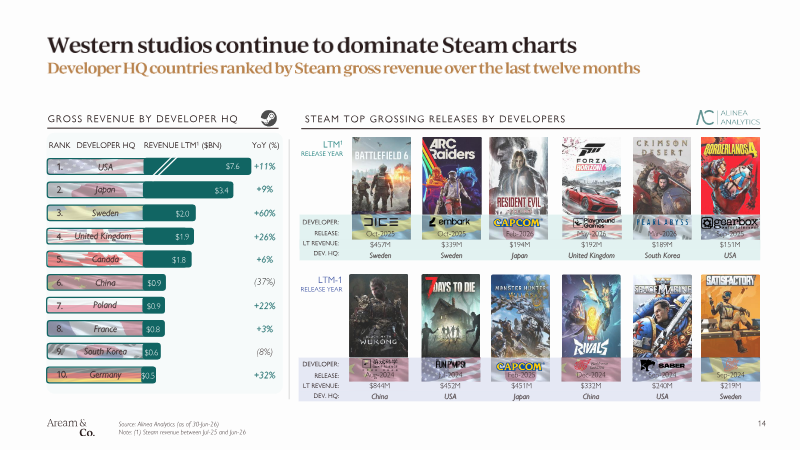
- Steam posted double-digit growth, with trailing twelve-month revenue up 13% year on year.
Essential Facts About the U.S. Video Game Industry: 2026
The "Essential Facts About the U.S.
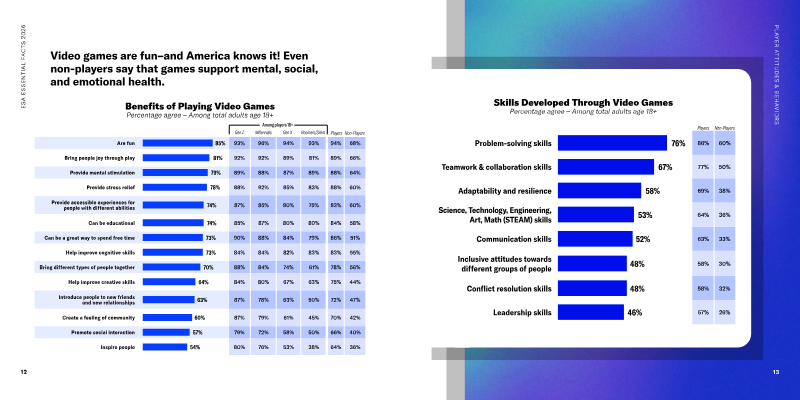
- The U.S. video game industry reaches 212.3 million Americans, representing 67% of the total population.
- The average American gamer is 37 years old, with a gender distribution that is nearly equal across all generations.
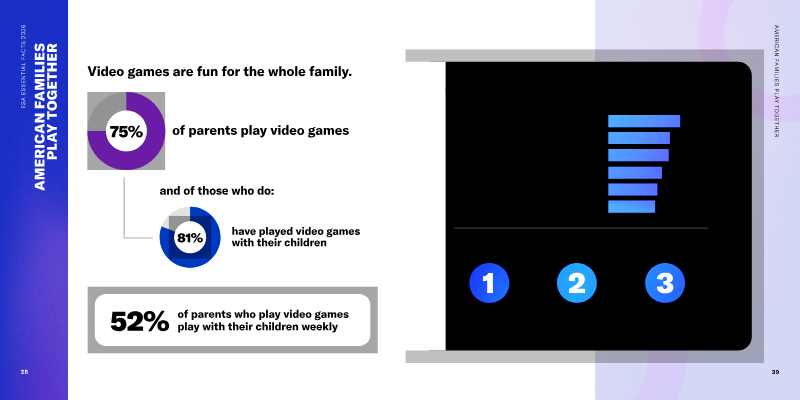
- Gaming is a primary social activity, with 70% of players interacting with others and 81% of gaming parents playing alongside their children.