Unreal
Game
Documents about Unreal

Spend Like You Mean It: No Business Like the Show-off Business
This analysis examines the intersection of mainstream marketing, corporate strategy, and financial performance within the gaming and technology sectors during early 2022.
- High-stakes advertising campaigns, such as Super Bowl commercials, often signal a transition from organic growth to a more difficult phase of active user acquisition, frequently preceding a market cooldown.
- Roblox experienced a 27% stock drop despite reporting $770 million in quarterly revenue and 49.5 million daily active users, highlighting investor sensitivity to missed growth expectations.
- Amazon Games is pivoting its strategy away from internal development toward third-party publishing, evidenced by the success of Lost Ark, which reached 1.3 million concurrent players.
How has the Pandemic Impacted the Game Industry in 2021 | Best of 2021 Part 1
The global game industry underwent a profound structural transformation throughout 2021, driven by the dual pressures of pandemic-induced remote work and rapid technological advancement.
- The game industry has permanently shifted toward hybrid work models, forcing management to transition from monitoring hours to prioritizing measurable output.
- Studios are increasingly leveraging a global talent pool due to the removal of geographic barriers, though this is complicated by the 'Great Resignation' and a growing professional demand for work-life balance.
- Technological democratization via engines like Unreal and Unity is enabling smaller, more efficient teams to produce high-fidelity content, supported by tools like MetaHuman that streamline asset creation.
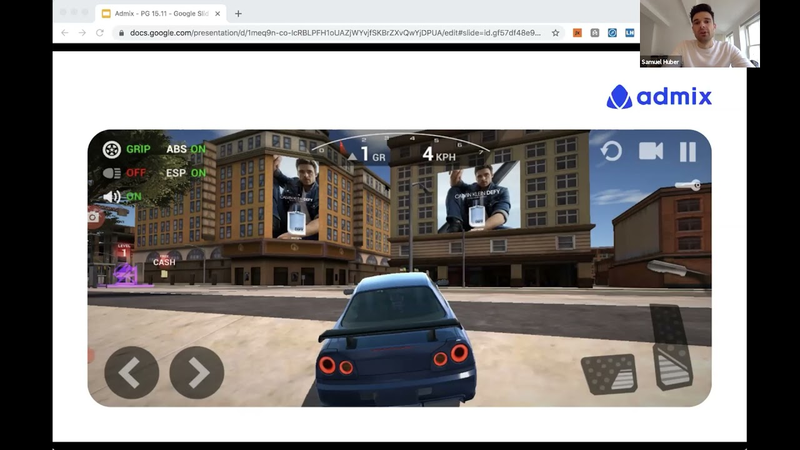
Superstar Session: Real Estate for Game Publishers: How to Monetise Your Virtual World
The monetization of virtual environments is shifting toward a real estate model, where game developers treat digital spaces as commercial property to host native, non-intrusive advertisements.
- Brand spending in the gaming industry currently lags 50 to 70 times behind social media platforms, representing a significant untapped revenue opportunity for publishers.
- Game developers are shifting toward a real estate monetization model that treats virtual spaces as premium, brand-safe commercial property for native advertising.
- Integration is facilitated through no-code plugins for Unity and Unreal engines, allowing developers to monetize high-traffic areas without relying on disruptive, interruptive ad formats.


Quarterly Report of 11 Bit Studios S.A. for the Nine Months Ended September 30th 2021
During the first nine months of 2021, 11 bit studios S.A. focused on a strategic transition toward a multi-team production model and the expansion of its publishing pipeline.
- 11 bit studios is investing PLN 110 million into three major internal projects: Frostpunk 2, Project 8, and Dolly.
- The company has allocated PLN 80 million to expand its third-party publishing division through 2023, aiming for a consistent annual release cycle of one proprietary game and multiple external titles.
- Financial performance for the first nine months of 2021 showed a year-over-year decline, with revenue at PLN 49.2 million and net profit at PLN 17.4 million due to the aging of the existing portfolio.
15 Years Later: Did Indie Game Discovery Happen Like We Thought?
The independent game industry has undergone a radical transformation in distribution, marketing, and development tools since the dawn of the digital era.
- The 30 percent platform revenue share remains a persistent industry standard, despite early 2007 concerns that digital distribution would fundamentally alter gatekeeper control.
- The democratization of development tools like Unity and Unreal has created a 'Cambrian explosion' of content, resulting in a saturated market where high technical quality is now the baseline requirement.
- Discovery has shifted from traditional review sites to a fragmented landscape dominated by social media and influencer-led platforms like YouTube, Twitch, and TikTok.

Why India is the Future of F2P Game Development
The global free-to-play (F2P) gaming industry is undergoing a significant structural shift, with emerging markets increasingly challenging established Western incumbents.
- Emerging markets like India, China, Turkey, and Poland are shifting from low-cost production hubs to centers of excellence, creating a structural cost advantage over established Western game studios.
- Disruptive insurgent studios, such as MiHoYo, FunPlus, and Dream Games, are successfully challenging Western incumbents by leveraging lower cost structures, high-intensity work ethics, and a lack of ideological resistance to aggressive F2P monetization.
- The concentration of talent in specific geographies creates a flywheel effect where successful hit-making companies foster local clusters of expertise as experienced talent disperses to new ventures.
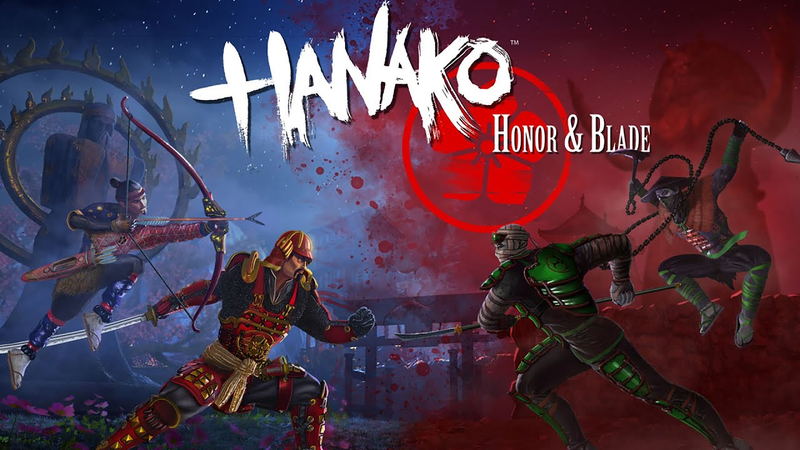
14 Years Development on Hanoka with Matt Canei | Game Dev Unchained Episode 284
The development of Hanako: Honor & Blade serves as a case study in the endurance required for long-term indie game production.
- The 14-year development of Hanako: Honor & Blade required a total labor investment equivalent to only 14 to 18 weeks of work for a 100-person studio, demonstrating the efficiency of a volunteer-driven, methodical approach.
- The project successfully navigated major technical shifts, including migrating the entire game from Unreal Engine 3 to Unreal Engine 4 while adapting to evolving market trends like the rise of battle royale games.
- By positioning the project as a mentorship platform for junior developers to build professional portfolios, the team effectively mitigated the impact of high turnover over the project's decade-plus lifespan.
Automated Testing of Gameplay Features in 'Sea of Thieves'
Developing and maintaining a live-service, open-world title like Sea of Thieves requires a robust automated testing framework to replace inefficient manual processes and mitigate the risks of regression.
- By implementing automated testing for 'Sea of Thieves', Rare reduced the time required to verify game builds from two weeks to approximately 1.5 days.
- The studio successfully reduced its manual testing team from 50 people on 'Kinect Sports Rivals' to 17 on 'Sea of Thieves' by automating repetitive checks.
- Rare utilized a continuous integration system via TeamCity to run automated tests on a build farm of PCs, averaging a full test cycle every 20 minutes.
Epic vs. Apple: Will the Walled Garden Get Breached?
The ongoing legal battle between Epic Games and Apple serves as a focal point for broader shifts in the digital marketplace and platform antitrust regulation.
- The legal battle between Epic Games and Apple continues to challenge the 'walled garden' model, with ongoing judicial scrutiny focused on market definitions and consumer switching costs.
- Global video game revenue is projected to decline by 4.3% in 2022 to approximately $184.4 billion, marking a market correction following pandemic-driven expansion.
- Regulatory pressure from the DOJ and FTC is shifting the industry landscape, potentially forcing dominant platforms like Apple and Google to reconsider their 30% revenue cuts.
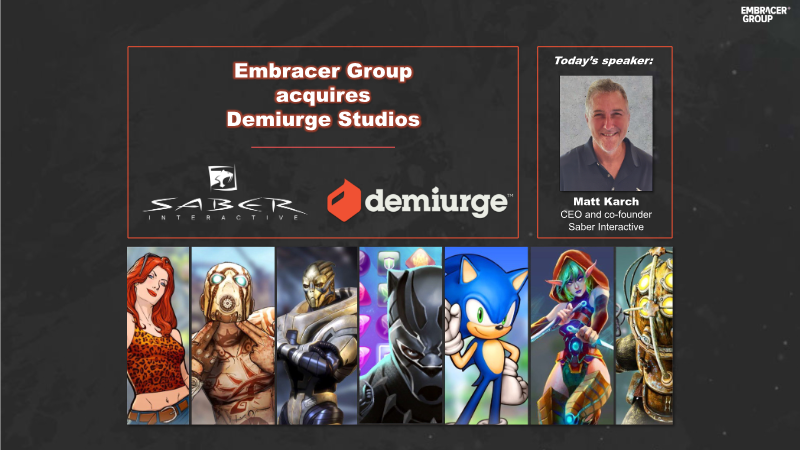


Embracer Group New Acquisitions: August 18, 2021
Embracer Group expanded its development capabilities in August 2021 through the strategic acquisition of three specialized studios: Demiurge Studios, SmartPhone Labs, and Fractured Byte.
- Embracer Group acquired Demiurge Studios, SmartPhone Labs, and Fractured Byte in August 2021 to integrate them under the Saber Interactive subsidiary.
- Demiurge Studios, which generated $15 million in revenue in 2021, plans to scale its workforce from 68 to over 350 employees within five years.
- SmartPhone Labs adds over 100 employees with expertise in mobile, console, and VR development to the group's technical infrastructure.
The Faces of 'the Creator Economy' for DIY Games
This analysis explores the emerging "creator economy" within DIY game platforms, focusing specifically on Core, an Unreal Engine-based creation and play environment.
- UGC platforms are shifting the burden of innovation from professional studios to player-creators, effectively de-risking the business model for publishers.
- Core’s parent company secured $100 million in funding, highlighting significant investor confidence in the DIY game creation sector.
- Top-performing creators on platforms like Core are often veterans of modding communities such as Garry’s Mod, demonstrating a high degree of skill portability.
Wakes, Explosions and Lighting: Interactive Water Simulation in Atlas
The development of the ocean simulation for the massively multiplayer online game Atlas centers on balancing high-fidelity visual realism with the rigorous performance constraints required for a seamless, multi-server environment.
- To simulate vast ocean surfaces for Atlas, Grapeshot Games replaced the standard Phillips spectrum with JONSWAP and JONSWAP-variant spectra to avoid unrealistic wave heights in non-oceanic environments.
- The team optimized FFT-based ocean simulation by using larger waves to distort smaller frequency bands, effectively masking tiling repeats without sacrificing performance.
- Buoyancy for rigid bodies is calculated by taking discrete displacement samples along a boat's hull and using an iterative Newton's approximation method to determine height at specific world locations.