1 free read left. Create a free account for unlimited reading + AI research.
Create free account
Superstar Session: Real Estate for Game Publishers: How to Monetise Your Virtual World
Key insights
6 takeaways- 01Game developers are shifting toward a real estate monetization model that treats virtual spaces as premium, brand-safe commercial property for native advertising.
- 02Integration is facilitated through no-code plugins for Unity and Unreal engines, allowing developers to monetize high-traffic areas without relying on disruptive, interruptive ad formats.
- 03Publishers can choose between a revenue-share model or a self-managed service to handle brand relationships, with the infrastructure designed to eventually support e-commerce and digital asset transactions.
- 04Performance measurement is moving away from traditional click-through rates toward contextual engagement metrics, specifically dwell time and gaze-based attention.
- 05While the current technology is cross-platform, expansion into virtual reality remains limited by existing restrictions on third-party software development kits.
- 06Brand spending in the gaming industry currently lags 50 to 70 times behind social media platforms, representing a significant untapped revenue opportunity for publishers.
Ask AI about this video
Transcript
on with the show today and the matter in hand and the first track we are going to kick off with um is ad insights we talked a little bit about the uh destructive ads and and new technologies earlier so um before we kick off this is brought in association with admix we have a message from our sponsor uh run vt catherine [Music] [Music]
and and there you've seen a little bit about what they do it's uh it's putting brands advertising into game it's really cool stuff um and so now we're gonna you've heard about what they do i've talked a bit about what they've been raising money earlier and now he gets to hear from the the the people themselves and the and the ceo in fact um so we've got a we've got a talk uh described entitled real estate for game publishers how to monetize your virtual world um and it's a superstar session and it is uh it is it's gonna be uh here he is it's gonna waiting for you to join it's going to be delivered to us by the the wonderful mr sam hoover the the visionary behind admix who is frighteningly young but he's doing for you um how are you sam can you hear me i can't hear you chris how are you i'm very good i'm very good whereabouts you in the world i am in london just like yourself in london that's good no you've got you've got it's just like a frighteningly white room it's like you're kind of from the
future a little bit very good i'd love to i'd love to have a room that got clean anyway i'm gonna step back and let you get on all your time don't worry i always like to start a bit late run over but over you go tell us all about real estate for game publishers and i'll be back at the end to ask questions perfect thank you chris good morning everyone um great to have you i know it's the first first talk of the day hope you had a good weekend um thanks for attending today i'd love to talk about a slightly different twist on the concept um which is real estate for for game publishers and answering the broader question how to monetize virtual worlds so just a little bit about admix you might have heard of us before we are an in-game solution we started in 2018 and what we've decided to do from from the get-go was uh creating a better solution for publishers and for the end user when it comes to advertising um and instead of having this annoying
intrusive ads that affect the retention of the game um we tried to find a system where the the brands are actually natively integrated within the game itself within the gameplay and we we call that in place our own twist on uh in-game um and it's been going really well um you know it's um we're trying to educate brands to um embrace gaming as a new channel um obviously gaming has been massively growing and lately it's been you know we've been managing to onboard much bigger publishers um we started with small indie developers now we work with the likes of aaa studios like gameloft and others um recently we've announced a big fundraising round 25 million which puts our total rates to 37 million dollars and and this will be deployed into the product creating the best products to help creators publishers monetize their games in a way that doesn't affect um the retention doesn't affect the the
game itself and is really as native as possible we believe that is the future of monetization banners videos that we can insert in the games this is really just the beginning there's a lot more exciting ways to to monetize games and also the metaverse um you know we started in 2018 by focusing on monetizing vr content then expanding into games for obvious reasons but where we really um the core dna of what we do is really about virtual worlds it's really about monetizing that just yesterday we launched our first um collaboration with the virtual world sonya space we dropped a set of billboard nfts in collaboration with cloud9 the esports team that is the first brand partner appearing on those billboards so um this new metaverse the new mechanics of it um the decentralization really opened exciting opportunities for creators to um to monetize you know the world that they have created so we have a self-serve platform we have
about 400 games on that platform um anyone can just go into admixplay.com sign up and find our technology there it's it's no code it's really simple and then connects you with 100 100 plus brands who are basically ready to go and and can serve content within the games that you connect to it so that's a little bit about what we do um today i wanted to bring a little little twist to that um discussion and this is a a question that we've started to ask to some of our game publisher partners uh people that that work with us and it's um it's it's it's purposely something to throw them off a little bit what is your real estate monetization strategy um of course if you're a game publisher on mobile um this is not not necessarily metaverse right it's all all publishers you probably don't have a real estate monetization strategy um you probably can grasp what i'm going with this but
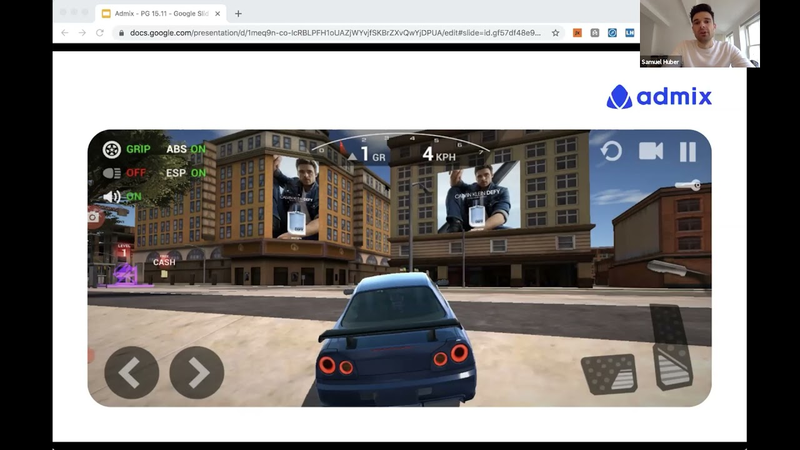
the idea there is to make people realize the creators that you know when you're building content um whether it's a city like you see here or it could be a stadium or it could be anything right you're building you're building content in your game you can really think of this as real estate it's it's a space in the game that has value but the traditional solutions that you might already be using with your mediation or interstitial or rewarded video that doesn't really monetize your real estate it monetizes the interruptions inside in the game but most of the time that the user play is within this real estate again whether it looks like a city or something else there is space there there's 3d or 2d spaces that can be monetized what about the inside of the gameplay and this is really the thought process that we had when we started admix um because we see that most of the time is not spent on the interruptions it's
spent within the game itself so it's a different mechanics and that's what admix is is is doing we unlock new revenue stream with this technology because now you can monetize the inside of the game so in a way it's not you know competing with traditional um models where you monetize interruptions you can have the interruptions that you monetize with interstitials and really the inside of the gameplay that you monetize with a different technology and the way that it works is pretty simple you you keep building your content nothing changes when you're actually creating the game and then with the technology like admix you can create those areas those those plots that um are basically areas that you want to monetize this is what our technology does you identify bits and pieces of the contents that are big that become monetizable and then we have a network of brands or businesses who want exposure through
your game they want to reach the audience that you have one way or another whether it's to show an ad or sell a product and this is the the brands the companies that appear within the slots that you have created in the game so this is why we talk about real estate and you can see that that concept um actually takes it a lot further than pure advertising because right now the spaces that you identify they are replaced by ads but in the future it could be something else it could be a 3d product that you want to sell or an nft that you want to showcase or maybe a transaction that you want to run so the way we see what we do is it goes beyond advertising it's about real estate it's about figuring out an area within the content that you've created that where a transaction can run we've started with advertising of course it's an obvious use case but again it can go a lot beyond that you can put anything in this real estate ads
e-commerce anything and the beauty of it is like it's not actually an sdk it's a plug-in there's no code required you literally bring that into unity or unreal you drag and drop those units you decide where you want to place it what you see is what you get type of thing and then from there the transaction can run and the result is is this right it's inserting brands inserting um messages within within the content itself so if we talk about real estate um let's try to take that analogy a little bit further and and see what are the things that really matter to maximize the monetization of the real estate that you have created within the game so the first one as every property owner will know um real estate is about location and what i mean by location here i mean about the game itself right um the way that monetization works whether it's advertising or e-commerce
or whatever you want to sell it's it's related to the amount of people who see the placement or can engage with it or can buy it right so of course the more popular your game the more people you'll have to potentially monetize so it starts with the location it starts with sending the user to a great destination um and helping brands target target this audience so the first thing you can do if you want to maximize your monetization and again whether it's our solution or a traditional rewarded video this doesn't change the more users you have the better you the better you you start so that's the first thing but that's where it starts to differ a little bit then we're looking at footfall which is a commercial real estate metric and footfall is actually within the game itself where do you place the placement so that it gets the best view so you can maximize the share of the screen and maximize the revenue and
we'll see some examples of that in the in the further slides and after that it's the income how much are you making from displacement again in real estate is it can be a rate of return if you're you know selling the building or it can be a rental income if you're renting it so this is the same here how much are you making per placement and is it actually worth the installation so if you look at um number two which is fruitful um the beauty of of the in-place solution is that you get to decide where you want to place those items and so of course what you're trying to do is to maximize the viewability when we talk about advertising the best placements the what brands are looking for is really to be seen in front of users for as long as possible um and ideally in the most straight possible position so that the the area of the ad itself occupies as big as possible in the area of the
screen if your ad was completely you know 180 degrees you were passing by no one would really see that so this is a great example here where you can imagine as you're driving you would literally see the banner for like five six seconds and then it becomes bigger and then you get to the next one so that's a great example where you maximize the footfall passing next to the banner so now how do we measure that so we actually have our own algorithms which are it's called a dwell time calculation we calculate how long this ad actually appears um on the screen and also the area of the of the ad compared to the area of the screen and that information is passed back to the advertiser and that's the trick that we use to quantify viewability we also have a third-party partner called integral ad science which is able to measure if this ad is seen by a real person and also has access to some some metrics but of course their product
is built for the web we've adapted it to make it work for the 3d world but it doesn't take everything into account which is why we also have our own uh our own calculation but nonetheless we are the only uh in place solution on the market to be verified by a third party and that gives advertisers a lot of confidence that you know their ad is actually seen by a real person seen by a certain amount of time which passes the iab you know minimum um minimum time time in view to get to guarantee an impression so that's kind of how you you maximize your footfall um here are some other great examples where you can place the ad unit you know kind of tailored in front of the the gameplay so that as the screen gets closer and closer you know your ad will become in view more we have algorithms where you use data to advise the publishers on how to optimize the placement so that you can maximize the viewability and the more viewability
the more revenue you make because the advertiser gets better and better performance for the for the metric that they're trying to optimize which is the viewability time so those type of ad units here you cannot interact with them which is a great thing actually because the users are not going to click on them they have nothing to do it's just there in the background so it is really about monetizing the time that those units are in view and the area that they appear on the screen and how so how do you do that you ask um well this is a fasted version of how the integration work we sped that up but it doesn't take very long as you can see you are in control the publisher is in control this is a tool that you can integrate directly with um with unity in this case and you literally just put the unit inside the game drag and drop and then you decide where you want to place it how big you want to place it the only thing you can't change is the aspect
ratio of the of the unit itself because we don't want the adverts to be squished or changed the aspect ratio but other than that it's really a tool that you control and that's that's the real beauty of it when we came up with the idea um i used to run a small game studio before and i always felt like the ad sdks were very much plug and play you know you have your content you spend time crafting it and then you slap a video on top of it and you just didn't have that many options to decide how this video would look it's just an overlay on top of the game so we really wanted to create a developer tool not just a plug-and-play solution so you decide you craft your experience you get to integrate in play the way you want to keep your monetization completely player-centric it's all about the player how do you create the best experience for them and on top of that we have extra controls that you're introducing as well
in the platform so you'll be able to now approve every single brand and even creative before it is served inside inside your content until now we could block categories so if you didn't want anything related to fast food or sports you could block that now we're going even one level more granular where you can actually approve the brand and approve the creative they come directly from our platform um so of course this is an extra layer of control so it takes a little bit longer you need to monitor the brands that are coming in but this is you don't have to do that it's only if you want to maintain complete control then you can do that you can create your own rules and then the system eventually learns and and prioritize the brands that you want the most and also and that's something i keep reminding our publishers you know this is a solution that you can insert in your game you can create this real estate but you don't have to rent it at all times so you could do that if you
have a game that is organized around events for example right where you have specific events specific things happening at specific time then you can just trigger that and monetize these moments but it doesn't need to be all time you know you don't have to rent the room that you own at all times to keep the real estate analogy so you can pause it and then everything would become transparent or would have a fallback texture depending on the settings so again it's about complete control it's not necessarily about um you know establishing in play as a next um the the next pillar of your monetization strategy you can definitely do that if you want but we also find cool integrations that are built around specific moments specific events that is uh organizing the game and then turned off and then turn on again at a later date and then keep it on for six months turn it off if you want this is this is the beauty of this solution is that it
is truly native to your environment and therefore you can do whatever you want with it so the next step was about income um how do you actually monetize how do you make how do you make money from this placement um but that is truly down to us right we have access to premium brands that we are getting excited about gaming as a whole the likes of disney mcdonald's uber um calvin klein sky i mean we've run you know hundreds and hundreds of of campaigns over the past couple of years uh some larger case studies like this we have movember starting um lately so you know the idea there is we have a team um that goes out to brands and two agencies and basically we're showing them the great content that you have built the great games and we're exciting the brands also about this real estate the pitch that we have is very similar to out of home you know we're showing them great location in a digital world but
it's still a great location and if you have a million users passing by this virtual bmx track for example you know it's equally as valuable as putting an ad in piccadilly circus these days because people spend more time interacting digitally than they spend in the physical world um or at least the segment of users do so so that's the pitch it's about the location it's about how great this space is going to be for their brand and of course all the added value because we can track what happens we can see how long people look at specific ads and that becomes part of their media mix so that's kind of how we are approaching brands and more and more brands are leaning in they're very excited about the world of gaming they're very excited about the metaverse as well which is the next phase of games um so you know that's just uh that's just growing and growing and so it's it's a perfect time if you're a publisher to start getting brands inside your content inside your real estate because more than ever
brands are trying to reach the audience that you have whatever they're selling whatever they're promoting they know that everyone is playing games one way or another right two billion people are playing games every single day on mobile so it's not really about the game anymore it's about the audience behind it and so if you have that audience it's extremely valuable the audience is what brings utility to your real estate right building a great building the middle of the desert where no one's there is not as valuable as having you know somewhere a great location and that comes back to the first point it's about the location then you maximize the footfall in that location and that is what brings income because brands are interested to place their ads and their product within this space so what i wanted to talk about now is just what are the ways that we have to actually monetize it um because we're introducing new business models for our creators um the first way was
what we call now sell as you go um which is you know you have a revenue share with us um where you get most of the revenue 70 in most cases and basically you you make money when advertisers are buying so you plug on the platform and then you see how much revenue is it generally takes a couple days to ramp up because we are we have a very scalable network we're not an agency we have um we plug into various networks like the google network of verizon and others so we have a steady stream of demand it's not you're not just waiting for sales team to to sell and that's what publishers really like about our solution is that it's consistent growth revenue the more users you have the more revenue you get it's very predictable very easy to follow and that's the current model it's sell as you go when we have advertisers which is all the time but the more advertisers we have it fluctuates a little bit based on the demand at the end of the quarter you have more demand because the budgets are closing and so you make more money this way
so that's one way um another way that we're introducing as well is is sell as a service we've built this great platform for advertisers to to basically come on our platform and create great campaigns target the games that they want to target and so on and now we're going to make this available to our publishers as well so a lot of our big bigger publishers they have their own brands they have their own relationship they have their own sponsors and so they were asking us why can't we use your platform to deliver on the relationship that we have already um because a lot of times those bran they have the brands they have the game but the technology to insert it it might be a bit clunky or it just it's just not as good as what we have because we spent three years and millions and millions of dollars developing the best in play technology so the service model is something that we are that we're getting started now um feel free to reach out if you're interested if you have brands interested we can become just the technology partner and um the revenue
share on this is is very advantageous and the other one is something that we'll be announcing soon so an exciting new way to monetize the real estate that you have so just to wrap up um this is an example of you know a studio showing that they managed to integrate in really about 10 minutes uh which is a record normally it's you can count you know couple of hours maybe a day of work depending on the complexity of the content but the idea really is is that you get to create a seamless experience which is really really important um because you know the more time you have your users in the content the better the more footfall you can get and by not interrupting the session time by not interrupting retention with this type of model you get to maximize the time that your users are in the game and you get to integrate that really really quickly and then you can drive great um
increase ltv increase these are just some some examples of studios that have worked with us and they have great big real estates and because of that can generate significant increase um from from you know the traditional solutions this is a study that we've done with one of our um publisher neon play that was beginning of the year i believe and uh and it shows that we've tried to have zero ad placement five ad placement ten ad placement and we measured retention in day 1 day 7 day 28 and as you can see there is no difference um so you know this is the proof that and we've replicated this test many times but this is the proof that because the placement the real estate is truly integrated with your game you do not affect the retention of your users they're not interrupted that you don't create those triggers for them for them to leave the game and that's the real beauty of it because it enables you to monetize without compromise
you have tons of buildings you have big real estate or you put five placements well if you want to double that you can put 10 placements if this is not going to affect as long as you're reasonable of course you know it needs to look great as long as you're reasonable this will not affect your attention i think that's that's one of the most exciting um thing because it completely shifts the way that you can think about monetization where you normally always trying to compromise between number of ads per user per day your retention you know that by increasing one you're lowering the other this is not the case here because we're we're not talking about intrusive advertising we're talking about monetizing your real estate so to close off um what are the key takeaway well it's really interesting to me to think about real estate if you if you're building content again it doesn't need to be anything you know in the metaverse it can be just a a mobile game we are
building an environment which is real estate and that is valuable and the technology that we had available until now just didn't really teach us to think this way but if you think this way it just opens up a lot of possibilities and you know in play our solution this is really how you monetize digital real estate inside games um it's not it's not an sdk it's a simple plug-in plug-and-play drag and drop you decide how this experience look doesn't affect the retention you keep complete control and you get to create an alternative revenue stream for your game so um thank you guys for listening i would love to answer any question if you have great no there is there is a number of questions we'll try and segue them into sort of uh two or three because there's sort of similar areas um i i just firstly want to say it every time you i'd sort of hear the presentation about him play it just seems like a total no-brainer to me because like why would you not do it i don't know i don't know you probably haven't got an
answer that would be a bad bad thing to have in the deck but i kind of it's not impacting your other advertising right it's not stopping you doing performance-based advertising not at all no no it's completely that's this is why i'm talking about it as something different almost it's a you know it's it's a different type of monetization and you can and it's just it's kind of it's like just advertising like you're getting display in the real world it's not i why would you not do that like people create people keep mock ads to make their experiences feel like a real world environment like why i just don't understand why i mean i don't know how many people are doing it but it just seems to me such a uh uh complete it's massively growing and yeah absolutely people are getting used to the concept of it and you know as we improve the technology we give them more control um it is really becoming a no-brainer certainly no i like the real estate analogy it's a good that's a good one i think it's it's good to keep comments in in different approaches there's a number of different kind of questions here's something you might have answered there's a question here about um about brands and non-gaming brands i think i think you
kind of answered that but i i think that's it's quite a key thing because often what i think we see with um mobile appetite and mobile performance advertising i guess is that it's it's often other mobile brands right for mobile games and the the whole games right now as i said in my intros is hot it's new black people are desperate to get part be part of this and it seems like this is this is a probably easier integration for them this is more like the advertising they understand elsewhere so it seems like this is the gateway to brands is that how you sort of see it yeah 100 i think um the you know interstitials and rewarded video um the reason why 95 of that other games is because the formats were just not great for brands right it's great if you want to drive a direct click if you want to drive you know impulse download perfect but for a brand that is selling a product you're not gonna sell a pair of sneakers while interrupting someone playing a game so it's not about the conversion
it's about it's about the awareness it's about driving consideration for a product and we're running studies now to prove that this consideration is higher because the message you know integrated in the game first of all it's very visible uh it's visible for a lot longer than if you had a banner on an article that you're scrolling down and um and because you're you're focused on the game your brain is fired up and therefore registered the message better than you would do when you're just lazily browsing social media for example so it's a perfect place for brands to to really nail the top funnel which is the awareness and we know that you know in a world where facebook and google control a lot of the last click attribution um the banner is in the top funnel you need to you know people are going to buy anyway especially in q4 when you know you're getting close to thanksgiving and christmas how do you max make sure they buy your product well they need to see more than others all awareness right well i mean it didn't hurt coke right they've done quite well with it so there's a couple of questions about
mechanics i think you've kind of answered a bit i'll quickly throw them out in terms of the key ways of measuring i mean again people are focused on measurement all the time i know this is more brand advertising but what what sort of data you get i you probably mentioned it and i was kind of claiming questions not listening to every bubble so are you this question did you is it just kind of you monitoring kind of uh the the views i mean obviously there's not kind of clicks in the same way so what is it is it just purely views any of the data well we look at um yeah in terms of the performance itself we look at um dual time which is the amount of time that the ad was seen on the screen the area on the screen as well we use a gaze um which is kind of a refined metric for for that you know focused attention we com we compile the two um but in terms of targeting the the beauty of our solution that is true i haven't mentioned that is that we're not looking at personal data um we believe that the data the contextual data of the
game is actually enough to be able to do great targeting it's not about who you are in the real world and what you've bought on amazon it's about the actions that you're actually taking in the game the type of games that you play and who you are in your digital form so that's how we are you know really looking at our data and the unique targeting that we can offer the brands okay there's a couple of questions though i'm going to get so i'm not going to get through all of them but um once it popped in from alexi ranson and he said he uses admix on mobile titles there you go existing client but would be great to hear it performs in vr on oculus quest specifically you said you came from i think vr initially the text out right or maybe i made that up i thought yes so presumably it works for me all right so so yeah i mean the technology works everywhere uh we've built it to be cross-platform i mean it's you know it's integrated with the game engine so um it is meant to be everywhere we have focused on mobile commercially just because we wanted to dominate that that category um vr is an interesting one so
on oculus at the moment um facebook does not allow any third-party um ad sdks yet we are we're in discussion with them but this is not something that we recommend doing at the moment it works on the other platforms that the moment um although we had some you know publishers that decided to go live anyway on oculus it's really up to them um technically it's not something that we recommend doing so while it definitely works technically um it's a matter of us you know working with them to enable our our technology on their platform okey dokey i was good there's a couple of questions here about kind of scale about ecpms and how big the market can be obviously it's still comparatively new so i are there is only data out there to suggest how big this in play market is or how big it's going to become do you have like so people want that information does that is that yeah well i mean the the way i like to i think um you know bottom up um is looking at
what is the attention what is what are the eyeballs right and um you know the big stat that we like throwing around is that they are the same amount of people playing games that are on social media um every day right the eyeballs are roughly the same if you aggregate all types of games and you aggregate social media it's roughly the same amount of attention but the budgets the the money that brands puts in social media is 50 times or 70 times more than gaming so there's a big discrepancy here between the amount of eyeballs the attention that is there your customers oh yeah and the willingness that brands have to uh reach them and we believe that the only reason why the discrepancy exists is because the technology just didn't exist until now because brands always try to reach the audience right that's they've done that across every single channel i think it's probably a bit of a hesitancy i think as maybe some of the bigger brands were a bit of hesitancy with games for a while i think there's been a long time games has been seen as this kind of subculture that's just working for a
while but i mean look at that but now yeah now getting you know violent games and uh you know they're leading the that that thing is gone um totally embracing it yeah well there's loads more questions here but i have to move on but if you if you if you want to if you want to pull three of those in the q a box and answer and e feel free to uh if not i'm sure they people can find you um through meeting system or in uh in discord or elsewhere but yes thank you so much um for that sounds really great and and yeah i wish you the best it's very very exciting i want to talk about first but not now another time
Summary
The monetization of virtual environments is shifting toward a real estate model, where game developers treat digital spaces as commercial property to host native, non-intrusive advertisements. By integrating no-code plugins into engines like Unity and Unreal, publishers can transform high-traffic in-game areas into brand-safe placements. This strategy moves away from disruptive, interruptive mobile ad formats, instead prioritizing the user experience to ensure that monetization does not negatively impact player retention.
Performance measurement in this ecosystem relies on contextual engagement metrics, such as dwell time and gaze-based attention, rather than traditional click-through rates or invasive personal data tracking. This approach provides a scalable, predictable revenue stream for developers, who can choose between a revenue-share model or a self-managed service to handle brand relationships. Beyond simple awareness campaigns, the infrastructure is designed to eventually support more complex integrations, including e-commerce and digital asset transactions.
Despite gaming capturing daily attention levels comparable to social media, brand spending within the industry remains significantly underdeveloped, lagging 50 to 70 times behind social media platforms. While this technology is currently cross-platform, its expansion into virtual reality remains constrained by existing restrictions on third-party software development kits. Nevertheless, the model presents a substantial opportunity for publishers to bridge the gap between gaming’s massive audience reach and the advertising budgets currently dominated by other digital sectors. By treating virtual worlds as premium real estate, developers can unlock sustainable revenue while maintaining the integrity of the gameplay experience.
















Comments