Unreal
Game
Documents about Unreal

Indie Gaming's Last Stand How Willem Delventhal Is Battling Corporate Dominance! | 316
The modern gaming industry stands at a critical juncture, defined by a tension between the democratization of development tools and the increasing centralization of power within corporate giants.
- Independent developers serve as the primary engine of industry evolution, consistently pioneering new genres and trends that are subsequently adopted by AAA studios to maintain market share.
- The gaming industry faces a systemic risk where corporate entities use their control over development ecosystems, such as Unity, Unreal, and Roblox, to commodify creative output and prioritize corporate agendas over user needs.
- The shift toward remote work has eliminated traditional office-based mentorship, forcing junior developers to rely on self-driven skill acquisition through game jams and multidisciplinary collaboration.

Former Epic, Riot Exec Mike Seavers Joins Yuga Labs
Yuga Labs, a prominent Web3 and NFT company, has appointed Mike Seavers as its new chief technology officer, effective May 22, 2023.
- Mike Seavers, former EVP of Development at Epic Games and former CTO at Riot Games, has been appointed as the new Chief Technology Officer of Yuga Labs, effective May 22, 2023.
- Seavers replaces outgoing CTO Kerem Atalay, who will transition into a role as a strategic advisor for the company.
- Yuga Labs is a prominent web3 and NFT company known for properties including Bored Ape Yacht Club, Otherside, CryptoPunks, 10KTF, and Meebits.

The State of Esports, UGC, and Venture Capital
The esports industry is currently undergoing a significant market correction, transitioning from a period of hyper-growth fueled by low interest rates to a more disciplined, sustainable operational model.
- The esports industry is undergoing a market correction as organizations shift from unsustainable, venture-backed scaling to models prioritizing operational efficiency and long-term profitability.
- Esports organizations previously relied on unsustainable media rights deals and high-valuation fundraising, a strategy that collapsed because game publishers retain the majority of ecosystem value without providing significant financial support to teams.
- Venture capital funding in gaming experienced a massive surge from $5.9 billion in 2020 to over $10 billion annually in 2021 and 2022, leading to a current period of recalibration and reduced liquidity.
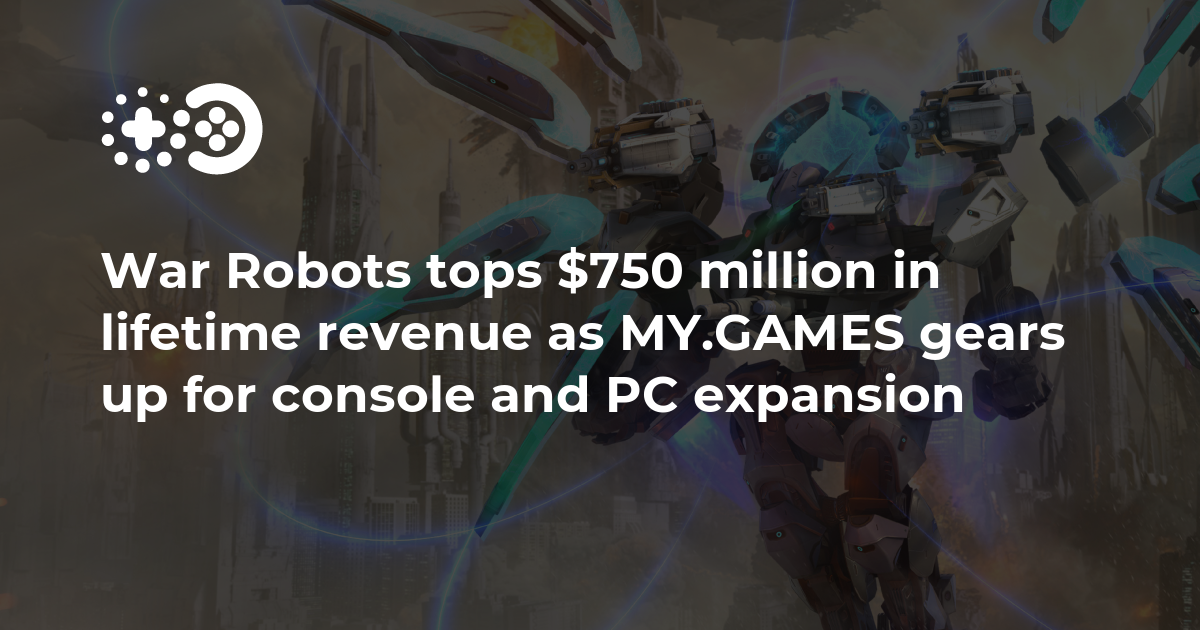
War Robots Tops $750 Million in Lifetime Revenue
The mobile mech shooter War Robots has surpassed $750 million in lifetime revenue since its initial launch in April 2014.
- The mobile mech shooter War Robots has surpassed $750 million in lifetime revenue since its April 2014 launch.
- The game added over 30 million new players in the year leading up to April 2023, marking a 40% year-over-year growth rate.
- War Robots currently holds a total registered user base of over 200 million, including a core group of 6 million players active for at least two years.

GDC Shakeups
The global gaming industry is currently undergoing a period of intense strategic realignment, characterized by shifting regulatory landscapes, the integration of emerging technologies, and a pivot toward creator-led ecosystems.
- Epic Games is pivoting Fortnite into a creator-driven metaverse by integrating the Unreal Editor and a revenue-sharing model to directly challenge Roblox's market dominance.
- Tencent is shifting its strategy from external M&A toward internal development of high-fidelity, cross-platform titles to mitigate geopolitical risks and increase its international market share.
- Regulatory scrutiny regarding major industry acquisitions, such as Microsoft’s bid for Activision Blizzard, is easing, suggesting a period of stabilization for market consolidation.
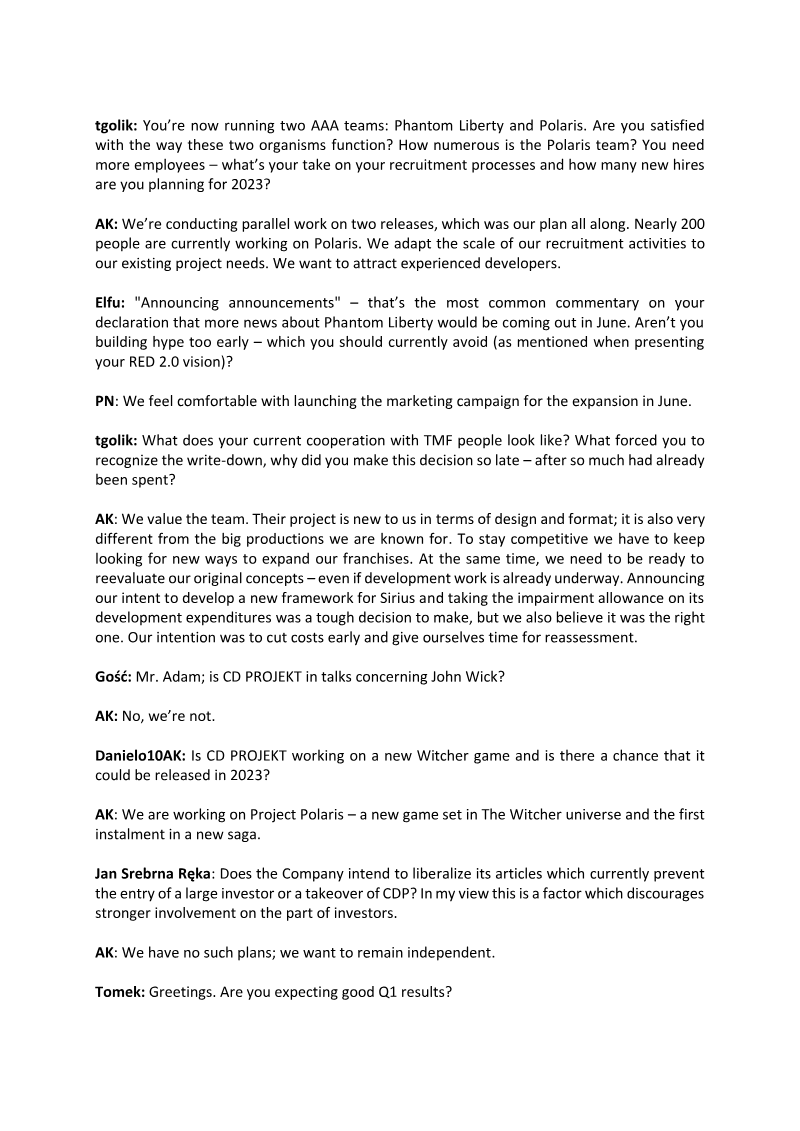


CD PROJEKT Group Earnings Report 2022: Individual Investors Chat
The CD PROJEKT Group 2022 earnings report investor chat serves as a platform for leadership to address shareholder inquiries regarding the company’s financial health, project pipelines, and strategic direction.
- CD PROJEKT is transitioning to a multi-project development model using Unreal Engine 5, prioritizing long-term franchise growth while maintaining corporate independence.
- The Cyberpunk 2077 expansion, Phantom Liberty, is scheduled for a 2023 release on next-generation consoles and PC, supported by a dedicated team of over 330 staff.
- Project Polaris, the first title in the new Witcher saga, is currently in development with approximately 200 dedicated employees.

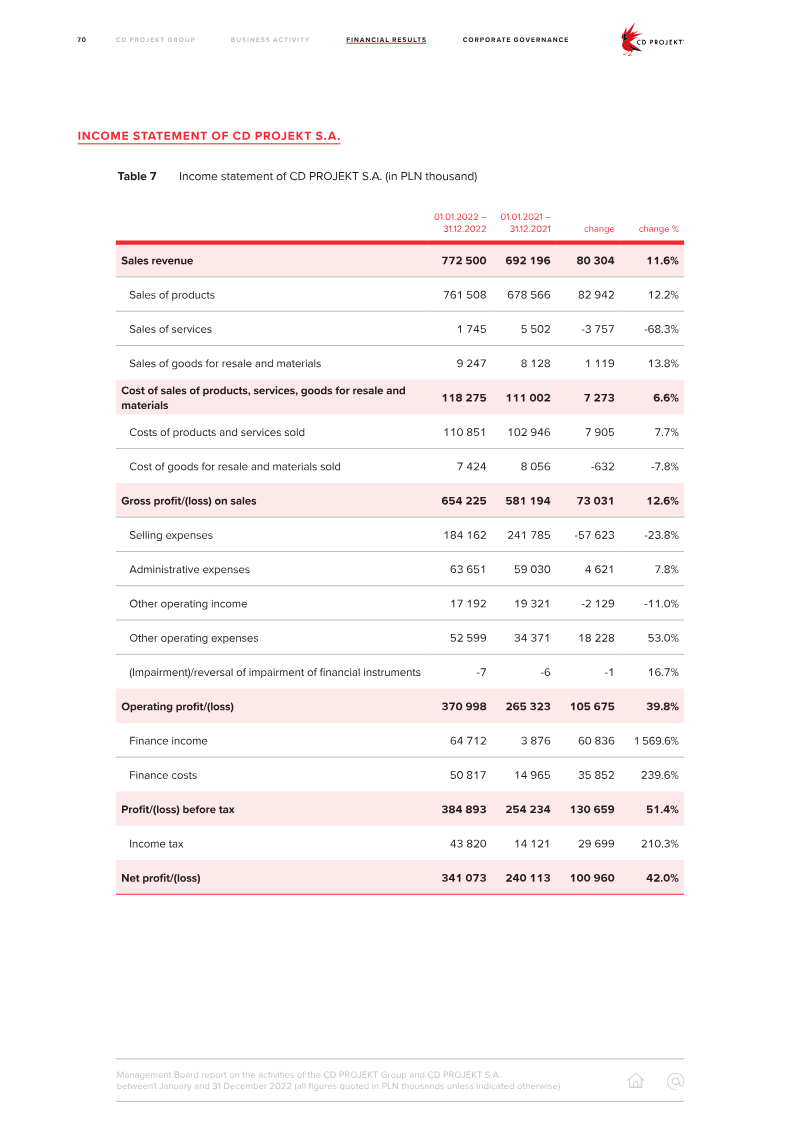
CD PROJEKT Group Management Board Report on Activities in 2022
CD PROJEKT Group’s 2022 activities centered on a strategic pivot toward long-term growth, characterized by the expansion of its core The Witcher and Cyberpunk franchises and a transition to a dual-franchise development model.
- CD PROJEKT transitioned to a dual-franchise development model, centering future production on The Witcher trilogy and Cyberpunk while initiating a third proprietary IP, Hadar.
- The company secured a 15-year licensing agreement to shift its future development pipeline to Epic Games' Unreal Engine 5.
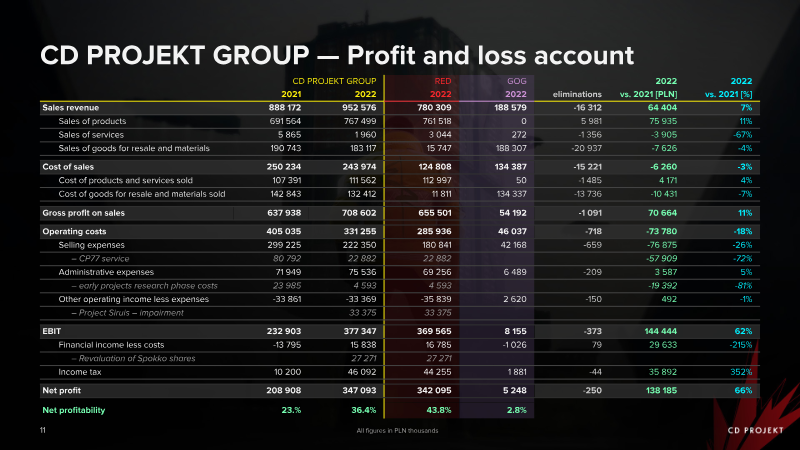
- Net profit increased by 66.1% to PLN 347 million in 2022, supported by the recovery of the GOG.COM segment and sustained sales of core titles.


CD PROJEKT Group FY 2022 Earnings Presentation
The CD PROJEKT Group fiscal year 2022 earnings presentation outlines the company’s strategic transition toward parallel development cycles and long-term product growth.
- CD PROJEKT Group reported a net profit of 347 million PLN in 2022, a 66% increase over the previous year, with total sales revenue growing 7% to 952 million PLN.
- The company transitioned to a parallel development model, supporting multiple concurrent projects including the Phantom Liberty expansion and the next installment in The Witcher series.
- Operating costs decreased by 18% in 2022, driven by lower selling expenses and reduced service costs associated with Cyberpunk 2077.
Unreal Editor for Fortnite: A Game Changer
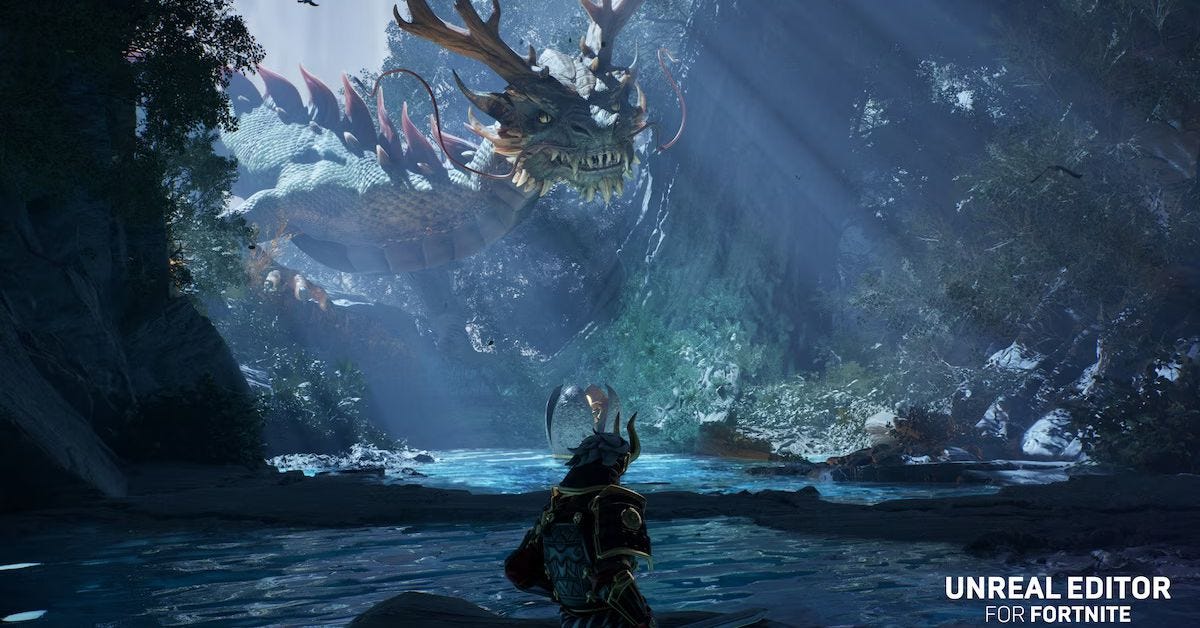
The introduction of Unreal Editor for Fortnite (UEFN) represents a significant shift in the free-to-play (F2P) gaming landscape, positioning Epic Games to compete directly with established creator-led platforms like Roblox.
- Epic Games launched the Unreal Editor for Fortnite (UEFN), a platform that enables creators to build multiplayer experiences using professional-grade Unreal Engine tools within the Fortnite ecosystem.
- The UEFN ecosystem aims to compete with Roblox by offering a path for developers to transition from creative platform tools to professional C++ development, addressing the career longevity concerns of creators.
- Epic Games introduced 'Fab,' a unified digital asset store for UEFN that shares 88% of revenue back to developers, while Fortnite creators are incentivized through a model that rewards engagement and retention.
Succeed by Failing – A Game Dev’s Journey Into a Mobile Dev Ops Tool Chain - Mac Clark, Sauce Labs.
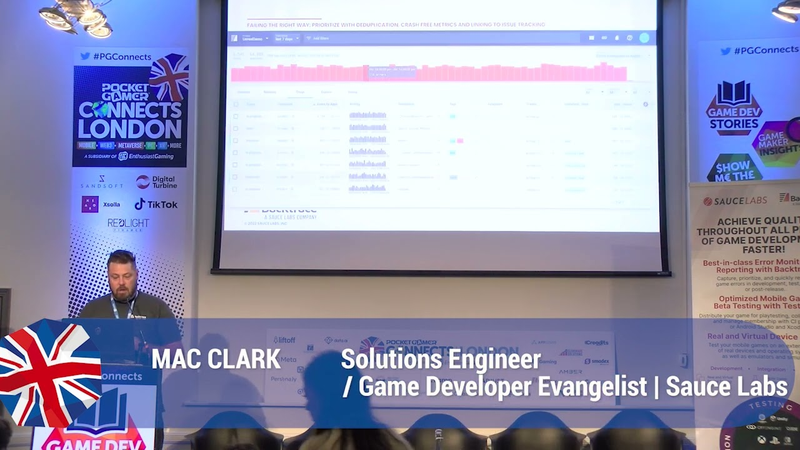
The primary objective of this presentation is to provide game developers with a framework for integrating mobile DevOps toolchains to improve game quality, stability, and long-term success.
- Technical stability is a primary driver of player retention, as games with ratings below three stars suffer significant declines in conversion rates and require higher marketing spend to compensate for poor sentiment.
- Implementing automated testing and real-time monitoring tools like Backtrace can reduce the mean time to detection and resolution of crashes by up to 70% through automated fingerprinting and call stack analysis.
- Developers should adopt a 'shift left and shift right' strategy, integrating automated testing during the development phase and utilizing real-time analytics once the game is in production.
Game Designer to Player Advocate: Trent Oster of Beamdog
The evolution of the gaming industry from the shareware era to the modern live-service landscape is best understood through the career trajectory of Trent Oster, a co-founder of BioWare and current leader of Beamdog.
- Modern game development efficiency is best achieved by adopting standardized engines like Unreal rather than building proprietary technology from scratch.
- Scaling a studio to approximately 70 employees requires a transition from micromanagement to strategic advocacy, specifically focusing on protecting staff from unsustainable labor practices.
- Studios can maintain creative independence from corporate publishers by using the revitalization of legacy titles to generate the cash flow necessary to fund original intellectual property like MythForce.

People Can Aviators of Gamedev: New Strategy, New Opening
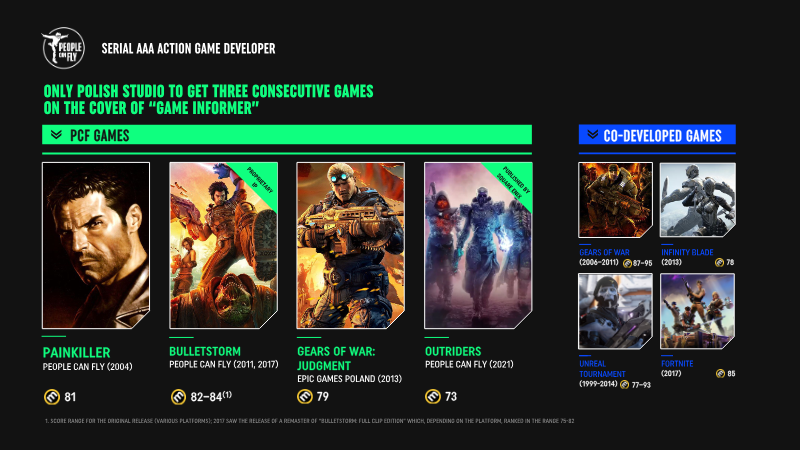
People Can Fly (PCF) Group is a veteran developer specializing in AAA action and shooter video games, currently executing a strategic transition from a work-for-hire model toward self-publishing.
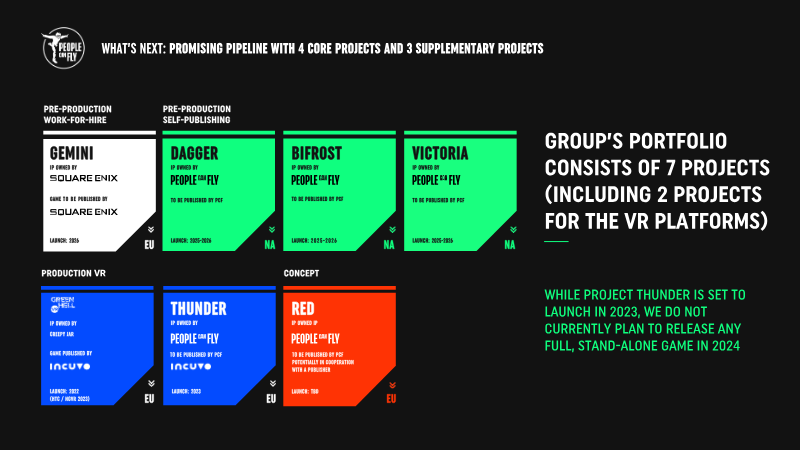
- People Can Fly is shifting its business model from a work-for-hire structure to self-publishing, aiming for the majority of future revenue to come from its own proprietary IP.
- The company targets 3.0 billion PLN in cumulative revenue for the 2023–2027 period, building on 608 million PLN in revenue and 185 million PLN in EBITDA reported between 2018 and 2022.
- The development pipeline includes four core AAA titles—Gemini, Dagger, Bifrost, and Victoria—scheduled for release between 2025 and 2026.