Unreal
Game
Documents about Unreal
Building the Next Game-as-a-Platform
The evolution of gaming platforms is shifting toward a model where user-generated content serves as the primary engine for long-term engagement.
- The industry is shifting toward a 'mod-first' philosophy that replaces high-barrier professional engines with accessible, iterative tools that allow users to remix existing assets.
- Platforms are integrating development tools directly into the gameplay loop to minimize the 'quantum of creation,' enabling users to produce and share bite-sized content instantly.
- Long-term platform viability depends on a hybrid monetization model that utilizes automated, three-way revenue splits to fairly compensate original creators and contributors.

Zoned Teams With 5-hour ENERGY for Fortnite Streamer Competition
The marketing and advertising agency Zoned, a subsidiary of GameSquare, has partnered with 5-hour ENERGY to launch a streamer-led community competition titled Flavor Wars.
- GameSquare-owned agency Zoned has partnered with 5-hour ENERGY to launch 'Flavor Wars,' a custom streamer competition built within the Unreal Editor for Fortnite (UEFN).
- The competition features a $10,000 USD total prize pool and is led by Fortnite streamers CouRage, LEGIQN, and Sparkles_QT.
- The custom map divides gameplay into three zones themed after 5-hour ENERGY flavors: Apple Bash, Pineapple Charge, and Rocket Raspberry.

Zoned Signs Partnerships With Topgolf, DairyMax, and More
Zoned, a gaming-focused marketing agency owned by GameSquare, has secured a series of new brand partnerships that are projected to generate $3 million in revenue.
- Zoned, a gaming-focused marketing agency owned by GameSquare, has secured new partnerships expected to generate $3 million in revenue.
- The agency is launching extensive marketing campaigns for Topgolf and DairyMAX as part of its new business growth.
- Zoned is also developing upcoming projects with various global sports, media, and entertainment companies, though specific names and financial terms for these deals remain undisclosed.
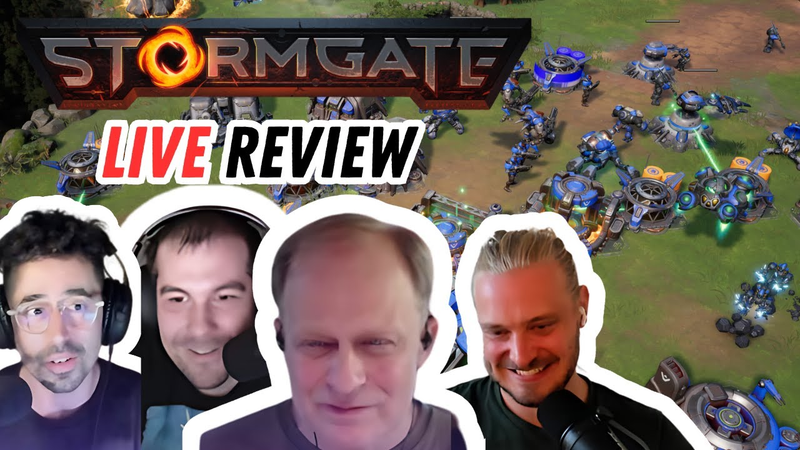
Inside Stormgate with Tim Morten: In-Depth Live Review & Gameplay with Insights
Frost Giant Studios is positioning Stormgate as a modern successor to the classic real-time strategy genre, specifically targeting the legacy of Blizzard titles like StarCraft and Warcraft.
- Frost Giant Studios is developing Stormgate as a free-to-play real-time strategy game using Unreal Engine and proprietary SnowPlay technology to manage high unit counts and network complexity.
- The monetization model rejects pay-to-win mechanics in favor of à la carte purchases for campaign expansions, cooperative commanders, and cosmetic items.
- The studio maintains creative independence through a combination of private investment and crowdfunding, bypassing traditional publishing deals to avoid KPI-heavy mobile gaming metrics.

TWiG #293: Twitch Loses $1B while Apple Admits the Truth about VR
The video game industry is currently navigating a period of strategic recalibration, defined by the tension between traditional licensing models and the pursuit of sustainable platform-based growth.
- Twitch continues to lose approximately $1 billion annually due to an ineffective advertising model that fails to convert its live-streaming audience into game players.
- Hasbro’s mobile title Monopoly Go generated $3 billion in revenue, demonstrating the high-earning potential of leveraging established IP through mobile licensing.
- Investment capital is shifting away from individual game titles toward platforms and distribution infrastructure, exemplified by the growth of the Unreal Editor for Fortnite ecosystem.
UEFN Magic and Frustrations with Game Industry Legends
The Unreal Editor for Fortnite (UEFN) represents a fundamental shift in game development, functioning as a high-velocity environment that allows creators to bypass the multi-year production cycles typical of AAA gaming.
- UEFN enables rapid prototyping by bypassing traditional multi-year AAA production cycles and leveraging Fortnite’s existing player base as a distribution platform.
- Successful UEFN islands can achieve up to 90% return on investment due to significantly lower server and user acquisition costs compared to standalone titles.
- The platform currently operates as a power-law market where success is driven by community-centric, social-first experiences rather than traditional top-down development models.
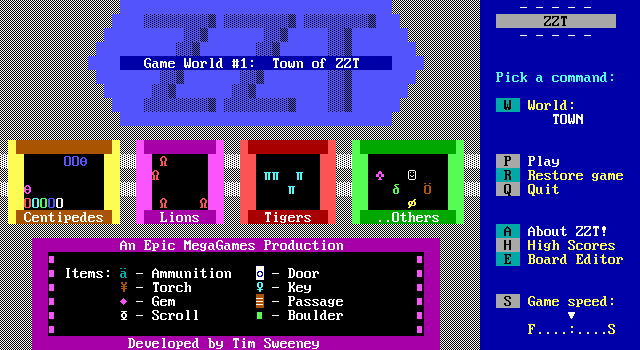
The Founding of Epic Games and the Quest to Build the Metaverse
The evolution of Epic Games from a small 2D developer to a central architect of the metaverse is rooted in a consistent philosophy of empowering user-generated content and accessible game-creation tools.
- Epic Games, founded by Tim Sweeney in 1991, initially focused on 2D games like ZZT before shifting to 3D with the 1998 hit "Unreal," which sold 1.5 million units by its fourth anniversary.
- The "Unreal Engine," which powered the game "Unreal," was Epic's primary investment, costing about $3 million ($6 million in 2024 dollars) to produce, rather than the game itself.
- Epic Games successfully built a business around licensing the Unreal Engine starting in 1996, generating $250,000–$350,000 in upfront payments and 5%–7% royalties from licensees.

3D Toon Rendering in 'Hi-Fi RUSH'
Hi-Fi RUSH achieves a distinct, 2D-inspired aesthetic within Unreal Engine 4 by utilizing a custom deferred toon renderer that decouples shading from geometry.
- Tango Gameworks achieved a consistent 2D toon aesthetic for both characters and environments in 'Hi-Fi RUSH' by customizing Unreal Engine 4 to decouple toon rendering from standard geometry rendering.
- To maintain a rock-solid 60fps required for rhythm-based gameplay, the team integrated deferred lighting and toon post-processing into a single, performance-optimized deferred toon rendering pass.
- The developers utilized a 'comic shader' that applies half-tone dots and hatching lines to surfaces, using world-space UVs to ensure these textures appear printed on polygonal surfaces rather than floating in screen space.

June 2024 Steam Launches, Deconstructed
June 2024 Steam launch data reveals a market dominated by high-performing free-to-play (F2P) titles and viral indie hits, while mid-to-large budget traditional releases face increasing pressure to recoup costs.
- Nexon’s free-to-play shooter The First Descendant dominated June 2024 with an estimated $35 million in gross revenue, driven by aggressive monetization and a global player base.
- Viral indie titles outperformed expectations, with Chained Together selling 2 million units and Bodycam reaching 400,000 units by leveraging Unreal Engine 5 aesthetics.
- NetEase’s Once Human achieved strong engagement with concurrent user peaks exceeding 160,000, fueled by high interest from both the U.S. and Chinese markets.
Making Connections: Real-Time Path-Traced Light Transport in Game Engines
Real-time path tracing has reached a critical inflection point in modern game development, enabling the rendering of complex, dynamic scenes with thousands of light sources at a consistent 60 frames per second.
- ReSTIR (Reservoir-based Spatio-Temporal Importance Sampling) enables real-time path tracing in Unreal Engine 5 by using statistical resampling to select and reuse the most essential light paths, significantly reducing the computational cost of light transport.
- Implementing a state machine-based control flow for shaders—consolidating random number generation and resampling code into single locations—improves performance by 20% to 40% by optimizing instruction cache usage.
- ReSTIR allows for GPU-driven lighting that replaces traditional N by M complexity occluder-receiver tracking with statistical sampling, eliminating the need for expensive per-light passes and reducing CPU draw call overhead.

The Next Era of Modding
The gaming industry is undergoing a fundamental transformation as user-generated content transitions from a hobbyist pursuit into a professionalized, revenue-generating pillar of game development.
- User-generated content is shifting from a hobbyist pursuit to a professionalized, revenue-generating pillar that helps studios mitigate the industry-wide content treadmill.
- Modding is increasingly viewed as a net-positive business strategy that reduces production costs and development timelines compared to traditional AAA expansion models.
- Console ecosystems are the primary drivers of market expansion, accounting for over 65 percent of all mod downloads for major titles.
People Can Fly: Q1 2024 Financial Results
People Can Fly’s financial results for the first quarter of 2024 demonstrate a significant improvement in profitability, characterized by a 63% year-over-year revenue increase to PLN 56.8 million (€13.1 million).
- People Can Fly achieved a 63% year-over-year revenue increase to PLN 56.8 million in Q1 2024, narrowing its net loss to PLN 864k and reaching an operating profit of PLN 3.9 million.
- The studio is managing a five-project pipeline, including Project Gemini (Square Enix), Project Maverick (Microsoft), two Krafton-partnered titles (Bifrost and Victoria), and Project Red, which is currently seeking a publisher.
- The launch of Bulletstorm VR was deemed unsatisfactory, resulting in the termination of the agreement with Incuvo and People Can Fly taking full control of the title's future.