The Walking Dead
Documents about The Walking Dead

2019 Predictions: Pokemon Go Will Get a Magical Rival
The mobile gaming industry in 2019 faces a landscape where location-based games (LBGs) remain dominated by a single incumbent, while pure augmented reality (AR) titles struggle to gain traction.
- Pokemon Go remains the dominant leader in the location-based game (LBG) genre, maintaining a top-10 grossing performance years after its initial launch.
- The LBG market experienced significant growth in 2018 following Google's decision to open its Maps API to developers, enabling titles like Jurassic World Alive, The Walking Dead: Our World, and Ghostbusters World.
- Pokemon Go’s success is driven by its global brand reach, with a balanced revenue distribution where 30% comes from the US, 30% from Japan, and 40% from the rest of the world, unlike competitors that rely on the US for roughly 50% of their revenue.
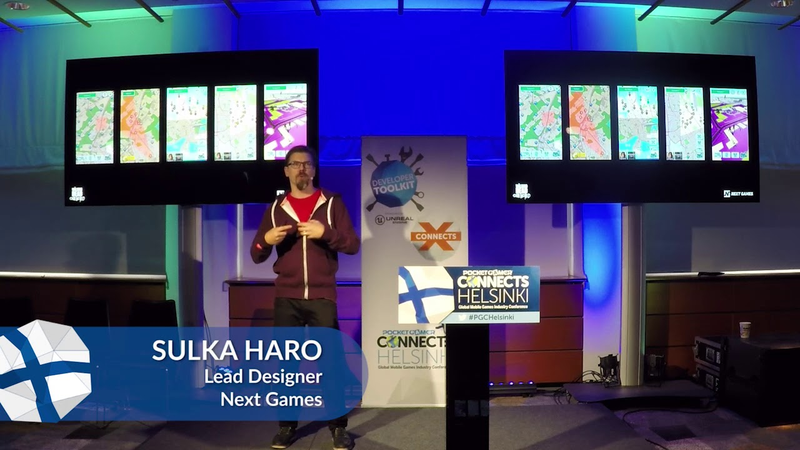
Innovating new location-based gameplay in The Walking Dead: Our World
The development of The Walking Dead: Our World focused on innovating within the location-based mobile gaming genre by prioritizing social cooperation and accessibility over traditional competitive mechanics.
- The Walking Dead: Our World shifts the location-based genre away from constant movement by allowing meaningful gameplay while stationary, addressing the 'traveling salesman' problem found in earlier titles.
- The game features 10-to-15-second mission bursts in a first-person shooter perspective, designed to accommodate short play sessions during commutes or adverse weather.
- Social cooperation is facilitated through a guild system where players complete shared 'bingo board' tasks and use virtual flares to teleport teammates to rare mission locations.
Visual Novels: Narrative Design in Virtue's Last Reward
Visual novels represent a distinct sub-genre of adventure games defined by a primary focus on narrative-driven selectivity.
- Visual novels differentiate themselves from passive media by using narrative-driven selectivity, where player choices fundamentally alter event progression within established rules.
- Advanced narrative design in titles like Virtue's Last Reward and Kamaitachi no Yoru shifts from rigid programming flags to mechanics that require players to apply knowledge gathered across disparate timelines.
- By blurring the line between player intellect and protagonist capabilities, developers can manipulate player discomfort to deepen thematic resonance and narrative immersion.
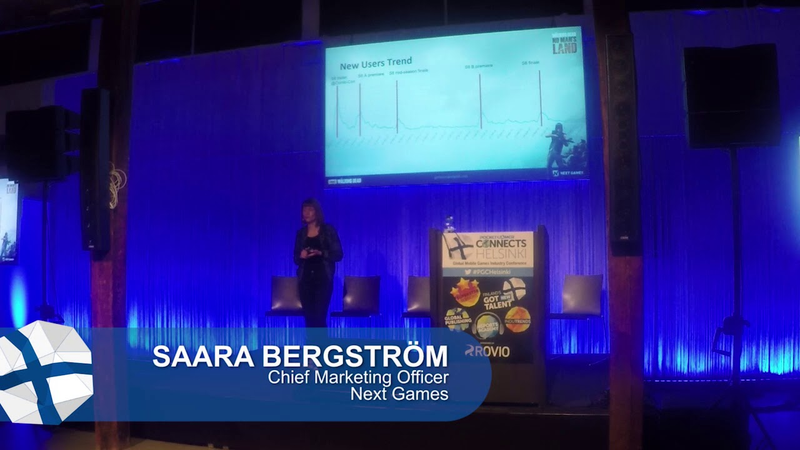
5 things Next Games learned from The Walking Dead: No Man’s Land
Next Games, a mobile developer specializing in licensed entertainment franchises, identifies five core strategic pillars for successfully translating global intellectual property into engaging mobile experiences, based on the development and operation of The Walking Dead: No Man’s Land.
- Synchronize game updates, marketing, and community management with the source material's broadcast schedule to maximize user acquisition and retention.
- Integrate IP owners as core partners rather than external entities to gain access to exclusive content and ensure authentic brand representation.
- Conduct deep audience research to identify specific demographics, such as younger fans prone to FOMO, and tailor game mechanics to their behavioral tendencies.
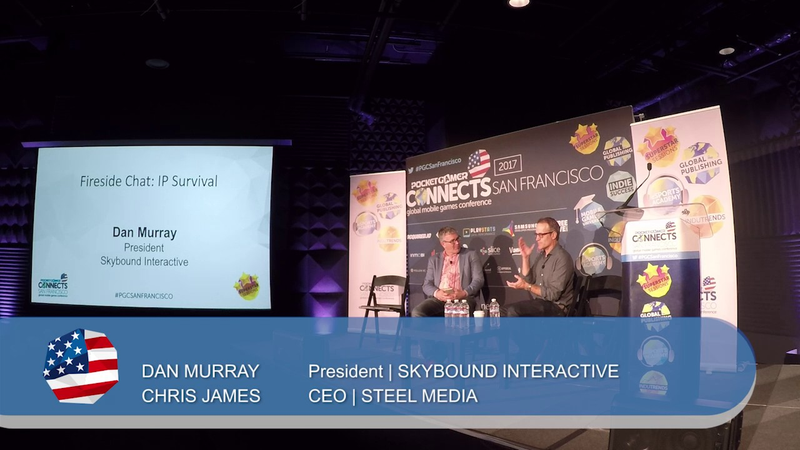
Skybound's Dan Murray on working with IP - Survival 101
Skybound President Dan Murray outlines the strategic approach to managing intellectual property (IP) within the gaming industry, emphasizing the importance of authenticity, creator-led business models, and deep collaboration between licensors and developers.
- Successful IP-based games require moving beyond superficial 'IP slaps' by ensuring mechanics and narrative spirit are deeply integrated with the source material.
- Skybound utilizes a 'wheel of awesome' business model, retaining core rights to properties like The Walking Dead to maintain control across film, television, and gaming adaptations.
- Licensing success relies on replacing siloed relationships with proactive, direct collaboration between IP holders and developers to ensure both narrative consistency and mechanical innovation.
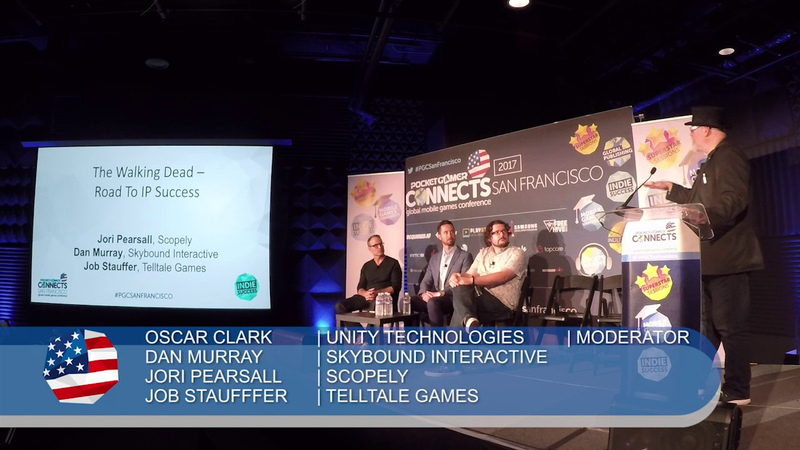
The Walking Dead – Road To IP Success
Effective intellectual property management in the gaming industry requires a shift from traditional, restrictive licensing models toward deep, collaborative partnerships.
- Successful IP management requires shifting from restrictive licensing models to collaborative partnerships that treat developers as strategic allies rather than vendors.
- Maintaining narrative integrity and brand authenticity is best achieved by granting developers creative autonomy while ensuring iterative communication with original creators.
- IP holders should employ a lean, agile editorial team to oversee adaptations, prioritizing creative freedom and player-driven choice over rigid, innovation-stifling constraints.
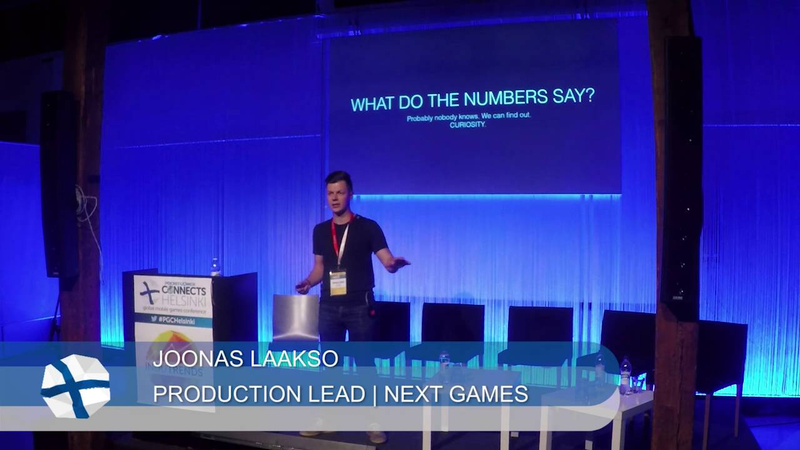
How to make good decisions in games development with lessons from The Walking Dead: No Man's Land
Effective game development relies on fostering a culture of empowered decision-making rather than relying on rigid, top-down bureaucratic processes.
- Empower teams by shifting from top-down bureaucracy to a culture of shared values, such as courage, caring, and curiosity, which fosters autonomy and alignment.
- Implement a four-step decision-making framework: evaluate value to the user, value to the business, opportunity cost of the task, and the risk of potential failure.
- Prioritize data-driven validation over personal assumptions, using analytics to verify hunches and confirm that features genuinely delight players.

How The Walking Dead mobile game was brought to life
The development of the mobile title The Walking Dead: Road to Survival represents a strategic collaboration between Skybound Entertainment, Scopely, and IUGO to translate a high-profile media franchise into a successful free-to-play mobile experience.
- The Walking Dead: Road to Survival achieved over 20 million downloads in its first year and maintained a consistent position in the top 50 grossing charts.
- The development team utilized a 'lean' philosophy that treated iterative failure as a necessary tool for refining technology and live-operations processes.
- To maintain narrative integrity, developers used backstory from the Governor novels to create a parallel story structure that allowed for consistent content updates without violating the core comic book canon.
iOS Gaming Leaders: October 2015
This analysis provides a performance overview of the iOS gaming market for October 2015, utilizing data from the Store Intelligence platform to track downloads, revenue, and growth trends across the United States and international markets.
- Game of War overtook Clash of Clans as the top-grossing iOS game worldwide in October 2015, driven by an 8% month-over-month revenue increase while Clash of Clans saw a 1% decline.
- Smashy Road: Wanted became the most downloaded iOS game in the U.S. for October 2015, gaining nearly four million downloads over the previous month.
- Electronic Arts' Need for Speed outperformed Smashy Road: Wanted internationally by approximately 1.5 million downloads, despite losing the top spot in the U.S. market.

Completing Mission 4 in Episode 3 Prison Voices in The Walking Dead: No Man's Land
Completing Mission 4 of Episode 3 in The Walking Dead: No Man's Land requires a strategic departure from standard squad compositions.
- Mission 4 of Episode 3 requires abandoning standard balanced squad compositions in favor of a specialized, offensive-heavy loadout to counter high-density walker waves.
- The primary objective is to secure locations by closing doors to block spawn points, a task that leaves the acting unit vulnerable for multiple turns.
- Armored enemies necessitate a team structure that prioritizes high-damage output over defensive tanking capabilities.

Monetizer: The Walking Dead: No Man's Land
The Walking Dead: No Man's Land, developed by Next Games, utilizes a hybrid monetization model common in mobile strategy and RPG titles.
- The Walking Dead: No Man's Land, developed by Next Games, maintains a consistent position within the top 50 grossing mobile charts in major markets like the United States.
- The game utilizes a hybrid monetization model that pairs traditional time-gating for base-building and survivor training with hard currency (gold) bypass options.
- Revenue is driven by a tiered currency purchasing structure and starter bundles that provide immediate utility, such as legendary equipment and additional squad slots.
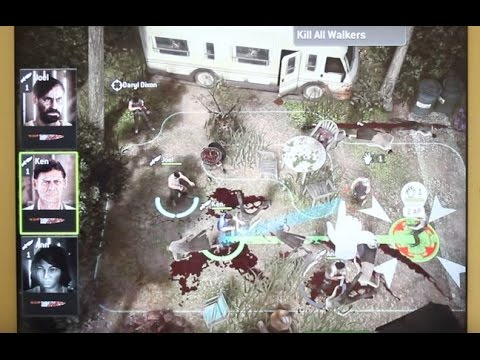
FTUE: The Walking Dead: No Man's Land
The First Time User Experience (FTUE) for the mobile strategy game The Walking Dead: No Man’s Land demonstrates a structured, multi-layered onboarding process designed to acclimate players to both turn-based combat and base-management mechanics.
- The Walking Dead: No Man’s Land utilizes a multi-layered FTUE to bridge the gap between turn-based combat and base-management mechanics, specifically targeting a mass-market audience drawn by the intellectual property.
- The combat tutorial emphasizes mission objectives over direct engagement, teaching players to manage action points and evaluate the risk-reward ratio of fighting versus reaching exit points.
- The game incorporates a base-building meta-layer inspired by Clash of Clans, introducing resource management, time-gating, and character progression to establish a long-term core loop.