The Walking Dead
28 documents in the library are about The Walking Dead, from writers such as PocketGamer.biz, Extra Credits and Game Developers Conference, the newest from 2026. Each has a summary and key insights with the page they come from.

The Walking Dead: Season One (also known as The Walking Dead: The Game) is an episodic interactive drama graphic adventure video game developed and published by Telltale Games. Based on Robert Kirkman's The Walking Dead comic book series, the game consists of five episodes, released between April and November 2012. It is available for Android, iOS, Kindle Fire HDX, Microsoft Windows, Mac OS X, PlayStation 3, PlayStation Vita, Xbox 360, PlayStation 4 and Xbox One. The game is the first of The Walking Dead video game series published by Telltale.
- Released
- Apr 24, 2012
- Developer
- Telltale Games
- Publisher
- Sony Computer Entertainment
- Genres
- Point-and-click, Puzzle, Adventure
- Platforms
- PlayStation 3, PlayStation 4, Linux, Android, PC (Microsoft Windows), iOS, Mac, PlayStation Vita
- Links
- Wikipedia
Game data from IGDB.com
Key figures
The Meta Quest ecosystem demonstrates significant commercial viability, with one-third of curated store titles generating millions in revenue and hits like The Walking Dead: Saints & Sinners exceeding $50 million in lifetime revenue.
GameDiscoverCo, 2024 · Steam Next Fest: Which Games Were Hot & Why?
Titles utilizing location-based features, such as The Walking Dead: Our World, have achieved day-seven retention rates 54% higher than the top 50 US game average.
PocketGamer.biz, 2019 · The Nuts and Bolts of Real World AR Gaming, p. 1
The Walking Dead: Road to Survival achieved over 20 million downloads in its first year and maintained a consistent position in the top 50 grossing charts.
PocketGamer.biz, 2016 · How The Walking Dead mobile game was brought to life, p. 2
Documents about The Walking Dead
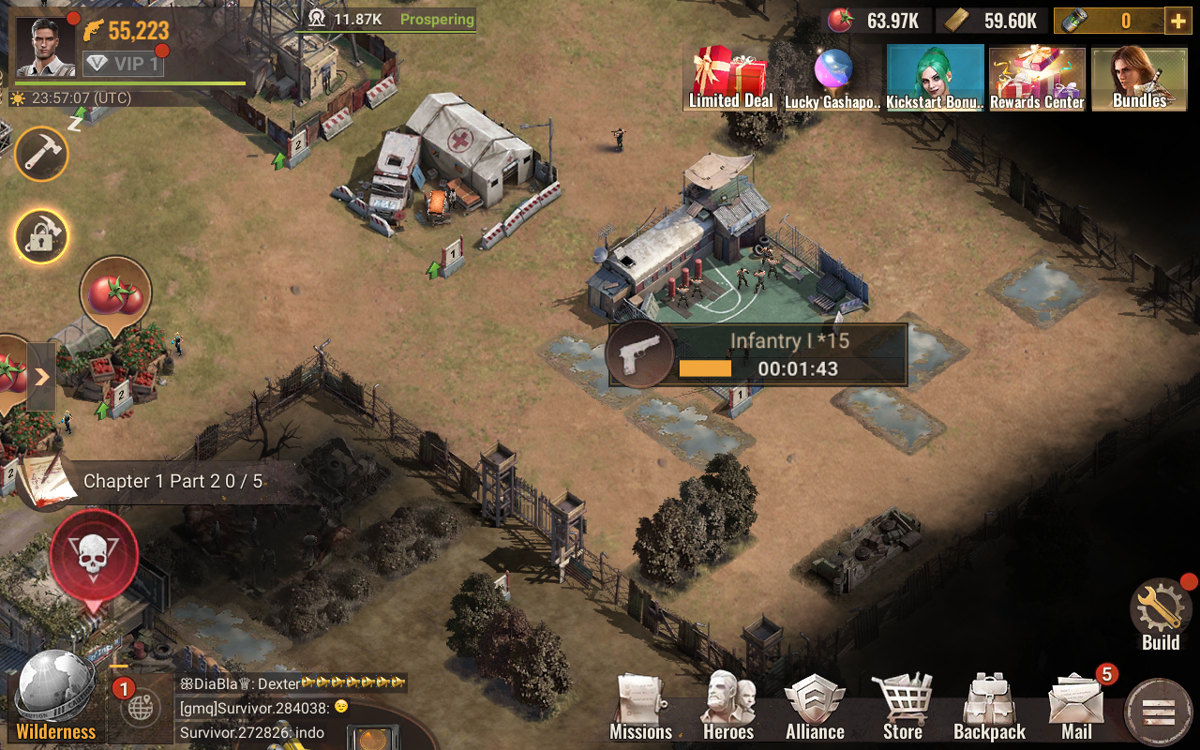
State of Survival: Revenue and Player Statistics (2019 - 2026)
State of Survival, a 4X zombie strategy game published by FunPlus International AG, has transitioned from a high-growth title into a mature, monetization-focused asset.
- State of Survival has generated $1.69 billion in lifetime revenue since its 2019 launch, with annual revenue declining from a $516 million peak in 2021 to $63 million in 2025.
- The game has experienced a significant contraction in scale, with monthly downloads, revenue, and monthly active users (MAU) down by 95%, 93%, and 91% respectively from their historical peaks.
- As of 2026, the game maintains a stable, mature player base of 5 million monthly active users and generates an average daily revenue per user (ARPDAU) of $0.79.
Skybound cuts back indie publishing to focus on Invincible VS and The Walking Dead
Skybound is fundamentally restructuring its business model to prioritize the internal development of its core intellectual properties, specifically Invincible and The Walking Dead, over the publishing of third-party indie titles.
- Skybound is pivoting its business model away from third-party indie publishing to focus exclusively on internal development of its core intellectual properties, specifically Invincible and The Walking Dead.
- The company has established an internal studio, Quarter Up, to maintain direct creative control and ensure video game adaptations align with the quality and tone of its existing comic and television franchises.
- This strategic shift aims to mitigate the risks associated with licensed game development and prevent the brand dilution often caused by low-quality, third-party titles.
Steam Next Fest: Which Games Were Hot & Why?
This analysis examines the performance and emerging trends of the October 2022 Steam Next Fest, alongside broader ecosystem updates for Meta Quest and the general gaming industry.
- Steam Next Fest demo performance follows a 'hockey-stick' curve where interest is highly concentrated; only seven games exceeded 1,000 concurrent users (CCU) during the October 2022 event, with the top title, Undecember, reaching over 16,500 CCU.
- High CCU performance during Steam Next Fest serves as a reliable leading indicator for a game's eventual commercial success upon full release.
- Valve’s decision to decouple the Steam badge from demo play has successfully eliminated bot-driven inflation, resulting in more accurate metrics for player interest.
Plus: Resident Evil 4 Takes Off Like a Rocket
This analysis examines the commercial performance of recent video game releases and forecasts upcoming market trends for the final week of March 2023.
- The Resident Evil 4 remake set a new franchise record on Steam with 140,000 peak concurrent users, significantly outperforming Resident Evil Village’s 107,000 peak.
- Projections estimate that the Resident Evil 4 remake will achieve between 3 and 4 million unit sales on Steam during its first week of release.
- The PC port of The Last of Us Part I is the most anticipated upcoming release, entering the market with 105,000 Steam followers.
Dwarf Fortress and Ixion Debut Analysis
The early December 2022 period highlights a significant trend on Steam where deep, complex strategy and simulation titles are dominating player interest and driving high Day 1 revenue.
- Dwarf Fortress achieved over 160,000 units sold within 24 hours of its early December 2022 release, peaking at over 22,000 concurrent users.
- Complex simulation titles are seeing high market demand, evidenced by Ixion reaching 16,000 concurrent users despite reported game balancing issues.
- New release performance is highly polarized; while Choo-Choo Charles saw strong engagement, Hello Neighbor 2 underperformed with fewer than 700 concurrent users.

Jacob Navok: How MILEs Will Transform Entertainment
Massively Interactive Live Events, or MILEs, represent a fundamental shift in digital entertainment by merging the passive consumption of streaming media with the agency of interactive gaming.
- Massively Interactive Live Events (MILEs) merge passive streaming with interactive gaming, allowing millions of concurrent users to collectively influence narrative outcomes in real-time.
- MILEs bypass high-end hardware requirements by utilizing cloud-native technology to stream high-fidelity, persistent narratives directly to mobile devices.
- The format functions as a community-driven spectacle that leverages established intellectual properties, such as The Walking Dead, to capture non-traditional gaming audiences.
Social Depth of Location-Based Play in 'The Walking Dead: Our World'
The Walking Dead: Our World demonstrates how mobile developers can successfully integrate location-based play with social mechanics by prioritizing accessibility and collaborative engagement.
- Collaborative guild-based challenges drive engagement for 90% of daily active users, serving as the primary engine for both player retention and monetization.
- The game utilizes a 'play-everywhere' design model that ensures consistent gameplay regardless of the user's physical environment, prioritizing accessibility over complex spatial competition.
- The core gameplay loop consists of 15-second, bite-sized combat and scavenging encounters, which prototyping proved more effective than analysis-heavy mechanics for mobile contexts.
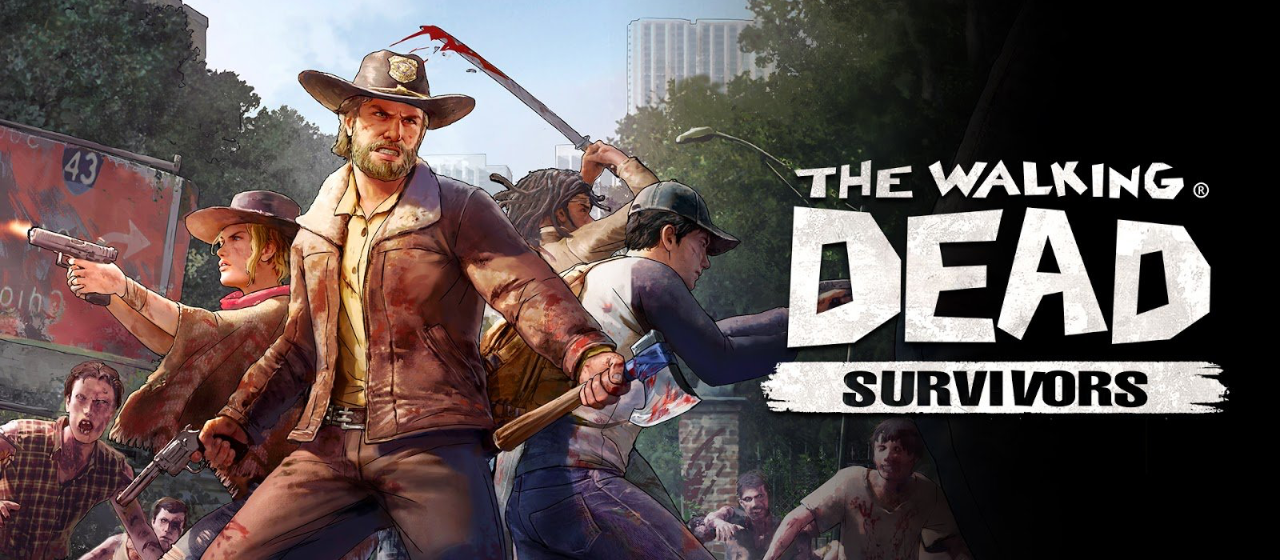
The Walking Dead: Survivors – A Player Perspective on Monetization
The mobile title The Walking Dead: Survivors functions as a 4X strategy game that shares significant structural and design similarities with established genre competitors like State of Survival.
- The Walking Dead: Survivors utilizes a 4x strategy framework highly similar to KingsGroup Holdings’ State of Survival, featuring comparable FTUE, world map mechanics, and tower defense-style campaign elements.
- Monetization is heavily driven by character acquisition and development, with specific IAP recommendations and VIP system benefits centered on obtaining the character Michonne.
- The game employs a shard-based gacha system for character summoning and star-level upgrades, requiring premium currency or tickets that can be purchased via bulk discount bundles.
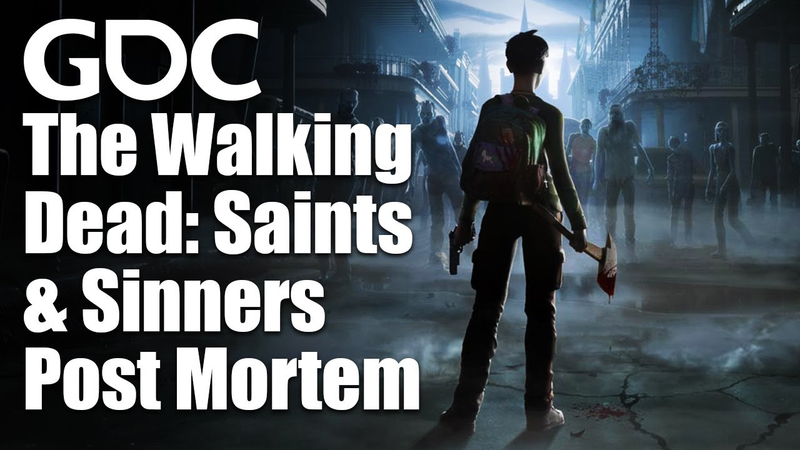
Making Great VR Games: A Postmortem on Skydance Interactive's The Walking Dead: Saints & Sinners
The Walking Dead: Saints & Sinners demonstrates that the path to successful virtual reality development lies in prioritizing player agency and physical immersion over scripted narrative sequences.
- Successful VR development requires prioritizing player agency and physical immersion through systemic gameplay loops rather than relying on scripted narrative sequences.
- Implementing a tension engine centered on resource scarcity, weapon degradation, and tactile inventory management forces players into high-stress survival cycles that enhance the game's realism.
- VR production timelines and iterative playtesting requirements significantly exceed those of traditional 2D game development due to the need for hardware-specific optimization.
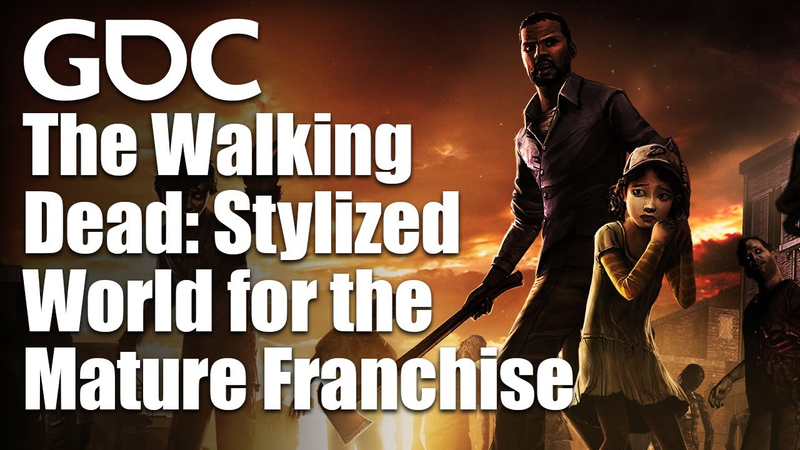
The Walking Dead: Crafting a Stylized World for the Mature Franchise
Telltale Games developed a distinct, stylized visual language for the 2013 release of The Walking Dead to differentiate the title from the saturated market of gritty, realistic zombie games.
- Telltale Games achieved a unique visual identity for The Walking Dead by rejecting the industry-standard gritty, desaturated aesthetic in favor of handcrafted, comic-inspired art that utilized bold silhouettes and high-contrast lighting.
- The production team successfully maintained visual cohesion across 78 environments and 45 characters by creating 2,316 textures that featured 'crafted imperfection' to reflect the series' mature, flawed narrative themes.
- To ensure the game could run on a wide range of platforms, the team imposed strict technical constraints, including a 30,000-vertex limit per environment and the use of vertex lighting instead of per-pixel lighting.

The Trolley Problem - Designs With No Right Answer - Extra Credits
The trolley problem serves as a foundational ethical thought experiment that challenges individuals to weigh the value of human life when faced with limited, often tragic, choices.
- The trolley problem, formalized by philosopher Philippa Foot in 1967, serves as a foundational ethical framework for evaluating the trade-offs between inaction and active intervention in life-or-death scenarios.
- Game designers utilize the trolley problem to move beyond binary morality systems, forcing players to confront their personal ethical codes through irreversible, high-stakes decisions.
- Titles such as Telltale’s The Walking Dead, Life is Strange, BioShock, and Fallout effectively implement this design to prioritize player self-reflection over objective correctness.
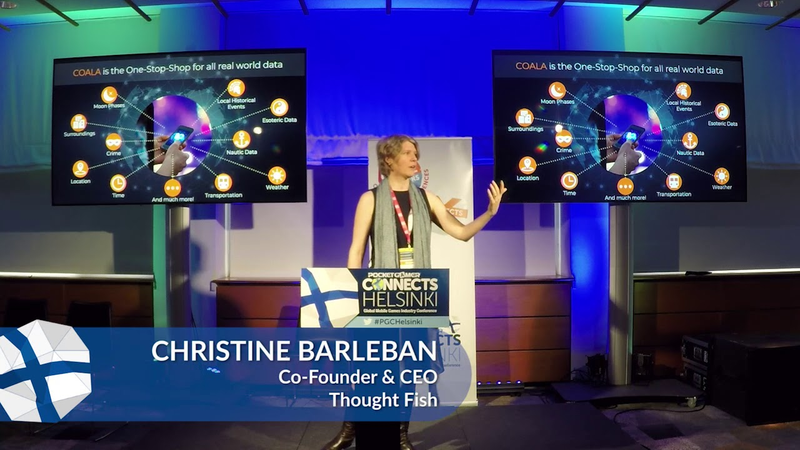
The Nuts and Bolts of Real World AR Gaming
Real-world augmented reality (AR) is emerging as a powerful genre in mobile gaming, serving as a significant driver for user retention and session frequency.
- Integrating real-world data into AR games can increase daily user sessions by 30%.
- Titles utilizing location-based features, such as The Walking Dead: Our World, have achieved day-seven retention rates 54% higher than the top 50 US game average.
- AR should be redefined as a tool for digital products to react to environmental context, such as using weather or moon phases to influence game mechanics, rather than simple camera-based overlays.