The Elder Scrolls Online
10 documents in the library are about The Elder Scrolls Online, from writers such as Game Developers Conference, GameDiscoverCo and Video Games Industry Memo, the newest from 2026. Each has a summary and key insights with the page they come from.

Every legend starts somewhere and in The Elder Scrolls Online, it starts with you. Write your story into a vibrant chapter of Tamriel’s distant past that takes place nearly 1,000 years before the iconic TES V: Skyrim, and discover a world steeped in adventure and possibility.
- Released
- Apr 4, 2014
- Developer
- ZeniMax Online Studios
- Publisher
- Bethesda Softworks
- Genres
- Role-playing (RPG), Adventure
- Platforms
- Google Stadia, Xbox Series X|S, PlayStation 4, PC (Microsoft Windows), PlayStation 5, Mac, Xbox One
- Links
- Wikipedia
Game data from IGDB.com
Documents about The Elder Scrolls Online
ZeniMax Online Studios Leadership to Exit as Part of Xbox Cuts
Recent workforce reductions at Microsoft have resulted in significant leadership turnover at ZeniMax Online Studios.
- ZeniMax Online Studios is undergoing a major leadership transition following the departure of studio head Joe Burba, executive producer Susan Kath, game director Rich Lambert, and production director Ala Diaz.
- The leadership exits are part of a broader reduction of 379 gaming roles across ZeniMax’s Maryland offices, with more than 200 of those cuts specifically impacting ZeniMax Online Studios.
- Josh Henderson and Nick Giacomini have been appointed to lead ZeniMax Online Studios, with the outgoing leadership team remaining in place for a transition period over the next few months.
Xbox Presses Reset
As of July 2026, Xbox has initiated a significant strategic reset in response to persistent financial underperformance and the failure of its long-term Game Pass subscription model.
- Xbox is undergoing a major strategic reset as of July 2026, involving the layoff of 3,200 staff members and the divestment of five game businesses, including Double Fine, Compulsion Games, Ninja Theory, and Undead Labs.
- The Game Pass subscription model failed to meet its 70-million-subscriber target, stagnating at 30 million, which led to the cannibalization of premium sales and a $300 million loss on the day-one launch of Call of Duty.
- Xbox’s hardware install base of 35 million units significantly trails the PlayStation 5’s 94 million, contributing to the conclusion that the company's high-budget premium model is financially unsustainable.

Five Things I Learned From My World of Warcraft Interview
Blizzard Entertainment is evolving the long-running World of Warcraft franchise to maintain relevance for an aging player base while simultaneously attracting new generations.
- Blizzard is shifting World of Warcraft's design to accommodate an aging player base by offering shorter, more accessible content updates every eight weeks alongside traditional long-form gameplay.
- To eliminate the historical six-month content droughts between expansions, Blizzard has moved to a model of empowered, decentralized leadership to enable parallel development across multiple teams.
- The development team is currently working on three expansions simultaneously, with the 12th (Last Titan) and 13th expansions already in active planning stages.
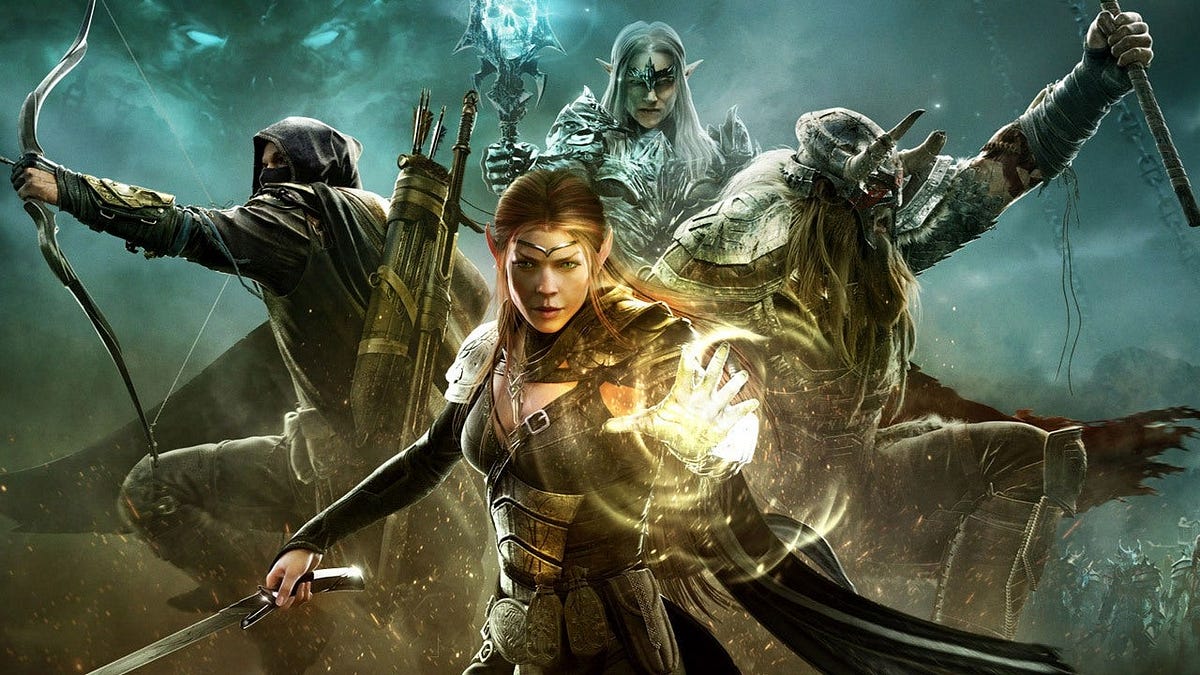
Listen to Your Elder Scrolls
The provided text examines the resilience and strategic evolution of live service games, using The Elder Scrolls Online (TESO) as a primary case study.
- The Elder Scrolls Online has generated $2 billion in lifetime revenue over its decade of operation by prioritizing sustainable community building and flexible engagement.
- Successful live service titles must pivot development priorities to meet player expectations, as demonstrated by TESO’s transition from a tab-target MMO to an action-oriented experience.
- Developers should implement horizontal progression systems and design for 'fickle' audiences to ensure players can easily return to the game after breaks.
Plus: Soulmask, MultiVersus Relaunch Lead This Week's Debuts
This analysis examines the performance of recent video game launches and upcoming releases across PC and console platforms for the final week of May 2024.
- The relaunch of MultiVersus reached 114,000 concurrent users on Steam, though the title faced significant player backlash regarding its new monetization model.
- The survival craft game Soulmask demonstrated strong commercial viability with a successful launch peaking at over 16,000 concurrent users on Steam.
- The Rogue Prince of Persia significantly underperformed market expectations, recording only 850 concurrent users at launch.


Console Title Activity Trends: June 2023
Console title activity in June 2023 reveals a market dominated by established live-service franchises, though major new releases successfully disrupted engagement patterns.
- Fortnite remains the dominant console title, leading the market with 36.1 million monthly active users and 612 million hours of total playtime in June 2023.
- Diablo IV emerged as the primary market disruptor, achieving 6.1 million monthly active users and leading in engagement depth with an average of 55 hours played per user.
- Established live-service franchises including Grand Theft Auto V, FIFA 23, and Call of Duty: Modern Warfare II continue to hold top market positions, demonstrating the difficulty new titles face in capturing player time.
Plus: Amnesia: The Bunker Shows Its Horror Chops
Amnesia: The Bunker serves as the primary case study for mid-year game performance across Steam and console platforms.
- Diablo IV achieved significant cross-platform success, selling over three million units across PlayStation and Xbox, alongside low-digit millions on PC.
- Amnesia: The Bunker debuted on Steam with approximately 2,450 concurrent users and 30,000 units sold, while simultaneously reaching over 100,000 players via Xbox Game Pass.
- Street Fighter 6 maintains strong market momentum, exceeding 500,000 units sold on the Steam platform alone.
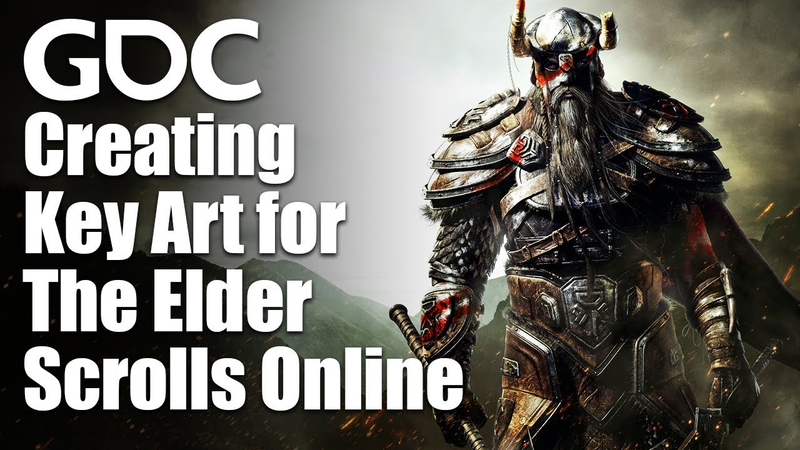
Illustrating Tamriel: Creating Key Art for The Elder Scrolls Online
The creation of high-resolution, hand-painted key art for The Elder Scrolls Online serves as a critical marketing function, requiring an eight-week production cycle to distill complex narrative updates into a single, compelling image.
- Creating key art for The Elder Scrolls Online is an eight-week process, consisting of two to three weeks of planning and compositional sketching followed by six weeks of production.
- Effective key art must distill the core narrative of an update into a single image, avoiding overly specific quest details in favor of broader role-playing themes.
- To manage the limitations of single-image storytelling, artists can use 'plot reversals' where the viewer knows more than the characters, creating dramatic tension by depicting characters unaware of an imminent threat.
Representing LGBT+ Characters in Games: Two Case Studies
The development of respectful LGBT+ representation in video games requires a deliberate, research-driven approach that prioritizes the lived experiences of the community.
- Effective LGBT+ character design is built on four core pillars: realism, consideration, explicitness, and respect, ensuring characters are fully fleshed-out individuals rather than defined solely by their identity.
- Narratives must prioritize character agency and consent, allowing individuals to disclose their identities on their own terms rather than through external imposition.
- Studios should integrate diverse voices into development teams and utilize external consultants, such as GLAAD or diversity readers, to ensure authentic and respectful portrayals.
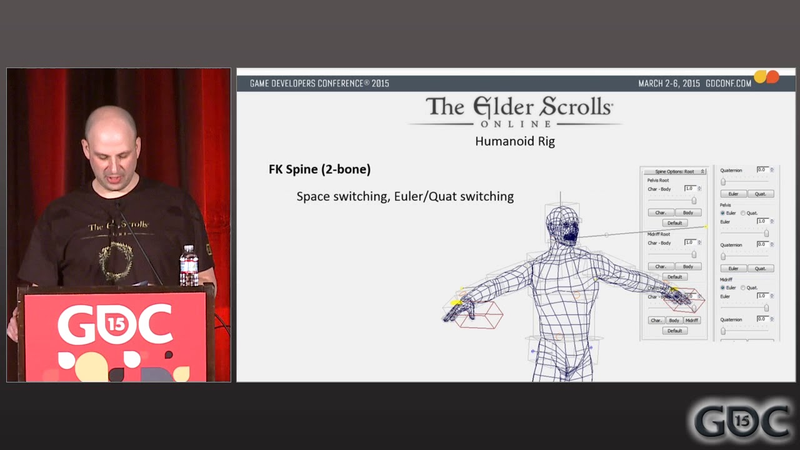
Tech Art in Tamriel: The Elder Scrolls Online's Character Tools and Pipeline
The development of The Elder Scrolls Online required a sophisticated, data-driven technical art pipeline to manage the massive scale of its character assets.
- The Elder Scrolls Online utilized a modular, XML-based rigging system in 3ds Max to manage character assets across ten playable races and ninety unique monster rigs.
- To meet DirectX 9 performance constraints, the team enforced a standardized humanoid rig limited to 77 bones, enabling automated asset creation and procedural animation for elements like robes and tails.
- A data-centric architecture allowed for the management of thousands of armor and character combinations while enabling tool updates across the network without requiring software restarts.