Key insights
7 slides
Key number
TESO generated $2 billion in lifetime revenue over a decade.
The game's longevity stemmed from prioritizing sustainable community building and flexible player engagement.
What changed
TESO shifted from a tab-target MMO to an action-oriented experience.
The game underwent a fundamental transformation following the release of Skyrim to better align with player expectations.
Player habits
Developers must design for fickle audiences who take breaks.
Making titles easy to return to is essential for modern live service success.
Launch strategy
New titles should focus on specific, well-executed mechanics at launch.
Attempting to compete with established, content-heavy giants at launch is not recommended.
Market shift
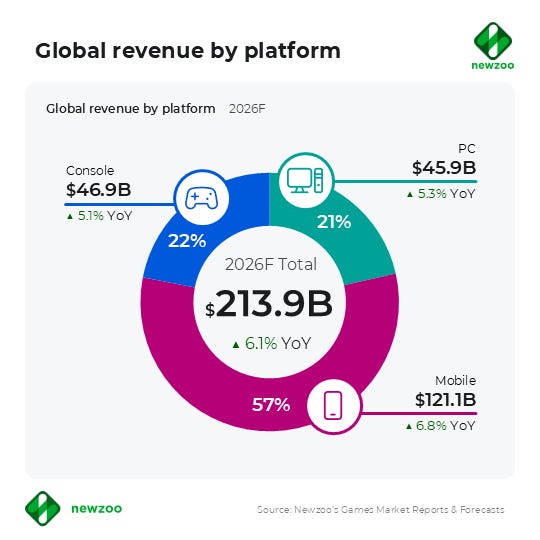
The industry is shifting how players allocate limited time.
The gaming industry is not necessarily in decline but experiencing a shift in player time allocation.
Consolidation
Scopely acquired Niantic's games division for $3.5 billion.
Major industry consolidation continues with this significant acquisition.
Strategic outlook
Success remains achievable with sustainable community building.
Developers who prioritize community building, flexible engagement, and focused design can achieve live service success.
1 / 7
Ask AI about this report