Street Fighter
Game
Documents about Street Fighter

Balancing for Skill - The Link from Optimal Power to Strategy - Extra Credits
Effective game design requires balancing not just the raw power of mechanics, but the relationship between player skill and the power output of those mechanics.
- Game balance requires aligning player skill levels with the power output of specific mechanics to ensure long-term engagement.
- High-power, low-skill entry points are essential for retaining novice players and preventing the formation of exclusionary, stagnant communities.
- Designers must create clear progression paths that incentivize players to move beyond simple, repetitive tactics to avoid hitting difficulty 'brick walls'.

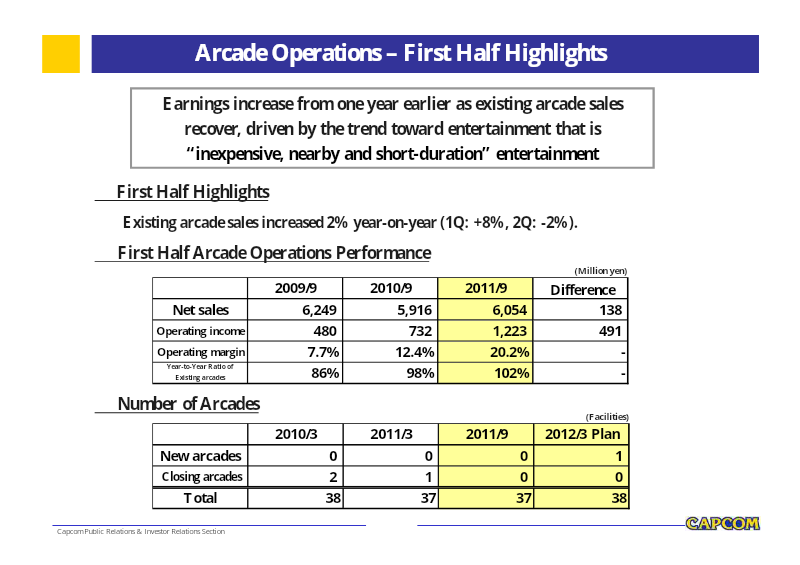

Capcom Results of Operations and Strategies: First Half of Fiscal Year Ending March 31, 2012
Capcom’s financial performance for the first half of the fiscal year ending March 31, 2012, reflects a period of contraction, primarily driven by the absence of major title launches within the Consumer Online Games segment.
- Capcom experienced a significant financial contraction in the first half of fiscal year 2012, with net sales falling to 29,252 million yen from 40,706 million yen in the previous year.
- Operating income declined to 2,782 million yen, though the company's performance still managed to slightly exceed its revised forecasts.
- The Consumer Online Games segment, Capcom's primary revenue driver, saw sales drop to 18,113 million yen due to a lack of major title releases.
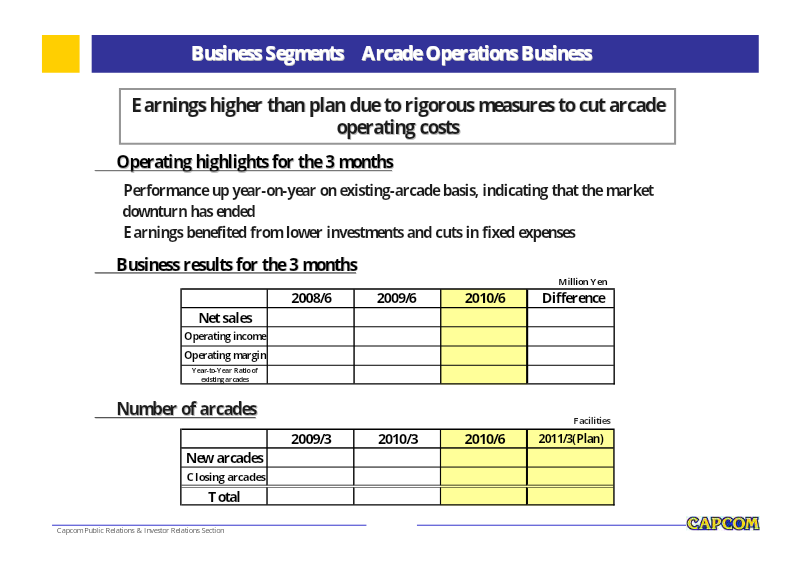

Capcom 1st Quarter Report: Fiscal Year Ending March 31, 2011
The Capcom first-quarter report for the fiscal year ending March 31, 2011, details a period of financial contraction characterized by declining profitability despite steady revenue performance.
- Capcom’s operating income dropped significantly to 1,005 million yen in Q1 2011, down from 3,664 million yen in the same period the previous year.
- Net sales for the quarter reached 19,037 million yen, a slight decrease from the 19,497 million yen reported in the prior year's first quarter.
- Operating margins in the consumer online games segment compressed from 33.3 percent to 11.9 percent due to a shift toward cost-intensive new title launches like Lost Planet 2 and Super Street Fighter IV.
Capcom Additional Information for Results of Operations: Fiscal Year Ended March 31, 2010
The fiscal year ending March 31, 2010, was a period of significant financial contraction for Capcom, characterized by a sharp decline in both net sales and operating income.
- Capcom experienced a significant financial downturn for the fiscal year ending March 31, 2010, with net sales falling to 66,837 million yen and operating income dropping to 5,587 million yen.
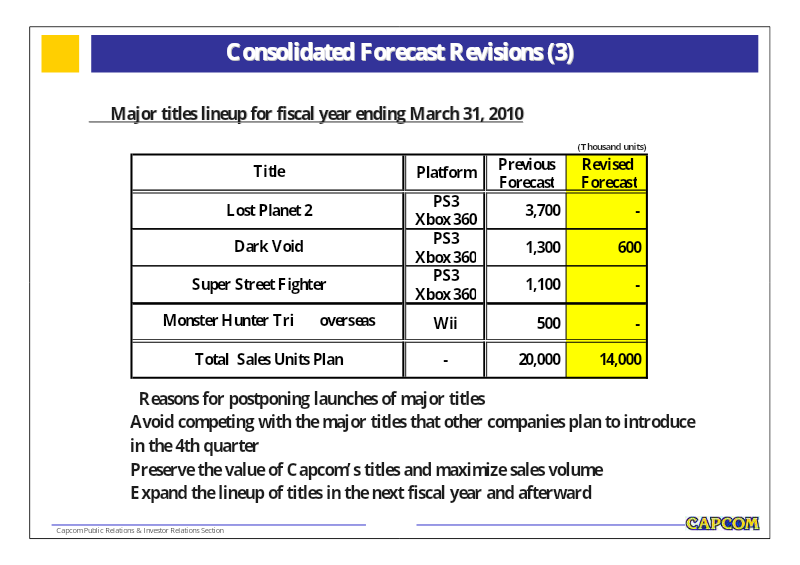
- The Home Video Games segment suffered a 72.7% revenue decline, primarily caused by the postponement of major titles including Lost Planet 2, Super Street Fighter IV, and the overseas release of Monster Hunter Tri.
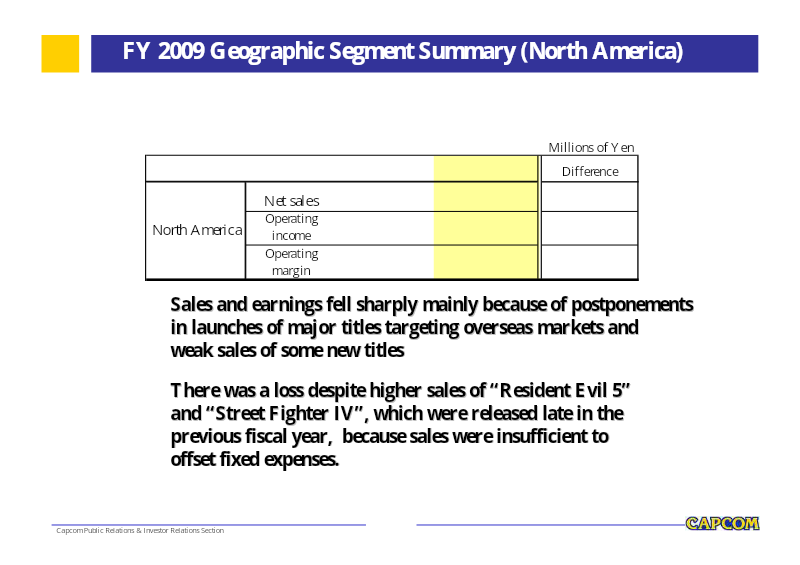
- North American and European markets saw substantial sales declines, with North America specifically recording an operating loss due to a weak product lineup.

Capcom Forecast Revisions for Year Ending March 31, 2010 and Plan for Fiscal Year Ending March 31, 2011
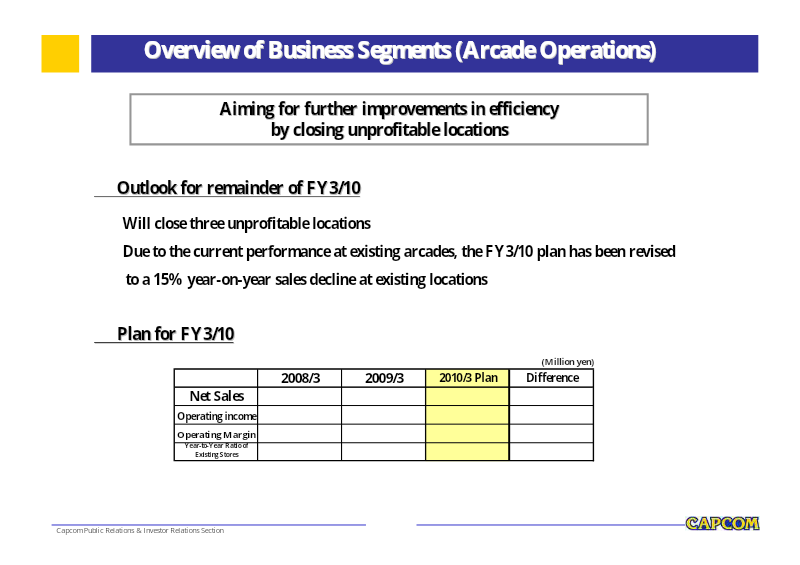
Capcom’s fiscal update for the year ending March 31, 2010, details a significant downward revision in financial performance alongside a strategic restructuring plan for the subsequent fiscal year.


Capcom 3rd Quarter Financial Results: Fiscal Year Ending March 31, 2010
The third-quarter financial results for the fiscal year ending March 31, 2010, reflect a period of transition for Capcom, characterized by strong performance in the first half of the year followed by a strategic slowdown in the third quarter.
- Capcom revised its full-year fiscal 2010 sales forecast downward to 65,000 million yen due to a strategic decision to postpone major software titles.
- Nine-month financial results for the period ending March 31, 2010, showed net sales of 49,987 million yen and operating income of 4,817 million yen.
- The home video game segment remains the company's primary revenue driver, with performance heavily reliant on the Monster Hunter series.


Capcom Annual Report 2010
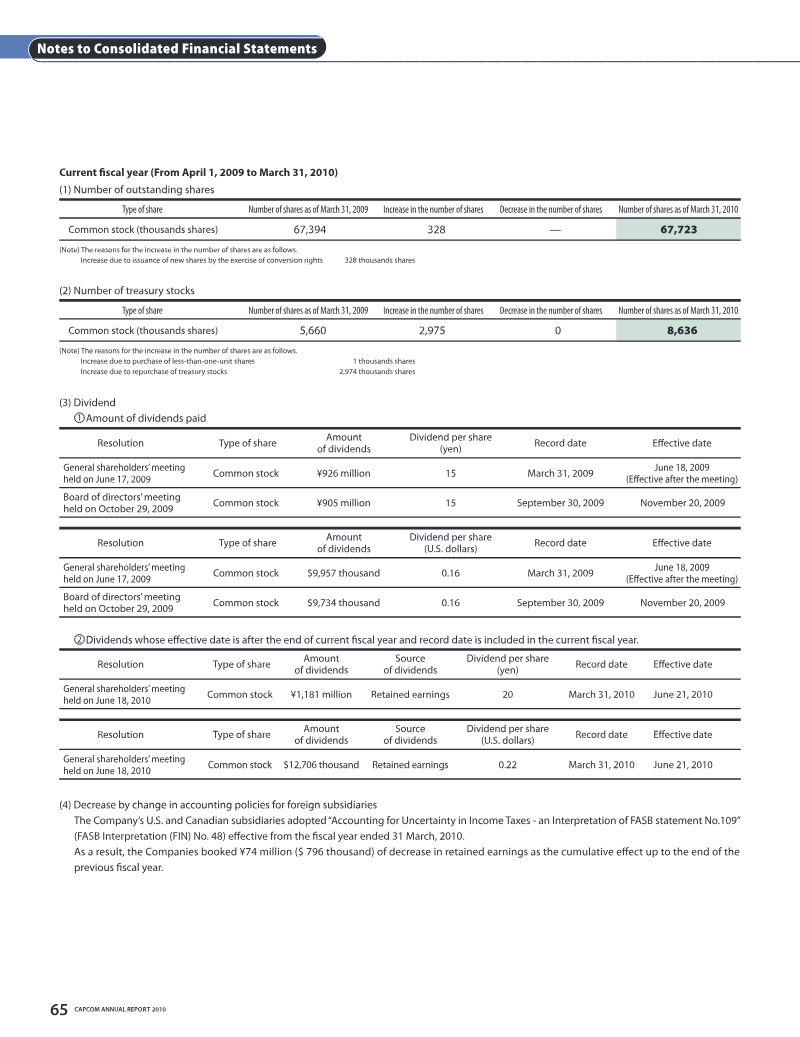
The 2010 fiscal year represented a period of significant financial contraction and strategic realignment for Capcom.
- Capcom experienced a significant financial downturn in fiscal year 2010, with net sales dropping 27.3% to 66.8 billion yen and net income falling by 73.1%.
- The company is pivoting to a 'Single Content, Multiple Usage' strategy to leverage core IPs like Resident Evil, Street Fighter, and Monster Hunter across consoles, mobile, and online platforms.
- Management implemented a new matrix management structure and separated CEO and COO roles to improve operational accountability and decision-making speed.
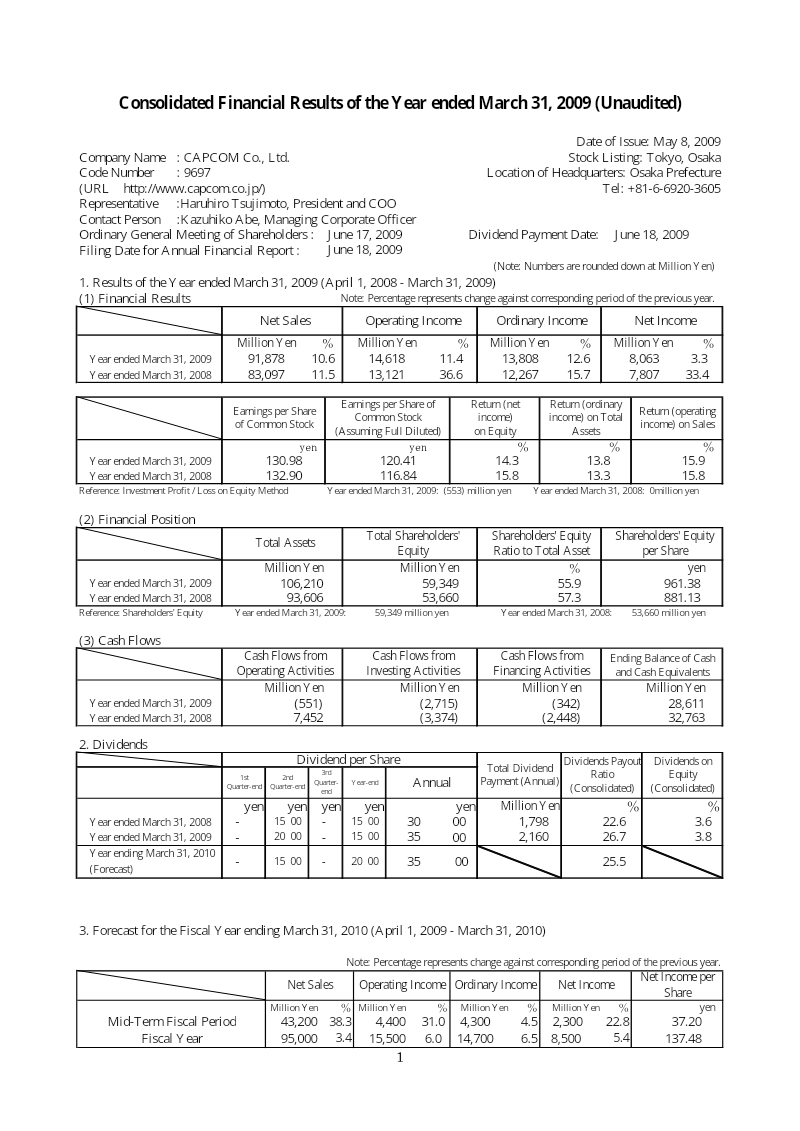
Capcom Consolidated Financial Results: Year Ended March 31, 2009
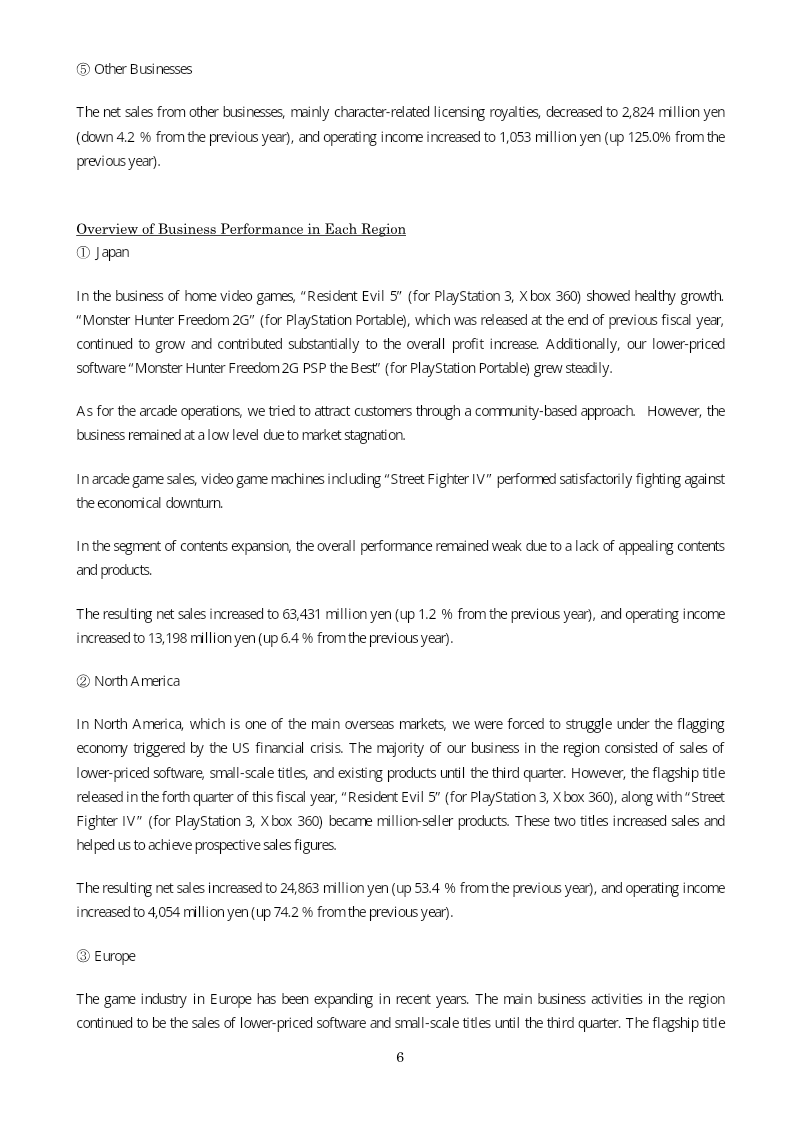
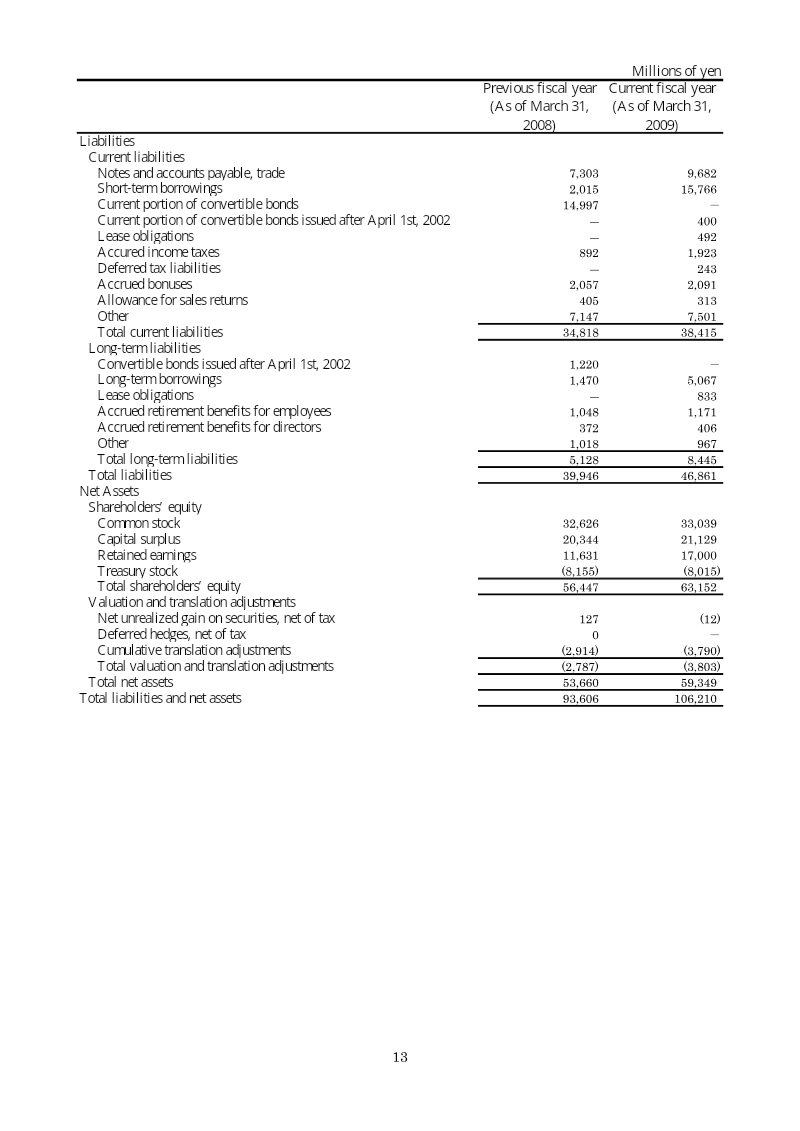
Capcom achieved robust financial growth during the fiscal year ending March 31, 2009, reporting consolidated net sales of 91,878 million yen and an operating income of 14,618 million yen.
- Capcom reported consolidated net sales of 91,878 million yen and operating income of 14,618 million yen for the fiscal year ending March 31, 2009, marking year-over-year increases of 10.6% and 11.4% respectively.
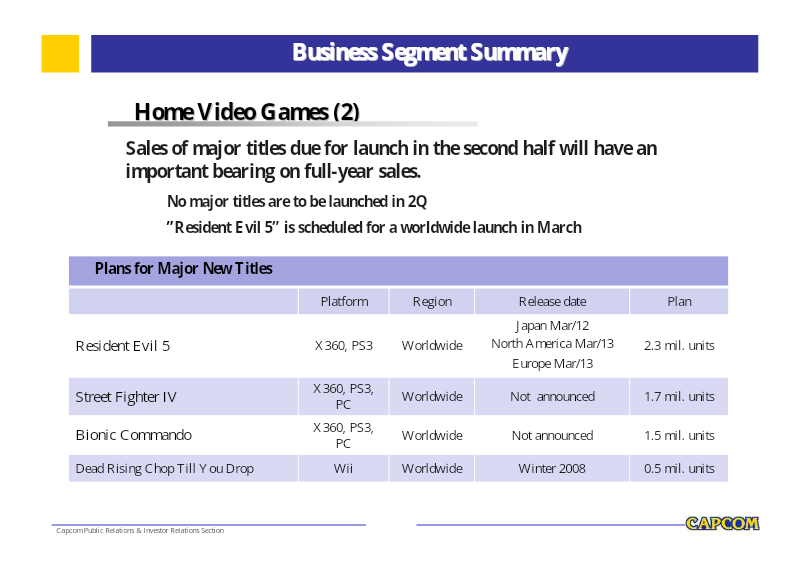
- The Home Video Game segment was the primary growth driver, generating 62,892 million yen in sales and 16,364 million yen in operating income behind the success of Resident Evil 5, Street Fighter IV, and Monster Hunter Freedom 2G.
- Despite strong software performance, the company experienced a net decrease in cash and cash equivalents, ending the fiscal period at 28,611 million yen.

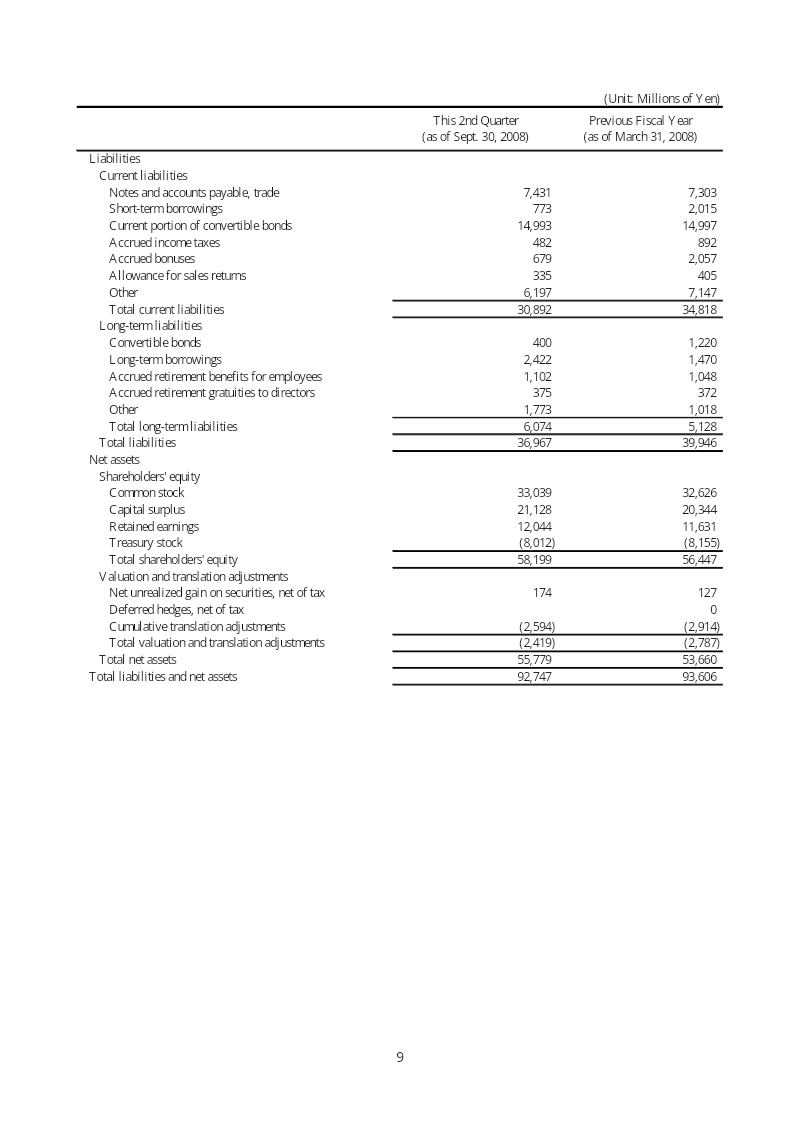
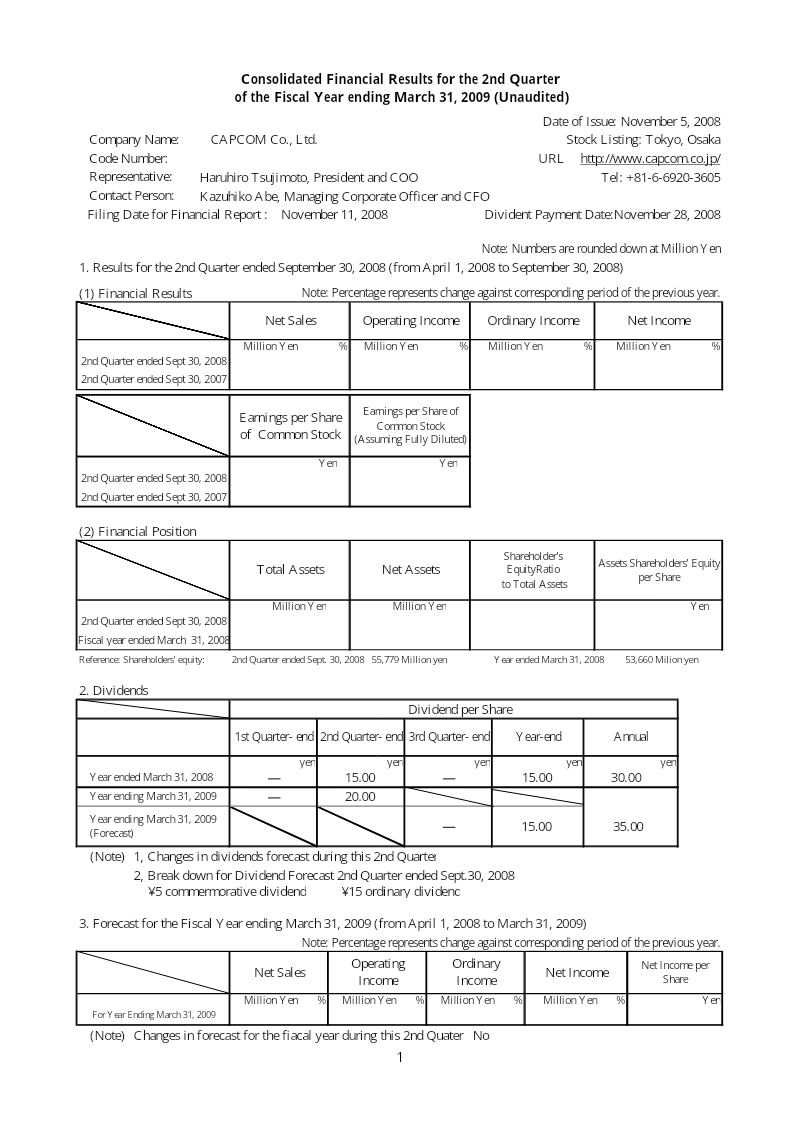
Capcom Consolidated Financial Results: 2nd Quarter Fiscal Year 2009
Capcom’s consolidated financial results for the second quarter of the fiscal year ending March 31, 2009, reflect a period of steady growth despite a challenging macroeconomic environment characterized by global recessionary pressures and a maturing domestic video game market.
- Capcom achieved a 16.8% increase in net income to 1,873 million yen and a 9.8% rise in operating income to 3,357 million yen for the second quarter of the fiscal year ending March 31, 2009.
- The Home Video Games segment drove performance with 16,486 million yen in sales and a 47.9% increase in operating income, primarily fueled by over 2 million units sold of Monster Hunter Freedom 2G.
- The Arcade Games segment shifted to profitability with an operating profit of 737 million yen, driven by the successful release of Street Fighter IV, contrasting with the prior year's loss.
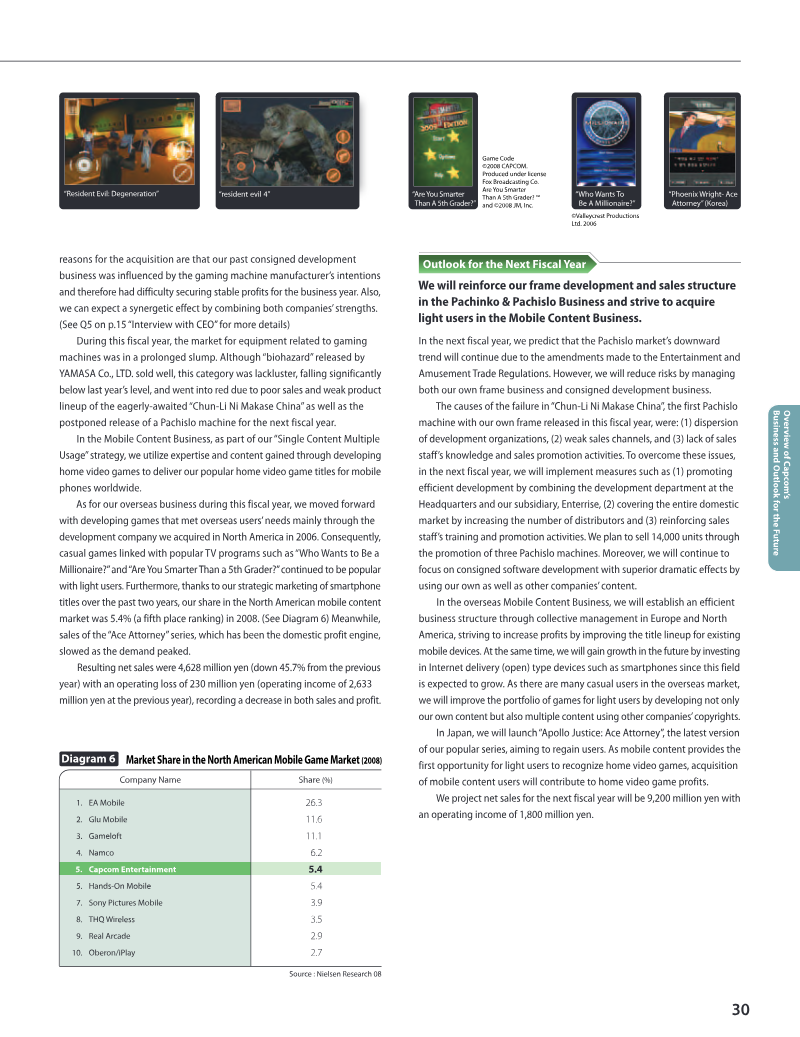

Capcom Annual Report 2009
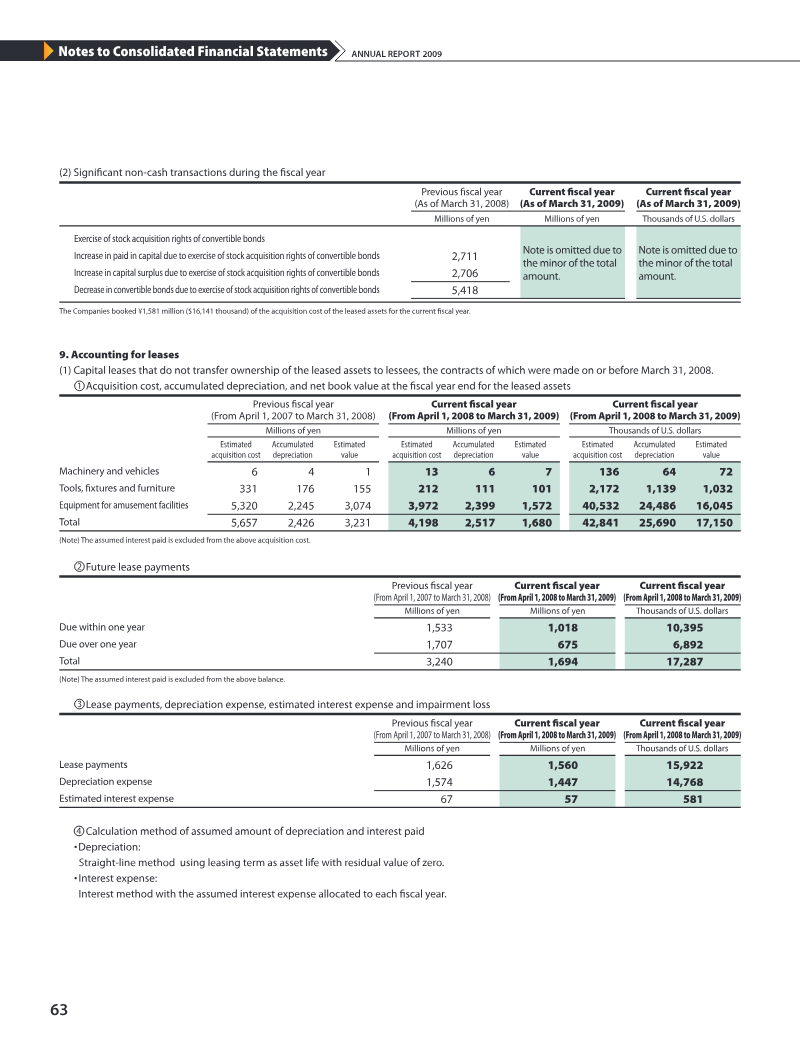
Capcom’s 2009 annual report details a period of robust financial growth and strategic transformation, characterized by a successful pivot toward global markets and multi-platform development.
- Capcom achieved its third consecutive year of growth with net sales reaching 91,878 million yen, driven by the international success of Resident Evil 5 and Street Fighter IV.
- North American and European markets now account for over 40% of total sales, validating the company's shift toward global expansion and direct-sales channels.
- The company utilizes a 'Single Content Multiple Usage' strategy to maximize intellectual property value across video games, mobile, movies, and merchandise.

Capcom 1st Quarter Report: Fiscal Year Ending March 31, 2009
The Capcom first-quarter report for the fiscal year ending March 31, 2009, details a period of strong financial growth driven primarily by the home video game segment.
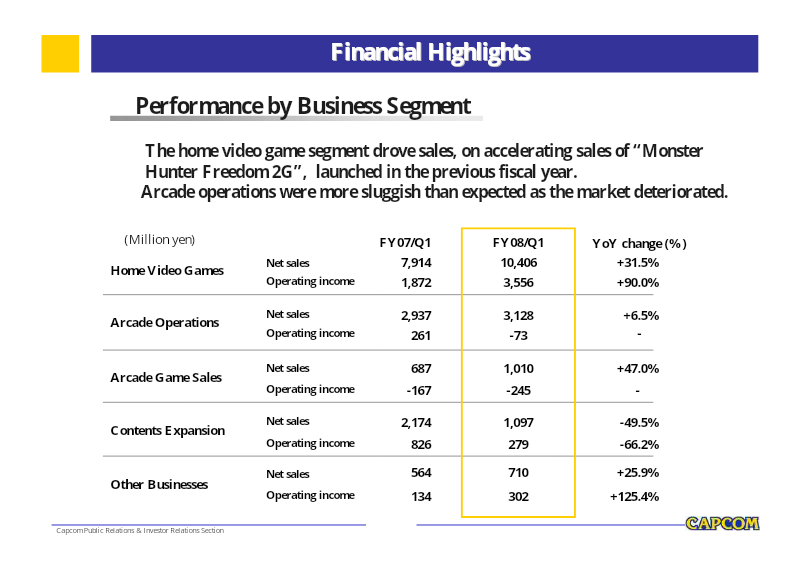
- Capcom achieved consolidated net sales of 16.35 billion yen, a 14.5% year-over-year increase, and a 110.8% surge in net income to 2.38 billion yen.
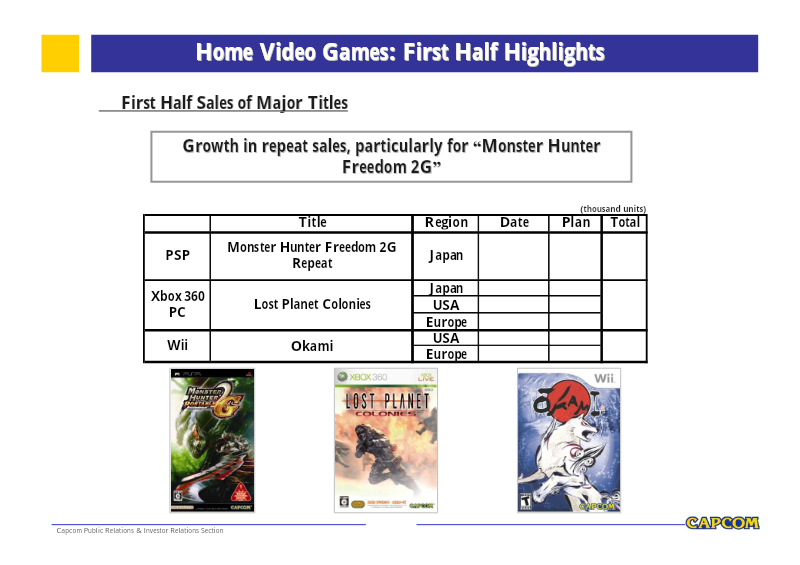
- The home video game division drove growth with 10.4 billion yen in sales, a 31.5% increase primarily fueled by the success of Monster Hunter Freedom 2G, which reached 2.48 million units shipped by July 2008.
- Financial performance was bolstered by an 840 million yen foreign exchange gain and the continued commercial success of existing titles.
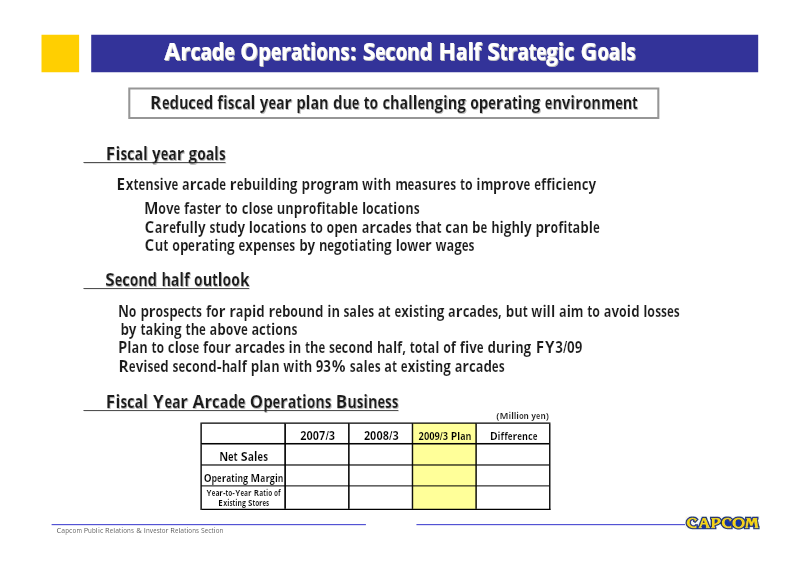

Capcom Results of Operations and Strategies: First Half of Fiscal Year Ending March 31, 2009
Capcom’s financial results for the first half of the fiscal year ending March 31, 2009, reflect a period of strategic transition characterized by strong profitability in the home video game segment, which offset significant underperformance in arcade operations and content expansion.
Companies behind it

As the documents state it.