Fighting reports and market data
24 game industry reports, presentations and talks about fighting from writers such as Game Developers Conference, Extra Credits and PocketGamer.biz, newest from 2026. Every document has a summary and key insights with the page they come from, and 3 charts and tables are extracted as data.
Documents
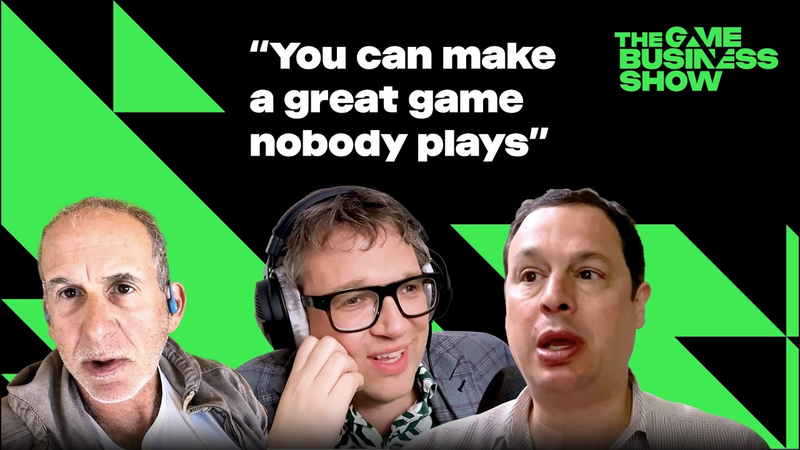
Skybound cuts back indie publishing to focus on Invincible VS and The Walking Dead
Skybound is fundamentally restructuring its business model to prioritize the internal development of its core intellectual properties, specifically Invincible and The Walking Dead, over the publishing of third-party indie titles.
- Skybound is pivoting its business model away from third-party indie publishing to focus exclusively on internal development of its core intellectual properties, specifically Invincible and The Walking Dead.
- The company has established an internal studio, Quarter Up, to maintain direct creative control and ensure video game adaptations align with the quality and tone of its existing comic and television franchises.
- This strategic shift aims to mitigate the risks associated with licensed game development and prevent the brand dilution often caused by low-quality, third-party titles.
Marvel Just Dropped TWO New Games and Fans Are Schocked!
The current landscape of the gaming industry is defined by a heavy reliance on established intellectual property, even as traditional entertainment franchises face declining public interest.
- Marvel is aggressively expanding its gaming portfolio with approximately 30 active licensed titles, including the newly announced 2D fighter 'Marvel Token' and mobile RPG 'Mystic Mayhem', to offset declining interest in its cinematic entertainment.
- Developers are increasingly leveraging established intellectual property to reduce customer acquisition costs, positioning high-quality game production as a primary brand surrogate.
- Habby is scaling toward a potential billion-dollar run rate by refining midcore meta-progression and utilizing recurring monthly annuity-style monetization models.
Nintendo Preps, Riot's Fighter Roster Revealed, and AC Shadow's Beautiful Dunk | Games For Breakfast
The gaming industry is currently navigating a period of significant structural and strategic shifts, characterized by corporate restructuring, hardware transitions, and evolving player-support policies.
- Nintendo is preparing for its next-generation console transition, with industry expectations anticipating a $400 price point, full backward compatibility, and seamless account migration.
- Ubisoft is restructuring its operations by creating a dedicated subsidiary for core franchises like Assassin’s Creed and Far Cry while securing a minority investment from Tencent.
- Riot Games will launch its upcoming fighting game, 2X KO, as a free-to-play title featuring a curated 10-character roster designed for long-term expansion.
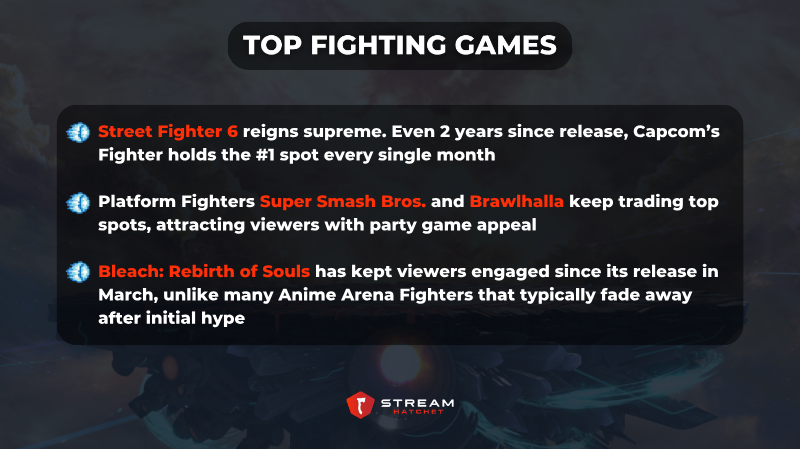
Fighting Game Live Streaming Report
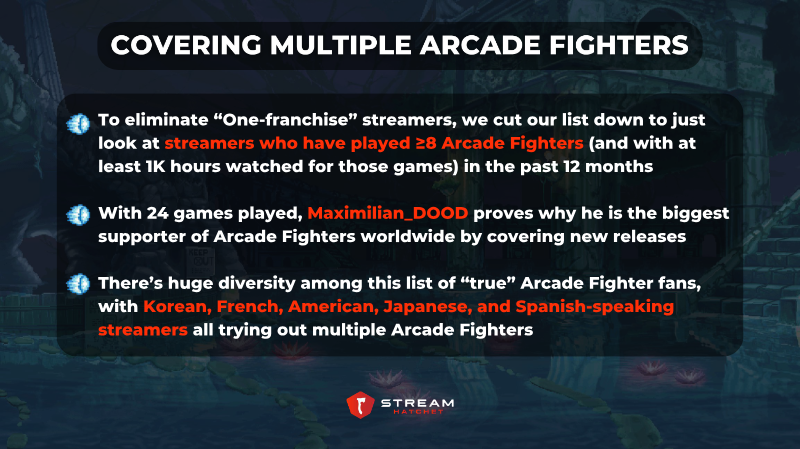
The analysis evaluates live-streaming activity for fighting games worldwide, concentrating on the period from July 2024 through June 2025 and tracking quarterly trends back to Q1 2019.
- Street Fighter 6 dominates the fighting game genre with 204 million hours watched, accounting for 71% of total viewership and averaging 40 million hours per quarter since its launch.
- Japanese streamers and VTubers lead the market, with fps_shaka and Kuzuha generating 6.4 million and 6.3 million hours watched respectively.
- YouTube Gaming has captured over 25% of total quarterly fighting game viewership, largely driven by the popularity of Japanese content creators.
Classic Game Postmortem: 'Karateka'
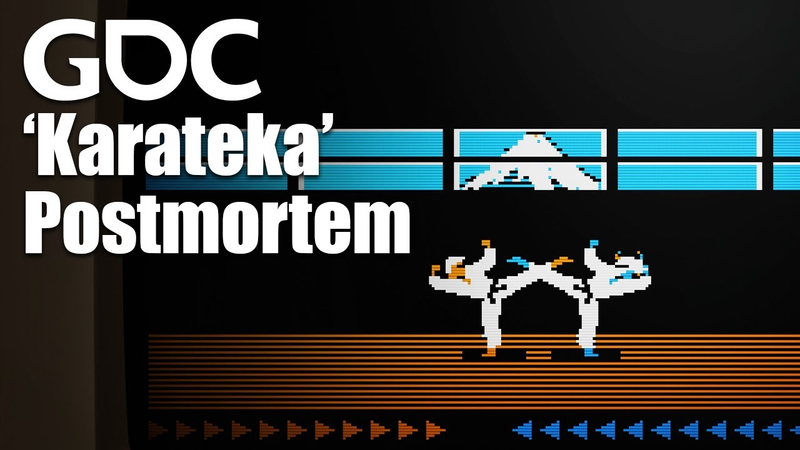
The development of the 1984 title Karateka represents a pivotal moment in early home computer gaming, marking a transition from rudimentary arcade-style action to cinematic, narrative-driven experiences.
- Jordan Mechner developed the 1984 hit Karateka by combining the large sprite design of the game Swashbuckler with the smooth, fast animation style of Choplifter.
- To achieve fluid character movement on the Apple II, Mechner used a VersaWriter graphics tablet to rotoscope live-action film frames, tracing them manually into the computer.
- Mechner implemented a cinematic 'leitmotif' musical approach, where his father composed distinct themes for the hero and villain to help tell the story through limited audio channels.
Throwing Down on Genre - A discussion on Fighting, Sports & Wrestling video games! - Extra Credits
The classification of professional wrestling video games remains a subject of debate within the gaming industry, specifically regarding whether they function as sports simulations, fighting games, or a distinct hybrid genre.
- Professional wrestling video games occupy a unique hybrid genre that defies traditional classification as either pure sports simulations or fighting games.
- The sports simulation classification is supported by the industry's reliance on iterative, annual release cycles that prioritize roster updates and authentic athletic presentation.
- The fighting game classification is supported by core mechanical similarities, including two-player combat systems, health depletion mechanics, and the use of special move meters.
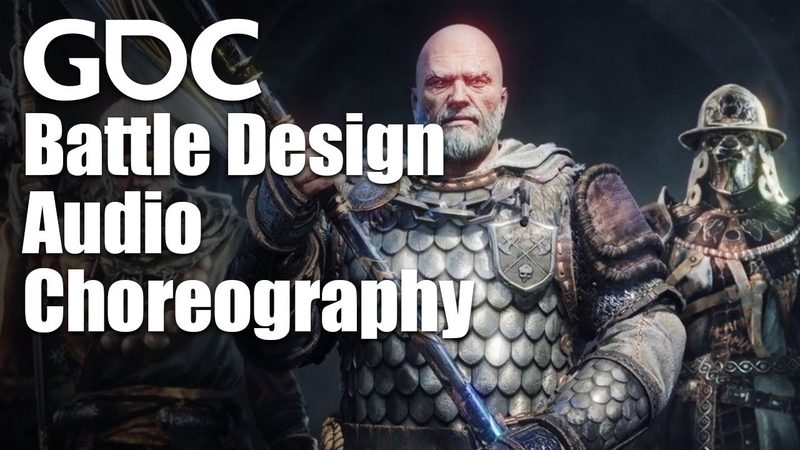
Fighting Legos: Audio Choreography for Battle Design
The primary objective of modern combat audio design is to move beyond simple, binary sound effects toward a system of bespoke, highly specific audio choreography.
- Modern AAA combat design, such as in For Honor, utilizes voiceover sound effects as a core game mechanic to provide players with immediate, consistent feedback that confirms their inputs and helps them learn the game's rules.
- Moving away from traditional 'variety packs'—where random sounds are pulled from a large bank—improves gameplay by creating a highly specific, repeatable audio-to-animation bond that reinforces player actions.
- To achieve this consistency, audio directors must coach voice actors to perform specific, repeatable sounds rather than relying on the long-standing industry practice of recording large batches of varied takes.
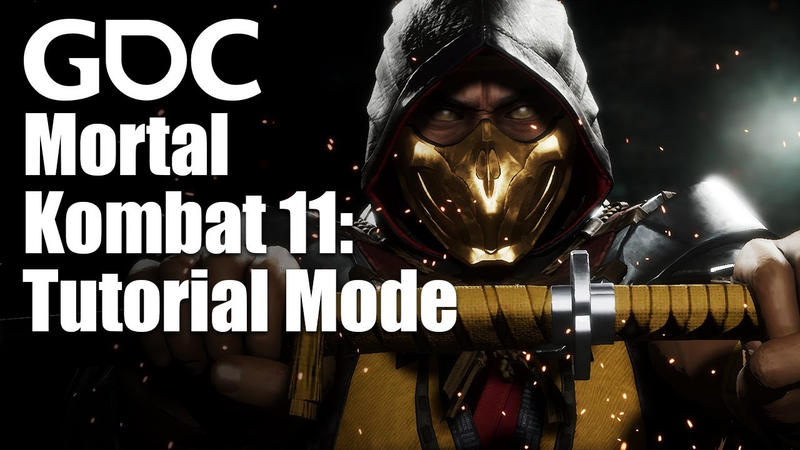
Mastering Kombat: Designing Mortal Kombat 11's Empowering Tutorial Mode
Fighting games often suffer from high player dropout rates due to steep learning curves and exclusionary design.
- NetherRealm improved player retention in Mortal Kombat 11 by segmenting their audience into four categories—campaigners, dabblers, connoisseurs, and PvP players—and building a tiered tutorial roadmap that maps specific skills to each group's needs.
- To combat player frustration and drop-off, the studio moved away from a flat tutorial structure to a hierarchical system that allows for incremental rewards, such as premium currency and exclusive character gear, at the end of every lesson and category.
- The tutorial design utilizes 'Show and Tell' visual aids, such as freezing the game world and color-coding character meshes, to help players identify complex, time-sensitive situational mechanics that were previously difficult to recognize.
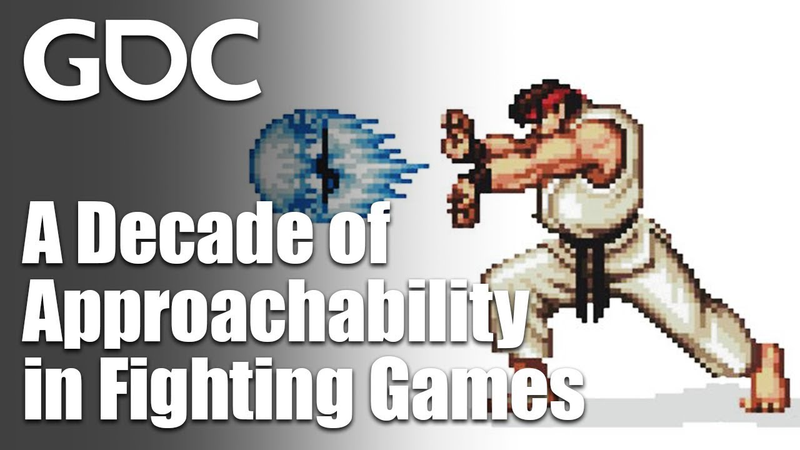
09 to '19: A Decade of Approachability in Fighting Games
The decade between 2009 and 2019 marked a transformative era for fighting games, characterized by a concerted industry-wide effort to broaden the genre's appeal through increased accessibility.
- Fighting game developers have spent the decade from 2009 to 2019 attempting to broaden audience appeal by reducing execution barriers, yet these efforts often fail to overcome the inherent intimidation factor of the genre.
- Developers frequently prioritize simplifying controls—such as implementing auto-combos, dedicated special move buttons, and simplified blocking—to help players reach the strategic decision-making phase of gameplay faster.
- Modern fighting games have increasingly incorporated comeback mechanics, such as Marvel vs. Capcom 3's 'X-Factor', Dragon Ball FighterZ's 'Sparking', and Tekken 7's 'Rage Art', to create tension and manage the game's momentum when a player is near defeat.
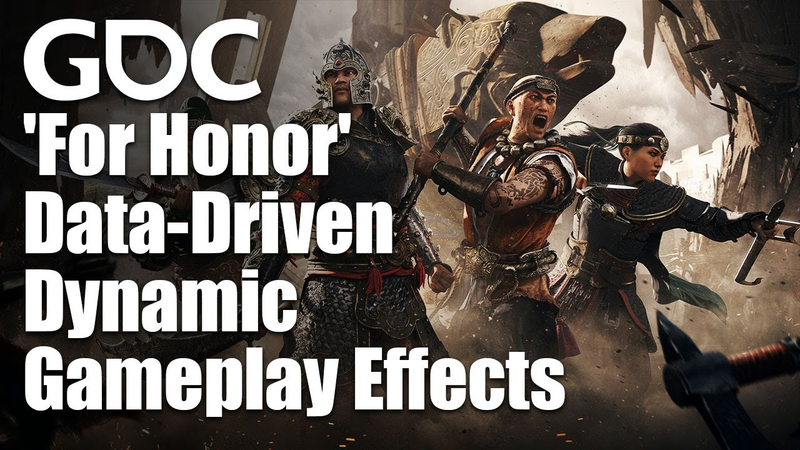
Data-Driven Dynamic Gameplay Effects on For Honor
For Honor employs a modular, data-driven modifier system designed to decouple gameplay logic from core programming, thereby granting designers the autonomy to iterate on mechanics without constant engineering support.
- Ubisoft implemented a data-driven modifier system for For Honor that allows designers to dynamically create gameplay effects—such as stat buffs, AI decision-making, and attack properties—without requiring additional programming code.
- The system utilizes a modular architecture where modifiers can be applied to various entities, including players, NPCs, capture points, and interactive objects, enabling high reusability across different game features.
- To manage performance under a load of approximately 3,000 queries per frame, the team implemented entity-specific caps, limiting soldiers to 6 active modifiers while allowing players a higher threshold.
8 Frames in 16ms: Rollback Networking in Mortal Kombat and Injustice 2
NetherRealm Studios successfully transitioned from traditional lockstep networking to a rollback architecture to eliminate the input latency inherent in fighting games.
- NetherRealm Studios successfully implemented a rollback networking architecture that maintains a consistent three-frame input delay by simulating up to eight frames within a 16ms window.
- The system supports competitive-grade online play for round-trip times up to 333ms, covering over 99% of all online matches.
- To ensure performance, the engine maintains a compact state footprint of less than one megabyte per frame by using handles instead of pointers and excluding non-essential systems like audio and particles during re-simulation.

Primal Rage II from Heartbreak to Resurrection: The Journey After Cancellation
Primal Rage II represents a significant, albeit ill-fated, attempt by Atari Games to evolve the fighting game genre during the mid-1990s.
- Primal Rage II was a $2.3 million arcade project initiated on March 1, 1995, featuring a team of 20 developers and specialized stop-motion animation that ultimately led to its cancellation on December 5, 1996.
- The game's development was hindered by the high cost and time-intensive nature of stop-motion animation, which made character pre-visualization impossible and prevented the creation of a polished vertical slice.
- The project was effectively lost for nearly two decades due to the use of custom hardware and unorthodox graphics delivery methods that made standard emulation impossible until the game was discovered and leaked by fans.