Star Wars
Game
Documents about Star Wars

‘Star Wars Hunters was no failure’ – The Big Zynga Interview
Zynga is currently executing a strategic pivot toward mobile-first development, emphasizing the creation of bespoke, high-engagement experiences over the adaptation of existing console intellectual property.
- Zynga is pivoting its strategy to prioritize wholly-owned mobile intellectual property over licensed console adaptations to reduce costs and improve marketing efficiency.
- The company has set a strategic growth target of reaching one billion monthly active users through scalable, social, and interactive mobile experiences.
- Zynga is actively shifting away from experimental technologies, specifically deprioritizing blockchain and console-specific development initiatives.

Epic’s State of Unreal: Building the Future of Games or Just Selling More Tools?
The annual State of Unreal keynote highlighted Epic Games’ ongoing efforts to expand its ecosystem through Unreal Engine 5.6, the Unreal Editor for Fortnite (UEFN), and the Epic Games Store.
- Epic Games reported $2.1 billion in total payouts to developers, with $722 million of that revenue generated specifically by third-party creators within the Unreal ecosystem.
- Epic is aggressively expanding the Epic Games Store with mobile self-publishing tools and a 0% revenue share model on the first $1 million earned to compete with established platforms.
- Unreal Engine 5.6 and the Unreal Editor for Fortnite (UEFN) are the core of Epic's strategy, though UEFN currently faces significant criticism regarding its platform stability and user experience.

Week in Mobile Games E30 - Ubisoft's woes and Genshin Impact hits $6bn in four years(!)
Ubisoft currently faces a period of profound instability characterized by a 20 percent decline in share price, driven by the strategic delay of Assassin’s Creed Shadows and the underwhelming commercial performance of Star Wars Outlaws.
- Genshin Impact has generated $6.3 billion in lifetime revenue over four years, demonstrating the long-term viability of mobile live-service titles despite a recent dip in annual earnings due to market saturation.
- Ubisoft is facing significant financial instability, marked by a 20 percent share price decline following the delay of Assassin’s Creed Shadows and the poor commercial performance of Star Wars Outlaws.
- Dungeon & Fighter Mobile has emerged as a major revenue driver, securing over $800 million in gross revenue within its first four months in the Chinese market.

TWIG #297 Gamescom Confidential, Why Steam ain't Blocked by China and the TRUTH about Tim Hortons
Gamescom 2024 underscored a pivotal shift in the global gaming landscape, characterized by the aggressive expansion of major Asian publishers like NetEase, miHoYo, and Tencent into Western markets.
- Asian publishers like NetEase, miHoYo, and Tencent are creating high competitive barriers in Western markets, with miHoYo investing $200 million annually into live-ops resources.
- New game titles are struggling to gain traction, currently capturing only 8% of total player time, while Steam wishlist-to-sale conversion rates have dropped as low as 5%.
- Black Myth: Wukong achieved record-breaking sales of 10 million units in three days, though its success remains heavily concentrated within the Chinese domestic market.

TWIG #295 GTA UGC Future, the Borderlands Movie, and VR Headset Wars
The global gaming industry is currently navigating a period of strategic recalibration, characterized by moderate growth projections of 4–5% for 2025 and a total market valuation estimated between $186 and $187 billion.
- The global gaming market is projected to grow by 4–5% in 2025, reaching a total valuation between $186 billion and $187 billion.
- Take-Two Interactive is anchoring its long-term financial outlook on the 2025 release of GTA 6, prioritizing core IP integrity over speculative platform expansion.
- High-budget transmedia and mobile adaptations are struggling, evidenced by the commercial failure of the Borderlands film and the underperformance of Star Wars: Hunters.

TWiG 288: Fortnite in Trouble, Anime Girl Horse Racing Game, and Switch’s New Life
The global gaming industry is currently navigating a period of significant regulatory pressure and shifting market dynamics.
- Apple faces potential fines of up to 10% of its global revenue following formal European Commission charges regarding Digital Markets Act violations related to restrictive app store practices.
- Fortnite is recording its lowest player counts since late 2023, prompting Epic Games to pivot toward a 2025 re-entry into the Japanese mobile market.
- Netflix has invested $3 billion into its gaming division, yet the initiative continues to struggle with demonstrating a clear return on investment.
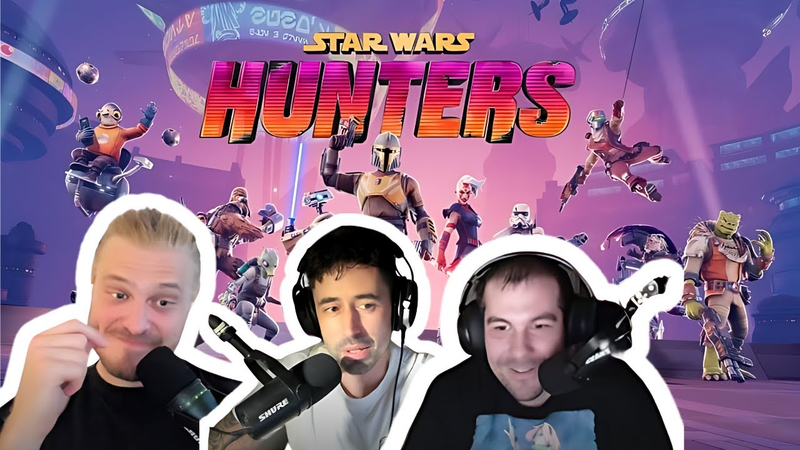
Star Wars: Hunters - The Waste of potential & Flaws A.K.A the honest review
Star Wars: Hunters functions as a high-production 4v4 hero shooter that struggles to translate its significant brand equity into sustainable financial performance.
- Star Wars: Hunters currently generates approximately $70,000 in daily revenue and 200,000 daily downloads, figures that are heavily reliant on aggressive marketing spend rather than organic player retention.
- The game lacks the robust gacha mechanics and power progression systems necessary to effectively monetize its user base in the competitive mobile market.
- Licensing constraints prevent the inclusion of iconic characters like Darth Vader, forcing the game to rely on generic archetypes that diminish the appeal of its cosmetic-focused monetization model.
Bringing a Star Wars Cantina to Life in 'Jedi: Survivor'
Pyloon’s Saloon serves as a central, dynamic hub in Star Wars Jedi: Survivor, functioning as a narrative anchor that provides respite from the game’s darker themes.
- The narrative team structured Pyloon's Saloon into five macro states mapped to the main campaign's acts, which were further divided into granular substates to track NPC locations and evolving dialogue.
- Writers utilized a TV-style room approach, conducting brainstorming sessions, table reads, and character voice experiments to ensure consistency across three to six writers.
- The team managed dialogue complexity using a 'Dialogue Matrix' in Google Sheets that calculated character adjacencies and generated templates to ensure every character had at least one unique conversation per substate.

The Economics of Obsession
Modern media and gaming companies increasingly design products to foster consumer obsession, transforming entertainment into a continuous, high-retention engagement loop.
- Modern media and gaming companies intentionally design products to transform entertainment into a lifestyle commitment, ensuring long-term profitability through continuous, high-retention engagement loops.
- The industry utilizes rapid content updates and external media ecosystems—including esports, streaming, and patch notes—to keep users tethered to a franchise even when they are not actively playing.
- The strategy of 'engineered obsession' evolved from early fandom behaviors, such as Star Trek and Star Wars lore analysis, into a formalized corporate sales technique used to maximize market share.

Building an Expansive 'Star Wars' World in Mobile VR
The development of Star Wars: Tales from the Galaxy’s Edge for mobile virtual reality platforms, specifically the Oculus Quest and Quest 2, required extensive technical optimization to maintain high-fidelity interactive storytelling within constrained hardware environments.
- To overcome mobile CPU bottlenecks, the team implemented a custom object pooling system to eliminate hitches caused by spawning and despawning actors.
- Engineers optimized complex component hierarchies by replacing scene components with actor components and utilizing skeletal mesh detachment to allow animation graphs to function independently.
- The team developed a custom, automated pre-computed visibility system using navigation mesh geometry to limit cell placement, which significantly reduced computation time compared to standard occlusion methods.
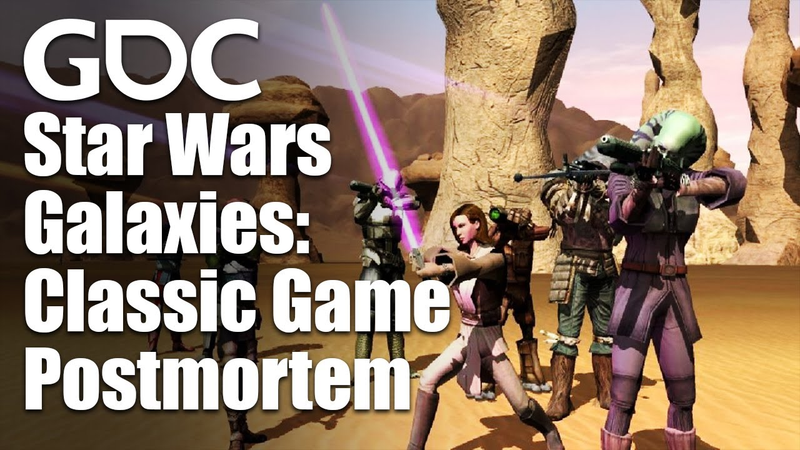
Classic Game Postmortem: 'Star Wars Galaxies'
Star Wars Galaxies represents a landmark experiment in early 2000s massively multiplayer online game design, prioritizing player agency and sandbox freedom over traditional quest-driven progression.
- Star Wars Galaxies suffered from a rushed development cycle, with the team forced to launch the game after only two years and nine months of production, resulting in a poor initial user experience and high player churn.
- The game pioneered advanced technical features for 2003, including a procedural terrain generation system that allowed for runtime building placement and a character customization system utilizing morph targets.
- The game's economy was entirely player-driven, requiring users to bootstrap resources from nothing, which created deep engagement but caused significant database stability issues.

TWIG #141 Reactions to XCOM mobile bleeds to debate on free-to-play games
The recent soft launch of the XCOM mobile title serves as a focal point for broader industry tensions regarding the adaptation of core gaming intellectual property (IP) for mobile platforms.
- Adapting core gaming IP for mobile creates a strategic dilemma where simplifying mechanics to reach mass-market audiences risks alienating the loyal, core fan base.
- Franchises with highly distinct, mechanics-driven identities—such as XCOM, Command & Conquer, and Civilization—face significantly higher resistance to gameplay changes than IP that can easily decouple from specific genre expectations.
- The soft launch of the XCOM mobile title demonstrates that high production values and strong narrative elements are insufficient to overcome fan backlash when core strategic gameplay is perceived as diluted.
Companies behind it

As the documents state it.