1 free read left. Create a free account for unlimited reading + AI research.
Create free account
The Economics of Obsession
Key insights
7 takeaways- 01The strategy of 'engineered obsession' evolved from early fandom behaviors, such as Star Trek and Star Wars lore analysis, into a formalized corporate sales technique used to maximize market share.
- 02Publishers historically utilized crossover events to force consumers to purchase titles across an entire ecosystem, a tactic that effectively expanded market share by requiring fans to stay current with multiple products.
- 03This design philosophy creates a feedback loop that limits consumer time and resources, often making it difficult for users to explore new media outside of their primary franchise.
- 04The systematic exploitation of the human desire for deep-world immersion, particularly among younger audiences, suggests a need for consumers to consciously reevaluate their media habits.
- 05Companies like Pokémon pioneered the gamification of collection and social status, while modern platforms like Fortnite and Roblox have refined this into a model that demands constant participation.
- 06Modern media and gaming companies intentionally design products to transform entertainment into a lifestyle commitment, ensuring long-term profitability through continuous, high-retention engagement loops.
- 07The industry utilizes rapid content updates and external media ecosystems—including esports, streaming, and patch notes—to keep users tethered to a franchise even when they are not actively playing.
Ask AI about this video
Transcript
Okay, so if Secret Invasion is happening in Phase 5 after Quantumania and they've renamed House of Harkness to Coven of Chaos, then that means that by the time we get to the Fantastic Four reboot in Phase 6, Agatha might already be babysitting Franklin like an FF94 from the '70s, readying him to take out Mephisto before we ever get to see him on screen. Boom! Oh, uh hey everyone. Sorry, I was in the middle of some fan theory crafting of the MCU. You know, come to think of it though, the 1986 Howard the Duck film could actually be the key to all of this. If Kang Wait. Oh, I'm sorry. Does it look like I'm not focused? I am focused, Zoe. Oh, maybe a little too focused, actually. You know, maybe we should talk about that. This episode is brought to you by the incredible value proposition that is the Curiosity Stream Nebula bundle, now actually at the lowest price I've ever seen it for the holidays. But, more on all of that awesomeness after the episode. In modern media, we've built a sort of desire to obsess into our entertainment.
And while there's absolutely nothing wrong with being really into something like a game, fictional world, or fandom, believe me, I am speaking from very personal experience here, it's also exactly what the companies behind some of those things want most in the world. So, today, we're going to talk about the history of how companies have got us to compulsively fixate on their products in hopes that actively thinking about what we obsess over can help us make sure that they're actually the things we want to be spending our time on. So, let's start with a question. Is there a franchise that you spend an average of an hour or more a day playing, watching, engaging with on wikis, Reddit, with friends, etc., or just generally thinking about? I definitely have one or two. Now, that may not seem like much, but when you do the math, that's roughly 1/16 of your waking life. Now, there are a lot of places that you can trace this desire to obsess behavior back to. Heck, for years in advertising alone, companies spend millions of dollars just to get us to think about them for 10 minutes or have them be worked into our daily routines. But, on the media side of things, this really started to ping the corporate radar with none other than
Star Trek and Star Wars. When these two franchises first came out, fans were desperate for more content. They loved these universes, and they wanted to interact with them so much more than a short TV run or a single movie could provide. So, they started to organize conventions, create their own fiction, dress up as their favorite characters, and discuss every minute detail they could because there just wasn't a lot out there. Of course, you talked to death the major plot arcs pretty quickly. So, all of the sudden, tinier things like Sulu's fencing style and why he would even need to fence in the far future became a topic of conversation. Then, it became cool within these circles to know the minutia, to be able to engage in these conversations. Of course, from there, it often became a form of gatekeeping. To prove you were a real fan, bad actors said you had to know the little details and minor sub plots. And while this sadly drove many people away from something that they might have otherwise loved, for those that stuck around, it became a strange form of promise. There is infinite depth to this franchise. You can spend forever here, and the community will reward you
for the time you put in. There's literally no end to how deep the rabbit hole goes. That is an alluring promise. And you know who took that and really ran with it? Who moved it from an accident to a stone cold sales technique? Comic book publishers. They realized that they could exploit this desire for obsession to lock someone into their ecosystem and then take advantage of that slowly, step by step, to expand the number of products a person purchased, which brings us to the crossover event. There's a ton of examples here, many that happened earlier than the one I'm going to talk about. But, for me, the first time I realized exactly what comics were trying to do was the Death of Superman. This was marketed as a major must-experience event. Heck, I think it was actually on like the news. But, crucially, it didn't just happen in Superman comics. It happened all over the DC spectrum. And this is the key step in the economics of obsession. Because by having all of your content point toward your other content, it creates a feedback loop of purchasing. After all, some parts of the
DC audience did only care about Superman, but because to get the full experience of this huge Superman story, they had to also purchase, say, a Green Lantern comic, most of us would. Then, if all goes according to plan, some portion of those Superman fans will now say, "Wow, Green Lantern's pretty cool." and start to consume that series as well. Of course, as a consumer, you have limited time and money to spend on entertainment. So, the more of that time and money you dedicate to one company's products, the less of both you have to explore new things and perhaps find something you enjoy more or that causes you to drift away from their world. And that's exactly what Disney was buying when they bought Marvel and Star Wars. It wasn't just a franchise, it was the fan base. Of course, with those franchises, at least some of that desire to obsess did grow organically. Over the last 20 years, though, the media in the background has started to train audiences to think that this is the way to engage with products to get the most out of them. And for most of us, elder millennials and later, we were targeted like this as kids, so it all feels kind of normal, like it's just the way you're
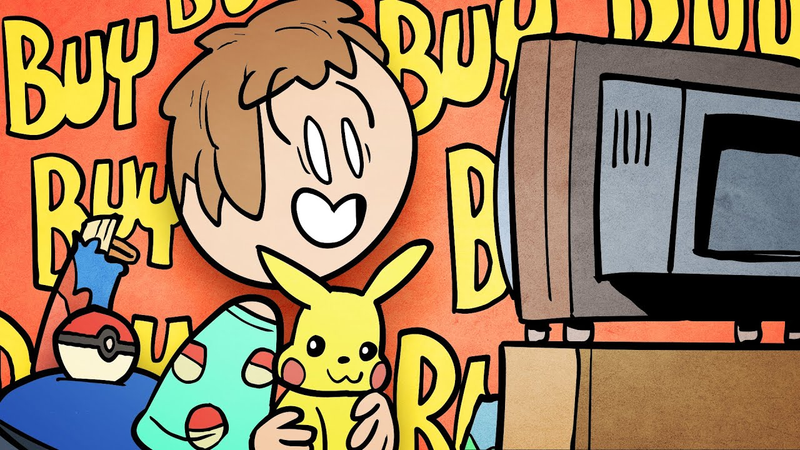
supposed to consume things. Meanwhile, in the game space, this behavior arguably started with Pokémon. Now, do not get it twisted, I love Pokémon as much as the next totally normal person who petitioned Nintendo to make a new Pokémon Snap for 15 years, but you can't deny that Pokémon is all about obsession. I mean, it's right there in the tagline. You got to CATCH THEM ALL! POKéMON! AND THEY, TOO, LEARNED TO TARGET KIDS YOUNG. The Pokémon TV show was aimed at kids under 10, and it straight-up told them that they should want to learn every Pokémon, that being cool meant knowing more about Pokémon than everyone else. It's kind of the whole theme of the show. Then, they offered those kids other avenues to engage with the product. Besides the video games about collecting, they created, very literally, a game that required collecting, the Pokémon collectible card game, and it paid dividends. Plus, many folks who watched the TV show as kids still play Pokémon to this day. And boy, did parts of the video game industry learn from this. I mean, take any lifestyle game like Fortnite, Roblox, League of Legends, Destiny 2, or almost
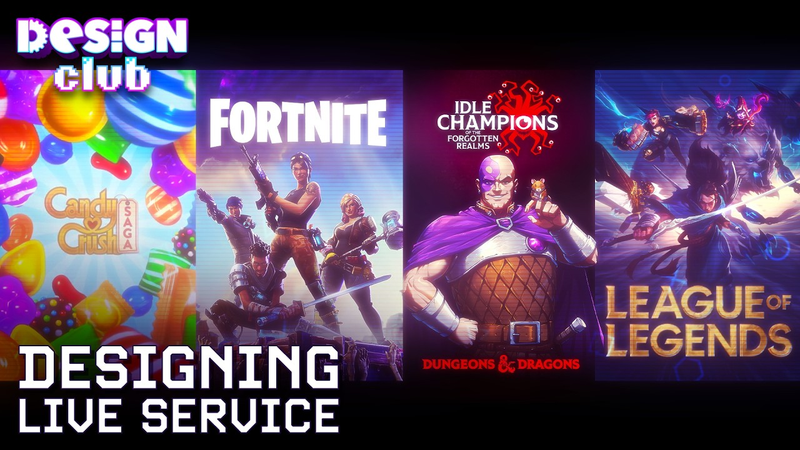
any MMO or CCG. Things move so fast in games like those and evolve at such a rate that if you happen to get off the train, you are definitely going to fall behind. So, when you're not playing them, you are often encouraged to be watching them or reading news about them or talking to your friends about them, so you're never not in the know and continue to be in that ecosystem. Now, I know from personal experience that it probably wasn't the healthiest thing for me to have a game try to get me to spend all of my free time on it. Watching esports and streamers, reading patch notes, digging through the lore posts, or pouring over every secret video when I'm actually not playing it. But, you know what it is good for? Retention, which directly correlates to profits. So, companies have tried to train us to do this and not even think about the fact that we are. Though, on that note, it is very important that we do push companies to stop targeting kids with this stuff because they're especially susceptible to this. I know I was. There's a lot about the way that young brains work that just want to glom onto things and obsess about them. So, we should be more critical of those who choose to exploit that for profit. All
of this isn't to say that the concept of obsessing is bad. There's a deeply human desire to find things to really deep dive into, to make it your own world, and there are so many good things that have come from that. I've just found that for me personally, it's important from time to time to take a step back to reevaluate and consciously choose my obsessions rather than be guided into them by some corporate marketing plan. And because I needed to remind myself, I thought it would be good to remind any of you out there that this might be helpful for. What do you all think? Have you found yourself so wrapped up in one game or franchise that you don't have time for anything else? Have you gotten suckered into watching things or playing things just to keep up with a franchise or pop culture? Or, do you have any best practices that work for you when determining what media to spend your time on? Let us know your thoughts in the comments below and I promise not to obsess about them, you know, too much. You do not want to get lost in that comment section narrative voice Matt. That way leads to ruin. Not to mention we got the first two extra history episodes on the path to Pearl Harbor to watch. Hold on there casual Matt. I think the turkey day time off has messed
with your internal calendar. Those episodes aren't out on YouTube yet. So how's watching them even possible? You know, I'm so glad you asked. Of course by now you're familiar with Nebula, right? Oh, totally. Our bike creators four creators streaming service home to a ton of the best educational creators on the internet. Yeah, yeah, yeah, everyone knows the tagline by now. But what I'm actually super pumped about is what we're doing right here. Helping to premiere a new feature that they're calling Nebula First. Basically thanks to all of their support they give us, we can now produce all of our extra history episodes faster and release them a full week earlier over there. Wait, let me see that. Oh, wow. It's not just us releasing stuff early either. Bingo my friend. A ton of creators are already doing it like Polyphonic or Tail Foundry or Ooh, Philosophy Tube's on there too. And just a ton more are just starting to release stuff early over with Nebula First. And that's of course on top of being able to watch all of the videos including ours without ads like, you know, this one that I'm reading right now. And the ever growing list of Nebula originals like, like Anita Sarkeesian's really cool look back series That Time Went. That's what it's called. When she takes a deep dive into some of the most like divisive moments in modern history
and politics and pop culture. It's freaking sweet. Don't forget the original podcast and videos us Matts made. Yeah, I'm pretty sure they know all about those by now. Though I will say if you have not watched my BioShock working titles yet, please do so because I am super proud of that one. But listen, you don't have to take our word for it because Curiosity Stream actually believes in what we're doing over at Nebula as well. So much so that they've teamed up with us to offer what is the best freaking deal in streaming today. Okay, check this out. When you sign up for a Curiosity Stream account, right? You can use our link in the description of course. Then you're going to get a matching Nebula subscription for free. And that's a full membership mind you, not a trial or anything, meaning you get Curiosity Stream's thousands of phenomenal big budget non-fiction films, videos, and award-winning original series, along with content from my favorite creators on the internet, some of which Early Now, and all of that's like less than 15 bucks a year, so au contraire, casual Matt. Actually, for a limited time, there's an even better holiday deal. All you got to do is go to curiositystream.com/extracredits right now, and you'll get both of these awesome streaming services for only 11.59 for an entire year. That's 42% off
the regular price, which works out to less than a dollar a month. Huh, is that even possible? Well, I'm going to choose to chalk it up to a good old-fashioned holiday entertainment miracle, where not only do you get to watch some of the best content this whole series of tubes has to offer, but you'll also be directly helping out our channel in the process when you sign up. Wow, look at you. It only took about two Matt's feet to break out the old parasocial angle. Shut up. Once again, that's curiositystream.com/extracredits to get 42% off the Curiosity Stream Nebula bundle, and then you can start watching Nebula first content right now. Oh, you're already doing it. Yeah, well, like I was going to wait for you. You know who's just the best? Hamza Ataturk, Angela Valenciana, Arclight Games, Casey Musgraves, Dominic Valenciana, Joseph Blain, and Skyler Holmes. Thanks so much for your support, all.
Summary
Modern media and gaming companies increasingly design products to foster consumer obsession, transforming entertainment into a continuous, high-retention engagement loop. By encouraging users to dedicate significant portions of their daily lives to a single franchise—through lore exploration, community participation, and constant content consumption—companies secure long-term loyalty and maximize profitability. This strategy shifts the consumer experience from passive enjoyment to a lifestyle commitment, where staying current with a franchise becomes a social and intellectual requirement.
The roots of this phenomenon trace back to early fandoms like Star Trek and Star Wars, where limited content availability drove fans to analyze minutiae and build community-led lore. Corporations later formalized this behavior into a deliberate sales technique. Comic book publishers, for instance, utilized crossover events to force fans of one character to purchase titles across an entire ecosystem, effectively expanding their market share. This model has been further refined in the gaming industry, particularly through titles like Pokémon, which explicitly gamified collection and social status, and modern "lifestyle" games such as Fortnite, Roblox, and various MMOs. These games utilize rapid content updates and external media—such as esports, streams, and patch notes—to ensure that even when users are not playing, they remain tethered to the product ecosystem.
This design philosophy creates a feedback loop that limits consumer time and resources, often making it difficult for individuals to explore new media. While the human desire for deep dives into fictional worlds is natural, the industry’s systematic exploitation of this tendency, particularly among younger audiences, warrants critical evaluation. Ultimately, the analysis suggests that consumers should consciously reevaluate their media habits to ensure their engagement is a matter of personal choice rather than a result of corporate-engineered retention strategies.


















Comments