Press Play
Game
7 documents in the library are about Press Play, from writers such as PocketGamer.biz, Deconstructor of Fun and International Journal of Games and Social Impact. Each has a summary and key insights with the page they come from.
Connections
Each row is a game or company named alongside Press Play, each column a document, oldest first. A mark means that document names it. Select a row to see those documents.
Documents about Press Play

Press Play to Start: The Challenges of Exhibiting Video Games at the Museum
Museums are increasingly grappling with how to exhibit video games as art, a shift that has accelerated since MoMA's 2012 acquisition of fourteen games for its Architecture and Design collection and the Smithsonian's The Art of Video Games that same year.
- Games resist conventional art presentation because their interactivity, dependence on evolving technology, and commercial origins do not fit the neutral 'white cube' gallery model, a tension framed through theorists Brian O'Doherty and Lev Manovich.
- Institutional recognition of games as art accelerated with MoMA's 2012 acquisition of fourteen games for its Architecture and Design collection and the Smithsonian's 2012 exhibition The Art of Video Games.
- Curators must 'translate' games' digital culture, community-based contexts, and interactive logic for diverse audiences, a framework associated with Domenico Quaranta, while funding pressures and audience appeal shape which titles are selected.
How Better Measurement Will Unlock the Next Wave of Brands in Gaming
Gaming represents a massive, underutilized advertising frontier that currently reaches over three billion people globally yet captures only five percent of total ad spend.
- Gaming reaches over three billion people globally but currently captures only five percent of total advertising spend, representing a significant underutilization of the channel.
- Consumers who purchase virtual items with physical counterparts exhibit an 86 percent conversion rate, demonstrating the potential for gaming to drive bottom-line revenue.
- The industry is at an inflection point similar to early social media advertising, where growth is currently constrained by a lack of standardized, transparent measurement and technical maturity.
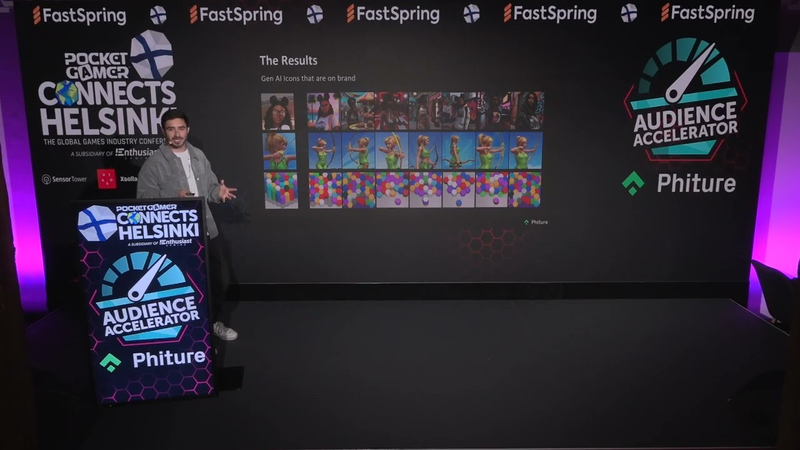
Session: Accelerating ASO Experimentation With Gen AI Using PressPlay - Mikey Feingold, Phiture
App Store Optimization (ASO) has become increasingly complex, requiring a balance between visibility and conversion that often exceeds the time, budget, and human resources available to many mobile growth teams.
- Phiture’s PressPlay platform automates ASO experimentation, enabling teams to run hundreds of tests on icons, feature graphics, and screenshots without manual intervention.
- A case study demonstrated the tool's capacity to deploy 322 experiments over eight weeks, resulting in a projected 12 million installs.
- The platform utilizes a cyclical framework that integrates competitor intelligence, user review analysis, and brand-specific guidelines to ensure AI-generated assets remain strategically aligned.

Press Play, Part 2: What Games Get Wrong About Retention, and How to Fix It
The gaming industry is currently undergoing a significant shift as its core design principles—specifically those centered on behavioral psychology, engagement loops, and interactive mechanics—become highly sought-after assets in non-gaming sectors.
- Game design principles are increasingly being applied to non-gaming sectors, such as Duolingo’s gamified learning or BCG’s use of simulation games to teach corporate strategy to consultants.
- Retention is driven by a deep understanding of human psychology, personality traits, and motivations rather than relying solely on mechanics, monetization, or dopamine loops.
- The stigma surrounding video games has faded, allowing game developers to pivot their skills into roles within marketing, emerging technology, and digital product innovation at non-gaming firms.
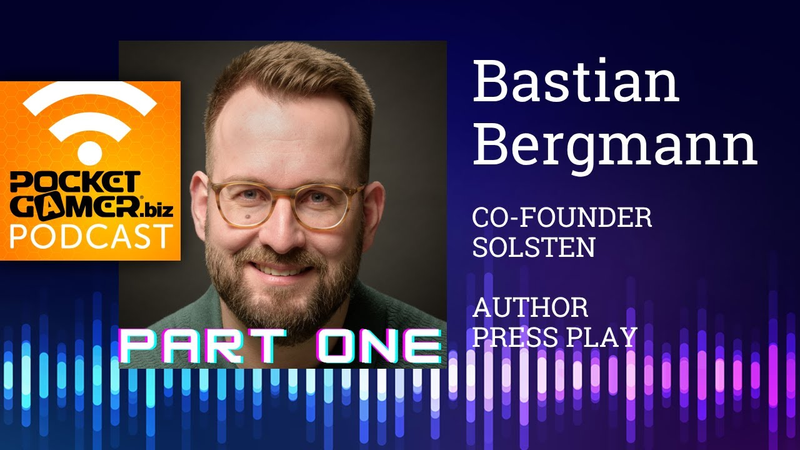
From Solsten to Press Play: Why Human-Centered Games Win
Gaming functions as a transformative technology that extends well beyond traditional entertainment, serving as a powerful mechanism for engagement and behavioral change in sectors such as fintech and wellness.
- Gaming is a highly effective engagement tool because it is an active, two-way medium involving constant action and reaction, unlike passive consumption models like social media.
- Successful brand integration in gaming requires moving beyond simple marketing activations to deep, complementary experiences that align with the brand's core product or service.
- Chipotle’s Roblox integration successfully drove record-breaking digital sales and loyalty program sign-ups by gamifying the customer experience and offering virtual rewards for real-world redemption.
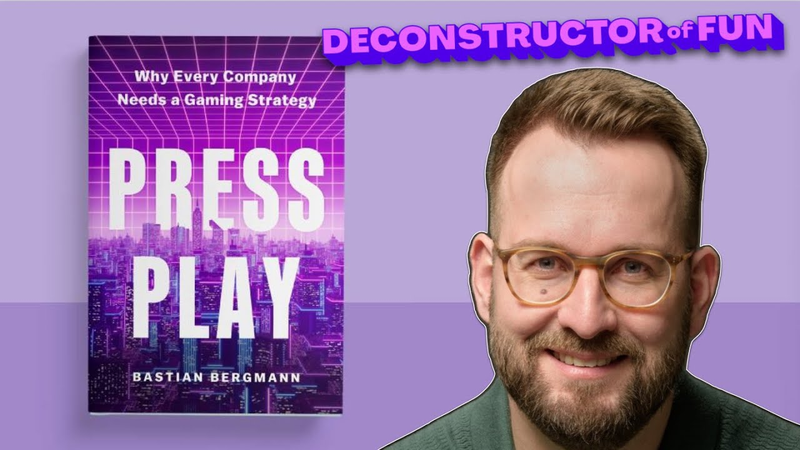
Why Adding Brands to Games Is So Hard with Bastian Bergmann
Video games represent a uniquely powerful medium for human transformation, driven by the fundamental human impulse for play.
- Brands should prioritize low-lift partnerships within existing gaming ecosystems rather than building custom experiences from scratch to mitigate risk and development costs.
- Successful brand integration requires shifting from traditional advertising to gamification that aligns with the inherent mechanics of play, as seen in Peloton’s Lane Break and Dettol’s Roblox campaigns.
- To move beyond vague awareness metrics, organizations must establish business-aligned KPIs such as loyalty sign-ups and long-term retention to track the effectiveness of gaming initiatives.
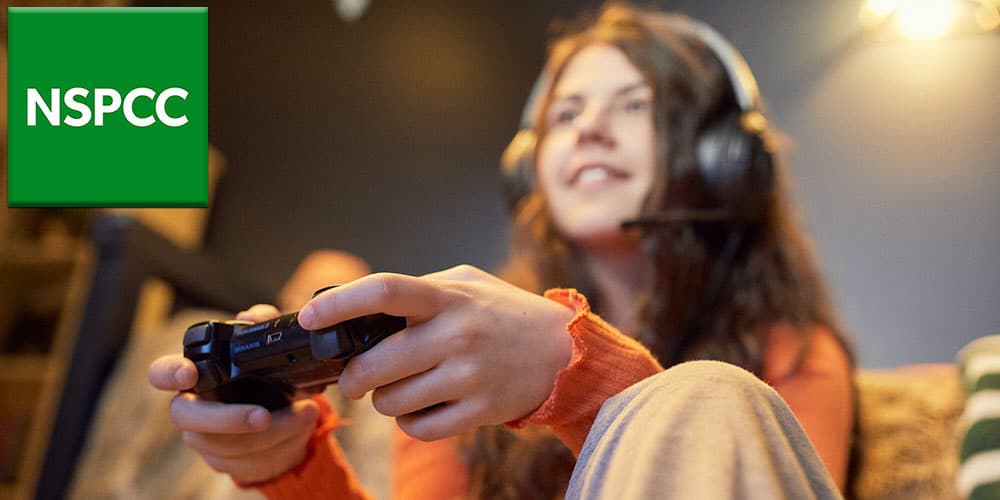
NSPCC Partners With EPIC.LAN for Game Safe Cup
The National Society for the Prevention of Cruelty to Children (NSPCC) has partnered with EPIC.LAN, National Student Esports, and SAF to launch the inaugural Game Safe Cup.
- The UK children's charity NSPCC is partnering with EPIC.LAN, National Student Esports, and SAF to launch the inaugural Game Safe Cup, a free-to-enter EA Sports FC 24 tournament.
- The tournament is part of the broader Game Safe Festival, an initiative designed to educate parents and children on online safety and promote a safer gaming environment.
- Registration for the Game Safe Cup opens on January 3, 2024, with online qualifiers beginning on January 13, 2024.