VideoNaavik
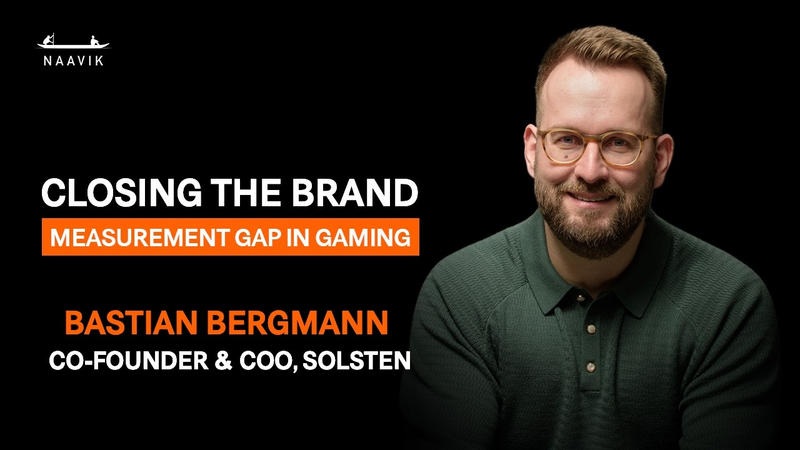
How Better Measurement Will Unlock the Next Wave of Brands in Gaming
10 Mar 202663 min video
Transcript
Welcome to the Navit Gaming Podcast, where it is our mission to explore the business and future of video games. We bring together the industry's brightest builders, investors, and thinkers to keep a pulse on current events, dissect emerging trends and games, share lessons learned, and have a great time. This podcast is also part of Navik's growing ecosystem which ranges from free and premium research to consulting and advisory services. For more information, visit www.navic.co. This episode is brought to you by Neon. For the first time in our industry, developers can finally have their own DTOC channels to save on app store fees and build closer relationships with players. But there's a catch. Selling direct means either building complex infrastructure yourself or choosing among legacy providers whose inexperience in games or questionable
reputations pose real risk to your business. Luckily, there's Neon, the DTOC platform built for games. As a merchant of record with customizable web shops optimized for conversion and modern APIs that let you use your existing live ops tools, Neon is trusted by some of the biggest names in gaming to help you sell direct without the typical overhead. To start selling direct and finally take control over your full player experience, simply head to neonpay.com or check out the link in the show notes. Today's episode is brought to you by Model AI, a team using the latest breakthroughs in agentic AI to transform how games are tested. Instead of relying on brittle scripts or deep integrations, Model QA Plus uses computer vision and reasoning models so AI agents can actually play your game, finding bugs the same way a human would, only faster. Born from a company pivot earlier this
year, Model AI was rebuilt from the ground up to tackle one of gaming's hardest problems, generalizable gameplay without any integration work. The result is a blackbox QA platform that's fast, scalable, and learning with every run. Check them out at model.ai to see how AI is reshaping game QA and learn how your team can benefit. Now, let's go to the episode. Welcome to the Navic Gaming Podcast. I'm your host, Kaylee Moore. Today's episode is about the collision between gaming and branding and why most companies are still getting it wrong. Over three billion people play games worldwide. It's where they spend their time and attention more than any other form of entertainment. And yet, gaming still only captures about 5% of the global advertising market. The question isn't whether brands should be in gaming, it's why so few of them know how to do it well. My guest today is Bastian Bergman, who's the co-founder and COO of Solston, a tech company that uses AI and psychological data to help brands and game studios, including EA, Sony, and
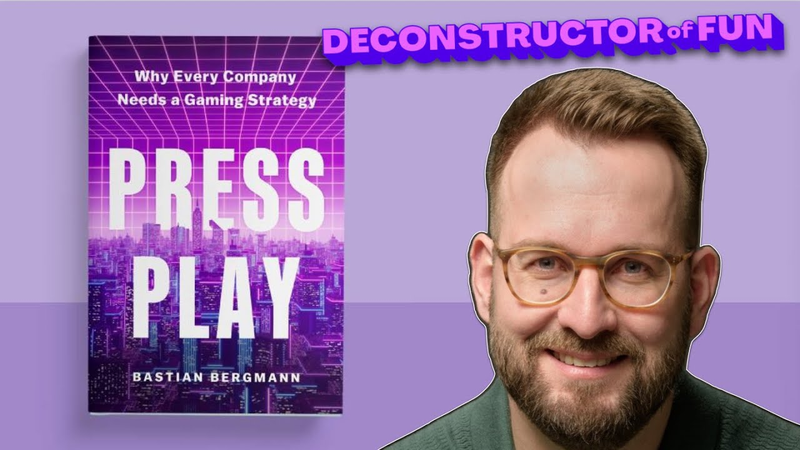
Pelatin, to build experiences that actually resonate with their audiences. He's also the author of Press Play: Why Every Company needs a gaming strategy, which was published last year by the Harvard Business Review Press, where he breaks down how companies like Adidas, Chipotle, and New York Times are using gaming for more than brand awareness. They're increasingly focusing on conversion and long-term engagement. Today, we're going to dig into why audience strategy is where most brands fail even before they start. What separates the companies who are doing this well from the ones that are burning money on empty roadblocks worlds and whether studios should be chasing brand deals or building for them. It's my pleasure to welcome Bastion Bergman, co-founder and COO of Solston, to the podcast.
Awesome. Thanks for having me, Kaylee. It's a pleasure to be here.
Awesome. Let's dive in first to the audience problem. You've said multiple times that the place where gaming and branding really collide is around audiences. Can you explain what you mean by that and why most people are still getting this wrong?
Well, I think you know part of the part of the data here that's um extremely striking that you articulated really well in in your in your introduction to this episode. It's all the engagement is there. If you look at just pure numbers of where people where consumers broadly and players spend their time. So one, you know, you have almost three and a half billion people that play games almost daily. Like for context, what a lot of people don't realize that's bigger than the population of India and China combined. It's also bigger than any religion we've ever had on planet Earth as a as a species. So it's it's massive. Play and gaming as a as a as an industry or as a medium are are massive. That also equates to roughly 80% of the actual global consumer population. So if you're a brand and you're trying to engage the general consumer, gaming is one of the most powerful mediums that you can go to because one a lot of the people are already there. That's that's just table stakes. But then when you
look at well you know how much time do people spend um in in games? um how deep is the actual engagement engagement immersion that you can create conversion from those digital channels to you know maybe even physical channels or or other touch points that you have as a as a brand nothing beats gaming and I think one of the things that always gets lumped into this conversation and gets confused quite a bit well one is the stereotype if you if you talk to CMOs or brand executives the immediate knee-jerk reaction for not everyone but still for the m you know the vast majority out there is, well, but gaming is for the 20- year old dudes in the basement, you know, with their energy drink and they're blowing stuff up in a shooter game. Like, that stereotype is not it's not wrong. Those people exist. There's a slither of the overall audience that exists. But that's the key word. It's a slither of the entire population that actually plays. It was a lot more, you know, prevalent about 20 25 years ago where that stereotype had a greater reason to exist, I would say. And then
the other component that you look at there's there's two other pieces. One, gaming as a medium are the only medium that actually cut across all demographic consumer cohorts. So young people play it, old people play it. One of the fastest growing segments in terms of our um hours played on a weekly basis are actually silver surfers.
Yeah. So then when you look at you know on the opposite end of the spectrum you look at Gen Alpha Gen Alpha is the first audience that plays more that games more than they consume any other form of entertainment or content or medium. It's the number one medium for that audience. So if I'm a brand if I'm looking at this I I in my opinion I don't have a choice but to be in video gaming if my task is well how do we a engage new customers? How do we reach new audiences or younger audiences? And B, how do we just overall remain relevant to the global consumer population?
Do you see the shift in at all? Also, I got into gaming about 12 years ago, the
gateway was esports, right? And I remember the first pitches that I was doing 12 years ago was that gamers and esports fans are not these kids in the basement.
Yeah. as demographic shifts and the boomers are starting to retire and uh the elder millennials which I think we're probably both part of start to take over brands. Have you seen greater adoption or awareness of bringing brands in game as people kind of age into CMO level positions?
100%. That's one of the big reasons is um you know you have the internal facets of people that grew up playing games whether they you know leave aside whether you know people would consider themselves to be a gamer or not like I play video games regularly. If you ask me if I consider myself a gamer, I wouldn't necessarily say yes. Like I'm I wouldn't label myself, but I play regularly, so I'm 100% a part of that population. Um, and it's, you know, you're exactly right, that demographic
shift in the workforce. You have people that grew up in the 80s, '7s, ' 80s, you know, early 90s maybe, playing games regularly. It's that it's their medium. They're now assuming mid-level to, you know, senior level executive positions positions. are now decision makers.
So you have that natural inclination more present in the seauite and and in the and in the boardrooms and then you add to that that those people you know our generation maybe a little bit little bit older they all not all but most of them tend to have kids now.
Yeah.
So they're growing up with this stuff. So it's the it's the double whammy to an extent where you're like well I grew up with it like I know I've got my console. I used to play Sega or Sonic on on the Sega or you know what have you. Um and now you're watching your kids and you go, "Well, I've got a almost seven-year-old. She's on she plays Nintendo Switch a little bit and she's on Super Mario." And I'm like, "I remember my first time when I played
Mario Kart." So, it's like you're seeing it happen on both ends of the spectrum. You you're bringing your own experience of how you grew up and how you were socialized and you're seeing it with, you know, maybe your own kids or your friends kids. So you've got that shift on both ends of the spectrum which I think is really really important. And then the other component too um there's just a general o an awareness that took place and you got to give credit to the pandemic. Well one is because now all of a sudden all the numbers around gaming became apparent and obvious to anyone. Well it's been you know 190 billion plus industry precoid for years. So, it's been this gorilla hiding in plain sight. But what CO did is it shifted the perception around it because people were all of a sudden playing more and it got cool again. It got socially accepted. So, I I have a ton of stories and people that I know that started that were older than me who started playing games again
during co and they played as kids and then they stopped because of stereotypes, of stigmat stigmatization, you know, what have you. And all of a sudden it was cool again to play and a lot of that has outlasted the pandemic and it's just culturally it's cultural zeitgeist. It's socially socially accepted. No one's going to look at you weird if you go like you know what are you doing this weekend? Oh I'm going to play video games with my kids. No one's going to go that you're you're weird. Like we're we're way beyond that. So I think it's all those factors coming together that are helping. So can you walk me through the framework of when a brand is considering integrating in-game what are the actual steps they should go through to identify whether it's the best audience for their brand but also where those specific people are in what gaming worlds.
Yeah it's a great question. So number one, I always say, you know, all of the different executives from brands that come to me where we have this conversation, they go, "We need a gaming strategy." And I say, "Well, I don't disagree with that, but that's not it's
a means to an end." Like just having a strategy for that space, like you know, that that's not going to help you win. So in terms of steps, the immediate first step has to be, well, what is our overall strategy as a company? where are we going as a business and what do we want to accomplish whether it's we want to reach specific consumers or you know you you name it whatever the goals of that business are and then you work your way backwards and then eventually you're probably going to come to the conclusion that in some way shape or form you're going to need a strategy for this thing that's called gaming but now you know where you want to end up because it ties into the broader context of your overall strategy as an organization so that connection is critical so once you've done that and now to your exact point now we can go okay well if we want to do a specific thing in gaming let's just say you know in my book I lay out four distinct strategies like just highle framework of how you can play in games as a brand one is you integrate with
existing ones two you build your own three you throw some blockchain in the mix and four is you actually make games a part of your own product and services so
quote unquote gamification but it's actually more than that because you're bringing over complete complete game, so to speak. Um, you know, for a lot of brands, that first strategy integrating in into what already exists a lot of times will be that first experience because it's a lot more feasible. It's easier, it doesn't cost as much, and the audience is already in a game because the game is already live. You don't have to worry about scaling, attracting people. You can go to where the people already are. And that that would be step one is if I'm a brand, let's say, um, I'll give you an example. I might be Ralph Lauram. I want to do research now around well my core audience if I want to engage my consumers. What games are they already playing? Where are they? Where are they spending time? Who are they? What do they really need? What do they care about? What are their innate you know needs, drivers and desires? And
then the second step and of that and that's really really important is you as a brand have to do soulsearching around well what are what are my brand values? What's my brand strategy? What are what's my brand value proposition? And you have to make your brand values match and align with the needs of the audience because only if you can do that are you going to be able to create an authentic experience. So, it's what environments are is my target audience already in? What do they really care about? What moves them? What drives them? What do I stand for? And if I can line all of those three up, I'm actually going to be able to show up in those gaming worlds and in those different games and environments in really authentic ways, and that's what's going to be effective. You know, one of the other things, and that's kind of like to say this really plainly, don't make it about yourself. you know, don't make it don't make it about Ralph Lauren. Make it about the player. You have to make it about people
because when people are in a state of play, when they're immersed and for a lot of people, the games that they play, they're extremely passionate about it. They love they love them. So, anything that messes with that, that gets in the way of that where people feel like, pun intended, they're being played and it's just like a quick attention grab or a quick money grab and it's too obvious. the amount of rejection that brands are going to get from that is exponentially higher and actually exponentially more damaging to the brand itself
than not showing up in the environment in the first place. So, it's like if you're not going to do it right, if you're not going to put in that upfront work of really laying the foundation in terms of audience and how do I show up authentically, it's better to not not even show up in the first place. I want to drill into one demographic that you mentioned earlier that I think the silver what was it? Silver
silver surfers. Yeah,
the silver surfers. I So in my dayto-day I see a lot of
really great brand activations particularly that overwolf is doing to reach a target audience but I haven't seen any incredible brand activation for silver surfers. One could you define that? What is that the specific age demographic like over 60s? Where are they playing? And have you seen any brand that's cracked the code to reach that target audience?
It's a really good question. So yeah, I I forget what the what the actual cutoff is is. I think it might be 65 plus. It might actually be 70 70 and above.
Um give give or take, but it's it's that the oldest quote unquote gen, you know, demographic cohort there. Um where do they play? You'd be surprised. They're playing a lot of similar games that your general population plays. Like they'll actually skew they'll skew a little bit more mobile for sure. They're not necessarily going to be on your console as much. They're not going to be on your PC as much, but you have people that are playing very actively a lot of PC games. So the cadence is kind of like mobile,
PC, console kind of in in in in that order. And you've actually seen a lot of games that came out that are catering specifically to that core because you know um you know mother nature and father time are are undefeated. So the older we get naturally you know we're going to have some some struggles that we're dealing with. So you see things like less buttons on a screen, text is already a little bit bigger just because it helps with you know readability and things like that. So there's actively, you know, people out there that are making games that are specifically catering to that cohort. In terms of brand activations, um I know as much as you do, I haven't seen a really good example of a brand that's gone after that cohort. And it might be for specific reasons. You know, everyone typically when you talk to executives around this, everyone's really concerned. Number one is we have to get in front of young people. Mhm.
It's like, well, gaming and young people, that's something young people do. So, we need to get in front of young
people. That's number one. And then typically number two, which is also, you know, a medium where podcasting is really strong compared to traditional TV, it's that actual cohort of 30 to 45.
Because those are the people that those are the income years. That's where you're making money, probably your most money. Um, that's also where a lot of times in your, especially if you're early in that age bracket, a lot of people don't have kids yet.
So, it's like you're economically a little more free. We'll spend stuff on, you know, money on dumb stuff because we still want to impress other people. We're trying to find a mate. Like, all all these all all these things are going on. And that's typically the second cohort then that brands are trying to get to because there's discretionary income. There's purchasing power even more so than with Gen Alpha. It's it's it's disproportionate. That's typically where the heat map kind of sits. So yeah, I I I haven't seen a very good brand activation going after the older
generation either.
I think it's a missed opportunity. My dad was just here over Christmas and he was on his phone way more than would be allowed.
Uh but yeah, I so for any brands or studios who are building for the older population, please reach out to us at Navic. Love to do a deeper dive into this demographic. My father-in-law is the same. You know, whenever we have when we get together with the family and it's like lunch on Sundays, you you bet between the main course and the dessert, the phone comes out and then it's royal match. So So shout out to the Dream Games guys. You've done a good job there. But
right, like we we like studying up um like child production. So we get like 15 minutes of gaming a day. Yeah, it's it's becoming a problem.
I think that's universal. Um, okay. I want to switch gears be to something that I that comes up a lot. I think you and I were both at Seg 3. We were probably both at Games Beat Hollywood. There are a lot of really interesting
talks about measuring success as brand awareness. When we had our first kind of initial getting to know you call before recording, you mentioned that you see a lot of brands treating gaming as just top offunnel brand awareness. Can you walk the audience through that and why that misses the point? So you it's so take you take a step back. Historically marketing's job is a lot easier if you say well we're just we're we're all about brand awareness because it's it's always been and this is regardless of gaming. It's always been a little bit fuzzier to measure and the ROI on those activities in terms of how does this actually drive revenue is always been a little bit fuzzier. So, you know, I love marketing, but that's like the kind of the you you you get to duck a little bit and you can say, "Well, we have more brand awareness, but did it actually contribute to our top line?" We're not really sure. Um, the challenge is, you know, you look at the numbers. You mentioned this in in in the
introduction. This is the big discrepancy that we have right now. Gaming gets all the engagement, all the attention, a ton of monetization from consumers, yet it gets 5% of the total global advertising budget. 5%. There's another medium that we're all very familiar with about 20 years ago that was in exactly the same position. It was getting a ton of engagement. People were spending a ton of time on it. It was getting all of the attention. It was barely getting any of the advertising dollars. And that was social media. Fast forward to today, out of the I think it's roughly $730 billion in terms of total ad spend that gets spent on everything else but gaming,
social media gets about 430 billion of that.
Yeah.
So, it's shifted completely and I'm convinced that gaming to an extent is at a very similar inflection point than social media was 20 years ago. And a big part of it that's going to have to
happen and mature a lot more for brands to shift more advertising dollars over is if they if a CMO can go to the CFO and say we spent 5 million last year on our Roblox initiatives and that drove 50 million in revenue. This year we're we're we're this year we're investing a h 100red million in Roblox. But you can't really do that yet. you're not at you're not at that point yet because it's all it's it's fuzzier and why I think it's a missed opportunity for brands just to go okay well let's let's just do brand awareness the tracking might not be there yet okay well one you can work with partners but but two um you're missing a point because one and a lot of people don't know this statistic 86% roughly 86% this is a study by BCG that was done a couple years ago 86% of all people that have bought a virtual item item inside of a video game where the actual physical item exists to the corresponding physical item. 86% of those people go on
and buy the real item, too.
That's wild. I I cannot believe I I work in this industry and I haven't heard that stat before.
Yeah, it's crazy. It's an it's an 86% virtual to physical conversion rate. There's not a lot of other channels that can that can do that. So now the problem is okay how do we track this regularly you get into all all those sorts of questions
but the fact that that conversion rate is there and that when people are in a state of play and they're immersed anything that you put in front of people they brand recognition's higher um unassisted brand recall is higher brand awareness is higher people have continuous engagement with it they share it with their friends a lot more you get virality a lot more quickly you're embedded in a social context because people are coming together and they're interacting with you, your brand becomes playable and experiential rather than just a logo that you slap on somewhere
that you that gets looked at. And now if I'm in this playable context and I'm engaging with let's just say an item as some sort of character, you know, take Mattel as an example. It's like a toy from Mattel that is virtual and you're playing with it. You've emotionalized it because you're in that state of place. So the natural the connection, the bond that the player forms with that item is already stronger. So the leap to go, I want this thing at home and they're just going to do it is a lot shorter than for Mattel to go, let me advertise my new whatever toy, my new doll to you because I need you to buy that and whatever through Amazon, ship it to your doorstep. It's a much stronger emotional leap to go to than I've already played it. I've experienced it. I've established some sort of bond with it. I've already formed memories around it. Oh, yeah. Well, of course, three clicks, I want this thing at home. And then it gets to you and you have immediate
associations with it because of the experiences that you had in the in the gaming world with it. So, it's a much stronger connection. That's why I think people are missing, you know, the point when executives and and and and marketers and brand leaders stay on that level of well, brand awareness. Okay, sure, start there to experiment more quickly. So, you're not don't spend $100 million right away. start smaller and see what works, but then work your way down the funnel and start to understand how do I bridge, you know, the gap between the virtual world and my physical world depending on what products are selling or or what services I'm selling as a company because the conversion rate of bringing people over and and driving monetization experiences in both touch points is is huge. But yeah, as you said, um, tracking is still, uh, tracking and transparent measurability is an ongoing is an ongoing endeavor.
So, I think you made a really interesting distinction that's
important, right? We have two we have brands integrating in games. So, building different unique experiences for the gamers, but then there is also just the pure advertising component too, right? when social media passed that inflection point from going to just overall brand awareness to we can actually now track to see did the people who see our ads buy our product was there you know just a really shift in like we now have API data how did that happen and how do you think it will happen to mirror that in gaming
yeah how how it happened in social was they made it easy to look at everything because that's the the nature of and this was, you know, 10, 15 years ago, 20 years ago. Now it's even worse. Everyone has information overload. No one wants to look at or has the time and the mental capacity to look at anything anymore. It's like, I want to click a button. I just want to do stuff and I need everything that I need to know literally with a click of a button so
that we can we can we can keep moving. So, making it easy for people so that they don't have to dig. And I think where where social really won was just being extremely transparent and granular and giving people the ability of you want to get to person X, I'm going to show you how you get to person X and then you see the results and they're like, I got to person X. Whether you actually got there or not, that's a complete that's a that's a whole another podcast. Um, but at least the um the takeaway and the perception was there was I got as close to the thing that I really wanted to get to or I might have even gotten there than I possibly could have and I can see every little bit of like click through this this this this is I know exactly what performed where, why, in what regions and it was a click of a button and all my stuff is there and it and it's transparent. That gives comfort because it's full transparency. Whether that's all accurate or as effective as it again
completely different podcast now when you look at gaming today
Roblox sorry to interrupt but like do you see a world in which Roblox or UEFN shifts more in that direction or are they always these
I think they have to I don't I don't think they have a I don't think they have a choice because um it's also about driving so one it's about if if I'm the platform so now shift shift the perspective I'm not the brand I'm UFN and I'm Roblox or Zapetto or, you know, any of these other platforms, my business is going to thrive off of. What's my number one? I'm going to have to bring in and keep people in my environment. I'm going to have I need I need MAU and I need them to consistently engage a lot because otherwise, if I don't have scale, I'm not attractive to advertisers. If you go to advertisers and say, "I've got two million uh monthly active users." They say, "Great. I'm going to keep going to Facebook because across Meta, I'm going to reach three and a half billion people." So,
yes, you can always make the point of
well, but it's more curated and it's more targeted and it's more focused and it's Yes, but you're still going to need scale. Otherwise, the mechanics of the the economics of advertising dollars just don't work. You need you need scale. So, you're going to need an audience. What does that mean? You're going to need more new content. you're going to need ways to keep the audience engaged, more creator tools, better creator tools. That also means, okay, I'm going to need better incentives for creators so that they stay or come to my platform. And you can see this playing out in real life with what Epic did with UFN, which I really, really like. They've gone very aggressive towards they were always developer friendly, but they've gone very aggressive into the creator side. I think it's the first first year you don't pay any fees. 100% goes to the creator and then you're still way way better off after that. compared to compared to Roblox. So, all of that stuff has to happen. Okay. Now, now I've got that side figured out. I've got engagement. I've got people. I've got attention. I've got that side going. But now, if I want to keep bringing ads
in because at the end of the day, that's also where the real money then is. It's the brand going, I want to engage with whatever 100 million people in Fortnite. Okay. So, now what? They're someone's gonna go, I'm gonna need to go to my CFO to demonstrate what are we gonna get back from that.
Yeah.
And and if you can't do that, you're not going to get those deals. um you can only ride the wave of marketing and cultural zeitgeist and perception for a certain time, but there's going to be new games that are come that that are popping up like Hidden Door is a really interesting game that has a ton of opportunities of bringing different brands in through storytelling and making that really immersive and engaging. you're going to have more and more and more platforms and different places pop up where people are going to go and create and that's going to put even more pressure on the Robloxes of the world and the Fortnites of the world to do everything that they can to maintain that eos that ecosystem
overall and I don't think you have a choice at the end of the day to to be ultimately be as transparent as you can with you know let's say Disney coming in or now Warner Brothers on on Fortnite with Bugs Bunny which is awesome
but it's like What am I what am I getting? What am I getting out of that? And I actually think it extends a little further if you if you if you talk about, you know, the game publishers, take the still fronts of the world or MTG, you know, any of the mid to even like slightly bigger publishers. If you start treating your your studios and all of the games that they make as an actual portfolio, as a content portfolio that you have.
Yeah.
With an audience and different audiences that play across all those different environments because it's not one in the same type of audience across all of your games. There's some people that play a lot of your games that you have to offer across your different studios, but then
you're going to have very individual and unique pockets or niches of audiences across all the games that you're catering to or that you're that that you have and that you own. If you're, let's say, Stillfront, so why don't you zoom out as a publisher and go, I'm going to treat access to these games. I'm going to treat that as a holistic entertainment portfolio and I'm going to make it really easy for brands. And that's the thing, you have to make it easy because this is still uncharted territory. You can't expect the CMO of L'Oreal to go, "Oh yeah, I know what game X, Y, and Z is, and I know the, you know, all the minute differences between this type of mobile game and this type of mobile game." Like, they don't know. And maybe at the end of the day, they don't care. And maybe they don't even have to, you know, they don't might not need to know. So make it easy for them. White glove service. Bring them in. How you integrate in your games. Plug and play. It needs to be easy out of the box, ready to go. And the tracking and the
measurement should just come with that. It's like if you as a brand, all we need from you is maybe these assets and we need to know this and the rest is all taken care of. You get you do this, we do this, we do this for you. At the end you get this and it's plugandplay. and they and and you walk them and handhold them every step of the way. So to me, it's actually a huge opportunity for the gaming industry that has the potential to catalyze growth again. Because again, like
we're sitting on 95% of advertising dollars that are not being spent in this industry by by by brands. I'm not saying that, you know, every dollar is going to get shifted. No,
but it should go from 5 to 5% to 20 or 25%. And now we're talking about 200 to$250 billion are invested into gaming every single year by brands. And what's that going to do for the industry?
Why do you think MTG, for the example, hasn't moved on this? Is it just, you know, too many competing commitments or
it's hard to get started with white label? Like why why aren't more people embracing this?
I don't know about MTG specifically. And full disclosure, like I I I I I I love the team over there and I think they're actually doing really really good work and they've pulled off
one of the harder transitions over the last years. Like let's not forget that that was a pure content. That was a publishing company originally. Like Modern Times Group was not a gaming company.
That was a traditional publishing house and now look at them today. So they deserve all the credit for the journey that they that they've been on. Um but I think more generally, yes, one you you always have competing priorities. Sure. The other thing is I think it's actually hard. It's a hard problem to solve. You have all these different games. You know, some run on different engines. Um I'm not going to name the name of the publisher, but I had that conversation 3 weeks ago about, you know, data and analytics that they're doing and audience segmentation. This is a this is a VP of growth. And he just said to me and goes, "Bastion, one of our best games. I can't like he's like, "What do
you I just gave them mix panel a couple weeks ago. They're learning Mix Panel right now. the game's killing it and has been for years.
I'm like, how do they manage players in an Excel spreadsheet?
That's that's how they're looking at their numbers once a month.
I'm like, and yet here's this game is it's super successful, but that's one of the challenges that you're dealing with. If you have, you know, let's say you are a publisher like that, you are MTG, you have five, six, seven studios, you might have 25, 30 games. The technical maturity across all of those is very different. the baseline's very different, then the platforms are different. So now to then go in and say we're going to make it make it an effort to go to streamline all of that so that we can give plug-and-play tools that's a huge lift. So and to me again this is actually one of the technical innovation opportunities in the industry where in that layer if you can go to a publisher and say like I've developed a way where I can give you a consistent
whether it's backend or streamlined system a API layers that you could plug into all of these different doesn't matter what the engine is it doesn't matter what this is but all of a sudden you can basically unite on your end the visibility into your 30 different games and I I can give this to a brand and go drop your logo, drop this, drop your assets and off and off we go.
Mhm.
I think it's it would be insanely valuable to both the brands but also the publishers and the gaming studios.
I also feel like in a world of Claudebot, this shouldn't be too far off. Also,
maybe. Yep.
Okay. I want to shift gears a little bit to talk uh to go back to the brands who are approaching advertising and gaming or doing branded experience in gaming from mid tier or bottom of the funnel approach. I'd love to hear a little bit about who you think brandwise is doing this really well and maybe share some case studies.
Yeah, so one of my favorite examples is
hands down the New York Times. Thank you.
Um it's if you look at again in an industry we just talked about MTG in an industry that's been severely challenged and you know by most standards just in structural decline traditional publishing. They're one of the only companies that have you know completely turn it around and buck the trend. They're growing and it's purely pretty much digital revenue, subscription revenue that's growing. And the number one reason, the key growth driver behind that is the New York Times games app and the subscription to that. So people that actually come in through the games app subscribe to the other content pieces more frequently. They own more and then subscribe to the overall New York Times subscription much more than people that come in through another angle into the New York Times ecosystem. They engage with news content a lot more. They turn a lot less. So overall, they're much more they're much healthier, much more valuable customers that the New York Times acquires through the through the
games channel. So it's really interesting. In the 19 I think it was in the late 30s, early 40s, um in the newsroom, they had this saying when the first New York Times crossword uh puzzle came out on the Sunday crossword,
they had this this this saying in the newsroom with the editors around
people come for the news and they stay for the game. We've actually shifted that to people come for the games and they stay and they stay for the news. And that just shows you what profound impact this has had on the New York Times. And what this how this translates into well bottom of funnel activity was if all these people are coming in and they're up up um upselling their subscription to I'm going to get the cooking stuff and now I'm going to get this stuff and I'm going to get the overall news subscription. Like that is bottom of funnel. people are converting converting a lot more and buying more from the New York Times compared to their quoteunquote just sticking to the games app. I think that that was a very good example. Another brand that's really good in this regard is Chipotle.
Mhm.
Actually, and they were one of the first ones a few years ago to actually go into into Roblox. What they did which was really cool 3 four years ago um around Halloween because that's a fan favorite holiday for Chipotle people. like they do this whole thing in the in the US in the restaurants around guac. So you have like Halloween characters that are kind of like themed as Chipotle menu items. Um and people actually dress up and go to their Chipotle restaurants to get food and they're in like full-on Halloween gear. So it's a it's a thing. So they took that as a first init and said around Halloween we're bringing this into Roblox and they had it with a it was called burrito maze. Um,
so you could play like this maze type game. You could collect different skins and characters and uh outfits for your own avatar. And there was also a virtual restaurant that you could go to an actual Chipotle restaurant. And you can make your own burrito and this and that. And they were handing out free entre. So
$1 million worth of free entre. So you could go in, get your free burrito, and then claim it in real life, whether it was online, or you could go into a store and claim it, too. I think it was just under 10 minutes and $1 million in burritos were gone. So that's one. But what's even more profound is that this, cuz you could say, well, people claimed it because it was free and then they didn't do anything with it. this event, this gaming activation, it actually led to one of the best digital sales days that the company has ever had in the history of the company. It also led to one of the best um enrollment days for its loyalty program, for its rewards members program. So now, and this is the question that I asked them is like what was the ROI on giving away a million dollars? They wouldn't give me the exact number, but they says like we paid we paid for this in minutes because you know the they know what the value what the lifetime value of an actual rewards
member person is
because they can do that historically. It's like if you come in roughly you know you're this type of person you're going to stick with us for 10 years on average you're going to order this this and this.
It's like with a million dollars we brought in this many people like this we paid for this in minutes. Not not even not even a problem. So I those two
they released those numbers for some kind of case study.
So they built their own Roblox world, right?
They did they did both. So the first time they integrated in an existing one, but then they also built their own their own um Roblox world. They're I would say they're they're a little bit um agnostic because they really do both depending on what they want to accomplish. Okay, this is kind of the perfect transition because there's this GIQ, I think, study. Yeah. Uh, that showed that brands are abandoning their own Roblox world and they're shifting into integrating existing games. I want to hear from your perspective, are you
seeing that just from a brand perspective, building within integrated gameplay versus building their own world? Has that changed in the past year or two? And what do you think is driving that shift? I mean, obviously, it's really hard to bring people into a game unless you have amazing incentives, but I'd love to hear your perspective.
Yeah, we we we definitely do see a little bit of a of a shift, and I think there's there's multiple reasons at play. Um, the first one is, and this is not going to be a surprise to any of the listeners to this podcast specifically, making games is really freaking hard. So, it's like, so for a lot of new people that came in, like, well, you need we need to make our own game. You know how the corporate mentality is? It's like it's shiny, it's new, it's big. We need to have this our own. We want our own. So people go and they make it and then you you have an own world that you have to maintain, operate. Maybe it wasn't even, you know, that well done from the beginning. But there's all these factors that go into that where what developers and publishers know better than anyone, making successful games is really hard.
So to me, part of what we're seeing is some brands, it's like gold rush. They went in, there's a new shiny thing. We need it. We need to be able to say on our earnings call that we're we have we're in gaming now. It's this new touch point. We have our own Roblox thing. And then realizing throughout the process that it's actually really hard.
Yeah.
So, what do we do that's maybe easier or more feasible. So, I I do think that's that's one. Another one is just people starting out with integrations because they're slowly trying to dip their toes into the water a little bit. The other reason is I do think is the tracking component because we already talked about it. So if just because something's hard at maintaining it doesn't mean you abandon it.
Just because it's hard doesn't mean you abandon it. But if you don't know what your actual ROI is, do do the efforts that we're putting in do the returns justify all the efforts that we're
putting into this? And if the answer is we're not sure, we think so, but we don't really know, you have a hard time scaling those efforts and and justifying millions of dollars in budget behind it, you know, let alone making it a consistent and a continuous thing. So, I do think there's multiple factors um at play here. If if you force me to pick one and take a guess what I think the number one is,
I do think it's people were rushing to it. It was a new shiny thing. They didn't think it was going to be, you know, maybe as hard as it was or as complex as it was. They were surprised by the complexities and just don't feel equipped to handle that ongoingly and are now looking at, okay, great. We understand we need to be in this space. We need to do something around gaming. How do we do something that's maybe a little more light lift right now?
Yeah. But I also think in some ways it opens up another can of worms, too. There's a really great article probably about six months ago in Digit. Alex Lee,
who's now at Gamesbeat, wrote it and it was UEFn creators going on the record saying, "Oh, these brands should have come and built with us in our world versus you building their own experiences." And it was very clear from that very nuanced article of
some of the creators haven't necessarily worked with brands. they don't necessarily understand brand guidelines and they have a very different idea of the KPIs that show success, right, than if you're working with developers who have built incredible games before who know how to integrate your brand safely too. So, I think that's also another discussion of especially brands who are very new to gaming who want to maintain that brand safety component.
Yeah, 100%. And that's one of the big reasons why I even went on this journey to to write to write this book
is to build a bridge. And I think that's an ongoing effort that has to happen here because
for for a lot of brands, gaming is foreign territory. It's uncharted territory. And I'm not even talking
about anything UGC and creator economy. Like that's even more uncharted territory to to to a large extent. So they're unfamiliar with it. And you nailed it. And the flip side of that is you have a whatever 17-year-old creator
and all of a sudden they're supposed to work with um Hasbro IP. It's like they've never heard of brand guidelines and brand safety and any of that in their life. And it's like well if you're running a toy company and you know kids are, you know, your customers, yes, you're selling to adults, but you're dealing with kids and you're dealing with multi-billion dollar IP. You bet there's going to be some guidelines around it for for for good reason. So I do think there's a little bit of both, you know, a maturing that has to happen on both sides and just facilitation of that conversation. I know Overwolf's doing really good work helping set those, you know, brand guidelines and making it easy for creators to understand, you know, what they can and what they can't do and more of that more of that collaborative facilitation to and honestly like all
good things in life, it starts with an open mindset. just having an open mind and approaching it with I'm here to learn
from that other person and and see how we can do really cool stuff together and not well here's how I always build my you know my different environments and I'm going to keep this my way or the highway and same with the brand like don't make it about yourself it's about the person it's about the people that end up playing your experience so how do you come together with creators to to deliver something that's really meaningful and enjoyable for people
what brands do do you think should be integrated into gaming like right now? Like that are just absolute no-brainers. It's crazy. They haven't done anything yet.
That's a very good question. Um, a brand that hasn't done anything yet
or maybe just their toe in, but like where are the huge opportunities that are being missed? Well, one that's very clear in general is
well, any brand that has an immediate direct relationship to a consumer, anything that's DTOC, 100%. To me, what what what's mindboggling to me is that not more apparel slash, you know, companies that are really close to e-commerce
are more aggressively going into that space because of the conversion rate. And you have a really good like Nike has done some stuff that that was cool for sure. No one's beating Adidas at this right now. what they've been up to over the last like Adidas what a lot of people don't know over the last four years Adidas is the only Fortune 1000 company that built an internal business unit that has its own P&L that is all they do is they sell virtual goods. They have an own business unit that is only tasked with selling virtual goods and it's highly profitable and it's growing like crazy. So, there's
a role model right there. And Adidas is active across all sorts of different environments. They have they just launched. It came out 3 4 weeks ago. Um, Three Stripe City, I think it was called in Minecraft. It was a separate DLC. People could download it for free, play it for free, and you had all sorts of, you know, new Adidas collection in obviously Minecraft style that was in there. They do a lot of collaborations with Fortnite regularly. They they do stuff with Minecraft. They do stuff with Roblox. So they're really across across the board and and they've been able to monetize this and they've been able to also show if we're doing certain things in these environments, here's how it actually impacts real sales of our jerseys or our Olympic collection or new sneakers that we have. They've been able to show that. So, for me, that's the part where I I'm I'm surprised that not more, you know, um more Adidases of the world or the Under Armours or like some of the challenger brands or like on running,
you know, there's so many really cool challenger brands that are big. It's like on running makes like I think six billion in revenue now or five billion in revenue. It's like they're big enough to do this. They're young, dynamic, modern, they have great great base in terms of customers. It's like and also their type of product and and and the brand values that they portray like
they feel like such a perfect fit to be in these environments to make the product even more experiential and the different you know shoes and and what what have you. I think that's the biggest biggest surprise for me is that we haven't seen more and deeper integrations where it goes directly from I maybe had this new on running sneaker on and I'm running through Fortnite and it looks cool and it's awesome. And I've got the hoodie with it, too. And it's like, well, let me go and actually get this delivered to my doorstep. Like, I want that hoodie. I want to wear it next week when I go running. So, let me just let me just buy that.
Yeah.
That that's the one that that's most surprising to me. Um, an industry that a
lot of people don't talk about that's actually slowly waking up um and starting to think about this are banks and financial services specifically, which
doesn't seem super intuitive immediately, but there's a lot of reasons for this. and they're looking at games partially as is could this be my future digital branch
where people don't necessarily go um go to you know physical branches anymore.
Um and then one of my favorite and I I hope and I think we're going to see a lot more is back to the New York Times. So like the publishing industry like news and content
but embedded in games. So, it's like my my kind of like hallucination or dream that I have is when the new GTA launches, you can actually drive past like I don't know whatever um CNN's building or there's like billboards where actually like live news are flashing through and it's like the stuff that you would watch on social or the
stuff that you would watch on TV. You can just follow the news and real life, real time content live in GTA and that's your publishing channel. That's your actual outlet rather than I need a whatever CNN plus subscription app or or whatever they have.
I mean, that would be amazing. I feel like with the exception of the New York Times, right? They're so behind. I mean, I feel like they're just conquering social media now. Wall Street Journal now has like a billion Tik Tok subscribers, which which is amazing. that that happened this this year.
Well, this year. Yep.
Yeah. Um, okay. I want to talk about this from the game studio perspective, too, because I do think that's a large part of the Navic audience.
So, if you are an indie game developer or a UGC creator and you want to bring brands in, how does that work? Should people pro it start thinking about it like, is this something I should proactively reach out for or should I build experiences that brands come to me for? If that
makes sense. cuz I know it's kind of a chicken in the egg. Where would you recommend a game creator starts?
I think if you're if you're already working on a game or you already have a game, like where I wouldn't start is I wouldn't start and build a game with the goal of well, I want to integrate a specific brand into that game right away because then you're you're you're maneuvering yourself into a corner because there could be a million reasons why that specific brand then says, "Well, well, we're not going to work with you for whatever reason. kind of might have nothing to do with you or the game might be could be a million other things and then you sit there and go well we have this great thing now now what do we do so I wouldn't build with brand first or a specific brand in mind what I would do is I would if you already have a game or you're working on something I would build it so that it's it's brand agnostic but it lends itself to well we we could do partnerships and integrations in this if we wanted to.
Mhm.
So, so that you're open enough. Number
one then would be if you bring in enough of an audience so you have sufficient scale that's attractive to these brands. That's
that was actually going to be my next question. What does that scale look like? Just
I think it depends on the honestly it depends on the type of game and it also depends on how good your engagement is.
Um so if you're just saying like well we have 10,000 people that come in every month that play this. not going to that's not going to, you know, not going to do it. But I think once you start to get to a 100,000 monthly active users and more, you're in the realm of it might not be the most attractive to the biggest brand that's out there, but it could be really interesting to a tier 2 or tier three brand, which is still going to help your game. And if you can show that it's very targeted, and again, the engagement around what you're doing is really good. So, I'd rather have 100,000 extremely engaged, highly monetizing users that are love my game, that are passionate, that keep coming back than 300,000 disassociated ma that
sort of like play my game, right? So, I do think it's a combination of of of looking at the telemetry holistically.
And what you can do as a as a developer is really invest in getting to know your audience. Um, not just well, what do they like about our game, but who are these people in real life? Mhm.
What brands do they already like? What movies are they watching? What other, you know, affinities and preferences do they have? Who are they actually in real life? What does a day in their life look like if they're not playing our specific game, for example? You know, what do they do? And what what do they care about? And how could we marry that and actually cater to that inside of our game? And I think that's the prep work that you have to do. If you go to a brand and say like, "Hey, um, uh, hey, Washington Post." There's there's a really cool game out there that's called News Tower. Really cool. It basically lets you play you you run the newsroom in the 1940s publishing
organization and you play against other people and it's about can you build the most successful newspaper. Really, really cool stuff. So, maybe it's the New York Times, maybe it's another brand that you want, you know, you want them to do advertising in your in your game, but let's just say Washington Post. You go to the Washington Post in your news tower and you go, "Okay, here's why we think you need to be in our game. Here's our audience." They actually subscribe to these different news outlets.
Yeah.
Some subscribe to the post. A lot of them are previous Washington Post people because they're struggling with subscriptions right now. So, there's affinity here, but they churned recently. We have really good engagement around this. We think this is an incredible opportunity. here are the values that you stand for. Here's what our audience is craving. Here's how we could imagine in integration what it could look like and how how it could help you. So, I think leading with that input, with that level of detail and understanding rather than well, our
audience is young. We give you access to young people. Okay, great. Like, why that spec? Why are you trying to have a conversation with me versus my three other competitors or 15 other newspapers or news outlets that you could go to? I think that's the number one that you could really do as a as a especially as an, you know, as an indie. Invest and and make sure that you know your player base more deeply and intimately than anybody else out there. And that's going to give you opportunities to go, we should talk to these people versus we should talk to this brand. And if you have trouble reaching them, you know, whatever, LinkedIn might be hard, email might be hard. The best recommendation that I can give where you're going to find a lot of those folks is at advertising conferences. So, you're going to have to venture outside of your gaming conferences a little bit.
But if you go to ad week in London or you go to ad week in New York or, you know, SEG 3 was obviously really good because that brings it, you know, a little bit more together. But I would go to those events where it's the intersection of all those or specifically advertising conferences and
you're going to run into the right people of across all the different brands, you know, sooner than later.
So, if there's one thing that you would want game studios to take away from this conversation, would it be the segmentation or is there anything else?
It's definitely the segmentation. And then the other component I would say is Don't a lot of studios unfortunately not I I should say some studios and more than I would like at least personally um have almost an allergic reaction to when you start talking about brands and brands going into this space like well but the purity of my game and people players are going to hate it and this is for players and I don't want this tainted and you're right with all of that. However, there's a commercial reality that is playing out in real time. And at the end of the day,
if if you don't have a game that makes meaningful revenue, that pays for all of the salaries for your team and for your office space and for your electricity, you don't have a business.
Yeah. And this is one of the most effective ways that's right there. That is where the world's moving anyway that can help you really solidify and grow your game, meaning your business. So that's the other takeaway in in in addition to the segmentation piece and just really understanding your people. Don't fall into the trap of having that immediate allergic reaction to I'm not touch brand's not touching my game. Like be open-minded. be open-minded to that conversation. Go. You don't have to work with everybody. You don't. But think about this. Read up on this stuff and start to understand that this is a reality that's sooner or later going to happen anyway. And think about and creatively explore what brands you maybe would like to work with
that could be a fit for your game. Start there. You don't have to work with everyone, but at least be open-minded and and explore avenues of there's also a lot of good that can come out of those different collaborations that might change the trajectory for your entire studio.
Absolutely. So before we wrap up, will you tell me a little bit about what is next at Solston? I know you guys sit at the intersection of AI, so it's a very exciting time. I'd love to hear a little bit more.
Yeah, abs happy to. So, we're currently um scaling our first AI application called Allaris, which is like uh it's an AI chatbot that runs on top of our own proprietary psychological database that we have been collecting over the last eight years and that we're constantly collecting. It's model agnostic underneath. So, think of like it's your your researcher, your marketing strategist, your insights person, and your content creator allin one. So it lets you create personalized content for your audiences actually against and and and you know with the understanding of
what are the unique psychological drivers of my audience that I'm trying to reach. So it's really cool when you start to compare output. You give Chad GBT the same prompt. You give Allaris the same prompt. The output is completely different because we just have more insight into the psyche and the the drivers of the people that we're trying to reach. So really excited about continuing to grow that. Um it's looking really promising right now. And then the other thing um that we're really excited about over the next few months is we're starting to go live with our own API layer. We're effectively building out an infrastructure layer for publishers, developers, engines, backend tools, content recommendation engines, you name it. advertising networks to connect to that layer to start using our data to drive deeper personalization into their environment. So, if you're running a multiplayer game, you shouldn't just be matching people off of skill or resources that they have. You should match them off of psychology based off
of who's going to have the best time playing together as well as playing against each other. We actually seen that this drives a little more than 20% engagement increase because people have a better time playing with people that they naturally like like or or or gravitate towards or you know what's the what's the next best movie or next best game someone should play or or watch or how do we bring the best people together who should see which ad in an ad network. So that's the next step for us is um basically making the intelligence that we have and that we're able to collect really accessible and empower other people's applications and use cases at scale and letting everyone benefit um off of this insight to drive more personalized experiences for people out there.
That is really exciting. We'll make sure to include the website and contact details in our show notes. Bastian, thank you so much for joining me in the Navag Gaming podcast and have a great
time at the Olympics.
Thanks so much, Kaylee. Really appreciate it.
If you enjoyed today's episode, whether on YouTube or your favorite podcast app, make sure to like, subscribe, comment, or give a fivestar review. And if you want to reach out or provide feedback, shoot us a note at [email protected] or find us on Twitter and LinkedIn. Plus, if you want to learn more about what Navic has to offer, make sure to check out our website, www.navic.co. There you can sign up for the number one games industry newsletter, Navic Digest, or contact us to learn about our wide-ranging consulting and advisory services. Again, that is www.navic.co. Thanks for listening, and we'll catch you in the next episode.
Auto-generated captions from YouTube — names and numbers may be misheard.



















Comments