VideoPocketGamer.biz
From Solsten to Press Play: Why Human-Centered Games Win
30 Sept 202537 min video
Transcript
They gave away about a million dollars in burritos in that experience. And I asked them, he said, "Did this pay off for you guys?" And they just literally just smiled and said, "You have no idea." [Music] Hello world. Welcome to the Pocket Gamer Podcast with your host, me, Brian Baglo, and the guru of gamification herself, Miss Peggy Ansults. Hello, Peggy. It's fabulous to see you. How are you this week?
I am good. Of course, we're all holding up, you know, summer heat, but I love how you did it. Guru of gamification. I don't know how you figure it out, Brian, but that's what this show is all about. We've been talking about for a while. I mean, you've been talking for it about it. Oh, yeah.
Forever actually. Right. Why games are bigger than games, why game studios need to think bigger, you know, and also again thinking about how they they can actually become more brand ready because
at the end of the day it is that that ecosystem as you call it, right? I mean games everything's a game.
Yeah.
All mechanics, they're everywhere from fintech apps, you know, wellness apps. Um games are where the audience is. Games are what we do. Gameplay is what we do. It is in our DNA.
Oh, absolutely. You know, and and you and I have spoken about this for years now, Peggy. It's the opportunity in front of games companies is more than just the consumer market, but we have this weird mindset that says the consumer games market is the beall and endall rather than looking at games as a transformative technology. So, I'm incredibly excited about this episode and really looking forward to meeting our guest.
Absolutely. in transformation. I like that a transformational idea because that's what we have. We've got a bold idea and we have got, may I say it, a kick-ass book coming out, right? It is generating buzz already ahead of its chamber release. And I mean that with, you know, absolute praise because even
the name of the book, Press Play, why every company needs a gaming strategy. How can be cool? And we have the author and the gaming, may I say it, OG himself, Bastian Berman, co-founder of Soulston. And we've had Soulston on the show before. And now we have Bastian. So Bastian, just great to have you and congratulations on the book Getting It Done.
Thank you guys. Appreciate the kind words.
So let's let's kick off by finding out a little bit more about yourself, Bastion, if you if you could. Um, you've got a really eclectic background, journalist, economist, AI entrepreneur, and co-founder of Solston. So, with all of that kind of rich history, how does that shape the company and and the way that you and Solston work um on the whole future of of gaming in the games experience? I think what really unites it is like the common thread between all of those experiences is one an an innate
curiosity for people and you know wanting to give people experiences that they really enjoy and and and leaving them with as vague as that sounds you know good feelings about what they just did. It comes down to the relationships that we have in our lives, the ones that we form, we keep, that we nurture. Um, and that's that that goes for the relationship between experiences and technology and users, consumers, players, people because they're all human beings at the end of the day.
It comes down to fun. You know, play is inherent. But as a as a society in the West, we seem to have a problem with the notion of fun. you know, um I give a whole bunch of different talks. Now, I say fun is not a four-letter word because, you know, for so many organizations, so many um businesses out there, if you're having fun, it's somehow frivolous rather than the single best way to engage with people and and
indeed learn. So, I mean, yes, the only reason I'm not popping party poppers and sort of waving little flags is cuz I want to keep that for the end. Keep in mind you're talking to a German citizen and we're talking about fun.
We invented fun. Pun pun intended. You know, fun is sort of considered has this bad rep of what's something frivolous and hence it doesn't, you know,
doesn't add additional value to your life. Well, that that's one, you know, I think flawed view of that for sure. The other nuance that I would add is if it's just fun for the sake of fun, like there's nothing wrong with that, but that's not all. It's about well, how do you make things accessible to people? How do you make things enjoyable to people, engaging to people, so that whatever activity folks are going through becomes that much more effective for the outcome that I want with that. That's why I think you know we're I think you know we're going to get to
these themes but that's why you're seeing such a proliferation of gaming as a concept um gaming as a medium gaming as a as a philosophy um gamification quote unquote for the lack of a better term because I know that's been you know it it's had its rocky history in the 2010s 2015s when people just slapped confetti on a screen and said we did gamification we're done with it. That's actually not what it's about. It's like how do you actually take the actual game design principles, but you look at Dolingo, you look at a lot of the different edtech solutions, you look at fintech, like gaming is everywhere and and it's not just because it's fun, sure, but it's because it's more engaging and more accessible because to play is human
and hence if I want, you know, if I want to educate people, well, what is my most effective way of giving people education, letting them learn new things more effectively? ly than other methods. Well, maybe I can leverage play. Maybe I
can leverage gaming as a part of that process to effectively use it as sort of a mechanism of transportation of what you know otherwise was maybe you're sitting in a classroom or you're just staring at a screen and you're consuming videos all day long. So, I think that's the it's it's fun not you know fun in and of itself. There's nothing wrong with that. But then there's also making something fun because there's a greater purpose. there's an actual goal or there's a light at the end of the tunnel and fun is kind of like the vehicle that transports you towards that other outcome, that greater outcome that you that you're after.
The whole time you're talking about that, I'm thinking about another book. It's it's old uh one I would had to uh write a review of back in the days when I was working with the Wall Street Journal. Um but it it is relevant here to bring it back. the power of pool and I'm thinking the whole time absolutely that's the other driver because yes fun um because that is what we are that is
what we appreciate it has to be as you as you said Basia not just fun for fun's sake but also it's the way we are as people because push doesn't work we pull so it needs to be engaging it needs to be something that we appreciate you know stuff that is pushed to us is not empowering we want to find it we want discover it, you know, game discovery. We'll get to that as well. But
all of that comes together and we had thankfully Joe also on the show and he was telling us about the psychology of all this. So, uh, so listeners, you know, I encourage you to go back and look at that other episode. And speaking about going back, let's go back to your backstory, right? Because Press Play didn't begin as a book. It was on your list, on your bucket list. And congratulations, you got that one, right? But uh you were chatting with me about this and I was just so intrigued because it was almost like a Eureka moment for you because you have a 40minute call
explaining the global gaming to Don
right yogurt maker. And that is what started the book. What made you realize what was that moment that said oh there needs to be a book here?
Yeah this was this was actually over three years ago at this point. It's crazy how, you know, how how quick, you know, just time just flies. But we were we were on a call and it was specifically with the the global marketing leadership team for the waters group within the Dell. So, Volvik, Evian, I'm you know, probably most of you watching this or listening to this that
have had both if not one of those two waters at some point in their lives. Like they're just absolute powerhouses in terms of global brand.
And Denown is one of the best, you know, bestrun consumer goods companies globally. They've been around forever. They're doing well. They have a ton of different brands. The people that work there, it's great talent, great executives. They know what they're doing. They're competent people. They're smart. They're good at their jobs. So, I find myself on this call with must have been like about six to eight people if I
remember correctly. And it was the the marketing leaders for these two specific water brands, Volvia. and they really wanted to talk about their digital strategy and specifically their gaming efforts because they saw gaming as one of their key three initiatives for continuing to grow those two water brands. And I said that's awesome. You guys are, you know, you guys are definitely ahead of the curve and it's the right way to think about this. What do you have planned? And it was, you know, did it was an innocent question because I generally wanted to know, hey, what are you guys up to? And they came back with an answer and said, well, we're going to sponsor an esports team. I said, ' Okay, okay,
cool. Okay,
what else do you think you're going to do? What else would you want to do?
And they literally muted themselves on that Zoom call and started talking to each other all muted. And I could see like a person in the front, she like turns to her colleague and she goes, "What does he mean? What else are we doing?" And the conversation from the 30 to 40 minute, what was it scheduled to be? ended up being a full-blown
90-minute conversation where it shifted not from what are they planning to do. it shifted to well here's gaming and here's esports in the context of gaming and here's how gaming actually works and what it is and all the other things that you could do and you're absolutely right Peggy like I walked away from that call I remember you know viscerally getting off that Zoom and going wait a minute it's again these are great people they're smart they're good at their jobs it's an incredible company if they don't know this
the likelihood that there's a lot more people that also don't
is very high
is probably very very high and and to me that was kind of like this you know this Eureka moment and I had this epiphany of like okay there's there's there's help is needed here someone needs to you know kind of like step in and almost like build a bridge between the companies on
the outside of the gaming industry because it is such a foreign object It's literally like in in the book some of the analogies or metaphors that I use like really think of it. It's like uncharted territory.
You know, when you first get into like the first time you open uh you know, God of War or a game like that, they're like, "Wait, there's this massive map
and all the different things that you can do." And if you've never played that game, that's what some of these brands, you know, feel like. And they go, "Okay, gaming." And it's just there's this whole territory that is completely foreign to us. And we are exploring that for the very first time. And you know we already talked a little bit about the importance of gaming and and and and why games work so well and what that you know play and all that and what it means for people. So that was what shaped this idea. It's like okay this is relevant for pretty much any company out there because there's a lot of different applications and use cases that you could look at other examples that you could already point to. So for me all
those things came came together and obviously also through the work that we do at Sultzen because we work at that intersection. We're obviously focused on the gaming industry but we work at that intersection actually work with and talk to a lot of the brands too that are trying to get into that space. So just a lot of the things that I've done in my life and over the course of my career and and honestly things that also interest me personally just all came together and it it felt very natural to to go down this path and write this specific book. you know the the interest from Denown I'm I'm absolutely not surprised um and I think an awful lot of the big corporates across every sector are now taking this very very seriously but maybe don't know you know where to even begin. So,
for those people who are hopefully listening in, um,
can we can we look at some of the the gaming mechanics and principles that are already out there? You know, Pelatin's
turned workouts into game loops, Chipotle's turned your lunch into leaderboard. What unites these successful brands? And, you know, how can studios tap into this,
you know, vast new market um, that they're maybe unaware of?
Yeah, those are those are great questions, Brian. I'll I'll start with what unites these experiences that are already out there and how can brands start to think about this space. Um and then we'll talk about what developers can do and game studios can do because they're obviously on the other end of that. It takes it takes two to tango and I think it's to your point
um actually an incredible opportunity for game developers and studios and it requires a little bit of a mindset shift and maybe a little bit of a paradigm shift but we'll I'm happy to speak to that a little bit um on the brand side and and the book goes into great detail of this. There's a lot of different avenues and strategies of how you can enter the video gaming space if you're on the outside and I really try to condense it down to the most simplest form of okay what can you do if you want
to start leveraging video if you're den you want to leverage video games how do you even think about this and in its simplest form you can think of them as they're uh they're escalating in their level of complexity and also in their in their potential for impact for your company. So in its very most basic form, the starting point that's easiest way to do is you find video games that you can integrate your brand and not just like slap a logo on it. Maybe do a one month themed event or product placement to a certain extent. The earliest versions of that to a degree that were really successful like way back when was Louis Vuitton in League of Legends. You remember like the trophy case that was the Louis Vuitton suitcase? like that in its simplest form was one of the early manifestations of exactly that. The key there is for a brand, you have to find a video game and you have to find different touch points where there's a strong enough overlap with the audience that you're specifically trying to reach
so that you're maximizing that established base. That's one of the big advantages. You don't have to build an audience from scratch because you're going to an established touch point that has a defined number of daily active users or monthly active users. and then you can integrate in that game that actually fits with who you are. So that's kind of like laid out as sort of the easiest, simplest, you know, painless starting point. From there, what we've seen a lot of companies do is you build your own video game.
That's actually Chipotle went exactly through that cadence. They first integrated into an existing experience on Roblox and then their second step was now we're building our own. So they built a full um it was called the burrito maze. I don't know if you guys have heard of it. Um was around Halloween because Halloween is one of the most important holidays for for for Chipotle. So literally what they what they took was they translated the culture and the essence of what that holiday in actual physical Chipotle
restaurants is because customers would come in, they would come dressed up, there'd be a special, you know, a couple special items on the menu. They took all of that and translated that to a virtual experience and it's actual standalone game on Roblox where you could play like a maze type game. You collect different items. You solve different puzzles. The more you would do that, you'd unlock clothing and accessories for your character that you could dress up and then eventually go to an actual virtual Chipotle restaurant and redeem some of those items for free burritos. And what's cool about that is that that game, that experience actually resulted in one of the best digital sales days that Chipotle has had in the history of the company and two, one of the most successful rewards members pro days, sign up in terms of signups of new people into the loyalty program. And and they can do the math. They know, well,
every person that signs up as a rewards member, what is the average value in terms of dollars that we're making with them as a company? And they invested a couple hundred,000 into making the game on Roblox. And they gave away about a million dollars in burritos in that experience. And I asked them, he said, "Did this pay off for you guys?" And they just literally just smiled and said, "You have no idea."
Okay. So they're like watching the impact and the ROI of this pretty much in in in real time from there. The other use case that you see quite a bit, that's the third strategy that we talk about. It's it's a combination of the first two with the distinction that I specifically call out web 3 and blockchainbased game because the underlying technology that powers those games just gives brands additional optionality and use cases for building enhanced loyalty and also building more monetization that you could just leverage due to the technology. One of
the best examples by far is Burberry for sure. Um they integrated with mythical games in their in the game Blanos. It was about four, three years ago, four years ago
and they launched at the time their latest collection in Blanco. So they had a limited limited edition characters, 750 of them. You could deck out your character with literally the newest collection of Burberry items, but it was in the game and then obviously play with those characters. And I think what I love about that story is when you think about, well, why did Burberry even do this in the first place? Because think of the stereotypical traditional Burberry customer just from like age, who they are, the type of profile, the type of shopper that they are. It's people that go down to downtown, they go on Main Street, they want to go to the Burberry store, they're going to try on the trench code, they do. That audience is aging out and they have to get in front of a younger audience and build that brand loyalty. And guess what? Whether it's Gen Z or
Gen Alpha or even millennials to a certain extent, their first point touch point in terms of shopping behaviors isn't the physical store in downtown. No,
they don't do that.
The first touch point is in is online. And for younger audiences, even more so, it's in those immersive environments which predominantly are video games. That's why they went to Blanos. And what I love about this story is in 22 seconds, 22 seconds, all of the limited edition characters, the 750 of them sold out at a price point of 300 bucks each, which is expensive for a free-to-play game.
Wow.
Oh yeah.
And the entire collection sold out. So, Burberry not only made over $200,000 in revenue in 22 seconds, even more importantly is they had now established a powerful and recurring touch point with an audience that they hadn't been able to get in front of previously. So, web 3 is kind of like the third strategy. And then the fourth one is,
and that's the Pelaton example that you were alluding to, Brian, is where video games actually become a part of the product or they become the product itself. And that's when you think of Pelaton. You go,
"Okay, I get Chipotle. I get brands. I get consumer goods. Okay, I get luxury. Sure."
Pelaton is a hardware me. They're a hardware manufacturer of fitness devices, bikes, treadmills, rowers, first and foremost. And they went into video gaming to go, here's more effective ways to engage people during workouts. So, they built this video game called Lane Break, which started on the on the bike. It's actually now available on the treadmill too.
And it's literally as you're biking rather than doing your workout with that's they call it instructorled content which is a very nice way of saying you know the person that's sweating in front of you on the bike yelling at you to go faster.
In that's instructorled content.
So this is an alternative to that. So rather than having a person yell at you or you're part of a class, you can
literally play this video game and it's simulating your movements on the bike. So the faster you are, the better you are at playing that game. Levels, you collect points, leaderboards, badges, does all this other stuff. And just to give, you know, listeners and and and and viewers some insight into the power of this, just over 50% of every Pelaton workout that's conducted on a bike is now done in this video game.
More than half. And every per the people that have this video game lane break as their dominant form of workout content come back for more workouts on a weekly basis. They do longer workouts on a weekly basis. So not only do you have is the thing in itself really engaging, it drives sustained engagement and retention with your actual product first and foremost with your hardware device. So that's the most sophisticated out of the different strategies and that's where especially companies in other
industries and you're really going I have a core product I'm providing a core service how do I leverage video games to complement that augment that bring it all together which is I I say it's the most sophisticated strategy because that stretches far beyond you know what most brands still gravitate towards which is marketing activation and brand activation. slap a logo on it, brand it, do a thing, do a banner ad in the game, and we can say that we're in video games. That stuff is effective to a certain extent. But where the power of games really come into into play, where it's really effective is the further you basically the deeper you make the integration
and the more effectively and the more um complimentary the games be become and are integrated into the services, the products and the offering that you have as a brand. That's where it starts to get really really really exciting. thinking the whole time is that in gaming also in brands but brands forever
but you know this is an instrument of loyalty this is an instrument of retention building at a time when the marketers we're talking with Brian are talking about you know life cycle marketing not just user acquisition player acquisition we had Ary on saying you know you have to start retargeting from the moment you actually acquire for that matter on our show recently. So this all comes together as momentum that says these are the instruments, these are the mechanics and the principles that fit together. Brands want to retain but gaming companies, studios have discovered that as well. So with that as a backdrop and thinking about the studios who are watching this, you know, how do they tap into this dynamic? because they're starting to really understand the importance
of loyalty and retention, but now they want to sort of like, you know, say, "Hey, we're open for business brands. We both are going in the same direction."
Yeah, that's a great question, Peggy.
Um, I think there's a there's a few things that are really important. The first one is you have to start to understand and really internalize the thought that you're not a game in itself. It's not don't think of it as this isolated form of entertainment. It's like I'm launching this thing and as long as I get people to just consume that, I'm I'm I'm good to go. The skills that you have as a studio, game design, development, the art behind it, architecting the user experience, that's really really powerful. And I that's the baseline. And I think you you think about that and you start at that from that place and then go great. What are different ways where we leverage them that you know how they could manifest themselves? And it might be a mobile game. It might be something on Steam. It might be something completely different that doesn't originally maybe feel like or you wouldn't originally consider it to be a video game, but under the hood it actually it actually is. So I think there's there's the first
sort of like a mindset shift there. The other component is and there's still unfortunately too many studios. I talked to one yesterday. Great group. I'm not going to name names. They have a great really successful game in the past. They're working on their second title and traction's okay. And I go, "Where are you guys taking this?" Well, we're completely confident. We've got it all figured out. We know who we're making this for. It's for people that are like us and our family and our family love. They already love it. We're in early access. Everyone's pumped. We're going to be fives.
And I have heard that story. I can't tell you how many times. And I the bottom line is I've heard it way too much.
We're making a game for ourselves. We are the audience and we're if if we love it, everyone else will love it.
You're a sample of one.
And if your team is 10, you're a sample of 10. You are not the world's population. And I think coming to coming to, you know, just grasp with that
realization and being okay with it. You're not making something for yourself. If you are, that's okay. That's a hobby. That's not a business because you could do that 20 years ago. And you know, don't take it from me. Take it from Raph Ker. He's one of the most iconic game designers ever. And I talked to Raph about this and he said, "Yeah, 20 years ago, I had the luxury of making the game that I wanted to make for myself and still have it do well." And he said, "Now, for every game that I start with, the first question I ask myself is, can I market this? And does this does this have marketability? and do I have the opportunity to monetize this? He said, I have to keep the lights on and I have to put food on the table and I have to pay my people. What you absolutely have to go to is what does the audience need and desire and what captivates them because that's who you're making it for. And especially when you start to bring in bigger brands, you know, let's go back to the Chipotle example and they did a lot of
research into this. Yeah, they went to Roblox because their initial hypothesis was we want to get in front of younger audiences and Roblox seems to be a good place. They overindex on Yep. Okay, great. But then from there there was a lot of work into well who are Chipotle fans? Who are people that who are our customers already? Who are people that love us and that connect with our brand and what we stand for as a brand? So the the brand and that's where the developer can help is don't make it about yourself, make it about the brand. And even more importantly, make it about the audience. That has to be the starting point.
And if you get that right, that's what it means to actually create an authentic experiences because people, we're so overwhelmed with content. And it's only going to get worse. we feel when stuff is inauthentic, when it doesn't feel right, when it doesn't sit right with us, when and especially people that play regularly, when they're being played, when they're playing games, we feel that right away. So, and we're going to
discard those experiences immediately. So making sure that the values of the brand align with the values and the needs and the desires of the audience that you're after. If you can match those two, that's what's going to allow you to create authentic experiences which are not only able to attract people, pull them in, but engage them over long periods of time. Pelaton actually had a really good example. Maybe a shout out to the folks over at US too because that was the game developer that worked with them on the lane break project. that was their partner and I asked the Pelaton guys like what was the experience and and and what was great about it and they said like well they didn't start with what they what their needs were what they wanted to do and they started with the user needs. It was all about who is this for and what do people need and then go to well here is the optimal gameplay experience that's going to actually satisfy and cater to the needs of your
audience not what we would like to do or what we think we we should do. So yeah, huge shout out to the us two people but um Pelaton only had really really good things to say and I think that's that's an example of what good looks like and what developers can and should do to make these partnerships successful. It is so very hard sitting here and staying quiet, Bastion, because it's there's I couldn't agree more. Um, and it's it's telling because there are so many examples um and experiences in my own work where I've run into the same thing. You know, one of the slides I use quite a lot in presentations to games people and people in the games industry is a screenshot of Candy Crush Saga.
Yeah. And I say, you know, who knows what this is? Hands up if you think it's a good game. Very rarely does anybody put a hand up. And I'm saying, but by every KPI, every measurable, you know, outcome you're wrong, objectively wrong.
Um, it's a work of art. It's maybe just not a game that you like.
Exactly. And the inability to take that step back and build games for other people maybe who are not gamers is a real dilemma within the games industry I think is really kind of holding back a number of studios because they define themselves by what they won't do not what they can't do but what they won't do.
What you have in your book bastion that stayed with me is games are the digital manifest playing then of play. Mhm.
That is critical. But I'd like you to unpack it for us.
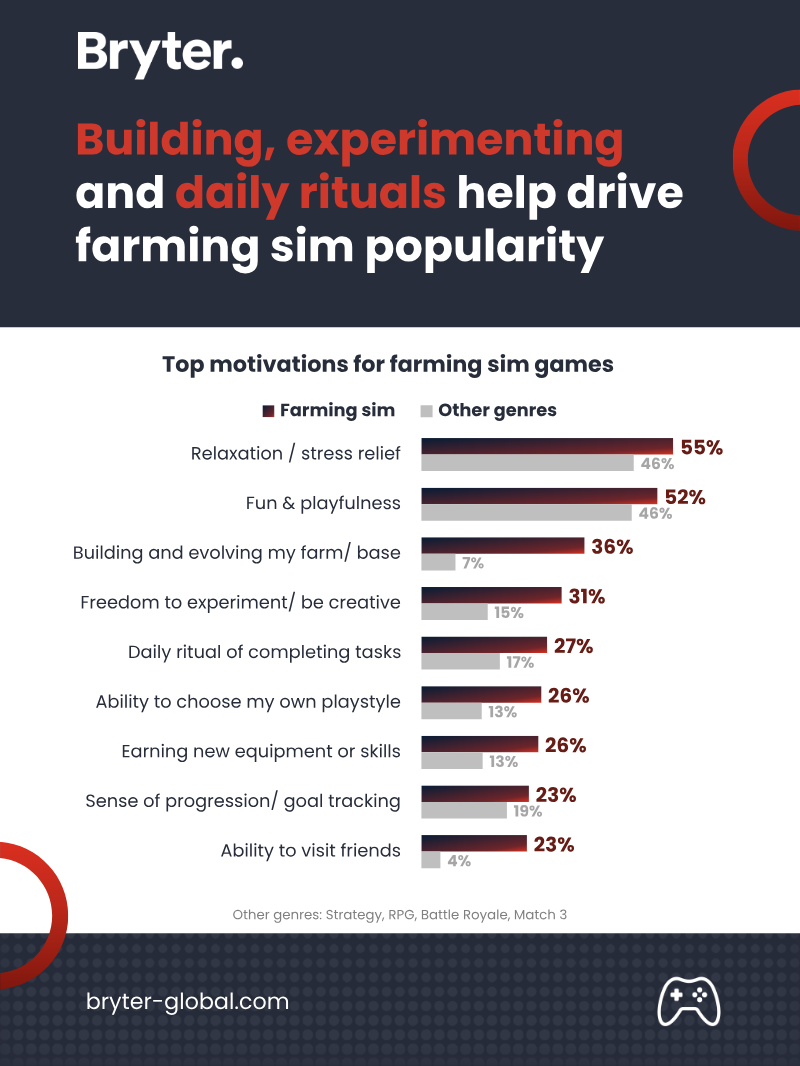
Yeah, absolutely. Happy to. And you know, credit goes to um my my partner and co-founder Joe because he first introduced me, you know, eight years ago to the concept of play. So that's, you know, that's the foundation for a lot of the work that we do. But effectively, you know, if you had to really simplify it to play as human, unstructured play. So, you know, I've I've got two young
kids. Um, if you've ever watched a toddler experience the world, it's through unstructured play.
They're just everything to them is a game. Everything to them is play. And if you look at, you know, all the different research out there and the best way for us as adults to learn new things and effectively rewire our brain is also through play. And what video games effectively are, it's a digital manifestation. It's the digital representation of play. You've got rules, you got boundaries, you've got outcomes, you've got rewards, and and off you go. And that's that's why games are so engaging because they're able to effectively latch on to or speak to from an evolutionary perspective one of the most foundational things that makes us human, which is play. That's why they're so effective. And you know what's interesting is a lot of people especially on the brand side well you
know yes there's social media and saying well people spend a lot of time on social media. Yes true already now for Gen Z and Gen Alpha they spend about I think it's 40% more time in gaming environments than they do on social media
already today.
And what's interesting is when you look at the average engagement with a post on social media like an Instagram post it's about 1.3 seconds. If you look at and you compare that to the average time of engagement with a branded video game experience on Roblox, it's 11 minutes.
So the time of engagement between social media and gaming environments is about 500 times more.
And one of the reasons for that, and this goes back to the concept of play, what makes video games so effective for people, it's a two-way street. It's not, you know, when you social media is a one-way street. At most, what you're doing is you're doing this, but that's not a real action. You're just, you're
being bombarded and it's a one-way street where the medium is feeding you information.
That's it.
Um, and that's also why social media is not really good for us and not healthy for us because we're just in these perpetual loops and our brain pretty much tunes out and it's just dopamine over dopamine over dopamine. When you look at video games, it's a two-way street because it's action, reaction, action, reaction. It's interactive. That's why it's so much better for our brains and that's why it's so much healthier for our brains because it's a it's an active experience. It's not a passive experience, which is also why they're more engaging, why they're more fun, why they're more enjoyable, why they retain better, because people walk away from playing video games. We've had so many different kinds of interviews and discussions here about you know are games are games good? We had, you know, games are uh what what what are they? What is their reason for being? And to think about it, yeah, doom scrolling, doom scrolling, that's not good for you.
Games games interaction and the and the excitement and the interest that that is.
So, Bashion, we we've been talking a lot about the opportunity to go beyond games, develop something that's more than games and how to spot them. How do developers take that step back that you mentioned earlier and stop trying to solve a problem with a video game and have a more creative and playful approach to the consumer needs, you know, the the brand needs and and building something that is of real value that maybe not a plain straightforward consumer video game. Yeah, it's a great question, Brian. And I think it comes down to a combination of one, having a very deep and concrete understanding of the people that you're making this for or the people that are affected by whatever solution you're looking into, their needs, their motivations,
even like personality traits, drivers, desires, a day in the life of what are the what are the things that they go through? What are they troubled by? [Music] And that's a wrap for part one of our conversation with Bastian Bericman. He is co-founder of Soulston and importantly author of Press Play. Little shameless plug here, a book why every company needs a gaming strategy and probably you need your own copy. But no, seriously, if today's episode, well, if it got your wheels turning, we did our job because we want you to be thinking about how gaming mechanics are reshaping marketing and even the way companies connect with players in games and beyond. But that's just it. It is a partnership between publishers and brands. And next week, we dive into how developers can prepare for the opportunities just around the corner.
And if partnerships aren't on your road map for your studio, well, brands need a gaming strategy, right? We talked about it. And your talents are in demand. So, we'll talk to Bastion about why companies are hiring gaming talent at an astounding rate and how you can stand out. So, be sure to follow or subscribe because the next episode, well, it's packed with pure gold insights and you won't want to miss it.
Auto-generated captions from YouTube — names and numbers may be misheard.
Key insights
7 takeaways · ~3 min read- 01Gaming is a highly effective engagement tool because it is an active, two-way medium involving constant action and reaction, unlike passive consumption models like social media.
- 02Successful brand integration in gaming requires moving beyond simple marketing activations to deep, complementary experiences that align with the brand's core product or service.
- 03Chipotle’s Roblox integration successfully drove record-breaking digital sales and loyalty program sign-ups by gamifying the customer experience and offering virtual rewards for real-world redemption.
- 04Burberry demonstrated the high commercial potential of virtual goods by selling out a 750-piece limited edition collection at $300 per item in 22 seconds, generating over $200,000 in revenue.
- 05Game studios often fail by designing for themselves rather than their audience, mistakenly assuming that their personal preferences represent the broader market.
- 06Authentic game design requires prioritizing the player's needs and psychology over the developer's internal biases to avoid creating content that feels inauthentic or manipulative to users.
- 07The proliferation of gaming principles across sectors like edtech and fintech is driven by the fundamental human need for play, which facilitates more effective learning and engagement than traditional methods.
Ask AI about this video
Cite this video
Citation
Generating citation…



















Comments