VideoDeconstructor of Fun
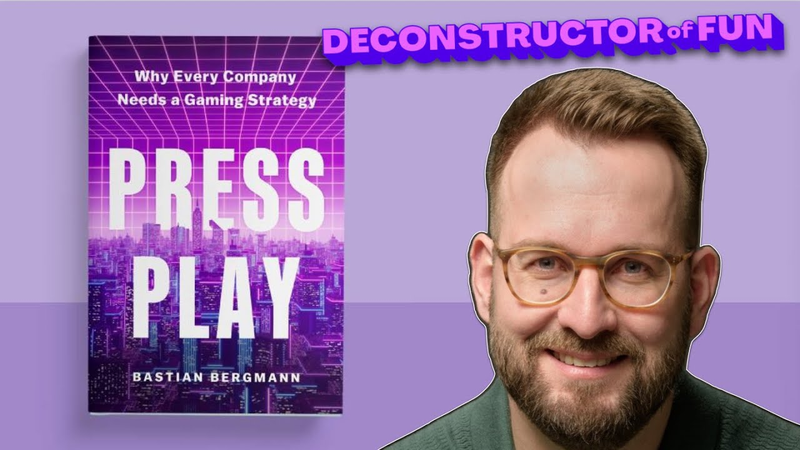
Why Adding Brands to Games Is So Hard with Bastian Bergmann
15 Sept 202563 min video
Transcript
I get uh PTSD when you start talking about like integrating all kinds of brands into games because that's not easy and it's it's usually comes from a BD team and they don't know anything about game development. They don't know they don't respect the timelines. They respect the the road maps and then they just come up with ideas. [Music] Bastian, what got you writing a book? Yep.
Like why? Who reads nowadays?
Well, I wish more people did. Uh I don't know how you feel. Um I got my my big bookshelves over there. Um I love it. Uh I wish more people did. Um it's funny that you mentioned that this I started my day today. Um I shouldn't have doom scrolling on Instagram for 10 minutes because I was like I had to accept my brain and I shouldn't have. I stumbled across this really weird like um might
have been fake so take it with a grain of salt but like Sam Alman's life lessons and you know all the things more exactly see if Chat GBT agrees but
number I don't know 30 something was read more long text read more books and spend less time on the internet I'm like I don't know even if that's not from him or if it is but I I tend to agree with that one. Um, so yeah,
less about Sam and more about Bastion. So you wrote a book called Press Play and in the book you say video games allow a deeper connection to the extraordinary self. Now are you saying that games are now the most powerful medium of human transformation?
In part, yes. And I think you have to you have to zoom out a little bit and look at and you know you of all people and the listeners to you know your guys' podcast and the doof crew know this you know better than most people. Um, you
have to look at what makes video games unique, you know, unique games and unique experiences. Like what makes a game a game? And that's actually I dedicated a whole chapter in the book on that because people outside of our industry aren't familiar with that as much. You know, they look at gaming as this foreign object, this uh it's like uncharted territory for a lot of those for a lot of people that, you know, run brands or that are at the helm of of that. But I think what it comes down to when you really zoom out and you look at the fundamentals of what is at the core of a game or a video game, it's it's play. And when you look at human beings, when you look at us as a species from an evolutionary perspective, I would argue there's nothing more that is fundamentally human than to play. Uh you and I both have, you know, young young kids and I and I'm pretty sure I hope this resonates with you, but you know, when you watched, you know, your your girls when they were toddlers, when
they were younger, how they explore the world and how they learn about the world, it's through play. It's through unstructured play. That's how they're actually wiring their brains and that's how they're learning. And even in in adulthood, even for us as a as adult human beings, play is the most effective form for us to rewire our brain to learn new things. So yes, it is an incredibly powerful medium. Video games are because it connects to I would say, yeah, what makes us fundamentally and distinctly the the species and the human beings that we are.
Do you give games to your kids? They're two and six.
Yeah. The 2-year-old, no. Um, the two-year-old gets barely any screen time. The screen time she gets is by association because the six-year-old gets to watch Bluey. Things like that.
Bluey. Oh, we're in that phase.
Yeah. Um, my six-year-old just started
playing on the Nintendo Switch a couple months ago. So, we just started her off a little bit. She plays Super Mario World, so she races Mario Kart. that's the only game that she has on there and she loves it and she actually she's very um moderate in her in her consumption of it. Like she doesn't she's not hooked on it. She doesn't ask for it every single day and she'll trade it in for screen time of watching a show or watching, you know, a small movie or something like that. She really enjoys it. Hm. That's uh that's really good because I've noticed that mobile games that are built around engagement aka addiction um can have quite negative of effect. Like our daughter is our eldest is eight and start stable is rough. Like it's like the first thing they got to open up in the morning. So with all those engagement and hooking mechanics, I'm asking you only about the games because I've after becoming a parent, I've
noticed the um the negative effect of games and it's quite significant that I have to, you know, install games on the regular.
No, I I get it. And I think a big part of it too is um is the platform itself. So yes, the underlying mechanics and what's the, you know, what you're speaking to with, you know, if it's designed around engagement, it often leads to addiction. I think the, you know, the root cause is, well, what's the monetization model? What's the business model that's driving it? Like we could have a whole another podcast series just about the advertising business model that runs the world and um and what that's led to um and the monetization of eyeballs because it's it's more clicks, more time, more money. like the the equation's really really simple and the incentives are are pretty straightforward there. And I think, you know, that's a big part of my kids aren't going to get a smartphone. I'm not going to give them an iPad and just leave them with the device. The Switch is, I think, a great place to start. Um
I personally play a lot more on um on the PS5. That's my I'm I'm more of a console gamer, quote unquote. And what I will play with her together is Astrobot because that's like installed and she loves it. absolutely loves it and it's a cool experience that you know that we get to have together and it's with any you know games in general have the power to be really good for us for kids but also for us but it's with any good things in life it's like with dark chocolate and with with red wine everything in moderation like would I give my kid the Switch and just tell her yeah feel free to go to your room and then I'm not going to see her for four hours and I don't know if she's still playing Mario Kart or or maybe Zelda, which is actually really good from like problem solving, strategic thinking, like puzzle skills, or if she, you know, happened to get access to some game that I don't want her to be playing on that thing. No, like I want her to be around me. I want it to be a shared social experience until she gets older, until
she gets to that stage where she has the the cognitive capabilities to make good decisions for herself and go like, "No, I'm going to stay away from this because it doesn't make me it makes me feel a certain way and I don't I don't like that or I know this is not good for me even though it feels good, but I shouldn't be doing that." I mean, at 6 years old, you know, I'm not expecting any child to be able to do that. That's a few years away. So to me it's not like screen time in and of itself isn't bad. it's what's on the screen and then obviously how much you do it and do you just leave kids up to their own devices literally or or is this in an environment where you actually do it with the kids together and you know I remember when I was a kid my first console was um was the the Sega and I played Sonic on it and then moved to the PlayStation and you know grew up on all the different sports games FIFA and all that and one of my favorite memories from childhood was literally playing FIFA together with my dad like we would sit there for hours and just play football games over and over and over
and over again. And but I to your to your example, I didn't wake up in the morning before school and go, "Oh my god, if I don't play FIFA today, like I can't function." It never it never got to that point. And I think as as parents, it's important to find that line and just be aware of what we're putting in, you know, on the screens or what we're exposing our kids to.
Yeah. Yeah. Good point. It's just, you know, there's goods and bad about games. Your book gives quite a positive impact of of what games do and it is overwhelmingly positive. Like, of course, like games are the reason why I'm here and have the the life that I have. Um, but the games have also evolved a lot since we were kids. We're not spring chickens anymore. So,
this sort of a engagement focused design is is probably not the best. But then again, there are plenty of creative games for kids starting with Tokabokas to uh
Marios and and Zeldas as well. So, uh one thing that you have in your book, I have a lot of quotes from it. Like one is I'm quoting you. You said knowing their psychology is like looking into the future. It reveals what they will do and why. And going back to companies that you said companies view gaming as this separate sort of a thing. How can companies understand customer psychology rather than just tracking their behavior?
Yeah. So I think first you have to start with a lot of there's there's starting to be almost like a a wakeup moment in companies not just within gaming but like across the board across different industries where because of the economy that we're living in whether we want to call it an attention economy or you know any other label but consumer attention is the currency that's the most finite the scarcest and the most valuable resource that everyone's after. If I can't with whatever service I'm providing, if I can't attract, capture,
retain the attention of a user or a customer or a consumer, whichever term we want to use, I'm going to have a very hard time being in business. And the reality is the amount of time that consumers have available to dedicate to certain things outside of work, outside of sleep, and maybe outside of family obligations, you know, like whether it's play, whether it's I want to watch a movie, I want to go to the gym, all these other things, you know. Yes, there's this whole promise of AI is just going to free up our whole day and we we can just be creative all day. Let TBD, we might gain 30 minutes a day. Maybe we'll even gain a full hour um
for for Instagram scrolling.
Exactly. Let's see. But we're not going to double the amount of available hours to us where we could just you know do the things that we want to do what whatever that is with our attention where we decide like I'm going to dedicate my attention over here over here. So that pie is not going to grow exponentially which means if I want to
be successful as a business I have to figure out how do I increase my slice of that pie if I can't enhance the pie. So, you have to get better at how do I actually bring consumers into my world? And the reality is thinking of people in terms of their age, their gender, or their zip code doesn't tell you anything about who they are as people. There's still, you know, great I'm not going to we're not going to name shame anyone, but like iconic brands with iconic consumer-driven businesses in gambling, sports betting, fitness, within gaming. And these are people that are really good at their jobs. They're seasoned, you know, um, veterans. They've been around forever. And when you ask them, they go, well, you know, we our customer, our most valuable segment are, I don't know, 40 to 50 year old male sports fans. It's like, what do you do with that? Try
and give that to your marketing team and go, can you can you make a campaign to target these people? They're like, good [ __ ] luck. That's really hard. You know, I was on a call with the um the folks over at Activision a couple weeks ago and they they asked me, "Guess how many different segmentations we have for Call of Duty." And I and I go, "Why do you even have different types of segmentations?" Like, "Yeah, you could use different input data." I'm like, "I don't get it. I don't get the question." And then he goes, "We have eight different segmentations." And you know, it's 45 to 55 year old men and they like guns. And the marketing team goes, "Thanks." like we really know what to do with that. So I think first it has to be the realization that if you really want to connect with consumers, you have to connect with the they they are a human being. So you have to understand the human being in order to be able to connect with them. And then understanding that neither the demographic data nor the behavioral data whether it's telemetry within a video game whether it's if you're on the
outside of the gaming industry if you're a brand and you're looking at let's say you're Amazon and you're looking at sales data oh uh Bastion purchased these books and he made this order and he made this order. It's going to give you some idea about what I consume but did I buy that for myself? Was that a gift? What drove me to make those purchases? why haven't I bought another one of whatever that fiction um novel that I bought and it was the only that one they don't know behavior literally only tells you that it happened but it's an extremely poor indicator of what will happen in the future so I think the first part is it has to be that realization that the data that most companies have access to is limited and it gives you a limited view into into the window of the soul and the mind of the people that you're trying to reach. So from there you have to go upstream and invest in understanding them psychologically. And there's obviously a lot of you know there there's different ways of doing that. Obviously what we've been building with
Sultan over the last eight years is and I'm yeah I'm obviously biased but it's it's the it's a great place to go. It's a great place to start because it gives you highly valid data very quickly. You can take the very long route. Try and commission a consultant and you're going to invest six to 12 months in a you know custom research project. They might do hundreds of interviews, but it's not going to be at the same scale. But the point being is just investing in trying to get to that baseline of if we think about our customer base, they're not the data points that we see in our system. They're human beings and we're going to make a concerted effort at actually understanding them as such because that's going to give us the insight and the tools and the capabilities to speak to them as human beings and to connect with them on a much more fundamental level. and that's what's going to help us um get their attention and hopefully bring them into our environment.
Today's podcast is brought to you by Appsfly, inviting you to dive into their new firstofits-kind report, the state of creative optimization 2025 edition. It's
not about how to make creatives. It's about understanding what makes users actually stop scrolling and what emotional and psychological triggers drive performance. Based on over a million creative variations and nearly $2.5 billion dollars in ad spend, the insights in the report will help you develop a winning creative strategy. Check out the link in the podcast description below or go to appslire.com and search the state of creative optimization. That's appslire.com. And what and with companies that do get this data that do view their users or customers more as individuals with certain type of traits rather than demograph demographic data or behavioral data. um do they also churn these sort of soulless der derivative experiences or are they able to package what they
produce in a different way because of this data?
Yeah, it's definitely the latter. So, um I'll make the caveat and say just having the data doesn't automatically lead to better experience, right? You have to you have to turn it into action. You have to turn it into into something. Um, but we see it, for example, on the advertising side quite a bit. When you talk about, well, I always say marketing and advertising in and of itself isn't bad. What's bad is if I'm being bombarded with a 100 ads in, you know, on Instagram every single day and all of them are irrelevant. Or if Amazon, this is a real example, two weeks ago, sends me a a book recommendation for a book that Amazon wants me to buy. and I turn over and I look at my shelf and I'm like, I bought this a year ago literally on Amazon. So, it's like, you don't even know that it's in your own inventory and in your own data. That's where it's soulless. That's where it's deprived because it's just like you're just
churning out prompts. But every once in a while, you know, you'll get a notification. Amazon will send me something like, "Hey, you should look into this." And then I look at it might be a book. and I go, "Oh, that's actually that's actually really cool. I'm going to check that out." And then I read that book and I'm like, "I'm glad they recommended that. I would have never found that." I think that's the place that that's the place that we have to that we have to get to. And you can certainly see it with, you know, with games, with other experiences where take Pelaton for example. I think Pelaton is an incredible use case because it it bridges from this is a fitness company. You make bikes, rowers, and treadmills. And they went all the way over into gaming. But what they did was at the very beginning of building that bridge to how do we leverage games and bring them into our world of physical fitness devices. The number one thing that they
did in the beginning was they laid the foundation in actually investing in understanding well who are we making this for? And and I think this gets to your point because it was the opposite of deprived and soulless. And what it led to was them building a video game called Lane Break that is workout content, but it's an actual game that you're playing. So, it started on the Pelaton bike. You're riding your bike and rather than having what they call instructor-led content, which is like another person on a bike sweating, yelling at you to go faster. That's in a nutshell what it is. Um, now you're actually playing a game on your Pelaton bike where the game simulates your movements, your pacing. You can collect, you know, different items. There's leaderboard, there's streets, there's all this stuff.
What I'm getting to is now fast forward, just over half of all workouts on a Pelaton bike are done in that video game and not with instructorled content. And people that do the majority of their
workouts in the video game actually come back for more workouts on a weekly basis compared to the group that predominantly does instructorled workouts and their workouts are longer. So yes, you could chalk that off with, well, okay, well, it's addictive and that's why people go. I'm like, well, is it is sweating on your bike and grinding? Like, maybe to an extent it's addictive, but maybe it's also just engaging and people actually feel really good about it and the way they're doing their workout. And I think that's the key point. They leave people leave this experience when it's the opposite of soulless and deprived and they go it might be subconscious but they go this felt like it was made for me and I think that's the that's the core point that's how you create this more natural gravity towards your experience this natural pull of retention where people don't wake up the next morning and go well if I don't play Star Stable today if I don't play FIFA today I don't even know how to function that's addiction we're
going to need help. But if you go back like after two or three days and go, you know what? It'd be awesome to play FIFA right now. Or it'd be I should jump on my Pelaton and do that lane break thing again because that felt amazing. It's this it gives you something like, you know, I don't know, you know, when you think of like the last time you were together with like, you know, friends and your family and you guys are like you shared a dinner together outside of your guys' home or, you know, wherever you were. like the feelings that you have during those moments that's you're not going to have you're not going to bring that group of friends together every single day. You're not going to have that meal every single day because you don't need to. You're not addicted to it, but it still gives you a lot and it makes you feel very good. So, you're going to naturally go back to and I think that's the shift that ideally has to happen especially when it comes to anything digital, not just games. Social media is the same thing. If you're starting to look at patterns now around how people are adopting, you know, chat GBT and other Gen AI solutions, we've seen that movie before. It's literally going to be the same story as social
media. People are spending more time on those platforms. There's already first signs of addiction to it. Now, we're going to start to get an advertising model introduced to it. The latest rollout of chat GBT5, what are people complaining about? Well, it's not giving me the same validation as before. I like the model that validated my feelings. It's like I like the model that spoonfed the answers to me rather than giving suggestions and let still letting me do some of the research. It's we've seen this movie all before and it's pe it's tapping into some of the darker corners or our biggest vulnerabilities as humans. And I think the way to reverse that is really understanding what you need and what you care about in life and designing to that. And that that's what's going to get us out of that. Web stores. You've seen what good looks like, but have you seen great? Appch charge is the direct to consumer platform backed by the likes of Supercell and built by monetization pros from Moon Active, Platika, Huge Games, and others, people who know the
difference. App charge powers over half a billion dollars in transaction a year for top studios, optimizing every detail. deeply personalized web store of offers, custommade design, industryleading monetization features, in-game payments SDK, and more. 70% of top grossing games already have a web store, but the ones scaling fastest, they're doing it with app charge. Learn more at appcharge.com. One of the quotes that he also had in the book was, "Put the stigmas to the side and approach the space with understanding that people are playing video games to experience a better version of themselves." Um, do you think the brands are still underestimating the emotional pull that games have?
100%.
It's and it's not because they're stupid. It's just such a different world. Like I talked to one of my, you know, good friends from university
yesterday and she's, you know, VP sales channels for a big online retailer. Like she's wicked smart, awesome career. And we were chatting about the book and gaming a little and she started asking really good questions and then she looks at me and she goes, "This is so interesting and it's all new to me." It's like it's just it's just not a part of it's never been a part of my job and it's also not necessarily a part of like my my friend group where that comes up naturally and you'd be exposed to that because and she literally brought this up. She's like, "My idea of gaming and people that play games are the 20-year-old dude in the basement with, you know, uh, you know, chip remnants, like crackers on a t-shirt and neon lights and playing in a shooter game or something like that." And I think that's the that's the big realization that companies are starting to have slowly but surely is that we're getting to a point where almost three and a half billion people on Earth play video games regularly. But you have to
get rid of that stereotype. It's not just that person in front of their PC or their console what it used to be like 20 30 years ago. And I remember it was last year at Gamescom. I met the the team that is in charge of in-car gaming for the Volkswagen group and we were talking a little bit just about gaming, you know, the pull of games and the appeal and the wide applicability of it. And then they looked at me and this was at Gamescom in the in in the convention center and they go, "We thought this was gaming." And I said, "Yeah, it's about 2% give or take of the entire industry. like you're looking at 300,000 people that are coming to this convention, but you're looking at a sliver of what the entire industry is about. And this is not, you know, the equivalent of what the entire gaming industry is and all of the people that play games and all of the different touch points and all of the different types of experiences. So, and that was a part for me where what compelled me to
even write this book in the first place. There's still such a gap and just in, you know, in terms of understanding and learning and education that has to happen from companies and brands understanding what video gaming even is and what it could be for them and how you go into that space. And also vice versa a little bit on the developer side like, okay, what are my options? there's other trends out there like gaming in and of itself is challenging. How do I maybe partner with an Adidas or how do I maybe partner with a Pelaton? There's other avenues for me to go. So, I think that's a big a big driver for me. What compelled me to write this in the first place is helping to bridge this this gap between, you know, seemingly different worlds.
Well, talking about partnering with different brands, you also wrote that video gaming feels like such a natural storytelling platform. It's a destination, not an advertising play. And then again, when we talk about these partners, whether it's the Adidas or the
Netflixes or you name it, let's look at their Roblox world. Seems like for them it is very much an advertising play and not uh social impact platform. So, can you talk about examples where games are driving so social change that you feel are are really good ones?
Yeah. So, well, let's actually stick to to Roblox as a platform because I think it's going to contrast what, let's say, a Puma or an Adidas or some other ones have have done. Um, you take Wreckit, which is one of the biggest um, you know, household goods manufacturers out of the UK. Um, Detl is one of their biggest brands. It's like hand sanitizer. You might have seen it in differenties around the world. and they had this huge initiative where they did a lot of education and social impact training and learning with children around the world in all different parts of the world like they'd have these in schools in Africa in South America in
Asia in you know Europe anywhere where they would go into schools and literally educate kids on hygiene hand sanitization because there's it correlates a lot with you know um being healthier picking up less diseases, especially in certain parts of the country, etc., etc. So, they did all this manually with people going to these different schools. You'd reach maybe 20 to 30 kids in a given classroom at any given time. Um, the learning effect was there, but it wasn't sticking as much, etc., etc. So, they took those principles and build a gaming experience on Roblox and actually integrated the DTL brand into other existing games on Roblox. This was around CO too where they identified um other gaming experience that kind of fit the theme of germs and sanitization. So they would have germs would pop up in other games and you could like squash the germs. We'd like have to kill them off. And then they would get a prompt where they
could get to the enter the dental hygiene quest where it was a miniame that was designed to teach people the same and kids the same principles of hand sanitization and hygiene that they would teach manually in physical classrooms around the world. Well, the big difference was now instead of being exposed, you know, having 30 kids in a classroom at any given time, they literally had millions of people in that game at scale. And what they would do is they would test the retention of learning and what kids took away from that. So, they had like a pre-experience survey around just hygiene and hand sanitization basics, what what would kids do, do they know what to do, etc. Uh and then they would do it after they played the game which was about like a 8 to 10 minute experience. And the uptick in learning so like retention of like better hygiene principles and guidelines was over 30%. It was like close to 10 times higher
what the actual physical um activation would do. So that wasn't for ultimately they wanted to do, you know, brand awareness, brand activation, but also bring in new customers. And we'll we can talk a little bit about the funnel and why that's still lagging and why still most brands default to it being quote unquote an advertising play. But for them, it was let's start with the social impact initiative. Why? Because we can do a lot more effective education. We can do it at scale and we could do it at a fraction of the cost and we can update it in real time and we could have it, you know, run on Roblox continuously rather than having it, you know, be pinpoint initiatives. So I think that is one of the best examples that's that's out there that fits the the the the question that you raised. And this is a this is kind of a you know more of a of a bigger bigger thing when you look at the funnel and why soul brands mostly default to gaming as an advertising
player for brand awareness. I think there's two components there. The first one is because it's easier and the internal scrutiny of the results if you're going into this space for the first time is a little more nebulous than saying we're going to go into this because we're going to sell more jerseys and we're going to sell more sneakers and this is the uplift that we're expecting. You launch on Roblox and then everyone goes so how many more sneakers did we sell? If you go we don't know there's more scrutiny. Brand awareness is more nebulous. It is a little fluffier than hard metrics. We sold this many more pairs of Air Jordans because of the game that we launched. So I do think one component is there is a little bit of cover your ass when you enter the space to be quite frank. The other component is though there's still technical limitations on those platforms. Like I was talking to um Matt Edelman. He's the CEO of Super League Gaming a couple weeks ago and he said to me what some CMOs say quite a bit who
are looking at that space. and go, "Well, for us, kind of like those Roblox experiences, for example, right now, they feel like glorified billboards. It's it's great. We know we need to be there because we know the consumer is there, so we're definitely going to show up. But until advertising dollars from other touch points shift hardcore, like today, get this, only 5% of global advertising spend happens in gaming. Only 5%. So everything else is spent elsewhere.
Yeah.
So
until that like that those numbers don't add up to the industry being close to $200 billion, you know, bigger TV, movies, music combined. Like there's a disconnect there and it has to do with the downstream trackability and the transparency of the funnel. Can I go from brand activation awareness? Can I actually go to
conversion? Can I actually impact my real bottom line as a business with whatever I'm normally selling as a company? And that to me, you know, there's a lot of talk around Roblox and brands and yes, they had a great quarter and yes, the stock price is finally above its IPO level and above its COVID peaks. Yes, it got there awesome. And I'm and I'm a believer in Roblox. I I am. But for me in order for that platform to really and this is true for I think you know gaming in general to then really command the space it occupies for brands and really become that touch point they have to invest in I can demonstrate tangible impact on your business that goes beyond you had 5.2 million gameplay impressions on Roblox and maybe we had a little bit of better brand recall. Did we sell more shoes? did we sell more of this? And I think when that happens, all bets are off because then you have um a consumer
touch point where people are spending, especially young audiences are spending way more time than on social media already. So, they are there. It's the touch point where they're spending the most time. you have the most engaging, most immersive touch point where if I'm a brand and I can interact with consumers in that environment, that interaction is going to live in that person's brain for the lack of a better term much longer, much more effectively than I throw up a banner ad on a website or I'm just running an ad on, you know, god forbid TV or something like that. But I think there's still there's technical things that have to happen. There's still a little bit of little bit of ways to go. Attention app and game developers. Are you ready to unlock the secrets behind the world's top performing apps and games? With Sensor Tower, you get the ultimate competitive edge, whether it's breaking into new markets, fine-tuning your UA strategies or boosting monetization.
Dive into data like never before. Track global trends across app stores. Analyze market leading inapp purchase and inapp ad strategies. and benchmark your performance with realtime insight. The best part, Sensor Tower doesn't just deliver data, it helps you turn it into action with intuitive tools and expert analysis. It's everything you need to make smarter, faster decisions. Thousands of app and game studios, from indie creators to global giants, trust Sensor Tower to help them win. So why not you? Start your free trial today at sensortowwer.com. That is sensortowwer.com. Hm. Well, in your book, you you have the of course the Roman quote of fortune favors the B. Uh but but when you talk about why brands should go for gaming
and gaming audiences, but the failure rate of these bold moves in gaming is pretty high. So, are you okay with telling the executives that most of them will burn money before they win?
Yeah, I think I think you have to be. And and I compare where gaming's at now a little bit to where social media was at 10 years ago. So it's it's with anything. If you're trying something new and if you're going into a space and gaming is not a new space. It's been around for a long time, but it's kind of like it's been this gorilla hiding in plain sight. Like it was here for everyone to see, but everyone went like this. So it's like we can't see it. Games, what is games?
Everyone's waking up to that fact. So, it feels like a new and nent space when when it isn't. But for those brands, it still feels it still feels new. But it's with every new thing that you're doing is you're going to have to be okay with investing some money and you're going to have to be okay with those things not working out right away. And at the same
time, you don't, and this is what I advise, you know, some of these companies to do as well, depending on what their goals are. You don't have to go, if this is your first thing, go build a complete Roblox experience from scratch yourself. Go build a mobile game from scratch yourself. You don't have to start there. Partner, go to um, you know, I don't know, find if this fits your brand and what you're doing as a company and your brand values, can you partner with Grow a Garden on Roblox? Is there something that you could do with Merge Mansion or is there something like the online retailer I just mentioned from, you know, where my friend um runs sales? Um they're selling like furniture and things like that. And I said, "Have you guys talked to Design Home or Homescapes and some of those games like could be really cool and that's that's a much lower lift. Doesn't cost a lot of money. Costs you a little bit time and resources, but the potential downside of
that is limited. it's it's kept. But the upside of that and what you're learning from those first experiences is profound. And I think that would be my general advice is start a little bit smaller. Do something that you could do more quickly. Test, learn from it, do something again, and then start to build out your understanding. Okay, what works? What doesn't work for us? Which platforms do we want to be on? Do we want to be on mobile? Do we want to be on Roblox? Do we actually want to go lean into Fortnite more? you know, what whatever whatever it may be and inform your strategy that way. But yeah, I think at the very beginning, you're going to have to be okay with investing, you know, maybe a couple hundred thousand and not being able to attribute that to this translated 10x or 100x into more revenue for us as a company. I would I would always, you know, in in in relation to that, the question that I would pose is, well, what is the opportunity cost? What's the potential risk of not doing it?
rather than okay, maybe you lost the money, but what if you wait another five years and then this whole thing takes off. All your competitors are in that space and then you're behind the eightball and then you're catching up and then you're just trying you're playing the catch-up game the whole time because you waited a little bit too long. So there's a real downside and real risk and real opportunity cost to to that as well. And so that's basically how you would influence a more conservative organizations who uh just to to approach it in a way to do these limited pushes, right?
Yeah. I think you start small, really really small in a limited way in something that is very closely aligned to what they're doing as a company. like um I started giving a talk to um the board of directors and the management of um a Danish bank, super traditional, like great people, really smart, but that's like old school finance, like old school finance. And they're all new to this. And we're
working through those motions now, saying like you could start here, you could do something small here. You know, financial literacy like for most of these players is something that they really care about. That's like, well, there's already a game that exists. Like, partner with them. Do a one-monlong themed event where you guys are present. You can engage with the community. Don't make it a whole thing. Don't build a full full-fledged team yet. Don't change your organization. Don't go through all of those motions. Have it internally skunk work style. Two to three people that run with it. And and that's it. Limited budget. Learn. go back and then build and build from there. And I think that's where you're limiting the risk. And far more what brands are more concerned about I find than the money is more the brand risk and the brand reputation. Like what if we go into the space and someone does something with our brand or someone draws a doodle that we don't like and you know all these different examples out there. And you're going to have to be okay with that in a creator-driven economy
especially when you look at platforms like Roblox and Fortnite. to an extent, you're going to have to be okay with people doing something and engaging with your brand. And 80% of the time, it's going to be purely additive and it's going to be amazing for your brand. And there's going to be 20% of those instances where you wish they hadn't done that. But I think you have to then just own it, embrace it, and acknowledge that that is a part of this world. and you educate your team and you educate community managers or whoever engages with the community so that they can work with that and handle that. But to me that's not an argument to just stand still, stay where you are, watch and not do anything. The cost of doing that is far greater.
What KPI should companies should be looking for when they embark on this sort of a exploratory journey inside games? Yeah, I don't think there's one answer that fits all companies. I think it depends very much
on the type of company. Um, Chipotle, for example, when they started going down that path, one of the things that they looked at was, well, they wanted game plays and views, but they had it tied specifically to they were handing out um basically free burritos. So, 1 million worth of free burritos, which awesome. Uh, yes. And um so they would look at the time it took for those to get claimed through gameplay and then are people redeeming that. So the redemption quote which was extremely high. Another metric that mattered for them was well can we actually increase uh signups for our rewards members program. So our loyalty program through these initiatives and some of those activations that they had on Roblox resulted in like top 10 alltime days of signups in their members program. That was a really powerful KPI for them because they know they know from data and experience what is the average LTV of every rewards member that signs up
over their lifetime with Chipotle. So they could do the math really really well. And I asked them, you know, the 1 million that you gave away in burritos, like did that pay off for you for you guys? and they're like within minutes this has paid off plenty like and many times over because of the signups into the rewards program and the loyalty program. So that was really good metrics for them that's not going to you know matter to another company as much or you know what what have you. I think Puma on Roblox for example they looked at how quickly would people claim how many of the Barussia Dortmund jersey that they had or like the red Puma hat the really iconic one. like, well, there's something like 2 million hats were claimed. People were putting them on their avatar and going to all these different Roblox games, still having their avatar wear that Puma hat. So, they would look at those types of metrics. For others, what matters the most is does this translate to actual hard dollars in our business. Take the New York Times with the New York Times
games app because that's a real application of gaming for a company and a brand. Um, there's a lot of nuance to this, but effectively people that it used to be people come for the news and they stay for the game. In like the 1940s with the crossword puzzle, that was the the the tagline. People come for the news and they stay for the game. Now it's people come for the games and they stay for the news. It's completely shifted because for them, they know every subscriber that they get to the New York Times games subscription has a very high likelihood of then subscribing to all of the other offers that they have. they become better retaining subscribers, way more engaged subscribers, and they've figured out that people that engage with games content either first or very quickly throughout their subscription overall become higher LTV, more better retaining, more valuable users for them. So, that's a metric that they're tracking closely. So, yeah, I can't give you the, you know, the boilerplate look at these three metrics and you're good to go. I do think it depends on what is
the nature of your business and what are you trying to accomplish with leveraging gaming. Are you bringing it over into your product? Are you going into a native, you know, gaming environment to do something? So, it's very much very much dependent on that.
And what about social media? Do you think games are becoming a more authentic space than the traditional social media apps? Uh, and what how would you view this from the brand perspective?
I sure hope so. um you know it's it's kind of how we started you know the conversation we had before before we started you know recording this episode but um I'm always weary when business models shift predominantly to advertising run business models and that's I think irrelevant of the platform so to speak because then you get to a model where okay more engage purely more engagement more clicks on that thing more ads means more money for me. So it starts to shift the incentives
from the company towards I'm just going to do the thing that's going to direct the user ultimately towards clicking on an ad whether that's good for the user or or not. So, you would hope that you know what I would like to see and we made this point a couple minutes ago that a Roblox or there's a company called Brandable Games which they build a game called Fashion Verse was just spun out of together with Tilting Point. But what they're actually trying to do is build e-commerce natively into mobile games so that it doesn't feel like a web shop. It doesn't feel like an e-commerce website which go to any e-commerce website today. They most of them are still 2D and it feels like what we had 20 years ago. So how do you actually make gaming native e-commerce and investing more in the capabilities to actually be able to track I can go from engagement that leads to I'm making a purchase for
that virtual item or maybe I'm actually buying that physical item. I I can I'm signing up for the subscription. I'm buying this New Jersey. You know what? I actually had this I got this chair for my desk that I'm putting into my virtual office within whichever environment I'm in. I love that. That would look really good in my own office. Like, what chair is that? Oh, it's on Wayfair. Okay, cool. Like, it I can buy it right away. I would rather see investments into those areas because I think that's going to alleviate some of the pressure around the distortion that you get with ads to your point where it doesn't like it's not as authentic anymore because now you can lean into well I can have gener I can have real impact I can drive real revenue but I don't have to do it off of forcing people into these perpetual feedback loops around ad did you click no here's another one did you click no here's another one I can more seamlessly and authentically make it a part of the experience that I'm playing.
It's like there's a really cool chair. Awesome. Like, hey, by the way, here's where you can get it. Like, do you think it would look good in your home? Actually, yeah, it's a really good idea. Like, yeah, why not? So, it's not true advertising in the sense of here's a thing I need you to look at. Why don't you click on this? Um, so for now, what what's good about gaming is it's kind of like for for from a user perspective, it's actually where people's masks come off. It's actually the place where you get more authentic, more real consumer behavior, human behavior. Um, whereas on social media, you know, you're you're fully anonymous. No one sees you. No one really interacts with you. And you just get to shout from the you get to heckle from the cheap seats. You get to shout from the sideline. Leave it in the comments. And it's like I just dumped my emotional garbage on whatever the person is that I wanted to dump this on. And I'm not saying there's no like, you know, toxicity of any kind in gaming environments. No, that stuff happens.
But you have a lot of other forces that are actually working against that much more so than on social media because you have real human interaction, you have real social interaction. And when people are in a state of play, they are they tend to be much truer to the person who they actually are in real life rather than the nonsense that they get to spew on Reddit behind some whatever tagline it is or on Instagram or any other social platform. But yeah, I think I am a little wary of everyone's push. Um, is it Eric Suford who said everything's an ad network? Um,
and I think he's not wrong at all. I I I don't think I wish I wish he wasn't as right. Um I don't think he's wrong at all. And that's my hope is that we're seeing investment from these platforms and from some companies to empower better trackability, better conversion to like actual products, actual purchases, things that are more
authentic that you could integrate more natively into these environments rather than defaulting to what is easy, which is let me show you an ad and just monetize eyeballs that way. Game devs, we know that great gameplay is what players love. But integrating metagame features like challenges, progression, rewards is crucial for retention and monetization. However, coding them is a tedious and timeconuming process. That's why top studios have turned to Hero. Hero provides a complete suite of battle tested metagame features that are quick to implement, letting you spend more time on the core gameplay experience. Ready to ship fully featured, engaging games? Check out Hero today by clicking the link below.
I I get uh PTSD when you start talking about like integrating all kinds of brands into games because that's not easy and it's it's usually comes from a BD team and they don't know anything about game development. They don't know they don't respect the timelines. They
respect the the road maps and then they just come up with ideas. But, you know, if it's done correctly with the gaming team being part of these conversations, that could that could actually work. But it's seldom. It's usually quite disjointed.
Yeah. And I think that's back to there's a big chapter in the book where, you know, there's like pages on pages where I actually talk about the game development process and some of the things exactly what you spoke to that brands have to understand like the timelines around this, the iterative process of this, how budgets have to be a little more flexible. It's like you can't compare it to traditional software development or any other like R&D that the company might be used to. Like it's a different thing with different skill sets, different talent involved. It plays by different rules. And having that understanding I think will help brands show up differently to these conversations too. And I think there's um there's a win-win here for both sides because when big brands are integrated in games, it gives the game itself uplift too. It's more people recognize
it. It's found more easily. You know, you get more attention. You can ride on the off gases of just having that big brand in your game where you can do a little bit less advertising. Like there's a potential win-win if if both sides come to the table and have, you know, understanding and empathy for, well, where's this person coming from? What are they used to? Because it's, you know, this whole idea of, well, it's my way or the highway. Like, this is how we make games. You guys don't know [ __ ] about what you're talking about. While that might be true, it's not conducive. It's not helpful. And same for the brand. If someone goes, "Well, we're uni lever and this is this is how we roll and you guys are going to have to do it this way." That's not useful either. But I think just recognizing that it takes two to tango and you need both to win in this space. There's a lot of good that come out of that. I'm I'm convinced of that.
All right, Bastion, let's do some myth busting with six rapid fire questions. Cool.
So, first one, data kills creativity. [ __ ] Sorry. Complete [ __ ]
I know. I'm not It's not I'm not busting a myth, but it's my honest reaction. It's complete [ __ ] Um I think that's a that's a statement that some designers like to hide behind because they feel like they're getting their toys taken away. Um I'm probably rubbing some people the wrong way listening to this, but it it's okay. Um, I think the right data actually enhances creativity because it's like giving you a flashlight going into a dark cave and now you can actually illuminate that cave to figure out, oh, there's a million pathways that we could take to explore this tunnel system. Which one's the most attractive? Which one should we explore first? Rather than you're going into that dark cave and you have a million avenues and you don't really know where you're going. So, to me, the right data actually amplifies the creative talent. All right, next one is my favorite. If we make great product, the audience will find it.
God, you know the answer to that. No. Um, you need both. You need you need
a great product, but you need to be really good at marketing, too. You can't just this whole idea of build it and they will come. No, absolutely not. Because um mentioned this a few minutes ago in this economy where we're in, consumers are overwhelmed. They're overwhelmed with choice. They're overwhelmed with optionality. There's a million things that they could spend their time on. And it's so loud on all of those platforms believing that or betting on we're just going to build something great and the rest will take care of itself. That worked 20 to 30 years ago because there was a lot less noise out there. And if you build something great, it was much easier to stand out. Today, you need to be great at marketing. You need to find ways to get yourself discovered and you need a great product. You you need both. You can't just do you can't just be very good at one or the other. You need both.
Distribution. Really important. Um number four, gamers don't care about
realworld causes.
Yeah, I think we debunked that one with the dental hygiene. Um another one, you know, is uh there's a game called Saver Island. It's a really cool example. It's not even in the book. It should have been um commissioned by the Royal Bank of Scotland, a Scottish studio that built it. And it's around like um clearing plastic out of the ocean. That's what the whole game is about. And when you ask, you know, in general people around like oceans, they'll say, "Oh yeah, plastic. Yeah, it's a big problem." And no one does anything. They got over I'm going to butcher the numbers, but millions of downloads and millions of people are actually playing this game for free. and they would have never thought that it would turn into that success. Um, I think gamers actually do care a lot. Not everyone cares about the right causes, but people do care and I think if you embed the cause in the right gaming context so that it's actually engaging and and stimulating, you can get people to care
a lot. Worthy did this together with Tilting Point um around um you know food for malnutrition children and um in Spongebob Crusty Cookoff and I think it was less than 24 hours they had the funds together to actually feed 90,000 children. So it's like people do care for sure.
Second to last gaming audiences are too fragmented to target effectively. I don't think that's a I don't think that's a problem with the gaming industry. There's there's definitely distinct audiences and there is fragmentation. There's no, oh, this there's one gamer that you could market to. That's not true. But you could market to them and you could target to them. But it's more a problem of how the targeting algorithms and the black boxes work and that you're locked into what maybe three real platforms, maybe four that you have optionality over. So it's like you don't really have much choice. The best way to target different gaming
audiences distinctly is actually through the creative and not through the targeting algorithm. Like trying trying to tweak the algorithm itself through the targeting parameters, it's like squeezing a stone for another drop of lemon juice. You're not going to get a lot from it. But if you actually tailor the asset in your campaign, the actual creative, the messaging, the theme, the visual, all of that to the distinct group in the market that you're trying to reach, you have a lot better chances actually cutting through the noise and actually getting clicks and conversion because again, people are going to look at the that ad and go, that actually feels like someone made that for me.
That's going to stand out a lot better. So, there's definite ways to doing that.
All right, last question. And this is the most interesting one. Why did you write this book?
Yeah. So, this is this is going to sound really cheesy, but it's true. This has been a lifelong dream. So, I started writing when I was a 12-year-old kid at
at home, the small town where I'm from. I started writing for the local newspaper, for local sports magazine that came out like once a quarter.
As a 12y old?
Yeah. As a 12-year-old.
You wrote for the local magazine?
Yep.
Damn.
Yep. At 14, they let me run like the local sports section when the editor was on vacation. So, it's like it's that was possible, you know, a couple of decades ago. I don't think I don't know if people would do that today, but
hot takes from the mother's basement.
That's right. Exactly. Um, so I've been I've been writing my whole life. Um, different formats in different places, different topics. And you know I think about like 10 years ago towards the end of the year every time you know you New Year's comes around I tend to sit down and take inventory of like how did the year go and what do I really want to do next year and sometimes I do like those fiveyear lookouts like what do I really want to what do I want to be in my life in five years and about 10 years ago I
actually decided like this is going to happen where I made it a point I made a goal and I said before I turn 40 I want to write and ideally publish self-publish if I have to or with a publisher a book. That's been that's been a dream of mine. And I've had a ton of different topics. I've had a ton of different ideas. I wrote like three, four, five different skeleton outlines of book ideas. Never pursued one because they never felt really natural. They never felt authentic to like, hey, maybe I should be the person to tell that story. And then I was on this call with the Denown marketing leadership team four years ago where they wanted to talk to me about their gaming strategy as part of their overall digital strategy. And I said, 'Th that's great. What are you guys doing? They go, "Well, we were going to sponsor an esports team." And I said, "Great. What else are you guys doing?" And they muted the call, they start talking to each other, they unmute the call, and they go, "What do you mean what else are we doing?" And it shifted to education around here's what gaming
actually is and here's how you can think about the space and what you could do. And I walked away from that from that moment thinking, Denown's a great company, well-run, they've been around forever, super successful. These people aren't stupid. They're in their jobs for a reason, you know, long careers, good people, they're smart. This is just a different world that people just don't know about. And and it felt natural. That felt way more natural than um all of the other books. So yeah, that's that was the the jump off point for me. and um a lot of early mornings, like really early mornings, and a lot of really late nights, months on end getting this together. But yeah, I couldn't be I couldn't be happier with the result, and I hope um I hope other people will like it, too, and find it useful in their in their jobs.
Well, I'm really happy you did it. You earned a new title, published author, Bastian Burger.
Yeah. Does that have to go on my LinkedIn? I
don't know.
Uh you should. I mean now you just promoted to be a top seller for on Amazon for uh for at least a week and you can be top selling author
in a specific category.
That's it doesn't even matter at that point. Um business strategy I don't know web marketing marketing whatever the categories are honestly doesn't matter. It's if I think what what what matters way more than like some sort of at least for me bestseller tag or something is a person reaching out to you and going hey I picked up a copy I read your book and it really helped us think about this space differently like and I hope I hope that that happens. So, if I could impact, you know, individuals and and what they do with gaming and and help more companies go into that space and use games to the fullest extent, um, I'll take that any day over some bestseller label.
The journey is that what matters. And
clearly you've put in enough time where you can really dive deep into these topics and these subjects and and have more meaningful conversations with brands and and you know grow the industry through that by bringing more brands to gaming.
Yeah, thank you for saying that.
Well, thank you Bastian for for joining and I'll see you in a matter of week or so in Germany.
Sounds good. Looking forward to that. Thanks for having me, Mishka.
All right, everybody. link in the description for the book. Very interesting read when you have conversations especially with brands or if you're a brand then a very good read when you're planning your strategy to have an impact in gaming. So on that note, thank you Bastian once again for joining the podcast.
Thank you.
You did it. You made it to the end of the episode. As a fan of the show, it would help us out if you'd subscribe and leave us a review on the podcast service of your choice. Those stars and likes
while small action on your part mean a lot to us and help to grow the show. More importantly, are you a member of the Deconstructor of Fun Slack group? If you have 5 years or more of games industry experience, go to deconstructorofund.com/slack and apply to join. Join the games industry best professional community filled with peers always willing to lend a hand or subscribe to our newsletter to get all the latest insights from the deconstructor of fun content creators. Thanks for listening. [Music]
Auto-generated captions from YouTube — names and numbers may be misheard.
















Comments