Press Play
Game
Documents about Press Play
How Better Measurement Will Unlock the Next Wave of Brands in Gaming
Gaming represents a massive, underutilized advertising frontier that currently reaches over three billion people globally yet captures only five percent of total ad spend.
- Gaming reaches over three billion people globally but currently captures only five percent of total advertising spend, representing a significant underutilization of the channel.
- Consumers who purchase virtual items with physical counterparts exhibit an 86 percent conversion rate, demonstrating the potential for gaming to drive bottom-line revenue.
- The industry is at an inflection point similar to early social media advertising, where growth is currently constrained by a lack of standardized, transparent measurement and technical maturity.
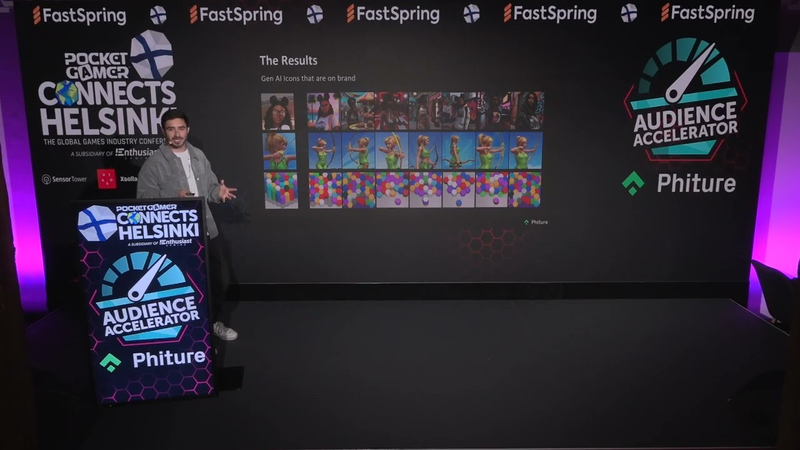
Session: Accelerating ASO Experimentation With Gen AI Using PressPlay - Mikey Feingold, Phiture
App Store Optimization (ASO) has become increasingly complex, requiring a balance between visibility and conversion that often exceeds the time, budget, and human resources available to many mobile growth teams.
- Phiture’s PressPlay platform automates ASO experimentation, enabling teams to run hundreds of tests on icons, feature graphics, and screenshots without manual intervention.
- A case study demonstrated the tool's capacity to deploy 322 experiments over eight weeks, resulting in a projected 12 million installs.
- The platform utilizes a cyclical framework that integrates competitor intelligence, user review analysis, and brand-specific guidelines to ensure AI-generated assets remain strategically aligned.

Press Play, Part 2: What Games Get Wrong About Retention, and How to Fix It
The gaming industry is currently undergoing a significant shift as its core design principles—specifically those centered on behavioral psychology, engagement loops, and interactive mechanics—become highly sought-after assets in non-gaming sectors.
- Game design principles are increasingly being applied to non-gaming sectors, such as Duolingo’s gamified learning or BCG’s use of simulation games to teach corporate strategy to consultants.
- Retention is driven by a deep understanding of human psychology, personality traits, and motivations rather than relying solely on mechanics, monetization, or dopamine loops.
- The stigma surrounding video games has faded, allowing game developers to pivot their skills into roles within marketing, emerging technology, and digital product innovation at non-gaming firms.

From Solsten to Press Play: Why Human-Centered Games Win
Gaming functions as a transformative technology that extends well beyond traditional entertainment, serving as a powerful mechanism for engagement and behavioral change in sectors such as fintech and wellness.
- Gaming is a highly effective engagement tool because it is an active, two-way medium involving constant action and reaction, unlike passive consumption models like social media.
- Successful brand integration in gaming requires moving beyond simple marketing activations to deep, complementary experiences that align with the brand's core product or service.
- Chipotle’s Roblox integration successfully drove record-breaking digital sales and loyalty program sign-ups by gamifying the customer experience and offering virtual rewards for real-world redemption.
Why Adding Brands to Games Is So Hard with Bastian Bergmann
Video games represent a uniquely powerful medium for human transformation, driven by the fundamental human impulse for play.
- Brands should prioritize low-lift partnerships within existing gaming ecosystems rather than building custom experiences from scratch to mitigate risk and development costs.
- Successful brand integration requires shifting from traditional advertising to gamification that aligns with the inherent mechanics of play, as seen in Peloton’s Lane Break and Dettol’s Roblox campaigns.
- To move beyond vague awareness metrics, organizations must establish business-aligned KPIs such as loyalty sign-ups and long-term retention to track the effectiveness of gaming initiatives.