windows
Company
Documents about windows

Building a Successful Ad Monetisation Strategy: What can Mobile Gaming Learn from Other Verticals?
The mobile gaming industry is undergoing a significant shift in its monetization strategy, moving away from a reliance on in-app purchases toward a more robust, ad-supported model.
- Mobile gaming should shift from a reliance on in-app purchases and performance-based game ads toward brand-centric advertising models used by non-gaming applications.
- Developers can attract premium brand budgets from retail and consumer goods sectors by treating their games as 'shop windows' that offer high-quality, non-intrusive ad placements.
- To appeal to premium advertisers, developers must prioritize brand safety and leverage recognizable intellectual property rather than relying solely on hyper-casual ad models.



2020–2022: The Most Exciting Time in the Gaming Industry
This analysis examines global investment and merger and acquisition (M&A) activity within the video game industry from 2020 through 2022.
- M&A activity reached a historic peak in 2022 with $37.7 billion in closed deals, representing a 199% increase over 2021, largely driven by major consolidations like Take-Two’s acquisition of Zynga.
- Public offerings for gaming companies collapsed in 2022, with an 82% decline in value as IPO and SPAC windows effectively closed due to macroeconomic headwinds.
- Private investment value fell by 16% in 2022 following a doubling of investment the previous year, signaling a shift toward a more disciplined, cooling market.

Optimizing UA Budgets by D7 ROAS | UA Coffee Talk
The primary thesis of this discussion is that Day 7 Return on Ad Spend (D7 ROAS) is an insufficient and potentially misleading key performance indicator (KPI) when used in isolation to optimize user acquisition (UA) budgets.
- Relying exclusively on Day 7 (D7) ROAS for UA budget optimization is a strategic error that ignores long-term retention and varying payback windows across different user sources.
- Automated bidding models on platforms like Facebook and Google prioritize short-term ROAS, which can mask declining revenue curves that emerge after 60 days.
- A single, consolidated D7 ROAS target across all traffic sources leads to suboptimal budget allocation because it fails to account for the distinct monetization profiles of different channels, geographies, and platforms.

How To Animate In Unity 3D
This tutorial provides a comprehensive guide to the fundamentals of animation within the Unity 3D engine, focusing on practical applications such as moving platforms, interactive bridges, and patrolling enemies.
- To prevent conflicts between animation data and physics components like Rigidbodies, animate a child object relative to an empty parent object rather than animating the parent directly.
- The Animator window manages state transitions using logic-driven parameters such as triggers, integers, and floats to control when specific animations occur.
- Animation curves should be adjusted to achieve precise linear movement for mechanical objects like platforms and elevators.

Indie Game Business with Jay Powell | Game Dev Unchained Episode 0197
The modern video game industry faces a significant disconnect between creative production and commercial viability.
- Independent developers must treat game development as a business from inception, prioritizing marketing and audience engagement alongside product creation to ensure long-term sustainability.
- The shift toward subscription-based distribution models, such as Xbox Game Pass, necessitates that developers focus on accessibility and the efficient management of digital assets.
- AAA studios often prioritize quarterly financial targets over product quality, leading to the release of under-tested titles, particularly around fiscal deadlines and holiday windows.

The LTV Metric Isn’t Dead. Here’s Why.
Lifetime Value (LTV) remains a critical and functional metric for mobile gaming marketers, provided it is utilized as a tool for strategic decision-making rather than an absolute truth.
- LTV remains a vital North Star for mobile gaming advertisers, as restricting acquisition to short-term payback ignores the vast majority of potential players; only 3.8% of mobile gamers ever become payers according to AppsFlyer.
- LTV models are inherently imperfect estimations, so teams should prioritize 'usefulness' and business decision-making over the pursuit of increasingly complex, yet still flawed, mathematical models.
- Defining LTV requires cross-departmental agreement on three core variables: the definition of value (including ad revenue or organic k-factors), the timing of the prediction, and the duration of the 'lifetime' horizon.

The Future of UA+PM | N3TWORK's Nebo Radovic talks Product Management and User Acquisition Strategy
The integration of user acquisition (UA) and product management (PM) teams is a critical driver of competitive advantage in the mobile gaming industry.
- Integrating User Acquisition (UA) and Product Management (PM) teams is a primary driver of competitive advantage, shifting from siloed operations to shared accountability and unified goal-setting.
- High-frequency communication, including daily or near-daily meetings, is required to synchronize live game events with UA strategies and monitor metrics like early retention and payer conversion.
- Genre specialization is mandatory for success, as distinct game genres require tailored creative assets and targeting strategies that align with their specific Lifetime Value (LTV) curves.
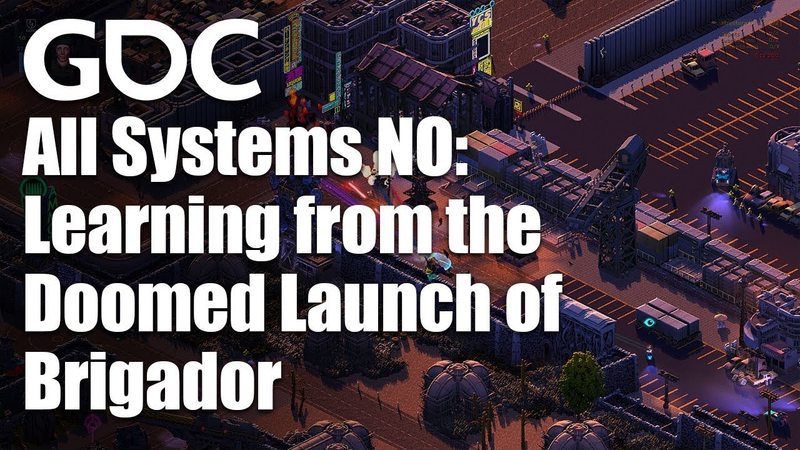
All Systems No: Learning from the Doomed Launch of Brigador
The debut of the indie title Brigador serves as a cautionary case study on the disconnect between critical acclaim and commercial viability.
- Marketing must prioritize conveying the subjective player experience over technical feature lists, as traditional trailers often fail to communicate a game's core value proposition.
- Personality-driven outreach and candid discourse on public forums can be highly effective, with such efforts accounting for approximately one-third of total sales for niche titles.
- Indie developers should prioritize intuitive onboarding over complex tutorials, as the majority of players drop off within the first two hours of gameplay.
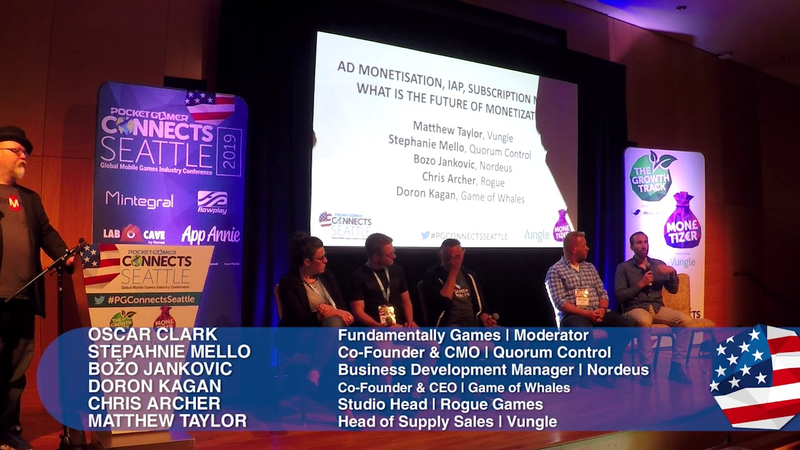
Ad Monetization, IAP, Subscription Model – What is the Future of Monetization?
Modern game monetization has evolved into a sophisticated, data-driven discipline that necessitates the integration of in-app purchases, subscriptions, and advertising into a unified lifetime value strategy.
- Successful monetization requires a unified strategy that integrates in-app purchases, subscriptions, and advertising based on behavioral segmentation rather than a monolithic approach.
- Data indicates that removing advertisements for high-value users often leads to a net decrease in total revenue, suggesting that these players remain valuable targets for both ads and purchases.
- Hybrid monetization models are increasingly standard in mid-core games, where ads supplement in-app purchase revenue without negatively impacting long-term retention.

The Future of Hyper-casual Games | GameJam CEO Christian Calderon
The hyper-casual gaming market has evolved from a niche category into a dominant force in mobile entertainment, characterized by high-frequency ad monetization and rapid development cycles.
- The hyper-casual sector reached a major milestone in 2018, when its titles accounted for 15 of the top 20 most downloaded games globally.
- The industry has shifted from intuition-based design to a data-driven model, where market leaders like Voodoo, Ketchapp, and Lion Studios prioritize retention analysis and lifetime value optimization.
- Macroeconomic trends show that advertising revenue has surpassed traditional in-app purchases, enabling developers to achieve payback windows as short as a few days or weeks.

It’s Time to Retire the LTV Metric
The traditional Lifetime Value (LTV) metric is increasingly obsolete for modern mobile marketing, as it fails to account for the complexities of the current mobile ecosystem.
- The LTV (Lifetime Value) metric is an anachronism in the modern mobile economy because long-term projections are fragile, unreliable, and difficult to validate against frequently updated products.
- Mobile marketers should shift their focus from abstract, long-term LTV calculations to managing cash flow and optimizing for specific payback windows.
- Advertisers are better served by buying traffic against early-stage ROAS benchmarks and iteratively adjusting bids as more data is accumulated to prove later-stage performance.
Games You Might Not Have Tried - ep 21 - Game Jam "Cycles" Edition! - Extra Credits
Game jams serve as a vital incubator for experimental game design, providing developers with a constrained timeframe—often around 100 hours—to prototype and refine unique mechanics.
- Game jams function as effective incubators for experimental design by forcing developers to prototype and refine unique mechanics within constrained timeframes, typically around 100 hours.
- The 'Cycles' theme demonstrates how developers translate abstract concepts into diverse genres, including puzzle-platformers, precision-based challenges, and social commentary.
- Limited development windows do not preclude high-quality output, as jam submissions frequently feature polished mechanics, effective tutorials, and cohesive aesthetic experiences.