windows
Company
Documents about windows
What's the Best Timing to Release Your Game?
Strategic timing for video game releases on digital platforms, particularly Steam, is analyzed to determine its impact on discovery and commercial success.
- Prioritize building a pre-release following and fostering fan interest over specific release timing, as these factors are more significant indicators of commercial success than the launch date itself.
- Avoid launching during major platform-wide events like the Steam Summer or Winter Sales, as these periods reorganize the storefront and suppress organic visibility in the 'Popular New' section.
- Steer clear of 'Cyberpunk avoidance zones'—weeks dominated by massive AAA releases—and the initial days of Steam Next Fest, when influencer attention is saturated by competing demos.
Mass Wishlist Deletes Are Coming and What to Do About It
The primary objective of this analysis is to prepare independent game developers for the inevitable surge in Steam wishlist deletions that occurs during major platform events, specifically the Steam Summer Sale.
- Steam seasonal sales, particularly the Summer Sale, trigger significant spikes in wishlist deletions for games of all statuses, including those not yet released.
- High-profile titles are not immune to these trends; for example, The Riftbreaker lost 290 wishlists in a single day at the start of a Steam Sale.
- Wishlist deletions during festivals are a natural byproduct of increased user activity, as shoppers review their lists to evaluate purchase intent and compare discounts.

Hit Points #11: Knackered
The modern video game industry faces a significant challenge regarding the sustainability of long-term development cycles and the professional toll they exact on veteran creators.
- Modern game development cycles have extended to multi-year projects, increasing the professional stakes and personal toll on developers who have a finite number of major titles left in their careers.
- Yuji Naka, the creator of Sonic, is considering retirement following the poor critical and commercial reception of Balan Wonderworld, which sold just over 2,000 copies at its Japanese launch.
- Square Enix provided Yuji Naka with less than three years to develop Balan Wonderworld and scheduled its release for March 26, 2021, just five days before the end of the company's fiscal year.

Superstar Session: Seize the Moment-Seasonal Changes in the Asian Market -The Best Times to Monetise
The Asian mobile gaming market operates on a distinct seasonal rhythm, where revenue and user acquisition are heavily influenced by cultural festivals, regional shopping events, and academic calendars.
- Align live-ops and advertising spend with peak regional windows, specifically Chinese New Year, Japan’s Golden Week, Korea’s monthly pay cycles, Ramadan, and Songkran.
- Avoid launching new titles during intensive academic periods, as these times consistently correlate with reduced player engagement.
- During high-traffic e-commerce periods when advertising inventory costs spike, shift focus from user acquisition bidding wars to retention and in-game content to capture spillover traffic.

Mobile Advertising Spend Can't Just Disappear
The mobile advertising industry faces a significant structural challenge following the implementation of Apple’s App Tracking Transparency (ATT) policy.
- Direct response (DR) advertising, which relies on precise unit economics rather than fixed budgets, will contract if privacy changes like Apple’s App Tracking Transparency (ATT) degrade advertising efficiency.
- Small and medium-sized businesses (SMBs) have driven the growth of major ad platforms, with Facebook’s active advertiser count rising from 5 million in 2017 to over 10 million by 2021.
- Because DR advertisers scale spend based on the ability to recoup costs from acquired cohorts, a decrease in targeting precision forces them to either reduce total spend or extend payback windows, which slows the velocity of reinvestment.

Easy Modes Aren't Easy - Designing Dynamic Difficulty - Extra Credits
The design of difficulty settings in AAA action-adventure games is evolving from simple health and damage adjustments toward nuanced, accessible, and customizable experiences.
- The industry is shifting from binary difficulty tiers to granular, customizable gameplay settings that allow a broader audience—including casual players and those with disabilities—to engage with AAA action-adventure titles.
- The Last of Us Part II serves as the current industry benchmark by offering a comprehensive suite of accessibility features, including combat modifiers, motor-skill assistance, and puzzle-bypass options.
- Modern design strategies prioritize adjusting mechanics like enemy aggressiveness and reaction windows rather than relying solely on traditional health and damage scaling.
How to Run a Mailing List Without Mailchimp’s High Fees
This analysis evaluates the viability of using Revue as a cost-effective alternative to Mailchimp for independent game developers managing mailing lists.
- Email lists significantly outperform social media for game marketing, yielding click-through rates of 20–34.2% compared to just 0.5–3% on Twitter.
- Revue offers a free alternative to paid services like Mailchimp, which costs at least $120 per year for a list of 2,000 subscribers.
- While Revue is effective for basic newsletters, it lacks advanced features such as automated welcome emails and custom fields required for distributing beta keys.
Superstar Session: Hypercasual in 2021: West & East
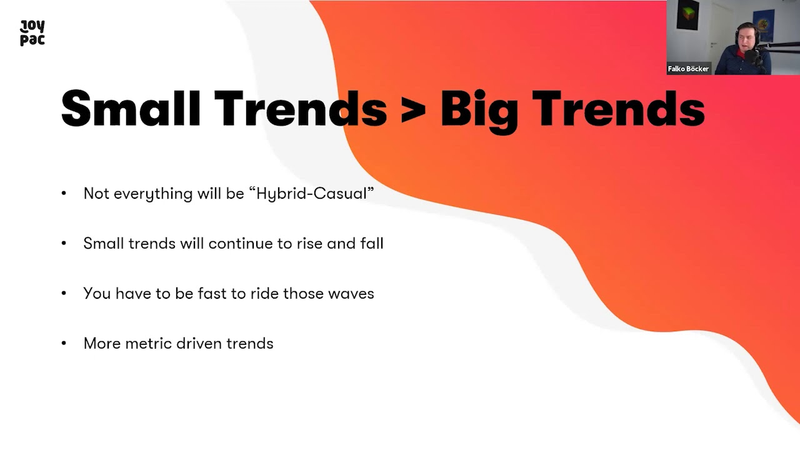
The hypercasual gaming sector is undergoing a structural transformation as it moves away from simple, rapid-fire releases toward a model defined by higher production values and long-term engagement strategies.
- Hypercasual gaming is shifting from simple, rapid-fire releases to a model emphasizing high-fidelity 3D visuals and meta-game elements to combat market saturation and improve long-term retention.
- Rising user acquisition costs and Apple’s IDFA privacy changes are forcing publishers to pivot toward creative-led targeting and tournament structures to maximize player lifetime value.
- The industry is undergoing consolidation, with publishers prioritizing long-term partnerships and the acquisition of superstar studios to secure a consistent content pipeline.
Panel: Lessons Learnt in Game Monetisation
Modern game monetization is defined by a strategic shift toward hybrid models that integrate in-app purchases, subscriptions, and advertisements to accommodate diverse player behaviors and genre-specific requirements.
- Modern monetization relies on hybrid models that integrate in-app purchases, subscriptions, and advertisements to cater to diverse player behaviors rather than relying on universal industry benchmarks.
- Developers should prioritize iterative testing and data-driven insights to balance complex in-game economies and maintain long-term player retention.
- Machine learning and automated bidding systems have replaced manual waterfall management to improve the precision of user acquisition and targeted offer delivery.
The 'Fab Four' Game Marketing Maxims to Live By
The primary objective of this analysis is to outline essential marketing principles for independent video game developers operating in the 2020s.
- Prioritize high-impact marketing initiatives over incremental, low-value tasks to improve game discovery.
- Abandon routine social media reporting, as it often constitutes unproductive busywork that fails to drive meaningful engagement.
- Focus marketing efforts on significant story beats surrounding launch and post-release windows rather than continuous, low-impact updates.
Game Platform Deep-Dive: From NeuroVoider to ScourgeBringer
This analysis examines the shifting landscape of game platform performance by comparing the commercial trajectories of two titles from Flying Oak Games: the 2017 release NeuroVoider and the 2020 release ScourgeBringer.
- Indie developers must shift from platform-exclusive strategies to hybrid monetization, as subscription services and bundles accounted for 68% of total unit sales for ScourgeBringer.
- Market saturation has drastically altered revenue distribution; while NeuroVoider earned 91% of its initial 60-day revenue on Nintendo Switch in 2017, ScourgeBringer earned only 14% from the platform in 2020.
- Steam has become a critical revenue driver in a crowded market, with ScourgeBringer generating 86% of its 60-day revenue from the platform and outperforming its predecessor tenfold in Steam sales.
Strategy Game Features: Genre and Great Games Report Highlights 2020
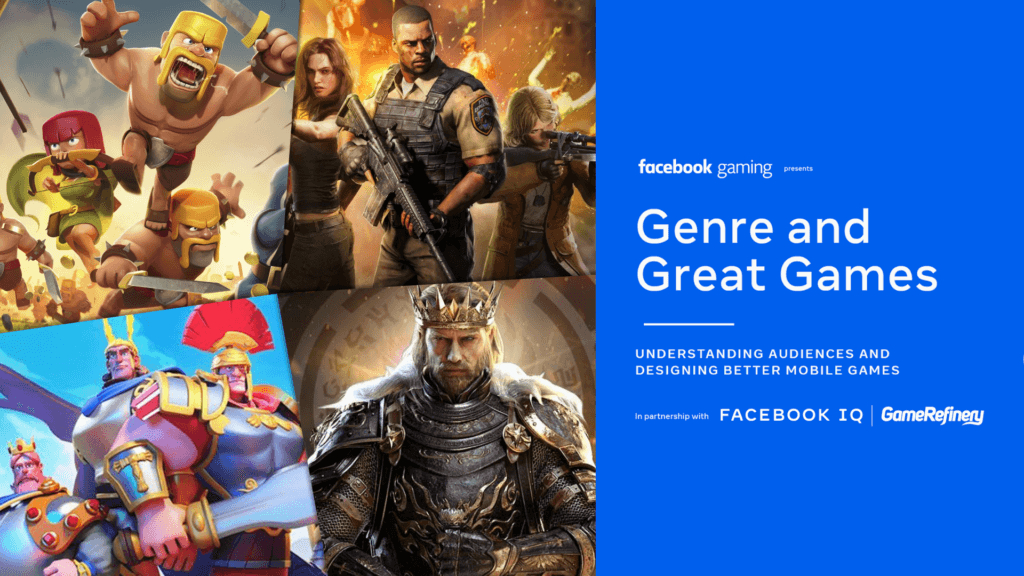
The mobile strategy genre maintains a significant presence in Western markets, with approximately one-quarter of mobile gamers in the US, UK, and South Korea actively participating in the category.
- Genre is a primary driver for mobile gaming, accounting for 49% of the reasons why players choose specific games.
- Multiplayer Battle Arenas can boost engagement and attract new audiences through promotional collaboration events that leverage character and cosmetic collections.
- 4X Strategy games effectively utilize limited-time 'mini-economies' during live events, using event-specific currencies to drive engagement without disrupting the primary game economy.