windows
Company
Documents about windows

Confessions of a Licensed Video Game Developer - Extra Credits
The development of licensed video games—often referred to as tie-in or transmedia games—presents a complex set of challenges that frequently result in products failing to meet fan expectations.
- The success of a licensed game depends on the developer's ability to identify and translate the core appeal of the original property into meaningful gameplay mechanics.
- Aggressive corporate timelines and short licensing windows frequently force developers to prioritize production speed over the creative nuance required to satisfy fans and license holders.
- Designers face significant friction when gameplay requirements conflict with established canon or the specific preferences of the intellectual property owners.
Episode 2: What’s Wrong With Your Publishing Contract?
Game publishing contracts frequently contain lopsided terms that favor the publisher, necessitating careful negotiation to protect developer interests.
- Publishing contracts are negotiable; developers should reject claims that terms are 'standard' or non-negotiable, as these are often used to pressure developers into unfavorable agreements.
- Ensure all verbal promises made by a publisher are explicitly written into the contract, as standard 'entire agreement' clauses will invalidate any previous oral or written communications.
- Define specific, time-bound obligations for the publisher, such as a mandatory release date and a requirement to launch on all agreed-upon platforms, to prevent the publisher from indefinitely delaying or shelving the game.

How Games Get Away With MASSIVE Environments
Optimizing performance in massive game environments requires effective rendering management to maintain high frame rates.
- Occlusion culling optimizes performance by preventing the engine from rendering objects that are outside the camera's field of view or obscured by geometry.
- By removing hidden meshes from the renderer, developers significantly reduce the computational load on hardware to maintain stable frame rates.
- In engines like Unity, occlusion culling is implemented by baking the scene to calculate visibility based on camera positioning and environmental barriers.

The State of Mobile Game and App Markets: Global Report on App Marketing for H1 2022
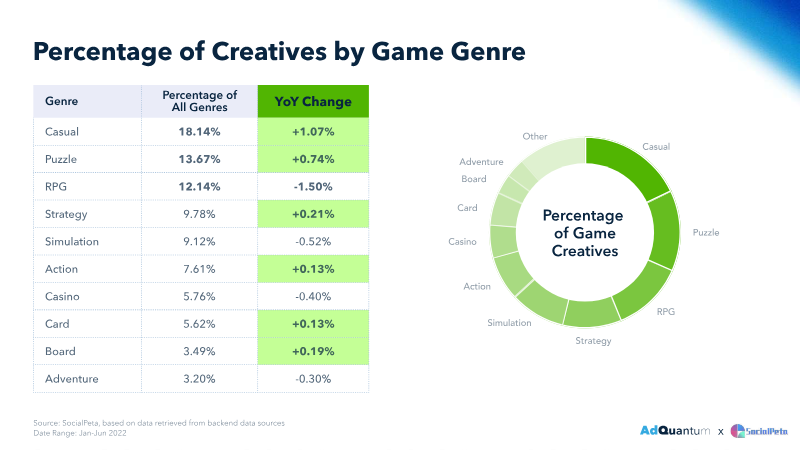
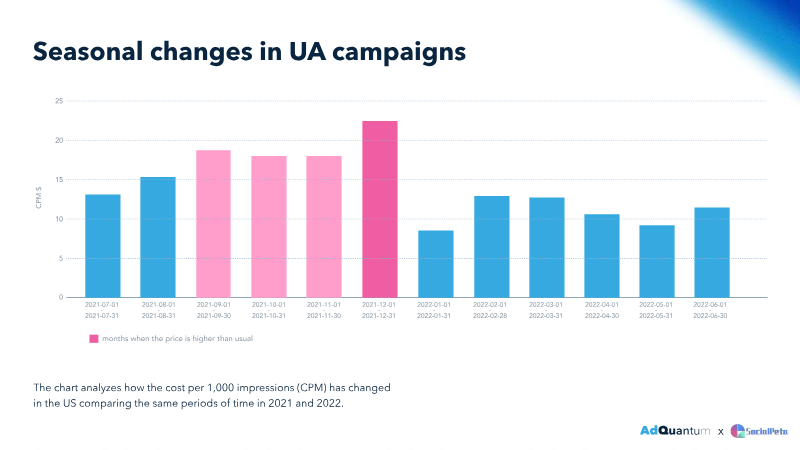
The mobile app and gaming landscape underwent a significant strategic pivot during the first half of 2022, characterized by a transition from high-volume advertising to a quality-centric model.
- App Store search accounted for 64.7% of all mobile app installs in H1 2022, cementing search visibility and ASO as the primary acquisition drivers.
- The mobile ecosystem experienced a contraction in mature regions, evidenced by a 6.2% year-over-year decline in advertisers and a 27% drop in total creatives.
- Tier-2/3 markets, specifically Hong Kong, Macau, and Taiwan, bucked the global trend with a 37% year-over-year increase in advertiser counts.
Noble Fates' Stealth Success, Examined
This analysis examines the performance of various PC and console titles during the final weeks of 2021, with a specific focus on the unconventional success of the fantasy kingdom simulator Noble Fates.
- Noble Fates achieved over 1,000 concurrent users and a 'Very Positive' rating on Steam despite launching its store page only two weeks before release, challenging the necessity of long-term wishlist accumulation.
- The success of Noble Fates suggests that high-quality titles in popular genres can bypass traditional marketing cycles through rapid organic discovery and unconventional tactics like using a custom Steam curator page as a landing site.
- Hardcore niche titles demonstrated strong market resilience in late 2021, with Ultimate Admiral: Dreadnought maintaining over 1,000 concurrent users.
Why Business Intelligence—and IndieBI—Matters
The emergence of IndieBI signifies a shift toward systematized business intelligence for the premium PC and console game sectors.
- IndieBI, a business intelligence platform for PC and console developers, recently secured $3 million in angel investment to expand its data-aggregation services.
- The platform centralizes sales data from Steam, Nintendo Switch, PlayStation, and Xbox into a unified dashboard to help developers optimize discount strategies and revenue.
- By analyzing metrics like discount uplift and wishlist trends, the tool identifies unoptimized revenue opportunities that are often missed in the non-mobile gaming sector.

I made Skyrim... BUT IT'S 2D
Recreating the complex, three-dimensional world of Skyrim as a two-dimensional side-scrolling adventure requires significant artistic adaptation and technical simplification.
- Adapting 3D open-world titles to 2D requires significant creative liberty and technical simplification, as demonstrated by a seven-day development project using Unity and Photoshop.
- Visual depth in a 2D side-scrolling format is achieved through layered illustration, parallax scrolling, and the strategic use of foreground elements like moss or stones.
- To maintain visual fidelity, the project utilized a 4K canvas and color palettes sampled directly from the original Skyrim assets.

A Single Source of Truth for Measurement
The mobile marketing landscape underwent a fundamental shift following the introduction of iOS 14 and Apple’s App Tracking Transparency (ATT) framework.
- The shift to Apple’s App Tracking Transparency (ATT) framework and the loss of IDFA has created a fragmented measurement environment that requires reconciling anonymous SKAdNetwork data with traditional MMP reporting.
- Implementing a conversion studio allows advertisers to automate the encoding and decoding of conversion values, enabling the measurement of revenue, engagement, and funnel events without frequent code updates.
- Advertisers can extend post-install measurement windows up to 72 hours to capture more granular user behavior data within the constraints of privacy-centric design.

Panel: UA & Retention: How to Pick the Ideal Tactic for Your Target Demographic
Effective user acquisition and retention in the mobile gaming sector require a strategic alignment between monetization models and specific payback windows.
- Developers must align monetization models with specific payback windows, prioritizing rapid returns for hyper-casual titles and long-term lifetime value for midcore games.
- Success in user acquisition relies on a formalized, iterative approach to creative testing to identify and scale concepts that resonate with target demographics.
- Machine learning and AI are essential for automating bidding and hitting return on ad spend targets, though they require human oversight to manage channel volatility and performance tracking.

Curated Panel: IDFA Effect' on UA Performance & New Changes for ASO
The mobile gaming industry is undergoing a fundamental transition from granular, device-level user acquisition to an aggregated, privacy-centric model following the implementation of Apple’s App Tracking Transparency framework.
- The implementation of Apple's App Tracking Transparency (ATT) and IDFA deprecation forced a shift toward probabilistic attribution and the use of Apple's SKAdNetwork (SKAN) to maintain user acquisition measurement.
- To address limited data visibility, advertisers are utilizing Conversion Studio tools to measure flexible activity ranges (e.g., levels 1-3) and sequences of events rather than relying on a single 24-hour window.
- Game developers are increasingly shifting UA budgets toward Android and exploring alternative acquisition methods, such as web-to-app flows using landing pages and smart banners to bypass iOS tracking limitations.
How to Get Shoppers to Stop Waiting and Just Buy Your Game Already
The primary objective of this analysis is to provide game developers with actionable strategies to convert passive wishlists into active sales.
- Game developers should expect a maximum conversion rate of approximately 20% of wishlists during the first week of release, leaving a significant majority of interested potential buyers to be captured later.
- Limited-time sales are the most effective tool to combat procrastination; developers should explicitly communicate the sale's end date and send reminders at the 24-hour and 3-hour marks before the discount expires.
- Marketing assets, particularly store capsules, should clearly display the discount size and a strong call to action to maximize the impact of FOMO (fear of missing out).
Superstar Session: Key to Success in Post-iOS 14 Advertisements: SKAdNetwork Data Reconciliation
The implementation of Apple’s App Tracking Transparency policy has fundamentally restructured the mobile user acquisition landscape by restricting access to the Identifier for Advertisers.
- The mobile user acquisition landscape has shifted from deterministic tracking to the privacy-centric SKAdNetwork framework following Apple’s App Tracking Transparency policy, which saw opt-in rates reach only 24 percent by mid-2021.
- Developers must pivot to aggregate analysis and channel-level monitoring because SKAdNetwork introduces reporting latencies of 24 to 48 hours and masks granular data through privacy thresholds.
- Long-term user value prediction now relies on the strategic use of conversion values as a proxy within the restricted tracking windows provided by SKAdNetwork.