1 free read left. Create a free account for unlimited reading + AI research.
Create free account
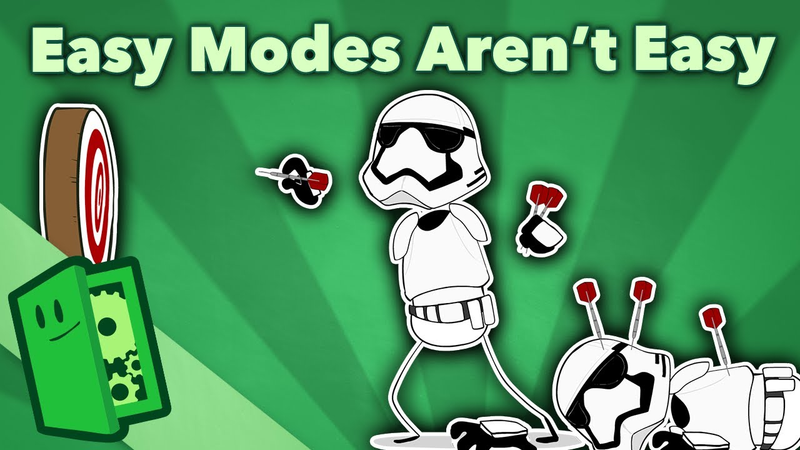
Easy Modes Aren't Easy - Designing Dynamic Difficulty - Extra Credits
Key insights
6 takeaways- 01The implementation of complex dynamic difficulty remains challenging for smaller indie studios due to significant resource constraints compared to AAA developers.
- 02Modern design strategies prioritize adjusting mechanics like enemy aggressiveness and reaction windows rather than relying solely on traditional health and damage scaling.
- 03Ghost of Tsushima demonstrates a nuanced approach by offering a low-intensity mode that simplifies combat and stealth mechanics to improve accessibility without altering the core game loop.
- 04Developers are increasingly utilizing post-launch updates to introduce assist modes, as seen in Control, allowing studios to preserve their original creative vision at launch while expanding accessibility later.
- 05The industry is shifting from binary difficulty tiers to granular, customizable gameplay settings that allow a broader audience—including casual players and those with disabilities—to engage with AAA action-adventure titles.
- 06The Last of Us Part II serves as the current industry benchmark by offering a comprehensive suite of accessibility features, including combat modifiers, motor-skill assistance, and puzzle-bypass options.
Ask AI about this video
Transcript
So, you're playing through a triple-A action adventure title, enjoying one fight after another, solving every puzzle that comes your way, and relishing in your forward progress. Until that all comes to a halt. Maybe there's a boss battle you can't win, and it's more than frustrating. It's sucking all of the enjoyment out of the game. And in the worst case, it can begin to feel like the game itself is wasting your time. That's definitely not the experience most designers would want you to have. But, it's also not super helpful if when you do decide to toggle over to an easier mode, you find that experience lackluster. So, the question then becomes, how can games retain their intended experiences while at the same time allowing folks with varying ability levels, or even time-crunched players, to get in on the fun as well? Dang. Sounds like easy modes aren't easy. Thanks so much to Skillshare for making online learning easy. Real quick up top, please give a warm easy welcome to Wired columnist and tech
writer Swapna Krishna, who wrote this episode. Thanks so much, Swapna. Over the past few years, we've seen a lot more easy mode options in a bunch of triple-A titles. And that makes sense. Casual gaming is on the upswing. After all, a lot of our other recreational activities weren't really available last year, meaning more and more people are picking up controllers for the first time. So, it's important for developers and studios to make their games accessible to this growing audience. Because while some players desire a game to challenge them and test their skills, there are others who would rather play a game on an easier mode to enjoy the experience on their own terms, ensuring that the content they paid for isn't behind a skill gate they can't penetrate. Others may be able to make it through the game's harder modes, but still prefer to play on lower difficulties because it's faster and they have limited time. Still others, including players with disabilities, might need these and other accessibility settings in order to play the game at all. So, offering options for people at varying skill and ability levels is never a bad thing, Especially because we've seen how this can be done without
ruining the developers' intended vision. But before we get into the examples of this, a quick caveat. Since how a game's easy modes will work and its effectiveness will vary depending on the game's style, genre, and budget. In this video, we'll be mostly discussing AAA action-adventure titles. Because let's face it, easy modes are a lot easier when you have a budget to make it happen. And since it's not always feasible for smaller indie studios to create dynamic easy modes, their strategies will differ from larger teams with more resources. When it comes to bigger budget titles, implementing an easy mode can seem pretty simple on the surface. Give the enemy AI the accuracy of a stormtrooper and make the player become a nearly invincible bullet sponge that can button mash through any fight. And while that's one way to do it, looking at it you Knights of the Old Republic, that really is the most basic approach. One that doesn't help the player have the most enriching experience that the developer probably wasn't envisioning either. But when a game puts more thought and care into the process, easy modes can become an art form of their own. For instance, Ghost of Tsushima from Sucker Punch
Productions is a great example. The difficulty level is a mix of overall gameplay settings, which you can choose at the beginning of the game, along with accessibility tweaks. You can play on easy, normal, hard, and in a new addition thanks to a patch in July of 2020, lethal. But unlike a lot of other games, changing the difficulty doesn't increase or decrease enemy health. Rather, selecting hard increases enemy aggressiveness and requires the player to be more precise in button presses, which is much more nuanced. Then the game's easy mode offers limited challenge. It's for players who want to focus more on story and exploration with the occasional hard boss battle or enemy encounter. Plus, the studio even offered a lower intensity mode option, which in addition to the standard easy mode settings also gives players more time to react to enemies and increases how long it takes for enemies to detect you while sneaking. Also, within the accessibility menu are a plethora of options to customize gameplay itself. From simplified controls to aim assist to button holds, which allow players to
hold down a button rather than pressing a button repeatedly until their thumbs fall off. An option I particularly appreciate. It ensures that players can still experience the game the way the developers intended, but at the same time makes it accessible to a wider audience. But what if you want to preserve a difficult challenging experience and you don't initially have the time or resources to develop a nuanced easy mode? Well, we can look at Remedy Entertainment's Control for one answer. At launch, Control was a notoriously difficult game and the developers preserved that experience for about a year after release, but eventually they decided to open up the field with an update called assist mode, providing more people a chance to experience the game, causing many who didn't consider buying the game on launch to purchase it as a result. This is another great way to include an easy mode while balancing the creative vision for your game, adding it as a free update after release. Granted, it's not a perfect solution, but having a well-crafted easy mode is better than a poorly designed one or none at all. Waiting like this ensures that studios will have enough time to create nuanced
well-thought-out difficulty tweaks to make for a great gameplay experience. And then, there's the gold standard for easy mode nuance and customization in the AAA space, The Last of Us Part II from Naughty Dog. One of the first games credited with elevating the idea of difficulty. While it doesn't have difficulty levels, the accessibility options are so numerous that we don't have time to discuss every one of them individually. But they include combat options such as reduced enemy accuracy, enhanced dodge, and slow motion, but also options for people with impaired vision, hearing, or motor skills, and settings to reduce motion sickness. There's even an option to turn off puzzles because they realized that tweaking combat doesn't solve every problem. And all of this allows the player to customize the gameplay experience to exactly what they want and need to make The Last of Us II work for them. Whether they want an incredibly challenging battle through the post-apocalyptic United States or prefer just to experience the story and not worry about fighting the Rat King for the hundredth time. Easy modes don't
have to be a controversial subject and in many ways feels like the next natural step for video games to take as they continue to expand their audience. After all, we all love video games, playing them, talking about them, making YouTube videos about them and being able to share them with more people from all walks of life is a wonderful thing. And even though there's not a one-size-fits-all solution on how to develop an easy mode while maintaining a game's intended vision, the last few years have shown us that it's definitely possible to have some easy cake and eat it with vision, too. However, if you're looking for a one-size-fits-all solution for all of your online learning needs, then you don't have to look any further than today's sponsor, Skillshare. Skillshare is an online learning community featuring thousands of super helpful courses for anyone looking to scratch a creative itch, enhance an existing skill, or even level up some new abilities. Seriously, they have classes on almost everything. For instance, we've been really enjoying Marques Brownlee's newest YouTube creation class, Shoot, Script, Edit, where he breaks down his techniques on turning complex tech topics into short,
hyper-engaging videos. Also, to help me along on my forever quest to manage my time more effectively, I've been taking fellow Nebula creator Thomas Frank's class, Productivity for Creators, where he shares some really great workspace tips that have really helped me a ton. Then with all the time I've saved, I move on to what really brings in the dough. Cookies. Didn't see that one coming, did you? Specifically, how to make edible art with Lori Shannon's class, Cookie Decorating for Beginners. And the info in there is, dare I say, frosty. Excuse me. Plus, Skillshare is continually launching new premium classes ad-free, so you'll always find something new you're excited to learn about all for under $10 a month. And speaking of exciting, the first 1,000 of you fine folks that click on the link in the description below will get a free trial of a premium membership so you can not only help out our channel by exploring your own creativity but also and I cannot stress this enough. Mhm, you can also bake more awesome cookies. So, come on. A legendary thanks to Ahmet Ziad Turk,
Joseph Blame, Alicia Bramble, Kyle Murgatroyd, Casey Muscha, Orioles 1, and Dominic Valenciana for all of their support.
Summary
The design of difficulty settings in AAA action-adventure games is evolving from simple health and damage adjustments toward nuanced, accessible, and customizable experiences. The primary thesis is that well-designed difficulty options allow developers to broaden their audience—including casual players, time-constrained users, and individuals with disabilities—without compromising the intended creative vision of the game. While traditional methods often rely on making enemies weaker or players more resilient, modern design approaches prioritize granular control over gameplay mechanics.
Key industry examples demonstrate this shift toward sophisticated accessibility. Ghost of Tsushima distinguishes itself by adjusting enemy aggressiveness and reaction windows rather than just health pools, while also offering a low-intensity mode that simplifies combat and stealth. Control illustrates a post-launch strategy, where developers introduced an assist mode via update to open the experience to a wider audience after maintaining the original, challenging vision at launch. The Last of Us Part II is highlighted as the current gold standard, replacing rigid difficulty tiers with a comprehensive suite of accessibility settings. These include combat modifiers, motor-skill assistance, and the ability to bypass specific puzzles, allowing players to tailor the experience to their specific needs.
The scope of this analysis is limited to the AAA action-adventure segment, acknowledging that smaller indie studios face different resource constraints that make complex dynamic difficulty harder to implement. Ultimately, the transition toward flexible difficulty is presented as a necessary and positive evolution for the industry, ensuring that games remain engaging and inclusive as they reach a more diverse global audience.
















Comments