Time
Company
Documents about Time
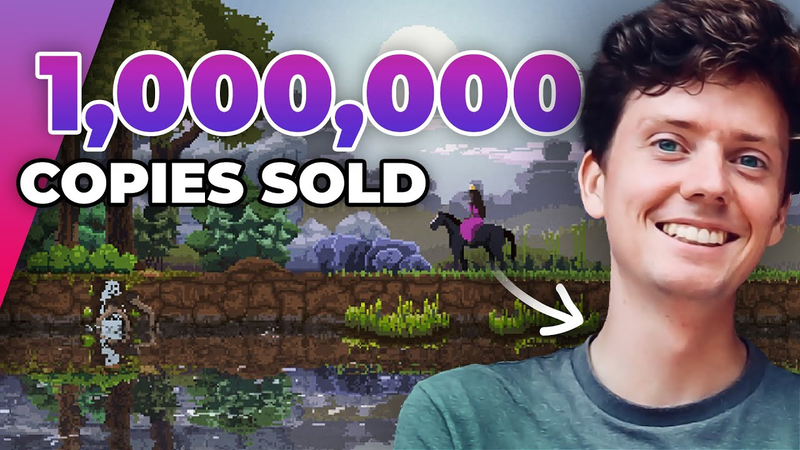
How He Sold 1,000,000+ Copies Of His Game (Thomas Vandenberg) — Full Time Game Dev Podcast Ep. 030
The path to commercial success in independent game development relies on a strategic balance between creative intuition and disciplined project management.
- Publishers provide essential financial stability and de-risking for indie developers, allowing them to focus on development without the mental toll of personal financial insecurity.
- The Kingdom franchise reached a state of 'elegant simplicity' after years of development, leading the creator to sell the IP to Raw Fury to pursue new projects after a decade of work.
- Game development productivity can be optimized by using a prototype-heavy approach, such as creating 20 prototypes in two-week sprints to identify the most viable concept for a six-month production cycle.
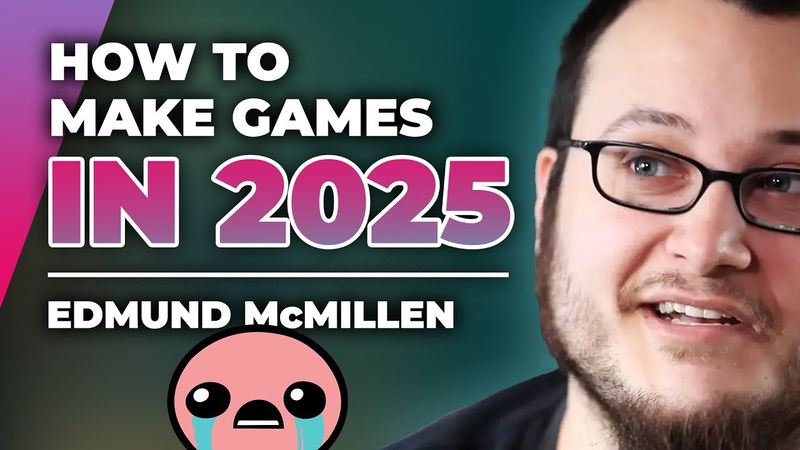
How To Make Indie Games In 2025 w/ Edmund McMillen — Full Time Game Dev Podcast Ep. 029
The independent game development landscape in 2025 demands a departure from trend-chasing in favor of radical creative autonomy and the cultivation of a distinct, uncompromising artistic voice.
- Success in the 2025 market requires prioritizing a distinct, uncompromising artistic voice over trend-chasing to differentiate projects in a saturated industry.
- Developers should adopt an organic, discovery-based development process that favors iterative idea-volleying over rigid design documents or speculative high-budget models.
- Financial constraints should be leveraged as catalysts for innovation rather than viewed as hindrances, as the industry shifts away from bloated, speculative investment models.
Mastering Predictable Feature Delivery on Live Service Games: Part 2
The primary objective of this analysis is to provide game production teams with a framework for achieving predictable feature delivery in live service environments through the systematic collection and interpretation of flow metrics.
- Predictable feature delivery relies on tracking four foundational flow metrics: Work In Progress (WIP), Cycle Time, Work Item Age, and Throughput.
- Work In Progress (WIP) measures all active, unfinished tasks; monitoring it via run charts helps identify bottlenecks, as increasing WIP often signals an overwhelmed system.
- Cycle Time is analyzed using scatterplots to visualize the time taken to complete tasks, with percentile lines (such as the 85th percentile) providing a benchmark for delivery expectations.
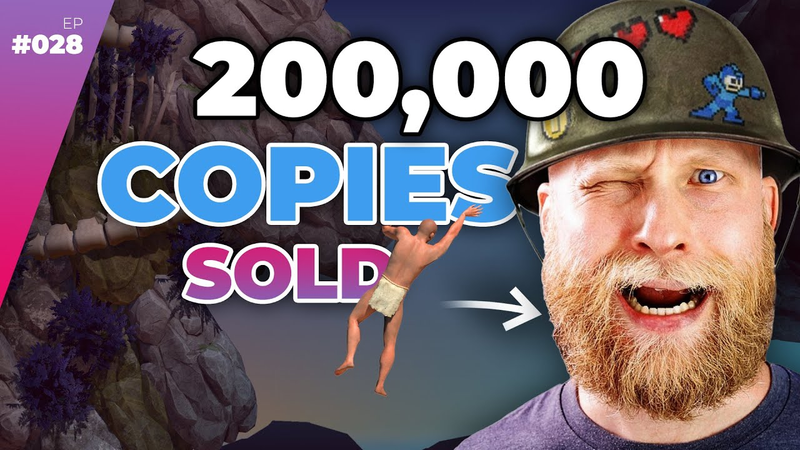
How He Sold Over 200,000 Copies Of His Game w/ PontyPants — Full Time Game Dev Podcast Ep. 028
Achieving commercial success in the independent game industry requires a strategic pivot from technical documentation toward high-impact, curiosity-driven marketing.
- Commercial success is driven by high-impact, curiosity-driven marketing that targets the general gaming public through streamer exposure rather than technical development logs that primarily attract other developers.
- Projects like 'A Difficult Game About Climbing' demonstrate that prioritizing entertainment value and narrative-focused content is essential for driving wishlists and achieving significant market penetration.
- Design should focus on refining a single, core mechanic through iterative prototyping while stripping away extraneous elements like tutorials and dense narratives to foster discovery and speedrunning potential.
How He Sold Over 960,000 Copies Of His Games w/ @JonasTyroller — Full Time Game Dev Podcast Ep. 027
Commercial success in the independent game industry is not a product of luck but the result of a disciplined, iterative design process that treats development as an optimization puzzle.
- Commercial success is achieved through a disciplined, iterative design process that treats game development as an optimization puzzle rather than a product of luck.
- Developers should employ a rigorous search phase to test multiple prototypes, art styles, and mechanics, ensuring only high-potential concepts move into full-scale production.
- A concise two-sentence pitch should serve as the foundational filter for all design decisions to maintain focus and prevent scope creep throughout the development lifecycle.
How To Make Games With No Experience w/ Mark Brown @GMTK — Full Time Game Dev Podcast Ep. 026
Transitioning from game design analysis to active development requires a fundamental shift in mindset, moving away from theoretical perfectionism toward the practical necessity of shipping projects.
- Prioritize finishing small, tightly scoped projects over theoretical perfectionism, as the act of shipping a game provides more professional growth than years of study.
- Mitigate risk in a saturated indie market by targeting specific niche communities rather than attempting large-scale titles that lack a clear, unique hook.
- Bridge the gap between internal vision and player reality through frequent, rigorous playtesting, as creators cannot objectively evaluate their own work.
How To Make Money From Your Game In 2025 w/ Chris Zukowski — Full Time Game Dev Podcast Ep. 025
The indie game development landscape in 2025 is characterized by high saturation and increased risk, necessitating a shift toward disciplined, iterative production models.
- To gain traction on Steam, developers should aim for a baseline of 7,000 wishlists before launch to trigger the platform's algorithm effectively.
- Marketing success is not achieved through social media posts or tweets, but by securing access to established audiences through influencers and industry gatekeepers.
- Developers should prioritize building their own owned audience (like an email list) rather than relying solely on Steam wishlists, as the latter is a platform-dependent asset that could be subject to change.
How To Make Indie Games In 2025 w/ Jonathan Blow — Full Time Game Dev Podcast Ep. 024
The contemporary game development landscape faces its most precarious period since the 1980s, defined by a saturated, "red ocean" marketplace where high-quality titles struggle for visibility amidst a deluge of low-effort releases.
- The current game market is a 'red ocean' characterized by extreme saturation, where high-quality titles are frequently obscured by a high volume of low-effort releases.
- Modern game engines like Unity and Unreal have lowered barriers to entry but introduced significant technical overhead, including software bloat and performance inconsistencies.
- Developers should consider building custom engines to regain technical control and efficiency, despite the increased labor and operational demands this approach requires.
Does Game Marketing Even Matter In 2025? — Full Time Game Dev Podcast Ep. 023
The modern game development landscape is defined by a critical tension between creative integrity and the harsh realities of a saturated market.
- Organic reach on legacy social media platforms like X is declining, forcing developers to pivot toward YouTube funnels and influencer partnerships to secure visibility.
- Success in 2025 is increasingly driven by engineered marketing and paid influencer content rather than organic discovery.
- Developers are abandoning the high-fidelity graphics arms race in favor of minimalist, stylized art directions to differentiate products in a saturated market.
How To Make Games ALONE In 2025 — Full Time Game Dev Podcast Ep. 022
The contemporary landscape for solo game development has transitioned from an era of speculative funding toward a rigorous, meritocratic environment that demands early market validation.
- Solo developers must treat game development as a disciplined business, prioritizing data-driven market validation over creative intuition to ensure financial sustainability.
- Steam wishlists serve as the primary key performance indicator for market interest, and projects failing to meet early wishlist benchmarks should be abandoned rather than polished.
- The industry has shifted away from speculative funding and subscription service payouts, necessitating a strategy focused on building an organic audience directly on platforms like Steam.

Now Is the Time! Workers in Games Are Ready to Form Unions
The game industry currently faces a critical juncture where widespread layoffs, precarious job security, and unilateral management decisions have necessitated a shift toward collective labor organization.
- Game industry workers are increasingly pursuing unionization to transition from individual advocacy to a structured, democratic system of negotiation that secures legally binding contracts.
- Collective bargaining is being utilized to address systemic issues such as widespread layoffs, job insecurity, and unilateral management decisions regarding remote work and unpaid testing.
- Strategic organizing efforts, supported by the International Alliance of Theatrical Stage Employees (IATSE), prioritize building studio-level supermajorities to establish industry-wide labor standards.

How This Game Dev Got 150,000 Wishlists In A Month — Full Time Game Dev Podcast Ep. 021
Transitioning to full-time independent game development requires a strategic balance between creative ambition and financial pragmatism.
- Developer David Wehle achieved 150,000 wishlists for his upcoming game, 'We Harvest Shadows,' within one month by leveraging a high-quality, standalone demo.
- The game's marketing strategy relied on a 'genre-bending' approach that combined farming simulation with horror, a niche identified by analyzing market trends and player fatigue toward 'soulless' games-as-a-service titles.
- Strategic exposure through high-profile influencers, including Jacksepticeye (30 million subscribers) and Gab Smolders, significantly accelerated wishlist growth after they praised the demo's emotional depth and unique mechanics.