Time
Company
Documents about Time

FTUE: Stormfall w/ added Megan Fox
The mobile strategy game Stormfall: Rise of Balur utilizes a highly structured First Time User Experience (FTUE) to onboard players, heavily relying on celebrity integration and repetitive, task-oriented mechanics.
- Stormfall: Rise of Balur utilizes celebrity integration, specifically featuring Megan Fox as an in-game tutor, to increase engagement and provide a recognizable guide during the initial tutorial phase.
- The First Time User Experience (FTUE) is designed as a highly structured, task-oriented loop that relies on 'skinner box' mechanics, such as frequent rewards of speed-ups, currency, and experience points, to reinforce player behavior.
- The onboarding process transitions from high-frequency, low-agency interactions—where directional arrows dictate every move—to an open-ended state, which serves as a critical friction point that often leads to player churn.
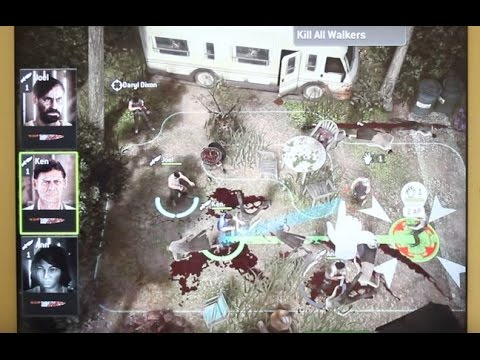
FTUE: The Walking Dead: No Man's Land
The First Time User Experience (FTUE) for the mobile strategy game The Walking Dead: No Man’s Land demonstrates a structured, multi-layered onboarding process designed to acclimate players to both turn-based combat and base-management mechanics.
- The Walking Dead: No Man’s Land utilizes a multi-layered FTUE to bridge the gap between turn-based combat and base-management mechanics, specifically targeting a mass-market audience drawn by the intellectual property.
- The combat tutorial emphasizes mission objectives over direct engagement, teaching players to manage action points and evaluate the risk-reward ratio of fighting versus reaching exit points.
- The game incorporates a base-building meta-layer inspired by Clash of Clans, introducing resource management, time-gating, and character progression to establish a long-term core loop.
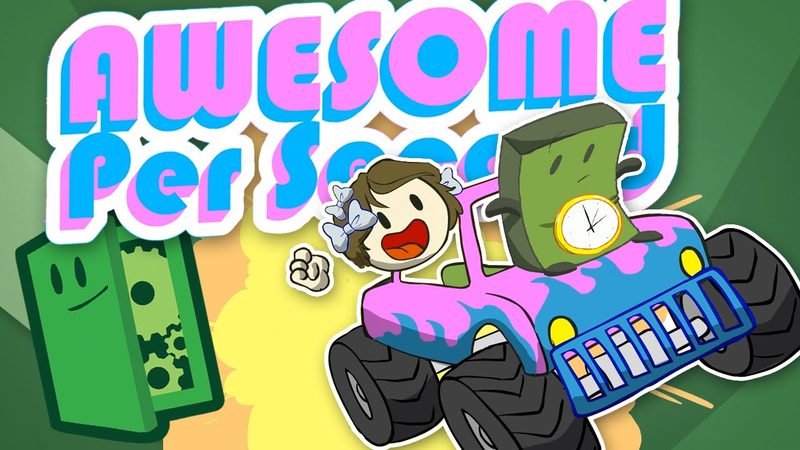
Awesome Per Second - Don't Waste Time - Extra Credits
Game design should prioritize the density of high-quality experiences over total play duration, a metric defined as awesome per second.
- Game design should prioritize 'awesome per second,' a metric that emphasizes the density of high-quality experiences over total play duration.
- Developers must ruthlessly edit their projects to remove content that is merely 'good' rather than 'great' to maintain a consistent interest curve.
- The industry-wide pressure to inflate play time to justify price points often leads to the inclusion of mediocre filler content.

Snakes and Ladders - How the Meaning of an Ancient Children's Game Adapted Over Time - Extra Credits
Snakes and Ladders serves as a profound example of how game mechanics function as metaphors for cultural values and philosophical beliefs.
- Snakes and Ladders originated in India approximately 2,000 years ago as a tool for moral and religious education rather than a test of player skill.
- The game’s mechanics rely entirely on chance to reinforce the concept of fate and the karmic cycle of life, death, and rebirth.
- In its original Indian iterations, the board layout featured more vices than virtues, reflecting a spiritual philosophy where regression was more common than elevation.
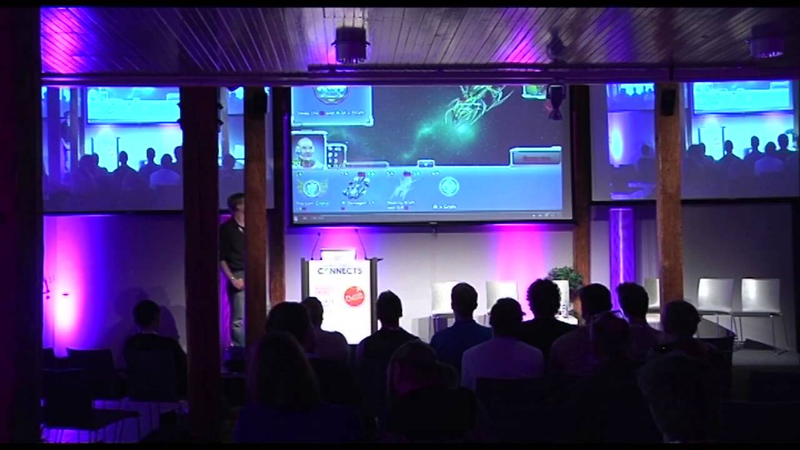
PGC Helsinki 2014: Demo Time!
The 2014 PGC Helsinki showcase highlights three distinct mobile game titles, emphasizing the diversity of development strategies within the indie sector.
- Indie developers are increasingly using soft launches in select regions to validate retention and engagement metrics before committing to global releases.
- Two Men and a Dog’s 'Zombie Catchers' achieved a 44% content completion rate during its soft launch, validating the market demand for high-quality mobile platformer-base-building hybrids.
- Hardcore Games is targeting the mobile CCG market with 'Star Admiral,' a 3D-modeled title currently in soft launch across Austria, Switzerland, and Canada that incorporates complex mechanics like energy sacrifice and tactical strike tracking.
3 Time-Sensitive Strategies for Ranking on the Google Play Android Games Top Charts
The primary objective is to provide actionable strategies for mobile game developers to improve their visibility on Google Play Top Charts following the platform's category expansion in early 2014.
- Developers can improve their chances of reaching the Top Charts by targeting less competitive categories such as Adventure, Board, Casino, Educational, Family, Music, Trivia, or Word.
- The Paid Top Charts offer a significantly lower barrier to entry than Free charts, with some apps achieving high rankings with fewer than 5 downloads and 1 review.
- In contrast to the Paid charts, the Free Action category is highly saturated, with top-ranking games requiring between 20,000 and 2 million reviews.
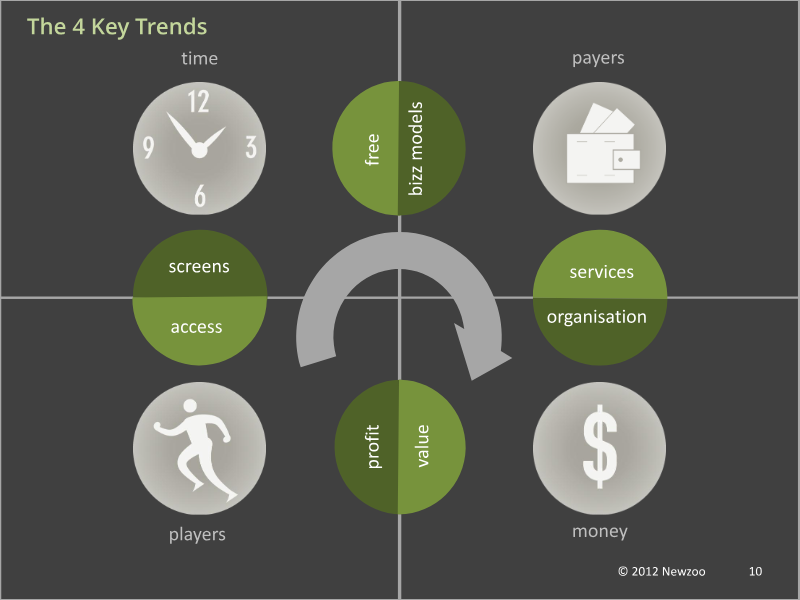
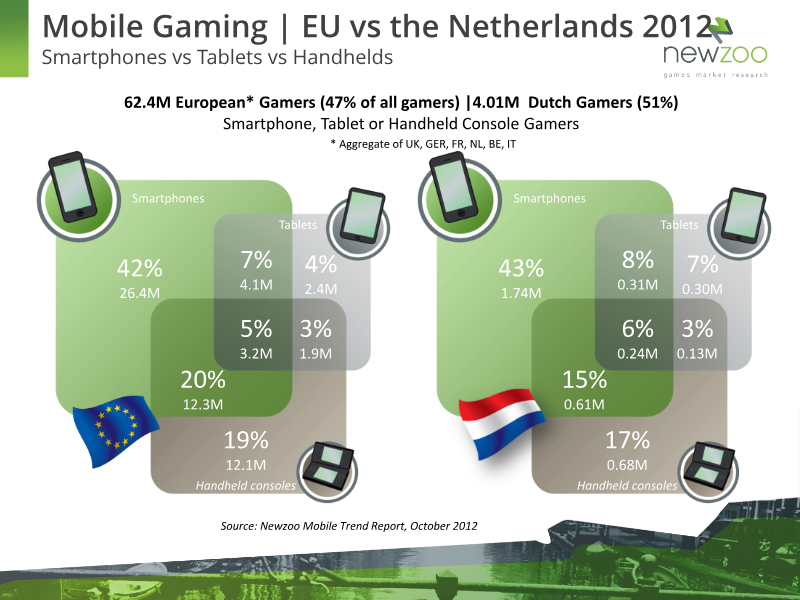

The Dutch Games Market: 2012 Summary Report
The 2012 Dutch Games Market report provides a comprehensive analysis of the gaming landscape in the Netherlands, focusing on consumer behavior, platform usage, and market growth indicators.
- The Dutch gaming market consists of 8 million active gamers, representing 45% of the total population, with 3.5 million of these individuals identified as paying customers.
- Casual and social websites dominate engagement, accounting for 65% of reach and 37% of total daily gaming time.
- Console gaming reaches 58% of the market and captures 19% of daily gaming time, while mobile devices reach 55% of the market and capture 16% of daily time.

The Lifetime Customer Value / Cost Per Acquisition Spread
The Lifetime Customer Value (LCV) to Cost Per Acquisition (CPA) spread serves as a fundamental metric for evaluating the profitability of user acquisition in the mobile freemium industry.
- Averages are ineffective for calculating the LCV/CPA spread in freemium models because they create theoretical profit margins that often do not reflect actual user behavior.
- LCV must be calculated using dynamic, real-time data—such as trailing 2-week ARPU and retention rates—rather than static cohort-based models to remain relevant to current market conditions.
- Developers must segment LCV and CPA by geography, as high-value markets require higher acquisition spending to avoid artificial revenue ceilings, while low-value markets require lower spending to prevent over-investment.
Power Creep - The Trouble with Expansions and Time - Extra Credits
Power creep represents a significant design and economic challenge for persistent online games, occurring when new content renders existing elements obsolete through superior numerical performance.
- Power creep occurs when new content introduces superior numerical performance, rendering existing game elements obsolete and devaluing historical player investments.
- Relying on raw stat increases to drive progression often leads to the rapid abandonment of legacy content and can trigger a mass exodus of the player base.
- Designers can mitigate power creep by introducing 'incomparables,' which are gameplay elements that provide distinct, non-numeric utility rather than simple stat upgrades.

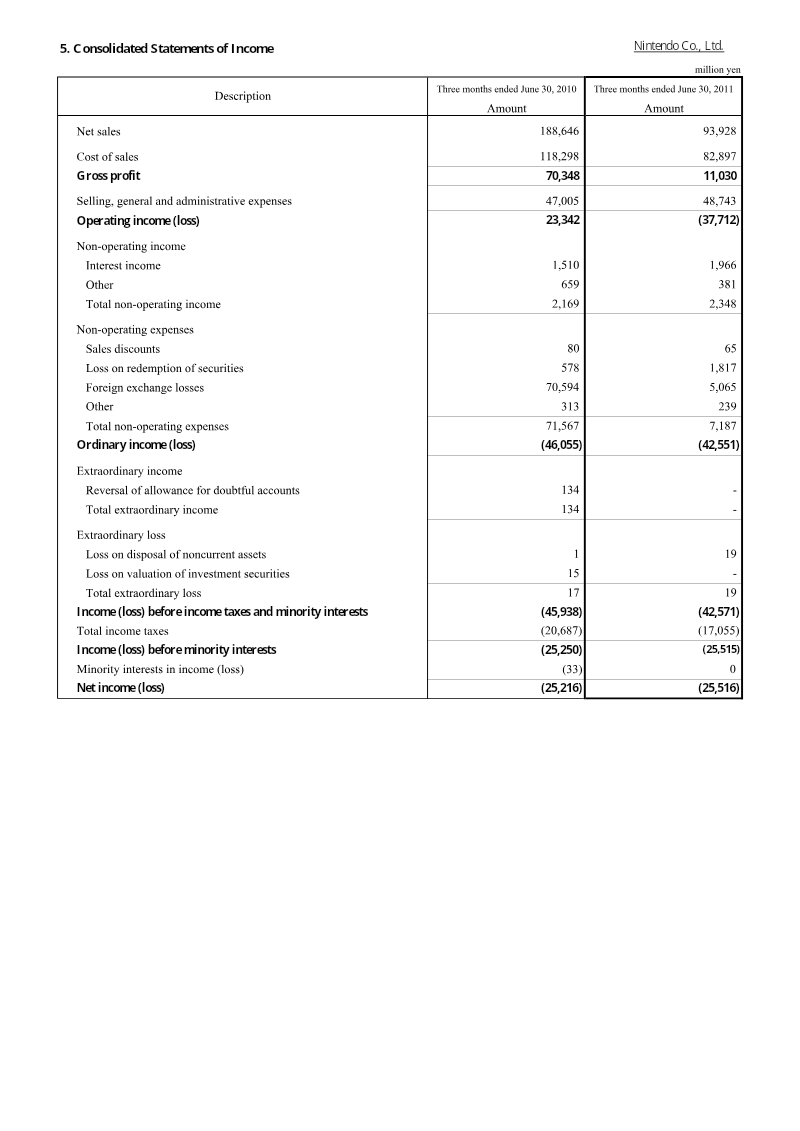
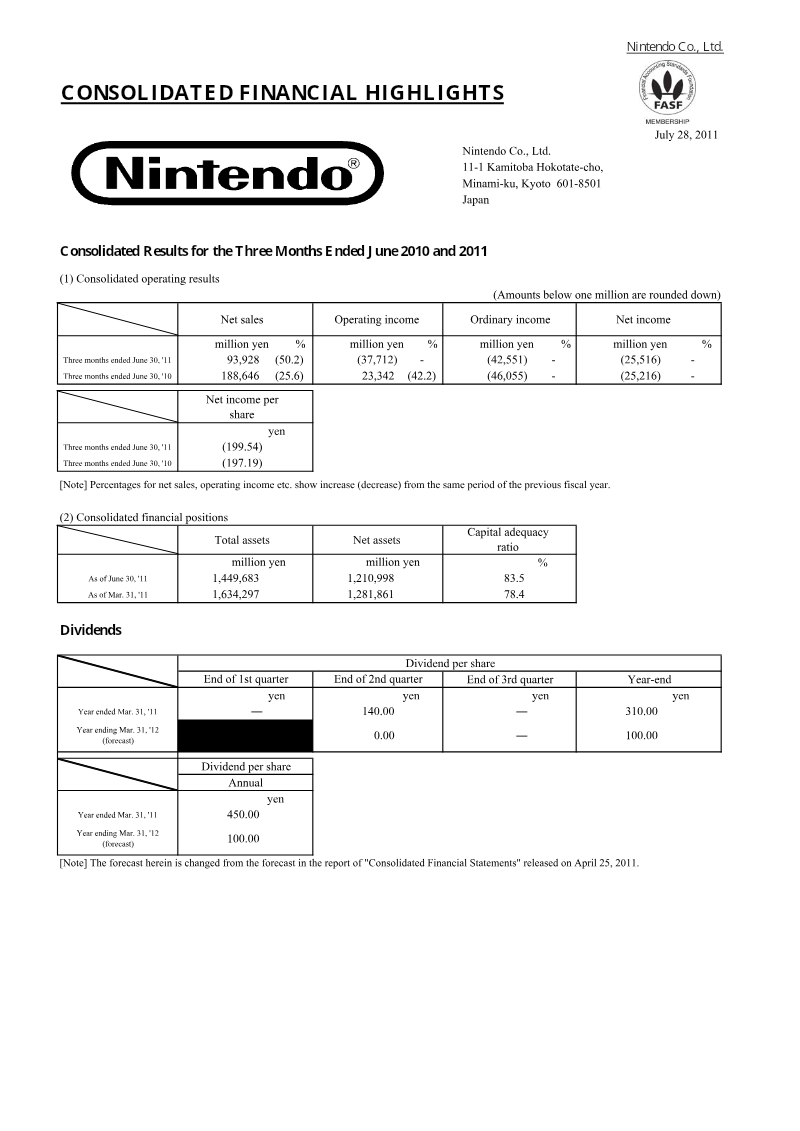
Consolidated Results for the Three Months Ended June 2011
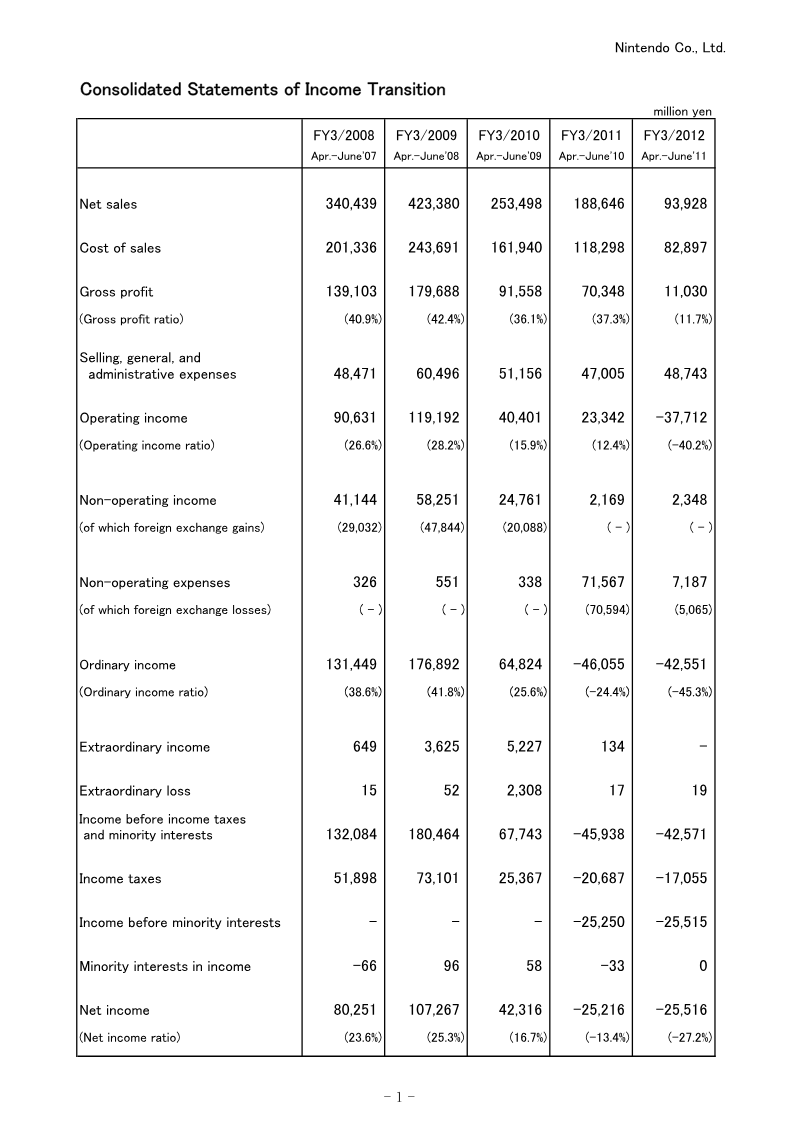
Nintendo’s consolidated financial results for the three months ended June 30, 2011, reflect a period of significant contraction and operational loss.
- Nintendo reported a 50.2% year-over-year decline in net sales to 93.9 billion yen for the quarter ending June 30, 2011.
- The company swung to an operating loss of 37.7 billion yen and a net loss of 25.5 billion yen, compared to an operating profit of 23.3 billion yen in the same period of 2010.
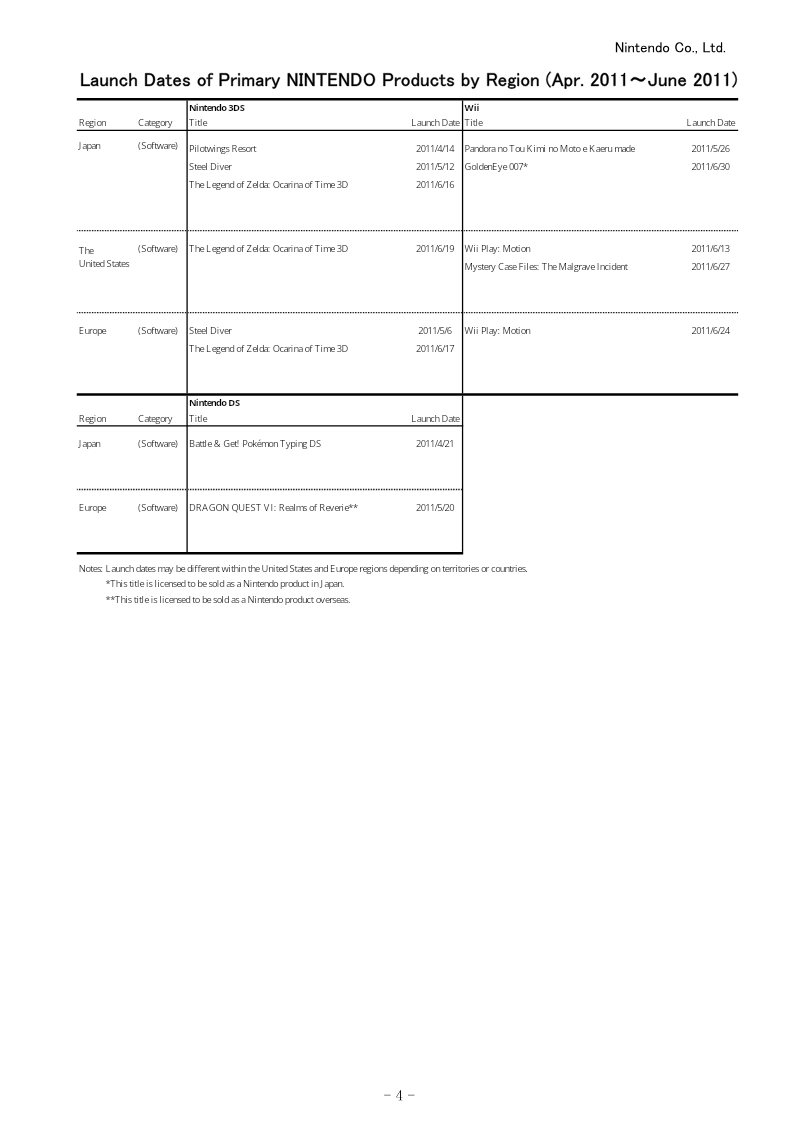
- Performance was negatively impacted by a lack of high-performing software titles across the 3DS, DS, and Wii platforms, alongside inventory markdowns for a planned 3DS price reduction.
Financial Results Briefing for the Three-Month Period Ended June 2011: Supplementary Information
The financial results for the three-month period ending June 2011 reflect a challenging fiscal start for Nintendo, characterized by a significant contraction in net sales and a shift into operating losses.
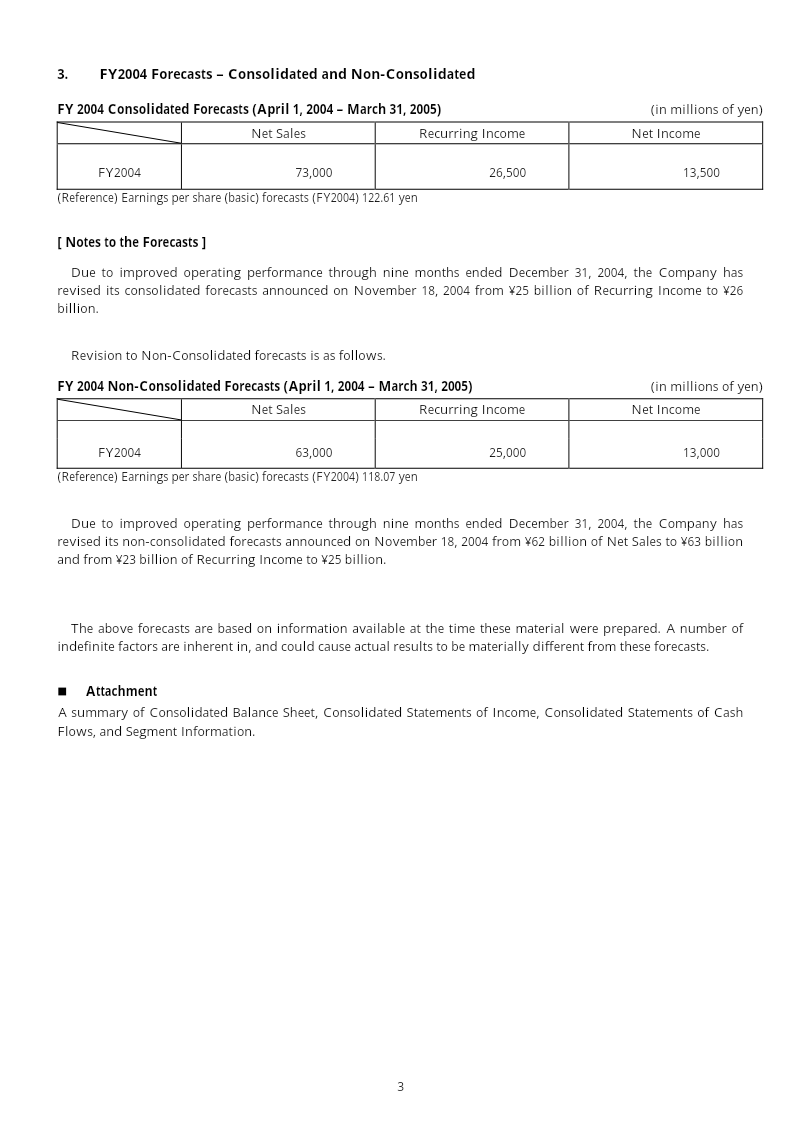
Square Enix Consolidated Financial Report: Nine Months Ended December 31, 2004
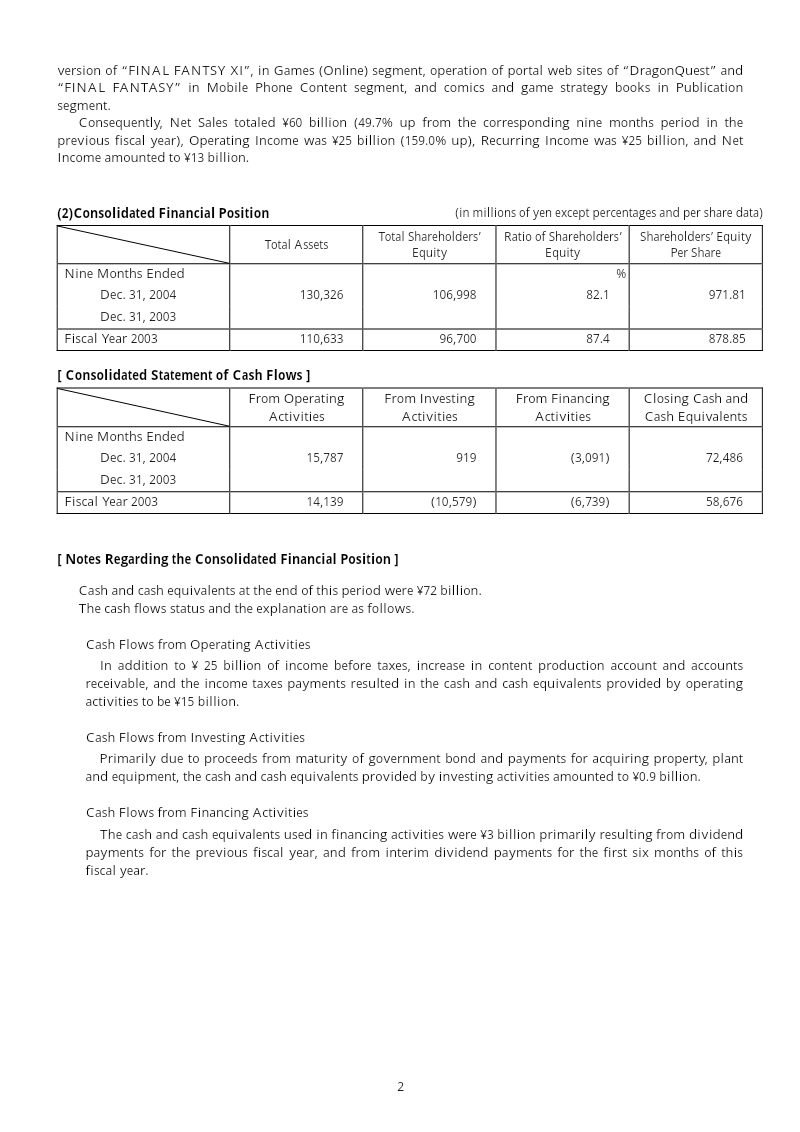
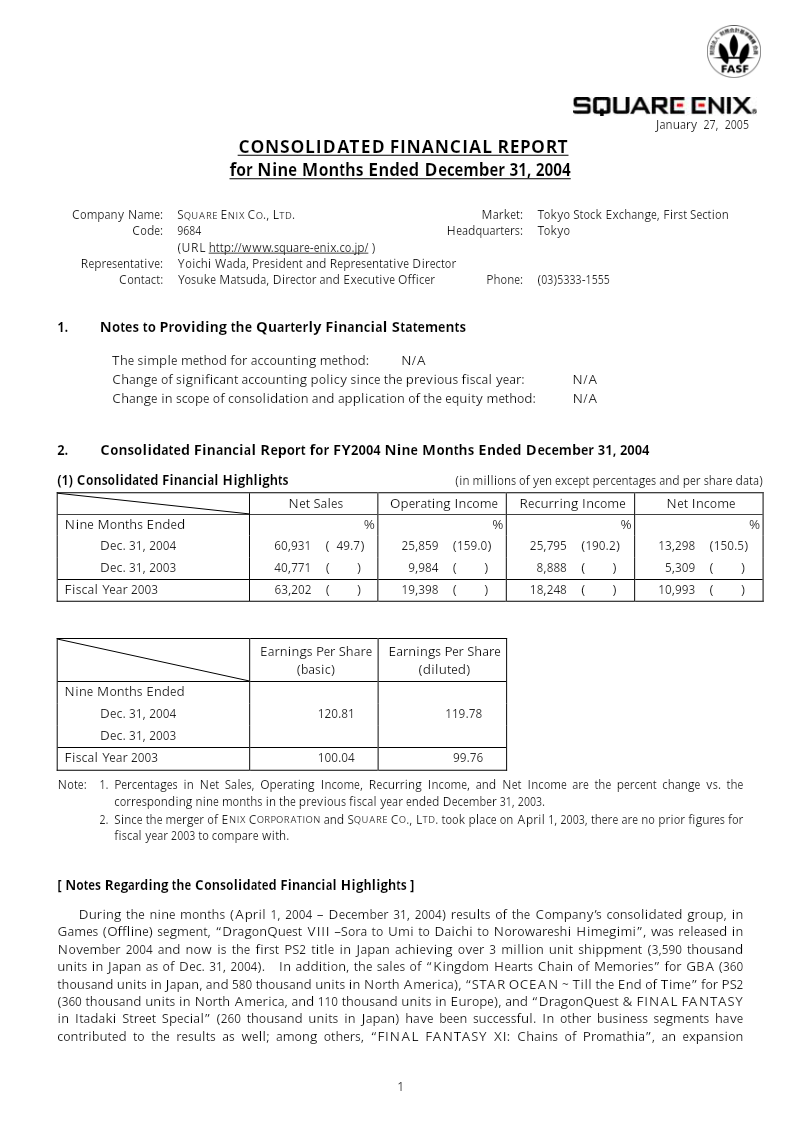
The consolidated financial report for the nine-month period ending December 31, 2004, details strong growth for Square Enix following the 2003 merger of Square Co., Ltd. and Enix Corporation.
- Square Enix achieved significant growth for the nine months ending December 31, 2004, with net sales rising 49.7% to ¥60.9 billion and operating income surging 159% to ¥25.8 billion.
- Net income for the period reached ¥13.3 billion, a 150.5% increase compared to the same period in the previous year.
- The release of Dragon Quest VIII was a primary performance driver, achieving over 3.5 million unit shipments in Japan.